
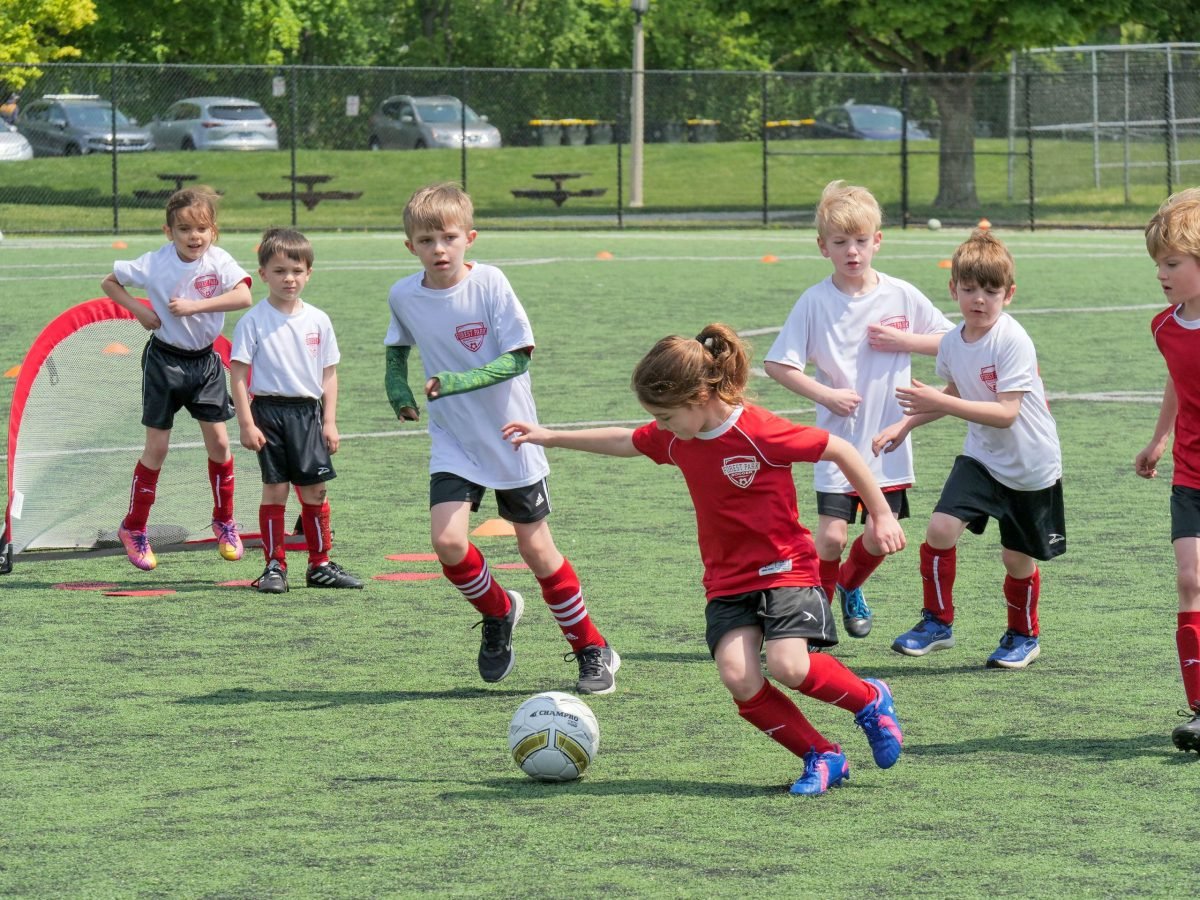
The duration of a youth soccer game varies depending on the age group, typically ranging from 40 to 90 minutes, including halves and any stoppage time.
Ever wondered how much time your young athlete spends on the soccer field? It’s a common question for many parents: how long is a youth soccer game? The answer, surprisingly, isn’t always straightforward, as it changes depending on their age.
Younger children play shorter games to match their attention spans and physical capabilities. As kids grow older, game lengths gradually increase to better prepare them for more competitive levels of play.

How Long Is a Youth Soccer Game?
Okay, soccer fans! Let’s talk about game time. If you’re new to the world of youth soccer, or even if you’ve been around the field a few times, you might be wondering, “Just how long is a youth soccer game, anyway?” It’s a great question because the answer isn’t always the same. The length of a game can change based on a few key things, like how old the players are and what league they’re in. Let’s break it down and get all the facts so you know exactly what to expect.
Understanding the Factors That Affect Game Length
The most important thing to know is that youth soccer games are shorter than professional or even high school matches. Think about it – little legs need more rest! The governing bodies for youth soccer, like US Youth Soccer and other similar groups around the globe, set the rules for how long games should last. They do this to make sure that young players stay safe, have fun, and get the right amount of playing time. Here are the main things that affect how long a game will be:
Age of the Players
This is the biggest factor. The younger the players, the shorter the game. This is because younger kids tire out quicker. They are still developing their stamina, so shorter games help them stay engaged and keep the game fun for them without overdoing it. It also allows them to really focus on the skills they are developing. We see quite a big difference in game times as the kids progress in ages, which is a great thing, as it grows together with the growth of their physical fitness.
Here’s a general idea of typical game lengths by age group:
- Under 6 (U6): These games are usually the shortest, often around 40 minutes total with short breaks in between. It’s all about fun and basic movement at this age!
- Under 8 (U8): Games are a little longer, often around 50 minutes with breaks in between, giving the kids more time to practice moving with the ball and understand the game better.
- Under 10 (U10): Here the games last around 60 minutes. This is a great point when the kids are really starting to get the understanding of more team play and strategies.
- Under 12 (U12): Game times extend to about 70 minutes, as the focus shifts to more tactical play, with more stamina and maturity of the players.
- Under 14 (U14): Games now are typically 80 minutes and usually have a referee and assistant referee to further enhance the structure of the games, as they are now approaching the high school levels.
- High School (U15/U16 and above): High school games are typically 80 minutes, and they are often the most standard length at this point.
Please Note: These are average lengths and can differ depending on the league and association your child is playing in.
League and Association Rules
Different leagues and soccer organizations have their own specific rules regarding game length. For example, a recreational league might have slightly shorter games than a competitive travel league. It’s always best to check with your specific league or club to know their exact rules. They often have handbooks or websites where you can find this information. You can also ask your coach.
Halftime Breaks
Just like in professional soccer, youth soccer games also have a halftime break. This break allows the players to catch their breath, get a drink of water, and hear some tips from their coach. Halftime breaks are not long – usually around 5 to 10 minutes. This gives them a chance to recharge and get ready for the second half. These breaks can sometimes have an impact on the overall game time if they are stretched out, but it is not too often.
Additional Time
Sometimes, games can go a bit longer than planned. Here’s what can cause that:
- Injuries: If a player gets hurt, the game might be stopped to make sure they are okay. This extra time might be added at the end of each half of the game to make up for the lost play time. The referee usually keeps track of this.
- Referee’s Discretion: In rare cases, the referee can add extra time at the end of the game if they feel it’s needed for any specific reason.
Detailed Breakdown of Game Lengths By Age Group
Let’s dive deeper into how game lengths are broken down by age group. It’s useful to have a good handle on this to make sure that your young player is getting the appropriate amount of activity without feeling overly exhausted.
Under 6 (U6) Soccer Games
At this stage, the emphasis is on fun, developing basic motor skills, and having a positive experience with the game. Games for this age group are very short, usually between 40-45 minutes total. This time is almost always broken into four quarters or short halves with a couple of breaks in between. The breaks are necessary because the children’s attention spans are still quite short, and they may get tired quickly.
Key features of U6 games:
- Duration: About 40-45 minutes total.
- Breaks: Short breaks to keep players fresh, usually 5-10 minutes between periods.
- Focus: Fun, basic skill development, and participation.
Under 8 (U8) Soccer Games
U8 players are starting to understand the game a bit better and can handle a slightly longer playing time. The games for this age group typically run for about 50-55 minutes. It’s still common to have these games broken down into two or four periods of play to help the kids from overexerting themselves. The focus is still on skill development, but there is starting to be a bit more strategy involved in the play.
Key features of U8 games:
- Duration: Around 50-55 minutes total.
- Breaks: A 5-10 minute halftime is common.
- Focus: Basic skills, beginning strategy, and team involvement.
Under 10 (U10) Soccer Games
In this age group, the players are really beginning to understand the strategy and technical elements of the game. The games are longer, usually running for 60 minutes. This is generally broken down into two halves of 30 minutes with a halftime break in between. The game starts to look more like a traditional soccer match at this stage, with a referee keeping the flow of the game smooth. The players begin to think strategically and in terms of a team.
Key features of U10 games:
- Duration: About 60 minutes total.
- Breaks: A halftime of about 5 to 10 minutes is customary.
- Focus: Skill development, strategy, team building, and the flow of the game.
Under 12 (U12) Soccer Games
At the U12 level, the game length typically increases to 70 minutes. These games are often played in two halves of 35 minutes each, with a halftime break. Players are now significantly more adept with the ball and with strategic play, and these longer games give them time to really focus on tactical approaches. The game begins to develop quite a bit more, and with a better grasp of the basics, the games look more and more sophisticated.
Key features of U12 games:
- Duration: Around 70 minutes total.
- Breaks: Halftime break of about 5 to 10 minutes.
- Focus: Advanced skills, tactical strategy, teamwork, and stamina.
Under 14 (U14) and High School Soccer Games
At this level, the game lengths are 80 minutes. This is similar to what you would see in high school games and often even matches in minor leagues or adult recreational leagues. The games are typically divided into two 40-minute halves with a short break in between. Players at this stage are expected to have a good understanding of the game and have the stamina to play the full 80 minutes. At this stage, the games are generally the most standard across different leagues and organizations.
Key features of U14 and High School games:
- Duration: 80 minutes total.
- Breaks: Halftime break of about 10 minutes.
- Focus: Tactical play, high-level skills, team strategy, and stamina.
Game Day Logistics: Arriving on Time and Being Prepared
Understanding the game length is just one part of the game-day experience. It’s also helpful to know some additional game day considerations. These will make sure your player is ready to go when the whistle blows, and avoid any unnecessary stress or panic.
Pre-Game Warm-ups
Most teams have a specific warm-up routine before the game. Warm-ups help prevent injuries and get players’ muscles ready for the game. Typically, a warm up is around 15 to 30 minutes long. Coaches often run the warm-up, and it can include drills like short sprints, passing exercises, or stretches to get the body ready for the game. If you are running late for the game, be sure to get there a little bit earlier to complete the warm up with your team.
Arriving Early
It’s always a good idea to arrive at the field a little early. This gives the players enough time to get prepared, use the restroom, and get into the team’s mindset before the warm-ups begin. It also allows the coach time to talk about any last-minute game strategy. For young players this allows time for a break before starting a warm-up and will make the game a more positive experience overall. Generally, it is a good idea to arrive 30 to 45 minutes early for any game, which will allow you plenty of time to prep and avoid any stress of running late for a match.
Post-Game Routine
After the game ends, it is important to spend some time for the players to cool down. Often times coaches and teams take a moment to talk about the game, while some of the players are starting their cool-down exercises. It also gives time for the coaches to talk about the game with the team in terms of strategies, or areas where the players can improve upon, or to congratulate them on a win. The players also have a great time interacting with each other and making memories on the field as teammates.
Why Understanding Game Length is Important
Knowing how long a soccer game is helps everyone involved. Parents and family members can plan their schedules around it. Players know how much energy they will need to play. Coaches can build their practice plans and strategies around it. A good understanding of the game length allows for a smoother, better overall experience for everyone involved.
So, the next time you head out to watch a youth soccer game, you’ll be in the know! Remember that the game length varies by age, but now you have a good understanding of all the game time factors. Knowing what to expect helps create a more positive experience for everyone involved – players, coaches, and fans alike. It’s all about enjoying the beautiful game and watching these young athletes grow and progress!
Wasatch JS vs L30 Barca – U12 D1 Soccer
Final Thoughts
Youth soccer game lengths vary by age group. Younger players typically play shorter games, often split into quarters. As players grow older, game durations increase, sometimes including halves. The exact answer to ‘how long is a youth soccer game’ depends on the specific league rules and age divisions.
Typically, a game for younger children might last 40-60 minutes. Games for older youths can extend to 90 minutes, with short breaks. Always check the local youth league guidelines to determine the precise game duration for their age.

