
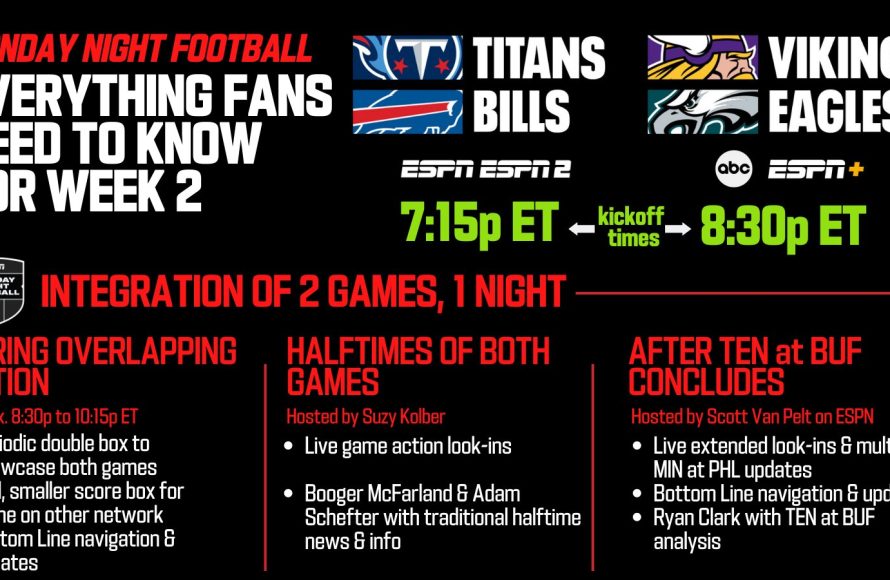
The NFL schedules two Monday Night Football games to maximize viewership and provide a broader platform for showcasing different teams, often on different networks.
Ever wondered why, on some Mondays, you get a double dose of football? The question of why are there twomonday night football games often pops up among fans. It’s not just a random scheduling quirk; there’s a strategic reason behind it.
The NFL arranges these doubleheaders for several reasons. Primarily, it allows them to feature more teams in primetime slots. This attracts a greater audience across the nation.

Why Are There Two Monday Night Football Games?
Okay, let’s dive into the exciting world of Monday Night Football (MNF)! For many years, football fans knew that Monday night was reserved for one big game. But recently, you might have noticed something different – sometimes there are two games on Monday night! It’s a bit like getting two scoops of ice cream instead of one. So, what changed? Why the double dose of football? It’s not just a random decision; there are some pretty good reasons behind it. We are going to explore these reasons, looking at how scheduling works and what it means for the players and you, the fans.
The History of Monday Night Football
To understand why we have two games, we need to look at where it all started. Monday Night Football has been a television staple since 1970. Back then, it was a revolutionary idea! A single prime-time football game on a Monday night? It drew huge crowds and became a tradition. Imagine families gathered around their TVs, cheering for their favorite teams. It was a big event, and for a long time, it was just one game.
The Rise of Television and Revenue
The original single game format was a hit, and as years passed, television became even more important to the NFL. TV networks pay big money for the rights to show NFL games. This revenue is a huge part of the NFL’s financial success. Because of its popularity, Monday Night Football was a very lucrative product for these networks. They saw a lot of potential for more viewership and, of course, more money. This eventually led to the conversations about expanding the MNF schedule.
The Introduction of ESPN and the Expansion
A major turning point was when ESPN, a cable network dedicated to sports, entered the picture. ESPN wanted to get in on the Monday Night Football action. They had a huge audience and were willing to pay a lot to have these games on their network. In the early days, ESPN had a single game on cable, with ABC (a free-to-air network) also airing a separate Monday Night game, resulting in two games on Monday. Later, ABC gave up the Monday Night Football rights. Then ESPN got the full package, with a new setup which led to another shift in how things were done.
ESPN’s Dual Broadcast Approach
ESPN, now holding the full rights, decided to experiment with having multiple Monday night games. To be clear, ESPN decided to have two games on some Mondays, not every Monday. Typically, they will have two different start times, with one game kicking off in the early evening and the second kicking off later, at a more traditional Monday night timeslot. This approach allowed ESPN to showcase more football, generating more advertising revenue, and it gave fans even more options to watch the NFL.
Scheduling Conflicts and Flexibility
Another factor driving the need for two games comes down to scheduling complexities. The NFL has 32 teams, and they all need to play a 17 game schedule. Trying to fit all of those games into one season is like solving a giant puzzle!
Balancing Team Schedules and Travel
The NFL tries to balance the schedule so that teams don’t have to travel too much, and have relatively equal number of home and away games. They try to have divisional rivals play each other, and try to make sure teams aren’t playing the same team every year. So, when the NFL tries to balance all of those things, it sometimes makes sense to spread the games out across different days, and this also means having two games on Monday nights occasionally. Sometimes it helps with ensuring that a team has a proper rest schedule, because they do not play every week on a Sunday; some weeks are on a Monday, and others on a Thursday night, or even Saturday.
The Impact on Fans and Viewership
So, how does the change to two Monday night football games affect the fans? Well, it definitely offers more football for viewers to watch, but there can also be some pros and cons for the fans.
Increased Viewing Options and Flexibility for Fans
The biggest advantage is more games! This means that fans get to enjoy more primetime football, and if they miss one game, they have another game to watch later on. It is great for families, friends, or individuals who enjoy a sports night. The staggered start times means that fans can choose to watch one game, or both. For some, it’s like having a mini-football festival every Monday night.
Potential Challenges for Fans
However, having two games also means that sometimes the second game starts pretty late, particularly for the fans living on the East Coast. If you are a young person or someone who has to wake up early for work or school the next morning, it could be a bit of a struggle staying up for both of the games. And if two of your favorite teams are playing on the same Monday night, this could force you to choose which game you would rather focus on.
The Financial Benefits for the NFL and Networks
Let’s talk money! The decision to have two Monday night games isn’t just about giving fans more football. It’s also about revenue, and for both the NFL and the networks that broadcast the games, it’s a win-win situation. Let’s explore this in a bit more detail.
Increased Revenue Streams from Multiple Games
For the networks, two games means two opportunities for advertising revenue. TV advertisements can be extremely lucrative during prime-time football, and if they have two games on the same night, then this is effectively a double amount of revenue. For the NFL itself, this increased revenue means more money to share among the teams, which can help them to build their rosters with better talent and players. The more money the NFL makes, the more the league as a whole prospers.
Advertising Revenue and Sponsorship Opportunities
Having two games on Monday night also opens up more sponsorship opportunities for networks. They can have different sponsors for both games, or even different segments of each game. This increased activity allows the TV networks and NFL to be able to work with more brands. It all goes hand in hand in creating a strong revenue base. The higher the revenue, the better is the product in turn for the football fans.
The Future of Monday Night Football
So, what does the future look like for Monday Night Football? Will we continue to see two games on some Mondays, or will things change again? Let’s take a look at some possible future scenarios.
Potential Further Changes in Scheduling
It’s certainly possible that the NFL and TV networks will make further adjustments to the schedule in the future. They are always looking at ways to improve the viewership experience, and also improve the revenue and profit generation of the league and the games. The NFL may try different scheduling formats, and we might even see other days of the week include two games. The NFL is always thinking of ways to innovate.
Adapting to the Changing Media Landscape
The way we consume sports is changing all the time, with things like streaming services and digital platforms gaining importance. The NFL needs to stay up to date with this changing media landscape. As time goes on, the NFL will need to work hard to figure out how to get fans to watch the games, and make sure the future of the NFL is bright. So, while two Monday night games seems like the current norm, there may be even more changes down the road.
Understanding Flex Scheduling
To make matters more interesting, the NFL also has “flex scheduling.” This means that games can be moved to different time slots or days within a specific timeframe.
How Flex Scheduling Affects Monday Night Football
Flex scheduling is very important for Monday Night Football. If a game on a Sunday is no longer seen as important or has lost viewership, the NFL may move a very big and important game from a Sunday slot to a Monday night slot to ensure maximum viewership. They can also change the time of an existing game. The purpose of flex scheduling is to ensure the highest quality matchups are broadcast during prime-time viewing slots. It gives the NFL the ability to shift around games, and help them make sure that the games with the highest interest are in the most visible time slots.
The Importance of Competitive Matchups
The NFL does everything it can to make sure the games they are showing on Monday nights are the best possible, in terms of competitiveness. If there is a really exciting game on Sunday that has a lot of buzz, then that game has a good chance of getting moved to Monday Night Football, while a less exciting game would be moved to another time slot. Flex scheduling helps make sure that football fans get to watch good football on Monday nights.
Key Takeaways about Monday Night Football
To summarize, the evolution to having two Monday night football games has come about due to a variety of factors. It has been affected by the growing popularity of the NFL, the evolution of TV networks such as ESPN, and the need for scheduling flexibility.
- Increased TV Revenue: The need for increased TV revenue has been a major factor.
- Network Negotiations: ESPN paid a lot for the rights to broadcast Monday Night Football, and this has led to further changes.
- More Games for the Fans: Two games mean that fans have more football to watch!
- Flex Scheduling: The NFL can switch games around to make sure the very best ones are shown on Monday night.
The goal of having two games is to maximize both the revenue for the NFL and TV networks, as well as provide the best viewing experience for the fans. It does come with the possibility of later nights for fans in certain time zones, but for the most part, it means more football for those who enjoy it.
The world of football is always changing, and the way we watch games is always changing too. Whether we will see more changes is something we will have to wait and see. For now, though, we get to enjoy having the chance to watch two games on certain Monday nights!
Why Are There Two Monday Night Games? 🏈🤔
Final Thoughts
Two Monday Night Football games occur because of scheduling flexibility and broadcast deals. The NFL strategically aims for maximum viewership and revenue. This strategy allows them to showcase more teams weekly, often featuring rivalries or highly anticipated matchups.
Ultimately, why are there two monday night football games comes down to maximizing the league’s presence. These doubleheaders provide more content for fans and networks. This approach boosts engagement and creates a must-watch primetime experience, benefiting everyone involved.

