
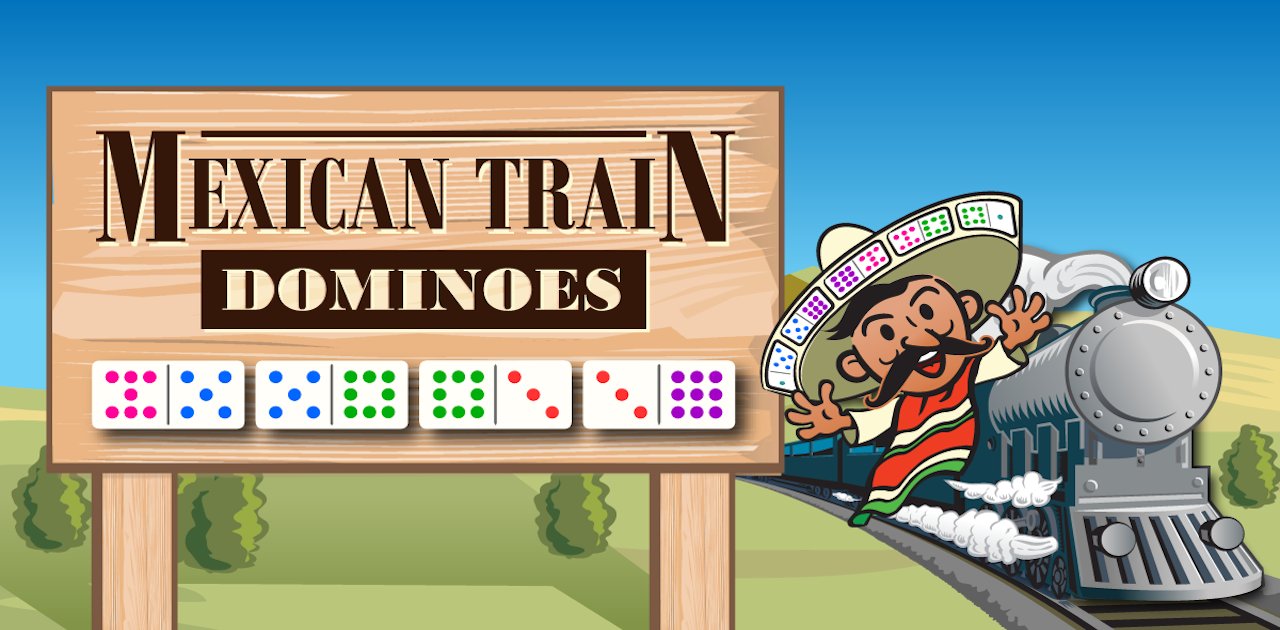
The game is called Mexican Train because players build domino trains emanating from a central “station” or the “Mexican Train” itself, often represented by a double-12 domino.
Ever wondered about the origins of your favorite domino game? The clattering of tiles and the race to finish your train always lead to this question: why is the game called Mexican Train? It’s a name that sparks curiosity and begs an explanation.
It turns out, the name has less to do with Mexico itself, and more to do with the visual layout of the game. The central starting point and the branching player trains give an image of a train departing, so the term mexican train came to use in popular gaming.

Why is the Game Called Mexican Train?
That’s a great question! The name “Mexican Train” certainly makes you wonder, doesn’t it? It’s a popular dominoes game enjoyed by families and friends all over, but its name doesn’t really tell you much about how the game is played. Unlike some games with names that clearly describe their actions or origins, “Mexican Train” keeps its secrets hidden in its title. So, let’s jump in and explore the different theories and possible explanations behind this intriguing name.
The Mystery of the Name’s Origin
Figuring out where the name “Mexican Train” comes from is a bit like solving a puzzle. There’s no single, clear-cut answer, which is part of what makes it so interesting. Over time, several theories have popped up, and some are more convincing than others. It’s important to understand that often, these kinds of games evolve from earlier ones, and the names can change a little along the way, sometimes for reasons that are now lost to history. This means that we have to rely on the history of games, the way that names spread over time, and what people have told us about the name over the years. The key thing to remember is that there is no single, universally agreed-upon answer, and we are going to explore the leading ones.
The Railroad Connection
One of the most commonly accepted explanations connects the game to trains, even though there are no toy trains involved! The “train” in Mexican Train comes from the way the dominoes are laid out. Each player has their own line, or “train,” of dominoes that stretches out from the center. The main goal is to be the first to complete your train using all your dominoes.
The center of the game board (or table) often has a starting domino in the center, and this can be thought of as a central station where all the trains start. Each player’s train extends outward like tracks running away from the station. The idea of these domino lines stretching out resembling trains on tracks is likely where the “train” part of the name came from.
The Visual Representation of a Train
To understand this better, imagine the game setup. You’ll have a main domino at the start and then, dominoes are attached to that to make an ever-longer line. Just like how railroad cars connect to a train, the dominoes connect in a chain, one after the other. This visual similarity is a big part of why the “train” part of the name fits so well. People could easily see the visual connection between the train of dominoes and a real train made up of cars.
The Public Train
In addition to each player having their own private train, another “train” is always available for anyone to play on and this is sometimes known as a “public train” or “Mexican train”. The public train is always available to play on, but players can only play on their own trains unless it is marked with a marker. This public train adds a strategic element, as players must decide whether to help themselves on their own train or play on the public train.
Why “Mexican”? The Geographic Angle
Now that we’ve explored the train part of the name, let’s move on to the “Mexican” part. This is where things get a little more speculative. Unlike the “train” connection, the reasons behind the “Mexican” part are less clear. There are some theories out there, but none of them can be stated as a definitive answer. Here are a few of the most commonly proposed ideas:
A Connection to the Mexican Domino Train Game
One of the most likely reasons is the association with a previous domino game called Mexican Domino Train or the more traditional domino game known as chicken foot. These games may be a predecessor to the current game and have evolved over time into the Mexican Train that we play today. It’s common for games to evolve, names sometimes morph as they travel to different areas. This name might have stuck because it was already familiar or because someone liked it better.
The Game’s Geographic Origins (Unproven)
Another idea is that the game originated in Mexico or had its early popularity there, but there is no clear evidence of this and it’s not well-supported by historical evidence. Games often travel across borders, and sometimes their names hint at their origins, but in this case, the evidence is slim to support the geographic origin theory.
The “Exotic” Name Theory
Another theory is that the name “Mexican” was chosen simply to make the game sound more interesting or exotic, without any real connection to Mexico. This is something that has happened to many products and games over the years. The word ‘Mexican’ might have seemed intriguing and different, helping the game to stand out. This idea suggests that “Mexican” was just a catchy label, rather than a true reflection of where the game came from. Without any other proof, we can’t really say that this is the real reason, though.
The “Misunderstood Origins” Theory
It is also possible that the name arose from a misunderstanding or misinterpretation. In early versions of the game, some people may have incorrectly called it by that name, which then stuck with the game through the years. Over time this incorrect name may have become more popular and this is how we have come to know the game today. It’s not uncommon for games, especially ones that have evolved through generations, to have confusing or inaccurate names as a result of people misinterpreting information.
The Evolution of Domino Games
To get a better grasp on the name’s possible origins, let’s take a look at the general history of domino games. Domino games have been around for a long time and have evolved into various forms. It is important to note that many different domino games involve creating lines of connected dominoes, so it’s easy to understand how the “train” terminology may have become common. The addition of “Mexican” to the name, however, is what makes the specific game of Mexican Train unique.
Domino Games Around the World
Dominoes are played in many countries around the world, with each country having its own regional variation. The games involve strategies that are often different to other countries. These games often have different names in each country, with different names and rules that vary greatly. This diversity reminds us that games are not static things; they evolve through time and space.
Domino Games and their Connection to Mexican Train
While Mexican Train is a modern version of dominoes, it may have been influenced by other older games. Some of these older games may have included some similar rules that are used in the current game, but with different names. We can’t be sure, but it’s entirely plausible that different games with similar rules contributed to the evolution of the Mexican Train as we know it today. In short, these older games may have been like a template, upon which Mexican Train was created.
How to Play Mexican Train (A Brief Overview)
To fully understand the name “Mexican Train,” it’s helpful to know how the game is actually played. Here is a brief overview of the game’s rules:
- Setup: The game begins with each player getting a set of dominoes. The double domino, such as the double-twelve, is set as the starting domino.
- Making Trains: Players lay dominoes from this starting double, creating their own “train” that must follow the rules of the game.
- The Mexican Train: In addition to the player’s own train, a public “Mexican train” is available and anyone can play on it if they have the correct dominoes.
- The Public Train: This public train extends from the starter domino just like everyone else’s trains.
- Markers: Markers or tokens may be used to signify who is eligible to play on whose train, according to the current rules.
- Winning: The first player to play all of their dominoes wins the round.
The way players build their trains and decide whether to play on their own line, or the public “Mexican train,” is key to the game. It’s what makes the game fun and strategic. If you are interested, you can find the full rules online or in the rulebook that comes with most Mexican Train domino sets. It’s a game that is relatively easy to pick up and play but can take time to learn the strategy.
Why the Name Matters
Even if the real story behind “Mexican Train” is a little fuzzy, its name is still important for a couple of reasons:
The Appeal of a Unique Name
A unique and slightly mysterious name like “Mexican Train” makes the game more interesting and memorable. It sparks curiosity and may encourage people to try out the game. In this sense, the name adds to the charm of the game.
A Recognizable Brand
The name “Mexican Train” is well-known in the domino game world. It has become a brand that is easily recognized. The game with this name is now well known and its name immediately makes it understandable. As a brand it has established itself and can be found in stores and online easily.
A Conversation Starter
As we are discussing now, the unusual name often leads to questions and discussions. This can help to bring people together and creates interest in the game and why it’s named that way. Talking about the name’s origin can be a fun part of playing the game itself. It provides a lighthearted bit of a mystery to explore as you play, adding another layer to the fun.
In Summary: The Mystery Remains
While we have explored the many possibilities, we still can’t say with absolute certainty exactly why the game is called “Mexican Train”. The most likely explanation is that the “train” part of the name came from the visual appearance of each player’s line of dominoes, and the “Mexican” part is thought to either be a link to previous similar domino games, a name that sounded exotic at the time, or an old misnomer that has stuck with the game. The truth may be a combination of these ideas or something else entirely. Ultimately, the mystery of the name makes the game even more interesting.
What is clear, is that Mexican Train is a great family game and loved by people of all ages. This is probably the main reason it has remained popular for so long, and the mystery of the name just adds to the game’s charm!
How to Play Mexican Train (Domino Game)
Final Thoughts
The game’s name is a mystery, and the origins are not completely clear. Some suggest the train line imagery, with its branching paths, prompted the “Mexican” part. Others believe it’s simply a catchy name.
The exact reason why is the game called mexican train remains somewhat elusive. This means, we may never know the definitive truth behind the game’s title. It is a fun game, and that is the most important thing.

