
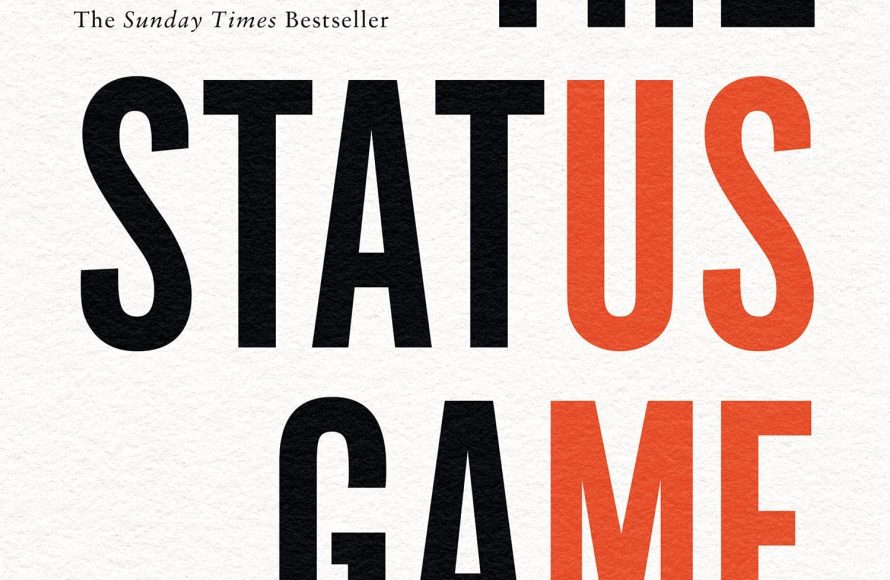
Will Storr’s The Status Game argues that the pursuit of status is a fundamental human drive shaping our behaviors and societies.
Have you ever wondered why we’re so driven to compare ourselves to others? Why we constantly seek validation and recognition? Will Storr’s The Status Game dives deep into these questions, exploring the powerful influence of status on our lives.
It proposes that this desire for status isn’t superficial but a core part of our being. This book examines how this ingrained need affects everything from our personal relationships to large-scale social structures. The book compellingly presents the ideas and offers new perspective on human behavior.

Will Storr’s The Status Game: Why We Play and How to Stop
Have you ever wondered why people do the things they do? Why some folks seem to always need the fanciest car or the most prestigious job? A lot of it comes down to something called “the status game.” Will Storr, in his book “The Status Game,” dives deep into this concept, exploring how our desire for status shapes almost everything we do. It’s not just about having more stuff than others; it’s about where we fit in the social pecking order and how that makes us feel. Let’s break down what this means and how understanding it can help us lead more fulfilling lives.
The Core Idea: What is the Status Game?
Imagine a playground. Some kids are the leaders, some are followers, and everyone is trying to figure out their place. That’s kind of how the status game works in grown-up life, too. But instead of monkey bars and tag, we have careers, homes, clothes, and even social media likes. The status game, according to Storr, is a fundamental drive in humans. It’s our desire to gain acceptance, respect, and a feeling of worth within our social groups. It’s not some new fad, it’s an ancient system woven into our psychology.
We all play the status game, whether we realize it or not. Think about it: why do we choose certain brands? Why do we try to impress others with our accomplishments? These actions often boil down to our need to be seen as valuable and respected by our peers. Storr argues that this drive isn’t inherently bad; it’s deeply ingrained in our evolutionary history. However, when it becomes our primary focus, it can lead to a lot of unhappiness and unhealthy competition.
Different Flavors of Status: Dominance vs. Prestige
Storr explains that there are two main ways we try to gain status:
- Dominance: This is about power and control. Think of a bully who gets status by pushing others around. It’s often based on fear and intimidation. Dominance status is fleeting because it requires constant reinforcement.
- Prestige: This is about earning respect and admiration for skills, knowledge, or positive contributions. Think of a respected teacher or a talented artist. Prestige status is more stable and often brings genuine satisfaction.
While dominance might seem like an easier route, Storr shows that it’s rarely fulfilling. Prestige, on the other hand, is about creating real value and earning genuine admiration. It’s like the difference between forcing someone to like you and someone actually liking you because of who you are and what you do.
How the Status Game Affects Us
The status game affects almost every area of our lives, from our careers to our relationships and our mental health. Let’s explore a few of these impacts:
The Impact on Careers and Work
Many people choose jobs or career paths based on the status they think it will give them, rather than on what they actually enjoy or are good at. We often strive for promotions and titles because they represent a higher position in the status hierarchy. This can lead to stress, burnout, and a feeling of emptiness when we reach the top rung of the ladder but still aren’t satisfied. The problem? We’re chasing the status rather than the passion.
The desire for status can also create unhealthy competition in the workplace. People might undermine colleagues to appear better, which breeds a toxic environment. When we base our worth on job titles and salaries, it’s easy to forget what really matters—doing meaningful work and making positive connections.
The Impact on Relationships
Our need for status also seeps into our relationships. We might choose friends or partners based on their perceived status, rather than on genuine connection. We may also try to impress our loved ones with our accomplishments or possessions, which can put a strain on our relationships. Think of the person who constantly name-drops or brags about their successes – they’re playing the status game in their relationships, often to the detriment of genuine intimacy.
Social media makes it even easier to play the status game in relationships. We might curate perfect online profiles to portray an image of success and happiness, which can lead to feelings of insecurity and comparison. We see other people’s highlight reels, and we start to question our own lives. Instead of connecting authentically, we’re often just trying to win at the status game.
The Impact on Mental Health
The pursuit of status, especially dominance-based status, can significantly impact our mental health. The constant need to prove our worth and stay on top can lead to anxiety, depression, and feelings of inadequacy. When we base our happiness on external validation, we’re always going to be chasing something we might never catch.
Storr argues that the status game can create a self-perpetuating cycle of unhappiness. We chase status, we might get a temporary boost, but the feelings fade, and the cycle begins again. It’s like trying to fill a bucket with a hole in the bottom – it’s always an exhausting and unsatisfying pursuit. This is why the pursuit of prestige and genuine growth is so much more beneficial to our mental wellbeing.
Understanding the Evolutionary Roots of Status
Will Storr’s book doesn’t just tell us that the status game exists; it explains why. He delves into the evolutionary reasons behind our status-seeking behaviors. Understanding these roots can help us see the game not as some arbitrary set of rules but as a deeply embedded part of our nature.
The Survival Advantage
In our ancient past, status was closely linked to survival. Those with higher status had better access to resources, mates, and protection. So, the drive to climb the social hierarchy became hardwired into our brains. This isn’t just something humans do; it’s also observable in many animal species. From wolf packs to bird flocks, animals constantly negotiate their status within their groups, and for good reason.
Think about it: in a small tribe, a person who was seen as strong, intelligent, or skilled would have been more likely to survive and pass on their genes. This means that the drive to achieve status, even in our modern world, is deeply connected to our biology. It’s not a personal failing; it’s an ancient mechanism.
The Fear of Low Status
Just as there’s a strong drive to seek high status, there’s also an equally powerful fear of low status. Being at the bottom of the social hierarchy can feel like a threat to our well-being. This fear drives us to compare ourselves to others and to strive to not be seen as “less than.” This fear can lead to many negative feelings and behaviors, such as envy, resentment, and aggression.
Storr explains that this fear isn’t irrational; throughout history, lower status often meant limited access to resources and a reduced chance of survival. While these threats are far less common today, our brains are still wired to react as if low status is a serious danger. Understanding this can help us become less reactive and make more mindful choices about our need for status.
Moving Beyond the Status Game: Finding True Value
So, if the status game is so deeply ingrained in our nature, is it possible to escape it? Will Storr argues that while we can’t completely eliminate our desire for status, we can become more aware of its influence and choose to pursue more meaningful goals. Here are some strategies to help you reduce the impact of the status game in your life:
Cultivate Intrinsic Motivation
Intrinsic motivation is about doing things for the pure joy of it, not for the external rewards or recognition. When we focus on our intrinsic motivations, we are less likely to get caught up in the status game. What are you truly passionate about? What activities bring you a sense of satisfaction and fulfillment? Pursuing these activities, regardless of the status they provide, is key to breaking free from the cycle of the status game.
For example, instead of focusing on becoming the “top” in your field, think about what you find enjoyable and rewarding in your work. This might mean focusing on helping others, being creative, or solving problems. Finding your “flow” and doing things for the sake of doing them, rather than for any external reward is a powerful way to shift your focus and escape the clutches of status.
Focus on Personal Growth and Learning
Instead of measuring ourselves against others, we can focus on our personal growth and learning. What are our goals for ourselves? Are we becoming better people, learning new things, and growing in positive ways? This inner focus shifts our attention away from external validation. When we define success by our own development, not by comparison to others, we start to move away from the harmful status game.
It’s not about being “better” than someone else. It’s about constantly improving ourselves in ways that matter to us. Learning a new skill, mastering a new craft, or simply growing emotionally can bring us a deeper sense of purpose and satisfaction than any status symbol ever could.
Prioritize Genuine Connections
Authentic and supportive relationships are vital for our well-being. Rather than focusing on the status of our friends and partners, we should prioritize those who support us, care about us, and make us feel loved for who we are. True connection is all about empathy, understanding, and acceptance; not the superficial metrics of social status. The people who truly care about us want us to be happy, not to win a social race. These connections give us a sense of belonging and worth that transcends the status game.
Think about the people who make you feel good about yourself. These are the people worth investing in, the people who can be your anchors during moments of hardship. These are the people who see your worth regardless of your external achievements. These types of connections are far more valuable than any social status you could ever hope to achieve.
Practice Gratitude and Contentment
A powerful way to escape the status game is to focus on what we already have. Practicing gratitude can help us appreciate the good things in our lives and reduce our desire for more. When we learn to be content with what we have, we’re less likely to get caught up in the endless pursuit of status. Keeping a gratitude journal, taking time to appreciate small moments, or simply expressing gratitude towards others is a wonderful starting point.
It’s easy to get caught up in wanting more, but it’s essential to pause and appreciate the present moment. We have roofs over our heads, food on our tables, and people who care about us. Recognizing and appreciating these blessings will make us less susceptible to the constant lure of the status game.
Reflect on Your Values
Take the time to really consider what’s important to you. Is it money, fame, and power, or is it something else entirely? What do you stand for? What do you want to be remembered for? When we live by our values, we are less likely to get caught up in external metrics of status. Clarifying our values will help guide our decisions and give us a sense of direction beyond the status game.
Our values are our inner compass, the things that we care about the most. By reflecting on them, we can make decisions that are more in line with our true selves. This brings a sense of integrity and purpose, regardless of external status.
The Status Game in the Digital Age
The internet and social media have amplified the status game in many ways. Social media platforms are designed to create a competition of likes, followers, and impressions, which can be highly addictive. We see a carefully curated version of other people’s lives, leading to constant comparison. Storr emphasizes that it’s easy to become trapped by this illusion and lose sight of what matters most.
We are often drawn to the perceived “glamour” of social media, yet, it is not a reflection of reality. It’s often an illusion meant to capture a highlight reel and not the full picture of a person’s life. It’s important to develop a critical understanding of these platforms and to use them in a mindful way. We can choose to participate with intention, focusing on authentic connection rather than status seeking.
Putting It All Together
Will Storr’s “The Status Game” is more than just a book – it’s a deep dive into what drives us as humans and how to live more meaningful lives. It makes us look at ourselves, our society, and our motivations in a new way. Understanding the status game, acknowledging its existence, and then consciously choosing to play it differently can lead us down a path of deeper fulfillment. We might not be able to escape the game entirely, but we can certainly change how we play it. By focusing on intrinsic motivation, personal growth, genuine connections, gratitude, and our core values, we can break free from the constant craving for external validation. We can build a world where success is defined by genuine impact, authentic connection, and intrinsic satisfaction, rather than by the meaningless pursuit of status.
How To Play The Status Game – Will Storr | Modern Wisdom Podcast 374
Final Thoughts
Understanding the nuances of social dynamics allows one to better navigate complex situations. It helps decode interactions and their underlying motives. People constantly assess status, often unconsciously.
This constant evaluation shapes how we behave and interact with one another. It’s a fundamental aspect of social hierarchies. Therefore, learning these dynamics is must for success.
Ultimately, recognizing the subtle cues in social interactions and how they contribute to status seeking, will storr the status game. Applying this knowledge provides a greater understanding of human behavior and will definitely guide one.

