
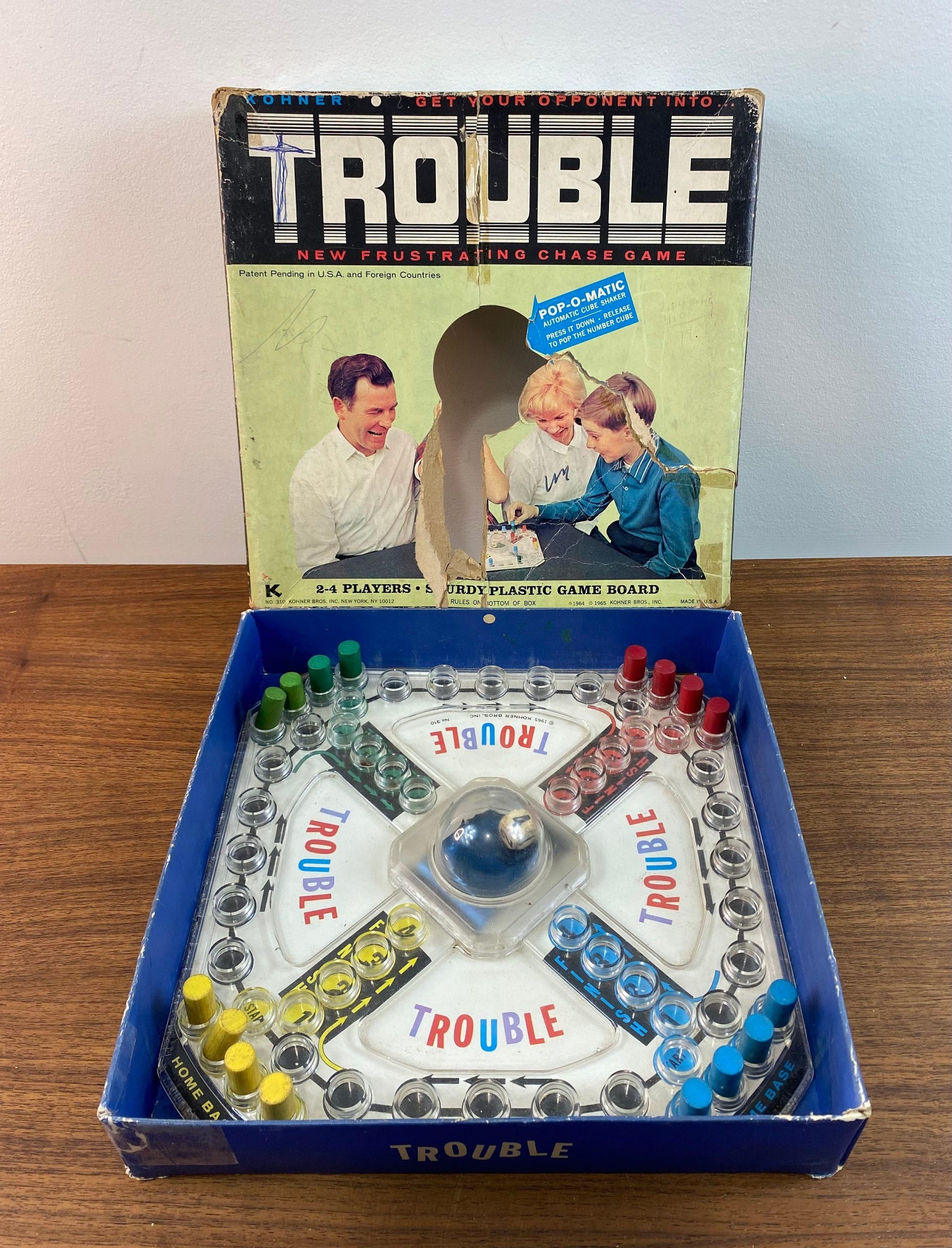
The 1965 Trouble game refers to the popular board game “Trouble” released in that specific year, featuring its iconic Pop-O-Matic dice bubble.
Remember evenings spent gathered around a board, the satisfying thud of dice, and strategic moves sending opponents back to start? The 1965 Trouble game holds a special place in many hearts for just these reasons. It offered simple yet engaging fun for families and friends.
That classic Pop-O-Matic bubble became a symbol of childhood excitement. This particular edition evokes strong feelings of nostalgia for many players.

1965 Trouble Game: Unpacking a Classic Conflict
The year 1965 marked a significant moment in the history of family board games. This was when the iconic game of Trouble, known for its distinctive Pop-O-Matic dice roller, first made its appearance. Parker Brothers initially launched this innovative game, quickly establishing it as a household staple. Its simple yet engaging mechanics captured the hearts of many players, from children to adults.
The board game landscape in the mid-1960s was ripe for new ideas. Traditional board games held sway, but there was a growing desire for fresh, interactive experiences. Trouble arrived on the scene with a novel approach to dice rolling. This unique feature became its most memorable characteristic.
The Genesis of Trouble: A 1965 Debut
The conception of the 1965 Trouble game stemmed from a desire for a straightforward, engaging racing game. Its design aimed for universal appeal across different age groups. Parker Brothers, a well-established name in the game industry, took on its initial release. This strategic move ensured wide distribution and immediate recognition for the new product.
The core concept revolved around a classic race-to-the-finish objective. Players moved their pegs around a track, attempting to be the first to get all their pieces safely home. This familiar goal made the game immediately accessible to new players. However, Trouble introduced a playful twist that set it apart.
Gameplay Mechanics of the Original 1965 Trouble
The fundamental gameplay of the 1965 Trouble game involved four players, each controlling four colored pegs. The game board featured a circular track with a dedicated “start” area and a “home” path for each color. Players took turns rolling the dice, which determined their movement around the board.
Movement rules were simple and intuitive. Players advanced their pegs clockwise around the track based on the number rolled. Landing on an opponent’s space allowed a player to send that opponent’s peg back to their starting area. This “trouble” element provided much of the game’s strategic depth and excitement.
To begin moving a peg from the start area, a player needed to roll a specific number, typically a six. This added an initial layer of anticipation and luck to the game. Once a peg was on the main track, it could move freely according to the dice roll. The goal remained constant: move all four pegs around the board and into their respective “home” areas.
The game’s simplicity contributed significantly to its rapid adoption. Families sought games that did not require extensive rule memorization. Trouble perfectly fit this niche, offering immediate fun without a steep learning curve. Its clear objective and straightforward actions made it ideal for mixed-age play sessions.
The Pop-O-Matic: A Design Marvel
Without a doubt, the most distinctive and revolutionary feature of the 1965 Trouble game was its integrated Pop-O-Matic dice roller. This clear plastic dome housed a single die, eliminating the need for loose dice. Players simply pressed down on the dome, causing the die inside to tumble and land on a new face. This ingenious mechanism solved several common board game frustrations.
The Pop-O-Matic offered multiple benefits that resonated with players and parents alike.
- No Lost Dice: The primary advantage was preventing the loss of dice, a frequent occurrence with traditional board games. Children especially benefited from this enclosed design.
- Fair Rolls: The mechanism ensured truly random and fair dice rolls. It prevented players from inadvertently or intentionally manipulating the dice.
- Tactile Satisfaction: The popping action of the dome provided a satisfying sensory experience. This unique tactile feedback added to the game’s overall appeal.
- Reduced Clutter: With the die integrated into the board, setup and cleanup became simpler. Players only needed to worry about their pegs and the board itself.
The Pop-O-Matic became synonymous with the Trouble game. Its distinctive sound and action were instantly recognizable. This innovative feature was so successful that it became a template for other board game designs. Some later games incorporated similar enclosed dice mechanisms, inspired by Trouble’s groundbreaking approach. The Pop-O-Matic was not just a gimmick; it was a fundamental improvement to the board game experience.
Innovations and Enduring Appeal
The 1965 Trouble game introduced several subtle innovations beyond the Pop-O-Matic. Its vibrant plastic components were durable and appealing to children. The pegs were sturdy and easily distinguishable by color. The board itself was robust, designed to withstand countless game sessions. This focus on quality materials ensured the game’s longevity in family households.
Trouble’s enduring appeal also stemmed from its perfect balance of luck and strategy. While dice rolls determined movement, players had to make strategic decisions. They chose which peg to move, when to send an opponent back, and how to position their pieces. This blend kept the game exciting and offered opportunities for thoughtful play.
The social aspect of the game was another key factor. Trouble fostered friendly competition and interaction among players. The thrill of sending an opponent back to start often elicited cheers or groans, adding to the game’s lively atmosphere. It became a catalyst for shared laughter and memorable family moments. This interactive dynamic solidified its place as a go-to game for gatherings.
Cultural Footprint and Legacy
The 1965 Trouble game quickly cemented its status as a board game classic. It became a staple in toy stores across the nation, appealing to a broad demographic. Its simple rules and engaging mechanics ensured it remained a popular choice for gift-giving occasions. Many adults today recall playing the original 1965 version during their childhoods.
The game’s distinctive design and sound became ingrained in popular culture. The Pop-O-Matic sound, in particular, evokes a strong sense of nostalgia for generations of players. This auditory memory often brings back fond recollections of family game nights and childhood fun. Trouble’s presence extended beyond the playroom.
Its success led to numerous variations and themed editions over the decades. While these later versions featured different artwork or licensed characters, the core gameplay remained unchanged. This consistent foundation speaks to the timeless nature of the original 1965 design. The game’s adaptable format allowed it to stay relevant across changing entertainment trends.
The impact of the 1965 Trouble game is evident in its continued production. Decades after its debut, new versions are still being released and enjoyed by new generations. This sustained popularity underscores its status as an iconic piece of board game history. It represents a golden age of family entertainment and simple, unadulterated fun.
Collecting 1965 Trouble Editions
For board game enthusiasts and collectors, a 1965 Trouble game holds significant historical value. Original editions are distinguishable by specific design elements and manufacturing details. These early versions represent the purity of the game’s initial concept. Collectors often seek out complete sets in good condition.
Key features to identify an authentic 1965 edition include:
- Parker Brothers Branding: The box and board will typically feature Parker Brothers branding prominently. Later versions often transitioned to Milton Bradley after their merger with Hasbro.
- Artwork Style: The original box art has a distinct mid-1960s aesthetic. It often portrays generic families enjoying the game.
- Plastic Quality: The plastic components in early versions might feel slightly different from modern plastics. The pegs and the board itself will have a certain weight and texture.
- Rulebook Details: The included rulebook will likely specify the publication year or copyright date as 1965. Any revisions would be noted in later printings.
Condition plays a crucial role in a collectible’s value. A complete game with all original pegs, a functional Pop-O-Matic, and an intact box is highly desirable. Minor wear and tear are expected for a game of this age. However, significant damage or missing components can drastically reduce its collector’s appeal. Preservation involves keeping the game away from extreme temperatures and humidity. Storing it in its original box also helps maintain its integrity.
Comparing 1965 Trouble to Modern Versions
While the fundamental premise of Trouble remains consistent, subtle differences exist between the 1965 original and contemporary versions. These variations often reflect changes in manufacturing processes, material availability, and consumer preferences. Understanding these distinctions helps appreciate the evolution of the game.
The most noticeable difference lies in the materials used. The plastic components of the 1965 game often have a different feel and finish. Modern versions might use lighter, more uniformly produced plastics. The Pop-O-Matic dome itself has seen minor design tweaks over the years, though its core function is identical.
Rule variations are usually minor, if present at all. The basic objective of racing pegs around the board and sending opponents back remains central. Some later editions might introduce very slight alterations to the starting rules or home entry requirements. However, these changes rarely deviate significantly from the original 1965 structure. The core appeal lies in its consistent simplicity.
The artwork and branding are also clear differentiators. Modern versions often feature licensed characters, such as Disney or Star Wars themes. The original 1965 artwork was more generic, focusing on the game itself rather than external franchises. This shift reflects changing marketing strategies over the decades. Despite these superficial changes, the spirit of the original 1965 Trouble game persists.
Table comparing key features:
| Feature | 1965 Trouble Game (Original) | Modern Trouble Game Versions |
|---|---|---|
| Manufacturer/Publisher | Parker Brothers | Milton Bradley / Hasbro |
| Primary Materials | Sturdy, early-generation plastics | Lighter, often recycled plastics |
| Pop-O-Matic Design | Original, robust dome design | Minor design tweaks, consistent function |
| Artwork & Theme | Generic family fun, classic game board art | Often themed (e.g., Disney, Star Wars), modern graphics |
| Rule Variations | Basic, foundational ruleset | Minimal, minor tweaks to starting or home rules |
| Collectibility | High historical and nostalgic value | High play value, less collectible (unless special editions) |
The Simple Genius of “Trouble”
The inherent genius of the 1965 Trouble game lies in its beautiful simplicity. It distills the essence of a race game into its most enjoyable form. The game does not rely on complex scoring, intricate strategies, or extensive setup. Instead, it offers immediate engagement and straightforward objectives, making it accessible to a wide audience.
The Pop-O-Matic is a masterstroke of design. It transforms a mundane action (rolling dice) into an interactive and satisfying experience. This tactile element adds a unique sensory dimension that few other games offer. It also resolves practical issues, ensuring no lost dice and fair play, which are crucial for family entertainment. The enclosed die prevents any arguments about “bad rolls” or “cheating,” fostering a more harmonious game environment.
Trouble’s reliance on both luck and minor strategic decisions creates an exciting dynamic. A single roll can drastically change the game’s momentum, either helping a player immensely or setting them back significantly. This unpredictability keeps all players invested until the very end. The possibility of “sending someone back to start” introduces an element of playful antagonism. This interaction generates memorable moments of triumph and playful frustration.
The game also fosters important social skills among younger players. They learn about turn-taking, following rules, and handling both wins and losses gracefully. These fundamental lessons are subtly integrated into the fun of gameplay. Trouble offers a positive environment for cooperative competition. Its intuitive nature means even young children can grasp the rules quickly, allowing them to participate fully and feel a sense of accomplishment.
Furthermore, the game’s replayability factor is incredibly high. Each game is different due to the random nature of the dice rolls. Players never experience the same sequence of events, ensuring fresh excitement every time the game is brought out. This high replay value makes it a worthwhile investment for families. It becomes a go-to option for spontaneous game nights or rainy afternoons. The game’s compact size and durable components also contribute to its longevity. It is easy to store and transport, making it convenient for travel or visits to friends and family. The timeless appeal of the “race” mechanism ensures that Trouble will continue to be enjoyed for many more generations. Its straightforward fun transcends complex mechanics, proving that sometimes, less is indeed more.
Trouble Original Board Game Brief History (1965) – Tom's Thrifty Finds #48
Final Thoughts
The 1965 trouble game remains a stark reminder of how off-field tensions impacted sports. This particular match went beyond mere competition, reflecting broader societal unrest of the era. It highlighted the deep divisions and challenges communities faced.
The controversies surrounding the 1965 trouble game forever etched its place in history. Its legacy serves as a crucial point for understanding the complex interplay between athletics and social dynamics. We remember its lessons.

