
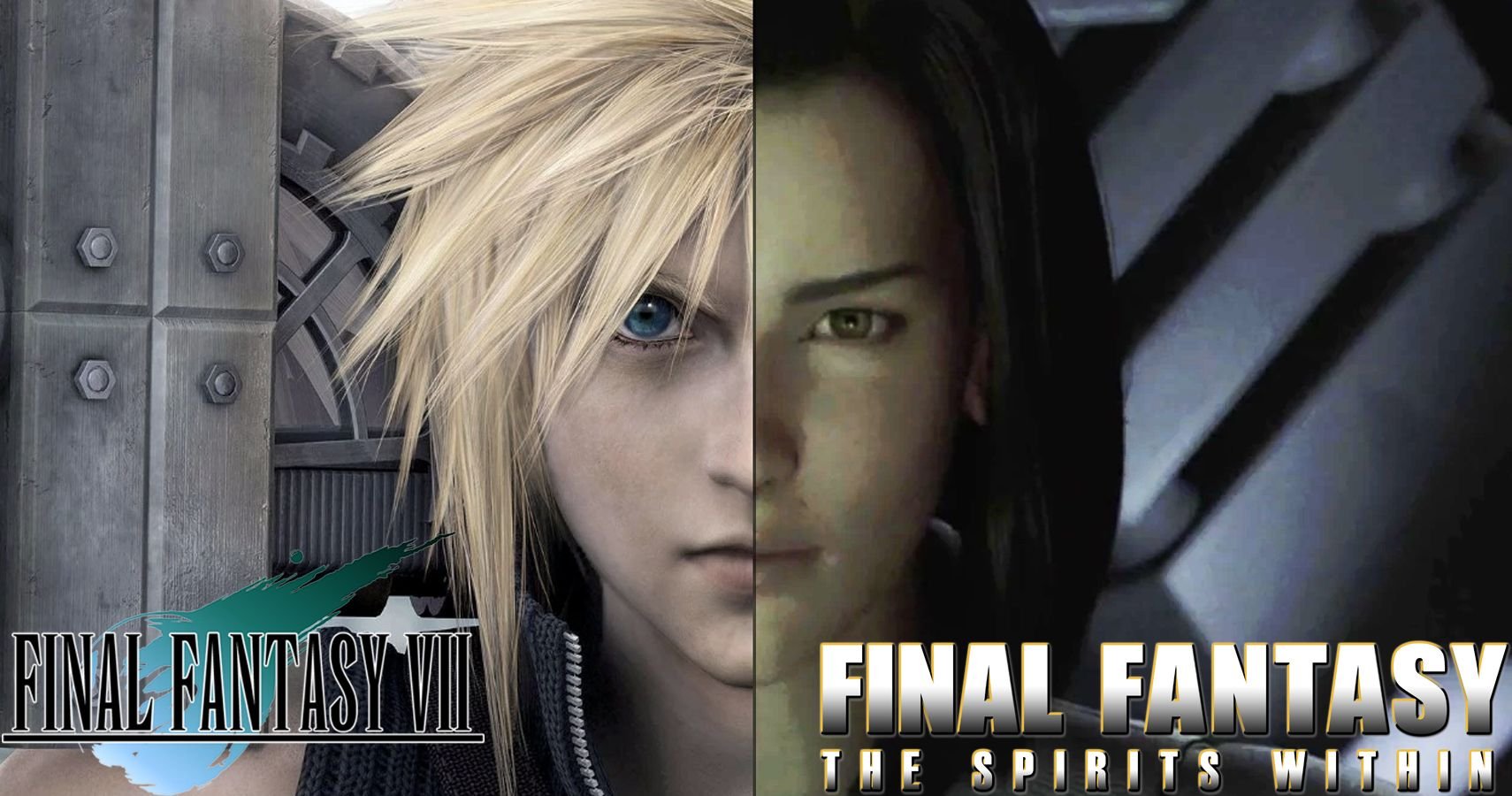
No, not all Final Fantasy games exist within the same universe. Each main numbered entry typically has its own distinct setting, characters, and lore.
Ever wondered if Cloud Strife could bump into Tidus at a café? The question of whether are all FF games in the same universe often pops up among fans. This series boasts incredible worlds and stories, but connecting them all isn’t straightforward.
While there are recurring themes and concepts, each numbered title creates a unique narrative experience. Different worlds and rules create standalone adventures. This gives a lot of creative freedom to each title.

Are All FF Games in the Same Universe?
That’s the big question, isn’t it? If you’re a fan of the Final Fantasy series, you’ve probably pondered this. With so many games, each with its own unique story, characters, and worlds, it’s easy to get confused. Are they all connected? Do they share a single timeline? The short answer is: mostly no. But, it’s not quite that simple. Let’s dive in and explore the fascinating web of connections (and non-connections) that make the Final Fantasy universe(s) so intriguing.
The Core Concept: Parallel Universes
Instead of one big, interconnected world, think of Final Fantasy as a series of parallel universes. Each numbered game (like Final Fantasy I, Final Fantasy VII, or Final Fantasy X) usually stands on its own. They often have different magic systems, different world maps, and totally different histories. These are like separate stories with different rules and different characters in their own little pocket dimensions. They are not sequentially following each other.
This allows the developers at Square Enix to be creative and experiment. They don’t have to worry about making sure every new game fits perfectly with all the previous ones. It is their core philosophy for the making of the final fantasy games. They can introduce new ideas without breaking continuity. So, each game feels fresh and unique.
Recurring Themes: The Shared DNA
Even though the universes aren’t the same, the Final Fantasy games share a lot of common elements. These recurring themes act as the series’ DNA, making each game feel like a part of the larger family. These elements help to create a consistent experience across all the titles, and they are not linked with the universes, they are independent of them.
- Crystals: Crystals are very important in many Final Fantasy stories. They can be sources of great power, essential to the world’s balance, or something that causes conflict. Their designs might be different from game to game but their purpose is mostly the same.
- Chocobos: These big yellow birds are like the mascot of Final Fantasy. You can usually ride them to travel faster. They can be yellow, black, red, or other colors as well, but they are always adorable.
- Moogles: These little fuzzy creatures are very cute and they often help players. They usually have little wings, a pom-pom on their head and they usually say “Kupo!”. They also come in various colors, but they are always present.
- Summons: Powerful beings that you can call upon in battle. They can be called Espers, Aeons, or just Summons, but they often feature classic monsters like Ifrit, Shiva, and Bahamut.
- Airships: Flying ships are usually a big part of the gameplay. They allow you to travel faster to new places and they become a major way to explore the game worlds. They also come in all shapes and sizes.
- Job Systems: Many games have a job system, where characters can change their classes, such as Warrior, Black Mage, and White Mage, each with its own abilities.
These elements connect the games together, so the experience is mostly similar, even if the universes are different. They give the player something familiar to grab onto.
Exceptions to the Rule: Connected Worlds
While most Final Fantasy games are standalone stories, there are some exceptions. These exceptions either happen because of direct sequels or spin-offs that are set in the same world. Let’s look at some key examples of directly connected final fantasy worlds.
Direct Sequels and Expansions
Some Final Fantasy games have direct sequels or expansions. These add to the game’s story or they continue the story of the main title. Games like, Final Fantasy X-2, Final Fantasy XIII-2, and Lightning Returns: Final Fantasy XIII are all part of the same universes as their base games. In these instances, you will see the same characters, same settings and the story continuing in a sequel format. We can explore these connected worlds below:
- Final Fantasy X and X-2: Final Fantasy X-2 continues the story of Tidus and Yuna in Spira a few years after the events of Final Fantasy X. This game has the same world, same characters, and explores their future after the conclusion of final fantasy X.
- Final Fantasy VII Compilation: This is a bigger example of a game that is connected with its sequels. In this case we get a collection of sequels, prequels and spin-offs based on the core game which is Final Fantasy VII. It Includes games like Crisis Core, Dirge of Cerberus, and the film Advent Children, all taking place in the same world and timeline. Final Fantasy VII Remake, Rebirth and the third game are also a part of this same universe, they are not parallel to final fantasy VII.
- Final Fantasy XIII trilogy: Final Fantasy XIII, Final Fantasy XIII-2 and Lighting Returns are all part of the same story in the same universe. These games tell the story of Lighting and her friends across multiple installments. They have the same core gameplay and they are all tied together.
- Final Fantasy VII Remake Trilogy: Final Fantasy VII Remake is not a remake of the old final fantasy VII rather it is a reboot, but the universe is same. The story is different as it has several key changes and the way the story is told is different but the universe is still the same. This is connected with the Rebirth and the third game that is in production.
Spin-Offs and Shared Worlds
Some spin-off games share a world with a main Final Fantasy title. These can often be games with slightly different styles or gameplay. They still usually take place in the same world, with the same history. We can see some of the major examples below:
- Final Fantasy Tactics and Ivalice: Final Fantasy Tactics and Final Fantasy XII both take place in the world of Ivalice. Although the stories are different, they are within the same universe. Final Fantasy XII also had a direct sequel called Revenant Wings on the Nintendo DS which continued the story of the world.
- Dissidia Final Fantasy Series: This series of fighting games features heroes and villains from different Final Fantasy titles, all pulled into the same dimension. However, this isn’t considered a normal Final Fantasy universe, it is often seen as a special crossover universe.
- World of Final Fantasy: This game brings together characters from different Final Fantasy games into a world with unique gameplay and mechanics. This is more of a fan-service game that connects different worlds for the sake of having a massive crossover. This is not a canon universe rather a fun crossover experience.
The “Fabula Nova Crystallis” Subseries
A special mention goes to the “Fabula Nova Crystallis” subseries. This was an ambitious project that planned to connect multiple games through shared mythology. While these games share the same ideas and concepts, they all exist in separate universes. Although they all share some ideas, they are still different from each other. Games in this category include Final Fantasy XIII and its sequels, and Final Fantasy Type-0, and Final Fantasy XV. These are connected via shared lore but they are still taking place in different universes.
Shared Themes and Lore
The “Fabula Nova Crystallis” games explore themes of gods, crystals, and fate. They use similar names for these elements, like fal’Cie and l’Cie. Each of these games has a unique story and they all take place in different places. Even though they have some common things, they are not part of the same universe. We can go deeper into exploring these elements below:
- Fal’Cie and L’Cie: These are terms that are used in all the “Fabula Nova Crystallis” games, although they have slightly different meanings depending on the game. Fal’Cie are god-like beings that give people a special purpose to do things. L’Cie are humans who are given special magical powers by the Fal’Cie to fulfill that purpose.
- Crystals and Mythos: The use of crystals is a big part of the story in these games. The core lore is slightly similar but it changes a little with each game. Each story shows the crystals and their mythos in a different way. They might have same concepts but different application.
- Separate Worlds: Even though they have shared elements, all of the “Fabula Nova Crystallis” games take place in different worlds. They have their own environments, characters, and histories. These are not same but they take inspiration from each other.
Why the Confusion?
If most games are not in the same universe, why is there so much confusion? Well, there are a few reasons. The main confusion comes from the shared themes and concepts we discussed earlier. Seeing familiar elements like crystals, Chocobos, and summons can make it feel like the games are connected. Also, sometimes the games have similar sounding names for different things. This leads to thinking these games are connected, but they are not.
Familiar Elements
The consistent appearance of familiar things like Chocobos and Moogles makes them look connected. These iconic elements are used in so many games that it is easier to think that all the games are connected, but they are not. These familiar elements are there to provide a similar and familiar experience. This helps to give a sense of a common identity. They are a staple of the franchise and it makes a series more recognizable.
Recurring Names and Concepts
The recurrence of certain names like Cid, or concepts like the Crystals can mislead you. For example, each game has a Cid but they are not the same character. The name Cid is used as an Easter egg. Similar things happen with crystal or summons as well. These are recurring elements, but they are different in the context of each game and each world. It can make you think they are connected, but they are not the same.
A Sense of Community
Ultimately, the shared experience of playing these games and the feeling of being part of a larger Final Fantasy community makes it easy to imagine that all the games are connected somehow. The fans often want these worlds to connect, but the developers are quite clear on them being separate.
The Beauty of Independence
In a way, the fact that each Final Fantasy game is its own thing is part of what makes the series so great. Each game provides a fresh experience, where the developers can explore new ideas. It allows the series to constantly innovate without being limited by the previous entries. This makes each game a fun adventure with new characters and new worlds. This is why each game has its own charm and this is why it keeps the game series fresh.
So, are all Final Fantasy games in the same universe? Generally, no. Most numbered entries are in their own parallel universes. There are direct sequels and spin-offs that share the same world, but these are exceptions rather than the rule. The shared themes, recurring elements and names create a sense of familiarity without actually being connected. The different worlds provide different adventures and that’s part of the series’ magic.
How FF 7 and FF 10 Take Place In The SAME UNIVERSE!
Final Thoughts
Ultimately, the evidence points towards separate universes for each mainline Final Fantasy title. Recurring themes and names often create a feeling of familiarity, but they’re essentially distinct entities. Connections are usually thematic, not literal.
Therefore, while we might wish for a single connected timeline, the answer to the question ‘are all ff games in the same universe’ is definitively no. Each Final Fantasy game must be viewed as its own standalone world.

