
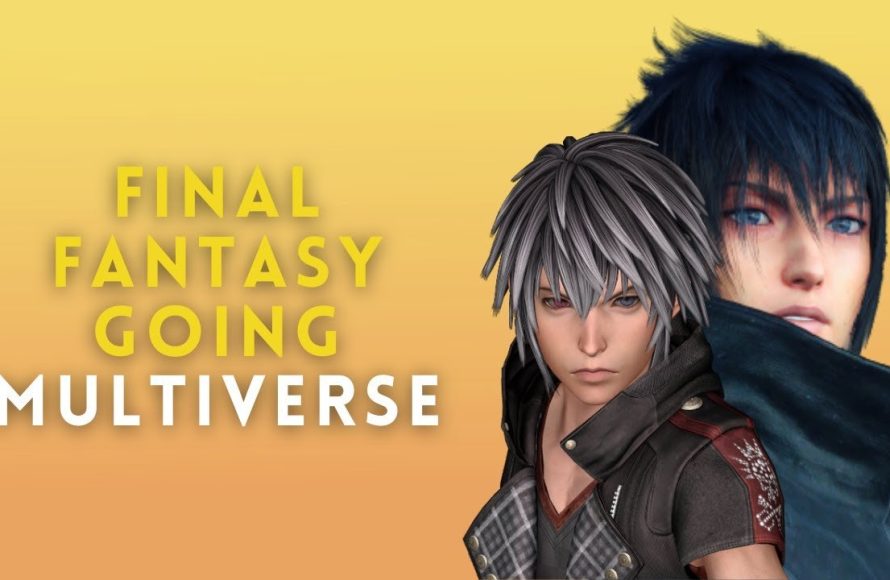
No, not all Final Fantasy games exist within the same universe. They often share thematic elements and recurring concepts, but each mainline entry generally presents its own distinct world and lore.
Ever wondered if the vast worlds of Final Fantasy are secretly connected? The intricate stories and diverse characters often spark questions, particularly concerning if are all final fantasy games in the same universe. It’s a common point of curiosity among fans.
While you might spot familiar creatures like Chocobos and Moogles, these are mostly nods to the franchise’s heritage rather than evidence of a shared reality. Each game crafts its own specific history, geography, and set of rules.

Are All Final Fantasy Games in the Same Universe?
This is a question that has puzzled and fascinated Final Fantasy fans for decades. You see, unlike some other game series where all the stories connect directly, Final Fantasy likes to change things up. Each numbered title usually brings a brand new world, with different characters, different magic systems, and often even different technology. So, are they secretly linked, or are they all completely separate? Let’s dive deep into the amazing, confusing, and sometimes magical world of Final Fantasy to find out!
The Standalone Story Approach
For the most part, the Final Fantasy series embraces the concept of standalone stories. What does that mean? Well, it means that Final Fantasy I has no direct connection to Final Fantasy II, and neither of those link to Final Fantasy III, and so on. Each game is like reading a different book in a library. They might all have the “Final Fantasy” label on them, but they tell their own unique tales.
Common Threads, Different Tapestries
Even though each Final Fantasy usually has its own setting, there are some ideas and themes that pop up again and again. These are like recurring characters in a play, but they’re not always the same person. Think of it like this: you see actors play different roles. They could be a knight in one play, and a farmer in the next, but they’re still the same actors you recognize. For example:
- Crystals: Powerful, often magical, and almost always crucial to the story, crystals are very, very common in Final Fantasy games. They usually have some control over the world’s natural forces, like earth, water, fire, and wind.
- Chocobos: These big, yellow, bird-like creatures are the adorable mascots of Final Fantasy. You can ride them around the world, and they often come in different colors with different powers. They’re not just in one game, but almost all of them.
- Moogles: These fluffy, small creatures are usually helpful and cute. They’re often associated with crafting and special abilities. Just like chocobos, moogles are a staple of the series.
- Summons or Espers: Giant creatures that are conjured into battle. You’ll see many familiar ones like Ifrit (a fiery beast), Shiva (an icy beauty), and Bahamut (a mighty dragon) throughout the different games.
- The Warrior of Light: A hero, or group of heroes, usually destined to save the world from some kind of great evil. This idea appears in many Final Fantasy stories, even if the “Warrior of Light” has a different name each time.
These recurring elements aren’t proof of a single universe, but they are the things that give Final Fantasy a feeling that’s consistent across all the titles. It’s like the author of a book series using similar ideas and patterns but telling unique stories each time.
Spin-offs and the Question of Shared Worlds
Things get a bit more interesting when we talk about spin-offs. These games don’t have the main number title and often are connected directly to the main game. Final Fantasy X-2, for example, is a direct sequel to Final Fantasy X, taking place in the same world with many of the same characters. This is a clear-cut example of how Final Fantasy sometimes expands its existing universes. In this case, it builds upon and continues the story.
The Fabula Nova Crystallis Mythos
Then there’s the Fabula Nova Crystallis series, which includes Final Fantasy XIII, Final Fantasy XIII-2, Lightning Returns: Final Fantasy XIII, and Final Fantasy Type-0. These games share a common mythology and underlying story elements, even though they happen in different worlds and timelines. The idea of fal’Cie, l’Cie, and crystals are central to these stories, though their specific roles change in each game.
A Shared Mythology but Different Stories
The Fabula Nova Crystallis is a complicated example. Although the games share the same underlying mythology, the world and characters in Final Fantasy Type-0 are different than the characters in the Final Fantasy XIII series. It’s like they’re using the same source material, but creating different plays from it. The common mythology links them, but they are not the same world. This shows how Square Enix sometimes connects its games in more subtle, conceptual ways.
Ivalice Alliance and the Shared Universe Approach
The Ivalice Alliance is a different kind of connection. Games like Final Fantasy XII, Final Fantasy Tactics, and Vagrant Story all take place within the same world, known as Ivalice. They may have different time periods and characters, but they share the same history, politics, and geography. These games really are connected and tell a shared story, though it may be in different points in time.
Different Timelines and Perspectives
Within Ivalice, we see how stories can connect by sharing locations, and common history. For example, Final Fantasy Tactics takes place before the events of Final Fantasy XII. Vagrant Story is also set in Ivalice, although it’s a bit more removed in time. The connections are there, but they often unfold in unique ways, giving each game its distinct story to tell within the larger canvas of Ivalice. Think of it like reading a series of history books; while they may share the same world, they focus on different events and characters in that world.
Parallel Worlds or Entirely Separate?
So, if most of the numbered titles are not directly connected in the traditional sense, are there any hidden links between the different worlds? This is where it gets a little bit… well, confusing. Some fans have proposed that the different Final Fantasy worlds are actually parallel universes, connected by a shared source of energy or magic. Others believe that each title is simply a brand new, standalone story, with no direct connection to any other.
The Theory of Parallel Universes
Some argue that the recurring elements, like crystals and summons, are remnants of a common source of power that exists across all Final Fantasy worlds. In this theory, the different worlds are like alternate realities, each with its own version of that magic source. This idea suggests that there could be hidden ways in which these worlds might touch each other, although this is never clearly shown in the games. For example, the “Void” mentioned in some games could be that common ground between the different universes, a space where different worlds intersect.
The Importance of Theme Over Shared Universe
Ultimately, most of the evidence supports the idea that Final Fantasy games are thematically connected rather than directly linked in the same universe. They all have common ideas and themes. Think about recurring themes like the struggle between light and darkness, the importance of friendship, and the battle against fate. These ideas appear in almost every Final Fantasy game. These elements, like recurring actors in different plays, give the series its signature style and feel. This focus on consistent themes allows the creators to tell new and engaging stories within the Final Fantasy umbrella, making each game a unique experience.
What about Final Fantasy XIV?
Final Fantasy XIV is an interesting case. It’s a massively multiplayer online role-playing game, or MMORPG. It has a massive world and a very intricate story. While it has it’s own lore and world, it also includes elements and stories from all the past numbered titles.
A Celebration of Final Fantasy’s History
In Final Fantasy XIV, it is very clear that some of its content is pulled from other past numbered titles. For example, areas in the world of FFXIV look similar to areas from past games. The game even has special fights against iconic villains from the series, allowing players to fight these villains with their characters. This doesn’t mean that Final Fantasy XIV is connected to all the different main stories, but rather the game is a celebration of Final Fantasy’s history.
The Role of The Multiverse in FFXIV
Final Fantasy XIV adds a layer of complexity to this discussion with its concept of the “First” and “Reflections,” which some might interpret as different parallel worlds, in addition to its own world of Hydaelyn and Zodiark. These concepts, while fitting within the game’s overall storyline, do offer a potential explanation of how multiple “Final Fantasy” worlds could exist alongside each other. This also shows how the games are more connected by ideas than actual connections.
A Matter of Interpretation
So, after all of this, the answer to “are all final fantasy games in the same universe?” is a tricky one. Technically, no. The numbered titles, for the most part, exist in their own self-contained worlds and tell their own stories. The occasional spin-offs and shared mythologies are exceptions, not the rule. However, they are connected thematically, and by common ideas. It is up to you whether you think all these different games are connected in some bigger way or if each game is a brand new adventure.
Ultimately, it’s a matter of how you want to see the Final Fantasy universe. Whether you think they’re all separate, parallel, or something in between, the magic of Final Fantasy lies in its ability to tell amazing stories with memorable characters, no matter the world.
Final Fantasy is a series that is built for exploration and discovery, each game provides a brand new experience that is truly something special. From the unique settings to the amazing stories and characters, each game stands on its own. Ultimately, it is up to each individual player to decide on whether the games are connected, or each game is it’s own unique experience.
7 ways Final Fantasy games SHARE the same universe #CISWS
Final Thoughts
Ultimately, the Final Fantasy series boasts a collection of distinct worlds. Each game generally features unique characters, settings, and lore. While some titles have direct sequels or spin-offs, they do not imply a single, overarching narrative.
Therefore, the answer to “are all final fantasy games in the same universe” is largely no. You can enjoy each game as an independent experience. The series’ brilliance lies in its flexibility.

