
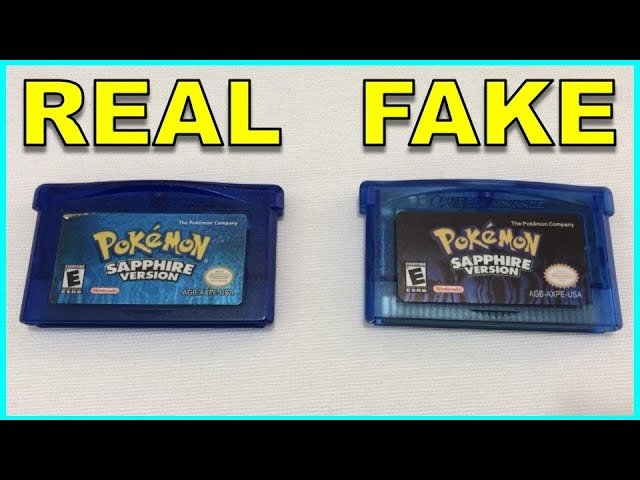
Checking for a fake Pokémon game involves scrutinizing the cartridge’s label, plastic casing, and comparing it to known genuine versions.
Have you ever felt that little twinge of doubt when buying a Pokémon game? It’s a valid concern, given the number of counterfeit products out there. Knowing how to tell if a pokemon game is fake can save you from disappointment and financial loss. It’s more common than you might think.
Poor printing quality on labels, strange fonts, and mismatched colours are some key indicators of a fake. The plastic of the cartridge itself may also feel cheap or have rough edges compared to authentic games. You also check the cartridge’s game code on the back and compare with its genuine version. It is important to be vigilant.

How to Tell if a Pokemon Game is Fake
So, you’re super excited to catch ’em all, right? You’ve got your heart set on that awesome Pokemon game, but wait! Is it the real deal or a sneaky fake? It’s important to know how to spot a counterfeit game because nobody wants to waste their hard-earned money (or precious allowance!) on something that won’t work or is of poor quality. Let’s dive into the tell-tale signs and become experts at identifying fake Pokemon games.
The Cartridge: A Closer Look
The first place to start your detective work is the game cartridge itself. Genuine Nintendo cartridges have a certain feel and appearance that counterfeiters often struggle to replicate perfectly.
Color and Material
Real Pokemon game cartridges have specific colors that match the Nintendo console they are designed for. For example, Game Boy Advance (GBA) cartridges are usually a shade of gray, while Nintendo DS games are black. Counterfeit cartridges might have slightly off colors, like a darker or lighter gray or black than what is expected. Sometimes, the plastic itself might feel cheap or flimsy compared to the real ones. Pay close attention to the material – does it feel sturdy or like it might break easily? If it feels lightweight or brittle, that’s a red flag.
- Game Boy/Game Boy Color: Typically light grey, sometimes dark grey for specific games like Pokémon Crystal
- Game Boy Advance: Usually a medium to light grey color.
- Nintendo DS/3DS: Typically black. Nintendo DS cartridges should also be slightly wider than 3DS cartridges.
Label Quality
The label is another crucial area for examination. Authentic game labels are printed with high quality ink and should be very clear and crisp, with no pixelation or blurriness. If the label looks fuzzy, or if the colors are off or faded, that’s a strong indicator that it might be a fake. Look for the following:
- Sharpness: The printing on a real label is very clear. Text like the game’s title and the Nintendo logo will be sharp and easy to read.
- Color Accuracy: Colors on the label will be vibrant and accurate to the original design. Fake labels may have dull, faded, or incorrectly saturated colors.
- Alignment: The label should be perfectly aligned on the cartridge. If the label is crooked or looks like it was slapped on, that’s a big concern.
- Font: Check the fonts used. Counterfeiters sometimes use the wrong font or a slightly different size. Compare it to images of genuine labels found online to notice any discrepancies.
- Nintendo Logo: Ensure the Nintendo logo is present and looks correct. Fake games often have a distorted or misprinted Nintendo logo.
The Nintendo Seal of Quality
The Nintendo Seal of Quality is an important visual cue on many of the game cartridges. It is usually a gold or silver oval seal. Here’s what to look for:
- Correct Design: Compare the seal to official Nintendo images. The seal has a specific design, and fake versions might appear different or distorted.
- Position: The seal is typically located in a consistent spot on the cartridge label. Check if the position is correct compared to an authentic game.
Screws and Cartridge Assembly
Look at the screws on the cartridge’s back. If they have a tri-wing design (three prongs), and are clean and fit properly that’s a good sign, although some very old real game boy games had regular Phillips head screws. If the screws look stripped, damaged, or don’t quite fit flush with the cartridge, then that is a concerning point. The casing of a genuine game cartridge fits together properly with no gaps or creaks. If the case feels loose, has noticeable gaps, or makes creaking noises, it might not be the real thing. Sometimes a fake cartridge will be a little bit thicker or thinner than real one.
Packaging and Inserts
Now, let’s move beyond the cartridge and look at the box, manual, and any other inserts that should come with the game. This is another important area where counterfeiters frequently make mistakes.
The Box Quality
The game box is often the first thing you see, and there are some clues that can signal a fake. Official game boxes are made of high-quality, thick cardboard that should feel sturdy. Fake boxes are often made of thinner, flimsier material that might bend or crease more easily. Here are key things to look for:
- Cardboard Thickness: Real game boxes use thick cardboard for durability. If the box feels flimsy or thin, it might be a fake.
- Printing Quality: Like the cartridge label, the printing on the box should be crisp and clear, with sharp text and vibrant colors. Fakes often have fuzzy text and dull or inaccurate colors.
- Gloss Finish: Authentic boxes usually have a gloss or matte finish. Pay attention to whether the finish matches an actual game of the same kind, as fakes might have the wrong finish.
- Text and Alignment: Carefully examine the text for spelling mistakes, and the alignment of the images and text on the box. Even minor errors can indicate a fake.
- Sealed Packaging: If the game is still sealed, check the quality of the seal. Real Nintendo games are sealed with precision and have a professional look. If the seal is poorly applied, is easily ripped, has creases or bubbles, or is not a heat sealed seal, it’s a sign of a fake.
The Game Manual and Inserts
The game manual and any other inserts, like registration cards or promotional materials, should also be high-quality. Here’s what to inspect:
- Paper Quality: Real game manuals are usually printed on quality paper that feels smooth to the touch. Fake manuals often use thin, cheap paper that feels rough or flimsy.
- Print Quality: The printing should be clear and crisp, with no blurring or pixelation. Fuzzy or unclear images are signs of a fake.
- Completeness: Make sure the manual is complete and not missing any pages or sections. Sometimes counterfeiters include incomplete manuals.
- Color Accuracy: The colors in the manual should be vibrant and accurate. If the colors are dull or off, it might be a counterfeit.
- Barcodes and Numbers: If the game has a bar code and model or product number check the authenticity of these, these should match the game and should be accurate.
Gameplay and In-Game Clues
Sometimes, the real clues come when you actually start playing the game. This can be done with older Pokemon games with a suitable handheld device, and more modern titles by loading them up on the specific console. Here’s what to watch out for:
Game Loading Issues
Fake games often have problems loading and saving game data. The game may freeze or crash frequently, or you may have difficulty saving or loading your progress. These issues are usually caused by poor quality cartridges or emulators. Real Pokemon games will load relatively quickly and run smoothly. If you have prolonged wait times to get into the game, you see distorted graphics when loading or you have crashes during gameplay then that is a bad sign.
Saving and Loading Problems
One of the most common issues with counterfeit games is trouble saving and loading. Your game save may disappear or not load properly when you next try to play. Real pokemon game cartridges have a save battery or other suitable memory that allows you to save your progress with no issues, fake games often have no proper save function or poor functionality.
Language and Text Errors
Pay attention to the language used in the game. Counterfeit games may have spelling and grammar errors, or the dialogue might not make sense. Real Nintendo games are carefully translated and will not have these types of issues. If you have seen or played the game before, or have seen someone else play it, you will notice if the wording or text is different to what you would expect.
Graphical Issues
Pokemon games are known for their pixel art style, however even with the older systems this should be consistent and smooth. If you notice graphical errors, such as strange colors, glitches, or missing sprites, that can be an indication of a counterfeit game. Sometimes you may even see graphic corruption during the game or on certain screens.
Sound and Music Problems
Authentic Pokemon games will have a certain consistency and quality to the sounds and music. If the game music sounds distorted, low quality, or is missing sound effects, this might mean the game is a fake. If the volume of the sound is much higher or lower than usual, then this is also cause for concern.
Game Functionality
Some fake pokemon games may have unusual functionality, such as some in-game events not triggering, certain game mechanics being buggy, or even a lack of some of the core functions of the game. If your game is missing vital in-game elements, then it is worth investigating further. If you have played the game previously, any major differences could be a sign of a counterfeit.
Where Did You Get the Game?
The source of the game can also be an important clue. Be cautious when buying games from non-reputable sources.
Buying from Unknown Sellers
Buying from flea markets, online marketplaces, or sellers you don’t know well can be risky. Counterfeiters often sell games through these types of channels. Always check a sellers reviews, and be wary of unusually low prices – they may signal that the seller knows they are selling fake games.
Price Check
If the price of a game is very low compared to the market value, then it is cause for concern. Whilst people may be keen to get rid of old games they no longer need, games like Pokemon often hold their value well, so if a game is being sold for a fraction of its usual price, this should make you question its authenticity.
Reputable Sellers
Purchase from reputable game stores or well known online sellers. These vendors are far more likely to have authentic games. They have an image and business reputation to uphold, and are far more likely to be selling genuine games. This also applies to well-known secondhand stores and websites, as they will usually check the authenticity of the items they are buying and selling.
Using Online Resources to Help You
It is worth using online resources to help you determine the authenticity of a Pokemon game.
Online Forums and Communities
If you are in any doubt, or you notice something suspicious about a game, it is worth reaching out to online communities and forums. There are many avid Pokemon fans online who have a lot of expertise and experience when it comes to spotting fake Pokemon games. Take pictures of your game, cartridge, manual, and box, and upload them to forums or discussion groups. The helpful Pokemon community can often help identify fake games.
Image Searches
Use a search engine to compare your cartridge, box, and manual to images of real games. If you notice major differences this could mean you have a fake game. This is especially helpful if you are looking to purchase a game, as you can use this method to check the authenticity of the images provided by the seller.
Trusted Websites and Resources
Check out trusted Pokemon websites and resources online to assist you with your investigation. There are many articles, websites, and videos online dedicated to helping people identify fake Pokemon games, so do your research if you are unsure.
By paying close attention to the details, using some detective skills, and by doing research online, you can become an expert in spotting counterfeit games. That way you can keep your money and stay focused on enjoying the awesome world of Pokemon! It is always better to be safe than sorry when it comes to purchasing Pokemon games.
Don’t Get Scammed – How to Tell if Your Pokemon Game is Real
Final Thoughts
To spot a fake Pokémon game, check the cartridge’s label; misaligned text or poor print quality are major red flags. Examine the plastic; genuine cartridges have a specific shape and feel. Test the game on your console; glitches or unusual loading times indicate a problem.
Box and manual quality must also be considered, fake versions frequently use low-quality materials. Comparing your game with images online is also a must. So, when wondering how to tell if a pokemon game is fake, these checks offer key details.

