
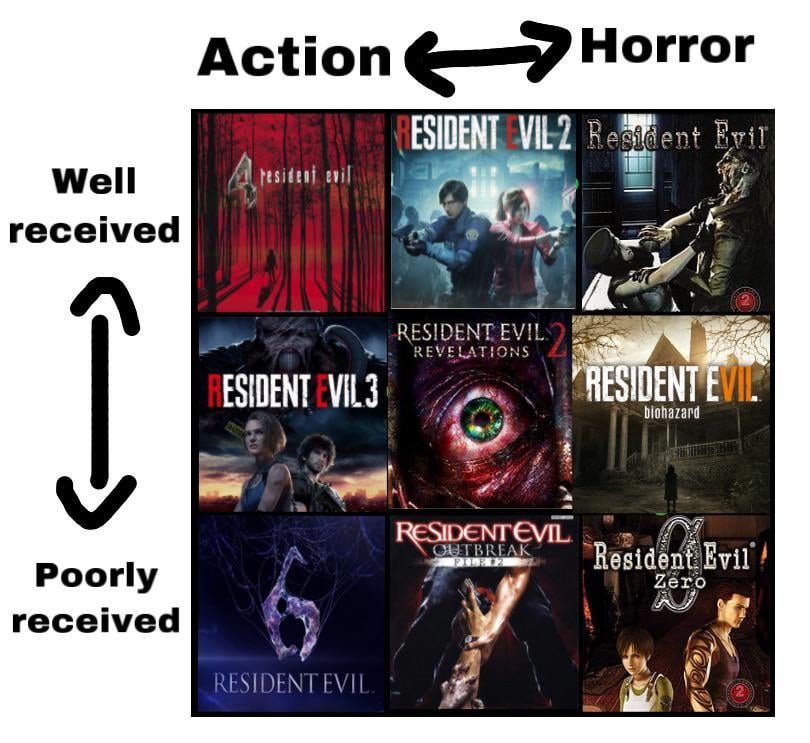
Yes, all main numbered Resident Evil games are connected through an overarching narrative, characters, and events, though some spin-offs have looser ties.
The sprawling Resident Evil universe, with its bio-organic weapons and shadowy corporations, can feel a bit complex for newcomers. So it’s a fair question to wonder, are all resident evil games connected? It’s not just a collection of spooky standalone titles, actually. The core numbered entries, from the Spencer Mansion incident to the latest viral outbreaks, link together.
We see familiar faces, like Chris Redfield and Jill Valentine, reappear through many games. These connections create a continuous story. While some spin-offs take a different path or focus on side stories, the main series definitely has a narrative thread.

Are All Resident Evil Games Connected?
The short answer is yes, almost all the core Resident Evil games are connected! They share a universe, characters, organizations, and events that weave a complex and sometimes confusing story. It’s like watching a really long TV show where each season (or in this case, each game) adds to the overall plot. However, figuring out exactly how they all fit together can feel like solving a puzzle, with pieces scattered across different games and spin-offs. Let’s dive deep into the interconnected world of Resident Evil and see how everything links up.
The Umbrella Corporation: The Root of the Evil
At the heart of almost every Resident Evil game lies the shadowy Umbrella Corporation. This powerful pharmaceutical company started as a seemingly benevolent organization but hid a darker side: biological weapons research. They created viruses like the infamous T-Virus and G-Virus, which are responsible for the zombie outbreaks and monstrous creatures that plague the world of Resident Evil. Understanding the Umbrella Corporation and its actions is key to grasping how everything connects. Their experiments, their pursuit of power, and their eventual downfall are all central to the ongoing narrative.
Umbrella’s Origins and Research
The story of Umbrella begins with Oswell E. Spencer, a nobleman with a twisted vision. He founded the company along with James Marcus and Edward Ashford. Their early research involved the Progenitor Virus, which was extracted from a flower. This virus, when modified, became the basis for all their bio-organic weapons. The initial aim was to create a super soldier, but the side effects were far from desirable, usually involving gruesome mutations and loss of sanity.
Umbrella’s main research facility was a sprawling mansion in the Arklay Mountains, a location featured in the very first Resident Evil game. Later, they expanded to other locations, including laboratories in Europe, Antarctica, and even underground. Each location became a hotbed for new experiments and new horrors, and these locations become important plot points in subsequent games.
Key Figures Within Umbrella
Several characters were crucial to Umbrella’s rise and fall:
- Oswell E. Spencer: The founder and mastermind of Umbrella, driven by his desire to create a new world order. He is the true villain of the whole franchise and has had his influence over each game till the recent release.
- James Marcus: A brilliant virologist and one of the company’s co-founders. He was known for being a very smart man and his research was a cornerstone for the creation of Umbrella’s viruses.
- William Birkin: A researcher responsible for creating the G-Virus. His ambition and desperation to secure his research led to the destruction of Raccoon City. He plays a key role in Resident Evil 2.
- Albert Wesker: Initially a STARS (Special Tactics and Rescue Service) captain, he was a double agent working for Umbrella. His ambition for power and a twisted vision of evolution made him a formidable antagonist. He had modified his own body using a version of the virus.
Major Outbreaks and Their Impact
The world of Resident Evil is defined by several major outbreaks that have shaped the storyline. These outbreaks are not random incidents; they’re often linked to Umbrella’s actions or experiments gone wrong.
The Raccoon City Incident
The most significant outbreak occurred in Raccoon City, a fictional town in the Arklay Mountains. This city was ground zero for the T-Virus outbreak in the first Resident Evil game. The virus quickly spread through the city, turning its residents into zombies. This is the main story of Resident Evil 2 and Resident Evil 3. The events in Raccoon City and the subsequent destruction of the city had a huge impact and changed the world of Resident Evil, exposing Umbrella’s true nature. The events of the destruction of the Raccoon City plays a major role in the entire story of the Resident Evil and serves as the back story for many characters in future games.
The Las Plagas Parasite
While the earlier games focused on viruses, Resident Evil 4 introduced a new type of threat: the Las Plagas parasite. This parasite, unlike the T-Virus, could control its hosts, making them not just mindless zombies but aggressive and coordinated. These parasites were discovered by the Los Illuminados cult in rural Europe, who found a way to use the parasite to take over the bodies of the local people. The use of Las Plagas is a departure from the T-virus, but the storyline still involves the same characters and organizations.
Other Notable Outbreaks and Incidents
Besides Raccoon City, there have been other outbreaks and incidents that contribute to the overall narrative:
- The Spencer Mansion Incident: The events of the first Resident Evil which leads to the exposure of Umbrella.
- The Sheva Alomar Incident: The events of the Resident Evil 5 in Kijuju, Africa, where another virus is distributed.
- The Dulvey Incident: The events of Resident Evil 7, involve a new type of bio-weapon and a family that is infected.
- The Village Incident: The events of Resident Evil 8, involves a new form of the Las Plagas.
Key Characters and Their Connections
The Resident Evil universe boasts a cast of recurring characters, many of whom are connected by their involvement in these outbreaks. Their stories interweave, often spanning multiple games. Understanding their relationships and motivations is key to grasping the overall narrative.
The STARS Team
The Special Tactics and Rescue Service (STARS) is a law enforcement team from Raccoon City. This team includes many key characters in the Resident Evil series and have faced Umbrella’s evil.
- Chris Redfield: A main protagonist in multiple games. He is an expert in combat and has a strong sense of justice. He is a prominent figure in fighting against bioterrorism.
- Jill Valentine: Another key protagonist. She is skilled in combat and is known for her resilience. She has faced many dangers from Umbrella.
- Albert Wesker: As mentioned before, he was part of STARS before revealing his true alliance with Umbrella.
Other Important Characters
Many characters have significant roles that impact the story:
- Leon S. Kennedy: An agent who was new in Raccoon City at the time of the outbreak. His actions during and after the incident changed the world of Resident Evil. He becomes a prominent figure in fighting against bioterrorism.
- Claire Redfield: Chris Redfield’s sister, who is determined to expose Umbrella’s wrongdoing. She is also a main protagonist.
- Ethan Winters: The protagonist of Resident Evil 7 and 8, with his own personal connection to the bioweapons. He is a normal person who was trying to protect his family.
- Rebecca Chambers: A field medic who survives the Arklay Mansion incident and joins the BSAA.
- Ada Wong: A mysterious operative who has her own agenda with Umbrella and is often seen in different games.
These characters’ paths often cross, and their interactions shape the overarching story, revealing new layers of the conspiracy.
Spin-offs and Non-Canonical Games
While most of the main numbered titles are interconnected, there are a few spin-offs that are considered non-canonical. While some of these titles are loosely based in the Resident Evil universe, they are usually separated from the main timeline. These titles usually include different storylines and are mainly made for gameplay purposes rather than continuing the main storyline. These titles can add to our understanding of the universe, but it is important to note that they are generally not essential to understanding the main plot. Some examples of non-canonical titles include:
- Resident Evil: Survivor
- Resident Evil: Dead Aim
- Resident Evil: Operation Raccoon City
- Resident Evil: Umbrella Corps
These titles often feature different gameplay styles, like first-person shooters, which differ from the traditional survival horror.
The Chronological Order of Resident Evil Games
Understanding the timeline of events in the Resident Evil world can be difficult. While the games are mostly numbered and released chronologically, there are a few games that are flashbacks or happen in between the main titles. Here is a basic timeline of the core numbered games and major spin-offs in chronological order. This list is based on the in-game events, not the release date.
- Resident Evil 0: A prequel that takes place before the first game, detailing the events leading up to the Spencer Mansion incident.
- Resident Evil: The original outbreak at the Spencer Mansion.
- Resident Evil 3: Some of the events of the game occur before the outbreak in Raccoon City as seen in Resident Evil 2, while the second half takes place after the events of the second game.
- Resident Evil 2: The outbreak in Raccoon City.
- Resident Evil: Code Veronica: Taking place after Raccoon City.
- Resident Evil 4: Leon’s mission to rescue the president’s daughter in rural Europe.
- Resident Evil 5: Chris and Sheva’s mission to Africa to stop the spread of a new virus.
- Resident Evil: Revelations: Jill’s adventure in the Mediterranean.
- Resident Evil 6: Global outbreaks involving multiple protagonists and their own specific storylines.
- Resident Evil: Revelations 2: Claire’s and Moira’s adventure on an island.
- Resident Evil 7: Ethan’s search for his missing wife in Louisiana.
- Resident Evil Village: The continuation of Ethan’s story in a mysterious European village.
This chronological order can be a useful guide when following the story.
Future of Resident Evil
The Resident Evil series continues to grow with new entries, remakes, and new storylines. The franchise has moved away from the initial concepts of just zombies and into different forms of bioweapons and bio-terrorist groups. The core themes of survival and biological horror remain constant, but the stories are evolving. The introduction of new protagonists like Ethan Winters suggests a new chapter in the Resident Evil saga, while also honoring the legacy of older characters like Leon, Chris, and Jill.
In Conclusion, The Resident Evil franchise is a complex web of interconnected stories, characters, and organizations. While sometimes confusing, the connections are there, creating a rich and engaging world for players to explore. Understanding the role of the Umbrella Corporation, the impact of major outbreaks, and the relationships between characters is key to understanding how all the games fit together. Whether you’re a long-time fan or a newcomer, there’s always something new to discover in the world of Resident Evil, and its story continues to unfold with each new release.
The Resident Evil Games in Chronological Order
Final Thoughts
Ultimately, the interconnectedness of Resident Evil games is complex. The core narrative threads definitely bind some titles, especially those within the same numbered series. However, certain spin-offs and remakes operate on a more detached scale.
The overarching themes and recurring characters undeniably create a sense of a larger world. ‘are all resident evil games connected’ remains a question with a nuanced response; some are heavily tied to the main narrative, while others explore specific events within the established universe. This connection must be examined on a case-by-case basis.

