
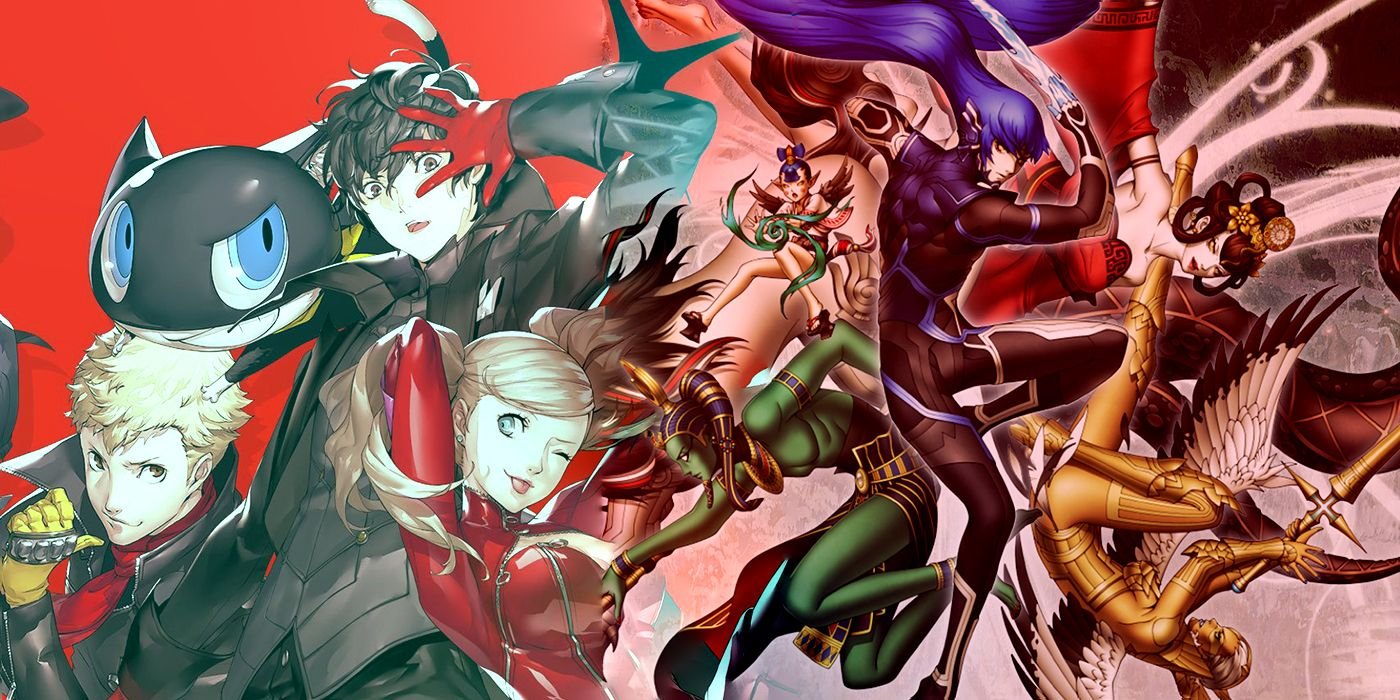
While most Shin Megami Tensei games share thematic elements and recurring demons, they aren’t directly connected in a single overarching narrative; instead, they often exist within distinct universes or timelines.
So, you’re diving into the captivating world of Shin Megami Tensei and the question ‘are the smt games connected’ pops up? It’s a common query because the series is known for its complex, interconnected themes.
Many games feature familiar demons and similar concepts, giving a sense of cohesion. However, each game usually tells its own story in its own distinct world, making each experience unique.

Are the SMT Games Connected?
The world of Shin Megami Tensei (SMT) games is vast and full of demons, gods, and the occasional high school student with special powers. It’s easy to get lost in all the different titles, from the mainline games to the Persona series and other spin-offs. This can make you wonder: are these games all connected somehow, like a big puzzle with different pieces? The short answer is: it’s complicated! While not all SMT games share a single, direct storyline, they do share a lot of connections.
The Shared Universe Concept
Instead of thinking of SMT games as one continuous story, imagine them as different realities within the same larger universe. Think of it like different versions of earth, or alternative timelines. They often use similar rules, concepts, and characters. This shared universe concept allows for many stories to exist without having to make every game a direct sequel or prequel to another. It also gives a familiar feeling for people who play many SMT games, without making it necessary to play them in a specific order.
Recurring Themes and Motifs
One of the biggest connections between SMT games is their themes. Many games explore ideas such as:
- The battle between Law, Chaos, and Neutrality: This is a cornerstone of the series. Games will often present you with choices that push you towards these different alignments, with different endings depending on what you choose.
- The nature of gods and demons: These beings are rarely portrayed as simply good or bad. Often, they’re powerful forces that humans can manipulate, negotiate with, or fight.
- The role of humanity in the world: SMT games often make you question what it means to be human and how humans should interact with the supernatural.
- The concept of choice and its consequences: Your actions throughout the game will often change the world and lead to very different endings.
You’ll see these themes come up again and again, even in games that don’t have any direct story connections. They give a sense of familiarity and make it feel like you’re playing games within the same shared space of ideas.
Shared Demon Designs
Another big connection is the demons. Many of the demons you see in one SMT game will show up in other titles, often with similar designs and abilities. Some of the demons are based on real-world mythology and religion, giving them a sense of history and depth. Here’s a short list of some popular ones that show up frequently :
- Jack Frost
- Pixie
- Cerberus
- Succubus
- Pyro Jack
While their appearances or stats may slightly change from game to game, their core designs stay consistent across various titles. This gives players a feeling that they are interacting with similar entities across different worlds, despite the story being different. It is also a way to create familiarity for long time players of the series.
Mainline SMT Games: A Loosely Connected Web
The mainline Shin Megami Tensei games (numbered titles like SMT I, SMT II, SMT III: Nocturne, SMT IV, and SMT V) have the strongest connections among themselves. They often share more than just themes and demons. Though, they still don’t have continuous story, instead these games are like different versions of same world.
Soft Sequels and Reinterpretations
Instead of being direct sequels, the mainline games often feel like “soft sequels” or reinterpretations of the same basic premise. For example, many games feature an event known as the “Great Cataclysm,” where the world is significantly altered. The specifics of this cataclysm and its aftermath change from game to game, but the core idea of a world-changing disaster is a constant. Similarly, recurring characters or entities might appear in different roles or with altered motivations, providing nods to previous games while carving their own path in each new title.
The Idea of Multiple Worlds
Some theories suggest the mainline SMT games take place in different timelines or parallel worlds, which would explain the differences in characters and settings. This also accounts for the way some themes from the previous games might show up in the new game. For example, the “Law” and “Chaos” alignments could be explored with different ideas and outcomes in various games, showcasing how such concept play out across various timelines.This allows each mainline game to stand on its own while still contributing to the bigger picture of the SMT multiverse.
No Direct Chronological Order
It’s worth noting that these games are not presented in a direct chronological order. You don’t have to play SMT I before SMT III to understand what’s happening. Each game is self-contained and introduces its own story and characters. This design decision allows newcomers to jump into any mainline game without feeling lost or needing to catch up on the plot of past games. This also contributes to the feeling of parallel realities where things might be slightly similar, while also being drastically different.
Spin-offs and Their Place
The SMT series has a number of spin-off series that venture into different genre or story lines. These spin-offs, while existing in the overall SMT universe, have varied connections to the mainline series. Let’s take a look at some of the popular ones :
Persona Series: A Clear Example of Connection (and Separation)
The Persona series, starting with Revelations: Persona on the PlayStation, is perhaps the most popular and well-known SMT spin-off. Persona games, although also being SMT games, have a specific focus on social links, high school life, and the power of the human heart. The connection to the mainline series is more subtle and often manifested by the presence of demons who act as Personas. The themes and ideas, like alignment and the duality of good and evil, often appear in these games, however, the style is very different.
Subtle Links
While Persona games have mostly self-contained stories, there are some occasional references to events or entities from the mainline series. For instance, a certain character from Shin Megami Tensei If… makes appearances in different forms in Persona 3 and Persona 4, as a nod to SMT connections. There are also certain demons, especially those relating to mythological beings, that have appeared across both series. These subtle but meaningful connections help to solidify the idea that Persona is indeed a branch of the larger SMT tree, but with its own unique identity.
Devil Survivor Series: Strategy and Shared Concepts
The Devil Survivor series takes the core SMT concept of demon summoning and blends it with a strategy RPG gameplay style. It features a very different storyline compared to the main series. However, some themes like the struggle between law and chaos and the idea of an apocalypse show up again. Many demons that appear in other games also appear in the Devil Survivor series. This shows that they are connected to each other under same banner of SMT, but have their own unique story and gaming experience.
Other Spin-offs
Other spin-offs, such as the Devil Summoner series and the Digital Devil Saga games, all have varying degrees of connection to the mainline series. Digital Devil Saga focuses on a more post apocalyptic setting, while Devil Summoner has a more police and supernatural detective storyline. Although each has its own unique plot and story, they all feature familiar demons and sometimes share the same themes. Even though their stories might not overlap, the connection of these games with the main series can be felt by SMT fans. It provides a sense of shared history and universe, even when every game might feel unique.
Understanding the Connections
So, are the SMT games connected? Yes, but not in the way you might think. They’re not all part of one continuous narrative. Instead, they’re more like variations on a theme. Imagine a giant tapestry, where each game is a different picture using the same thread. These threads include:
- Recurring themes: Law vs. Chaos, the nature of gods and demons, etc.
- Shared demon designs: Familiar demons appearing in different games.
- A shared universe concept: Different timelines or realities within the same overarching world.
This approach allows each game to be its own unique experience while still maintaining a sense of cohesion with the rest of the series. It also allows the developers to explore different themes and narrative ideas without having to conform to a single storyline. It also makes it easy for players to jump into the franchise at any point without having to worry about not understanding the storyline.
Therefore, when diving into the SMT universe, don’t get too caught up in trying to find direct connections between every game. Instead, focus on the shared elements and how each game puts its own spin on them. Enjoy the unique stories, characters, and worlds that each SMT title offers.
The SMT universe is a rich tapestry of stories, themes, and characters. The connections between each game are like subtle threads that run through the tapestry, linking them all together while allowing each story to shine with its unique light. This approach ensures that every new SMT game offers something fresh while still feeling like part of the larger whole, creating an experience that appeals to both newcomers and long-time fans. It is this careful balance of shared elements and unique designs that makes SMT such an enduring franchise.
The Megami Tensei Timeline – Year of Megaten (January)
Final Thoughts
Ultimately, the answer to “are the smt games connected” is complex. While most Shin Megami Tensei titles feature similar themes and demons, they rarely share direct plot connections or characters. There are recurring elements, like the Law, Chaos, and Neutral alignments, but the main stories usually exist within their own individual universes.
Some games, like the Devil Survivor series, are clearly separate. Others, such as the Persona sub-series, have established their own identity, even though they originally spawned from SMT. SMT’s consistent thematic material is the core component and remains true across every entry.

