
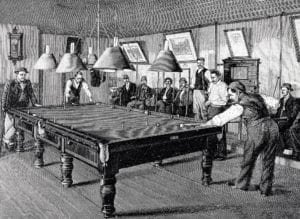
The precise origins of the game pool are murky, but it evolved from various outdoor lawn games like croquet and similar billiards-type games, rather than a single inventor.
Ever wondered who invented the game pool? It’s a question that often pops up in casual conversations, especially among those of us who enjoy a friendly game. The story is less about a single person and more about a slow evolution of similar games.
Games involving balls and sticks have been around for centuries. Pool didn’t spring into existence overnight. Instead, it took many years of changes. These changes gradually turned it into the indoor pastime we love today.

Who Invented the Game Pool? A Journey Through Billiards History
The question of who invented pool is a bit tricky! It’s not like the lightbulb, where we can point to one person and say, “Aha! He did it!” Instead, pool, or billiards as it’s often called, evolved over many years, with lots of different people contributing. Let’s take a fun trip back in time to see how this popular game came to be.
The Early Days of Billiards: More Than Just a Game
Before we talk about pool as we know it, we need to understand its ancestor: billiards. The story begins way back in the 15th century, maybe even earlier! Early versions of billiards were played outside, kind of like croquet, but on a table. Imagine playing a game with sticks and balls on a giant table in someone’s garden – pretty cool, right?
Outdoor Table Games: The Seeds of Billiards
These early outdoor table games didn’t look like pool at all. They were often played on the grass, and the goal wasn’t always to pocket balls. Sometimes, the aim was to knock balls through hoops or at targets. Think of it as a blend of croquet and early bowling, played on a table. These games were mostly enjoyed by wealthy people who had the space for them.
- Games played on outdoor tables with sticks and balls.
- Aimed to hit targets, not pocket balls.
- Popular among the wealthy class.
Moving Indoors: A Game for All Seasons
As time went by, people started bringing these table games indoors. This was a smart move, especially for places with cold or rainy weather. Indoor tables were often made of wood, with cloth coverings, and sometimes with cushions on the rails. The balls were made of ivory and the sticks evolved to become more refined cue sticks. This shift indoors helped the game evolve, leading to the variations we recognize as pool or billiards.
- Table games moved indoors due to weather and convenience.
- Indoor tables made of wood and covered with cloth.
- Balls made of ivory and sticks refined into cue sticks.
France: A Key Location in Billiard’s Development
France played a huge part in making billiards popular. It’s in France, and during 16th century that we start to see games that closely resemble what we know as billiards, developing and being enjoyed. We can find some of the earliest references to games similar to billiards in France. The game was played by French royalty and it quickly became a fashionable pastime for other people as well. During that time, the game wasn’t called “pool” yet – it was usually referred to as “billiards.”
The Rise of Billiards in French Society
Billiards quickly became a big hit in France. It wasn’t just a game; it was a social event. Imagine elegant rooms filled with people playing billiards, enjoying friendly competition and social conversation. The tables, the cues, and the balls were all becoming more refined as the game grew in popularity. Billiards became a part of the French culture and lifestyle, further spreading its influence throughout Europe.
- France played a big role in billiards popularity.
- Billiards became a social event.
- Tables, cues and balls became more refined.
England: The Game Takes Another Turn
The game crossed the English Channel and became popular in England. The English further refined the game, creating their own variations. They introduced the idea of pockets on the table, which led to a new way to play. Think of the first time someone thought, “Hey, what if we try to hit the ball into these holes?”. That simple change led to big changes in how the game was played. These English variations eventually crossed the Atlantic to America, where they played a major role in the evolution of modern pool.
Introducing Pockets: A New Element to the Game
The addition of pockets changed the entire game dynamic. Now, the object was to skillfully guide balls into these holes, which required more accuracy and precision. This was a significant shift from earlier versions of billiards, where the focus may have been on hitting targets. The introduction of pockets brought with it the strategic aspects of position play and a completely new level of challenge, which we now associate with the games of billiards and pool.
- English players introduced pockets on the table.
- The aim was now to pocket the balls, requiring more skill.
- Pocket-style billiards became popular in England.
The American Influence: Pool as We Know It
When billiards arrived in America, it took on new forms and eventually evolved into what we call pool today. The game became widely accessible with many public billiards halls being built, becoming increasingly popular. These halls weren’t just places to play; they also became social hubs where people could relax, meet friends, and enjoy some competition. It was here that variations of billiards were created and the term “pool” became associated with the game.
Billiards Halls and the Rise of “Pool”
The name “pool” actually came from the practice of wagering in these billiard halls. People would pool their money and play for the pot, and the game eventually became known by that term. The American version also saw the use of standardized rules, pocket sizes and table dimensions, helping to create a consistent and easily accessible version of the game. Pool in America took on a unique character that sets it apart from its European ancestor, billiards, thus becoming more popular than any other form of billiards.
- Billiards became very popular in America with public billiards halls.
- The game was known as “pool” due to wagering.
- Standardized rules, pocket sizes, and table dimensions were established in America.
Different Variations of Pool
In America, different variations of the game sprang up such as 8-ball, 9-ball, snooker, straight pool and many others. Each variation has its own unique rules and strategies. 8-ball is probably the most widely known and played form of pool and is often the first game that new players learn. Different games of pool cater to various skill levels, making it a universally enjoyable activity for diverse groups of people.
- Many variations of pool, including 8-ball, 9-ball and snooker, emerged in America.
- Each variation had its own rules and strategies.
- The games cater to different skill levels.
So, Who Can We Credit?
So, if we can’t point to one inventor, who should get the credit? The truth is, pool developed over many, many years, with input from lots of different people in different places. The early outdoor table games, the French refinement of billiards, the English addition of pockets and the American invention of ‘pool’ with its variations and its standardised rules; each of these had an influence on how we play the game today. So, instead of one inventor, it’s better to think of the game as a collection of contributions, ideas and evolutions from different cultures over the centuries. The creation of pool is a collaborative achievement.
- Pool is a collection of contributions, ideas and evolutions from various cultures.
- Early games, French refinement, English pocket introduction and American variation were key.
- Pool is a collaborative achievement.
Pool’s journey from an outdoor game to a popular indoor activity illustrates how a simple idea can evolve over time, blending with cultures and new thinking. This is the beauty of the game, having a diverse history that has led to the great sport that we have today. Pool is a wonderful game, full of strategy, skill, and fun that anyone can enjoy.
history of pool
Final Thoughts
The true origins of billiards remain murky. Historians suggest various early forms developed across Europe, particularly in France, England and Italy. These involved balls and tables, evolving over centuries. It’s difficult to pinpoint one specific inventor or single event.
While we can’t credit one person definitively, several individuals played key roles in pool’s progression. So, when someone asks ‘who invented the game pool’, a definitive answer is impossible. The game developed gradually with different influences.

