
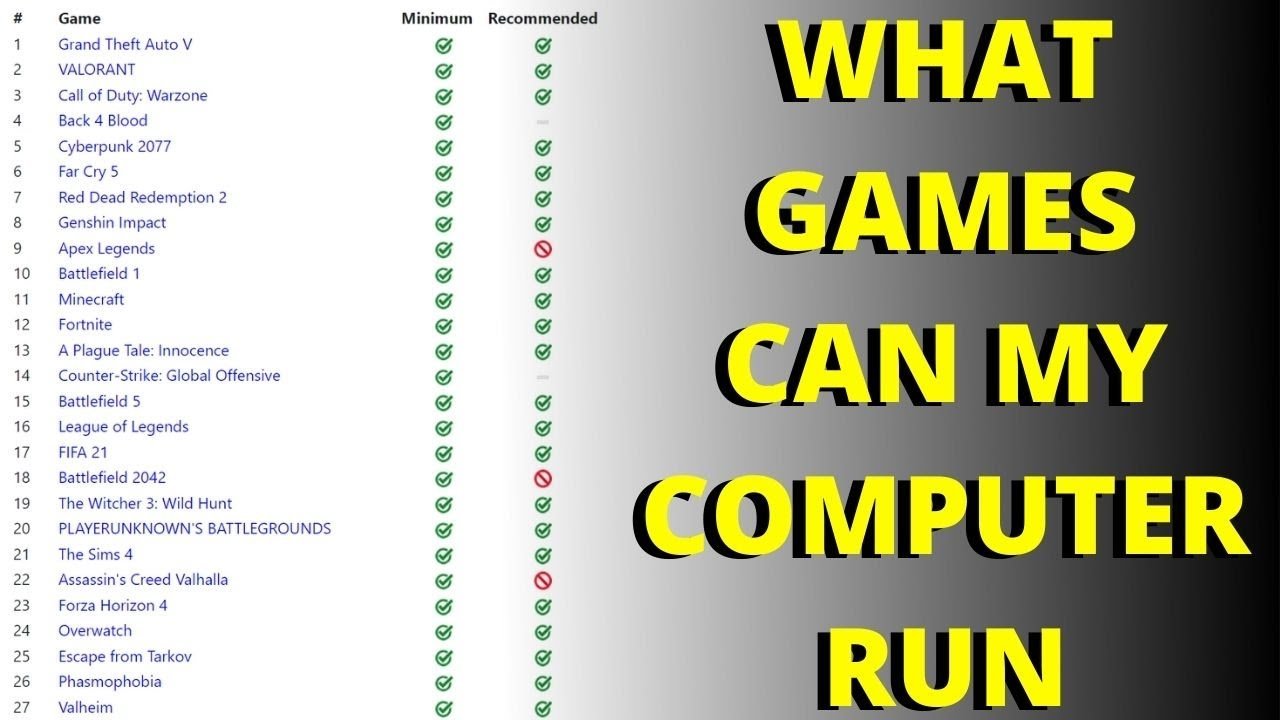
To determine if your PC can run these games, you need to compare your system’s specifications against the game’s minimum and recommended requirements.
Ever wondered if your computer is powerful enough for the latest games? The question of “can my pc run these games” pops up frequently. It’s a common worry for gamers who want the best experience.
Knowing your computer’s specs is key. We will explore how to quickly check what your machine has, and how it stacks up against what those games need. Then you can play without frustration.

Can My PC Run These Games? Figuring It Out!
Ever stared at a cool new game, picturing yourself playing it, only to wonder, “Can my computer even handle this?” It’s a question every gamer asks, from beginners to pros. Don’t worry, it’s totally normal! This part of the article is here to help you figure that out. We’ll go over what makes a game run smoothly, how to check your computer’s stuff, and how to understand those confusing game requirement lists.
Understanding the Game Requirements
Before we dive deep, let’s talk about what games ask from your computer. Think of it like this: games have needs just like people do. Some games need just a little “food,” (computer power), and some need a whole feast! These “needs” are called “system requirements.”
What are Minimum System Requirements?
The minimum requirements are the bare minimum your computer needs to run a game. Imagine it’s like having the smallest amount of ingredients to make a simple cake. You can make it, but it might not be the best. If your computer only meets the minimum, you might have to play at lower settings, which means less detailed graphics and maybe some slow-downs (lag). It’s playable, but not ideal. So, minimum means you can play, but might have to turn some things off to make it run smoothly.
What are Recommended System Requirements?
The recommended requirements are like having all the best ingredients for that cake and a fancy oven too! These requirements mean you can play the game at its intended level, usually with high graphics and smooth gameplay. If your computer meets or goes beyond the recommended requirements, you’re in for a treat. You can expect a pretty, crisp image, fast frame rates, and a great overall playing experience. Always aim for these if possible for a better gameplay experience. Think of recommended requirements as the optimal setup for a smooth and fun time.
Key Components to Consider
Okay, so you know about minimum and recommended requirements. But what computer parts are we even talking about? It’s like knowing you need flour, eggs, and sugar for a cake, but not knowing what each does. Here are the main parts to think about:
The CPU: The Brain of Your Computer
The Central Processing Unit (CPU) is like the brain of your computer. It handles all the calculations and instructions needed for the game to work. When a game requires higher CPU power, it means it’s doing a lot of complex math and calculations like rendering game world elements, player actions, and much more. So, a more powerful CPU means the computer can handle more complex calculations faster. It makes the game smoother. It’s one of the most important parts, for gaming. Different games require different levels of CPU power depending upon their design and mechanics.
The GPU: The Artist of Your Computer
The Graphics Processing Unit (GPU) is like the artist. It’s in charge of making all the pretty pictures on your screen. It is responsible for all graphical calculations. It draws the game world, the characters, and all effects that make a game look great. A better GPU means the game looks more detailed and crisp, with high resolution and all the eye-catching visuals. If your computer has low-end GPU, your game might look blurry and might have low frame rates. A high-performance GPU results in faster frame rates, sharper textures, and much better visuals overall.
RAM: The Computer’s Short-Term Memory
Random Access Memory (RAM) is your computer’s short-term memory. It stores the data your computer needs right now, so it can quickly access it. For a game, RAM keeps track of what’s happening in the game, such as characters, environment, and other game data. More RAM means the computer can handle more stuff at once. It reduces loading times and keeps your games from freezing up while loading in different areas or elements in your game. Having enough RAM is important for the game to function smoothly and quickly.
Storage: Where the Game Lives
Storage is where your computer keeps all of its files, including games. There are two types to know about.
- Hard Disk Drive (HDD): These are typically larger in space and cheaper, but slower for access speed.
- Solid State Drive (SSD): These are faster and your game will load faster, making a lot of difference in gaming.
You need to have space on any of these, but SSD are prefered for faster loading.
Operating System
This is the basic program that runs your computer, like Windows, macOS, or Linux. Games are usually designed to run on specific operating systems. So, you need the correct one or you can’t play the game. For gaming, mostly people use Windows as it supports most of the games.
Checking Your PC’s Specs: How to Do It
Now that you know what parts matter, let’s figure out how to check what you have. It’s easier than you might think! Here are different ways to check it:
Using the System Information Tool (Windows)
This is the most common and easier way to check your PC. For this,
- Press the Windows key, type “System Information,” and press enter.
- A window will appear with a lot of details about your computer.
- Find these main sections:
- Processor: This tells you your CPU model.
- Installed Physical Memory (RAM): This shows how much RAM you have.
- BaseBoard Product: This tells you about your motherboard.
- System Type: This tells you the bit version of your PC for OS compatability.
Checking the Display Adapter (GPU)
To check your GPU (graphics card) , follow these steps:
- Press the Windows key + “X”, select “Device Manager” from the menu.
- Click the arrow next to “Display adapters.” This shows your GPU.
- Right-click your GPU, choose “Properties”, and then go to the “Driver” tab to see the driver details.
Checking Storage Space
- Go to “This PC” or “My Computer” and look at your hard drives.
- You will see how much space each drive has, so you can see if you have enough.
Comparing Your Specs to Game Requirements
Now for the fun part! Take your computer’s specs and compare them to the system requirements of the game you want to play. Remember to look at both the minimum and recommended requirements. You need to go on the game’s page on Steam, Epic Games, or other official game websites, and look for them. Here’s how to do the comparison:
Making a Simple Checklist
Make a checklist to easily compare the specs with the requirements, so you don’t miss anything:
- CPU: Check if your processor matches or exceeds the game’s requirements.
- GPU: Check if your graphics card meets or is better than required.
- RAM: Make sure you have enough memory.
- Storage: Be sure you have the required space available.
- Operating System: Check if your OS version is same as the game.
Using Online Tools
Many websites offer tools that help you compare your computer to the requirements of specific games. Here are some examples:
- System Requirements Lab: This is the most popular site where you can pick games and they show how your computer performs for that.
- Can You RUN It: This website automatically checks your computer’s details and tells you if you can play the game.
These websites are very useful, and all you need to do is simply pick the game you want to compare and press check.
What To Do If Your PC Doesn’t Meet Requirements
It’s disappointing if your computer doesn’t meet the requirements for a game. But don’t lose hope just yet! Here are some ways you can try to improve things and play the game:
Adjusting Game Settings
The most simple way to play a game on your PC that doesnt meet the requirements, is to reduce the graphics settings to lowest.
- Turn down graphics settings: In game settings, reduce texture quality, shadows, and other visual settings. This will make the game run faster.
- Lower the resolution: Playing at a lower resolution (like 720p instead of 1080p) can significantly improve performance.
Upgrading Your Computer Parts
If you want to enjoy the game properly, you can also upgrade specific components. Here are parts that you can consider for upgrades.
- Add more RAM: Extra RAM can make a big difference if your computer is struggling.
- Upgrade your GPU: If your GPU is very low-end, a new graphics card can improve performance.
- Install an SSD: Getting a solid-state drive can make the game load faster.
- Upgrade your CPU: If your CPU is very old and slow, you can consider upgrading it for a much better performance.
Consider taking your PC to a local repair shop if you are unfamiliar with doing PC upgrades yourself.
Using Game Optimization Software
Some programs, like Razer Cortex, can help improve game performance by closing other programs that are using memory. These software are designed to optimize your game by freeing up some resources so your game runs smoothly.
Consider Cloud Gaming
Cloud gaming services, like NVIDIA GeForce Now or Xbox Cloud Gaming, allow you to stream games. This means your computer doesn’t need to be powerful, because all of the processing is done on the cloud. You only need a good internet connection for this. This is a good option if you dont have enough money or expertise to upgrade your PC.
By understanding the parts of your computer, how they impact gaming, and what game requirements mean, you can decide if your PC can handle the game you want. If it can’t, now you have some ideas on how to make it work. Happy gaming!
How To Find Out If Your PC Can Run A Specific Game [Simple]
Final Thoughts
Checking system specs against game requirements is a must. Consider CPU, GPU, RAM, and storage. Meeting minimum requirements allows basic play.
Recommended settings provide better experience. Compare your hardware to the stated needs of each game to see if you meet them.
Therefore, can my pc run these games? Thoroughly compare, and then you will have your answer. This process gives needed info about playability.

