
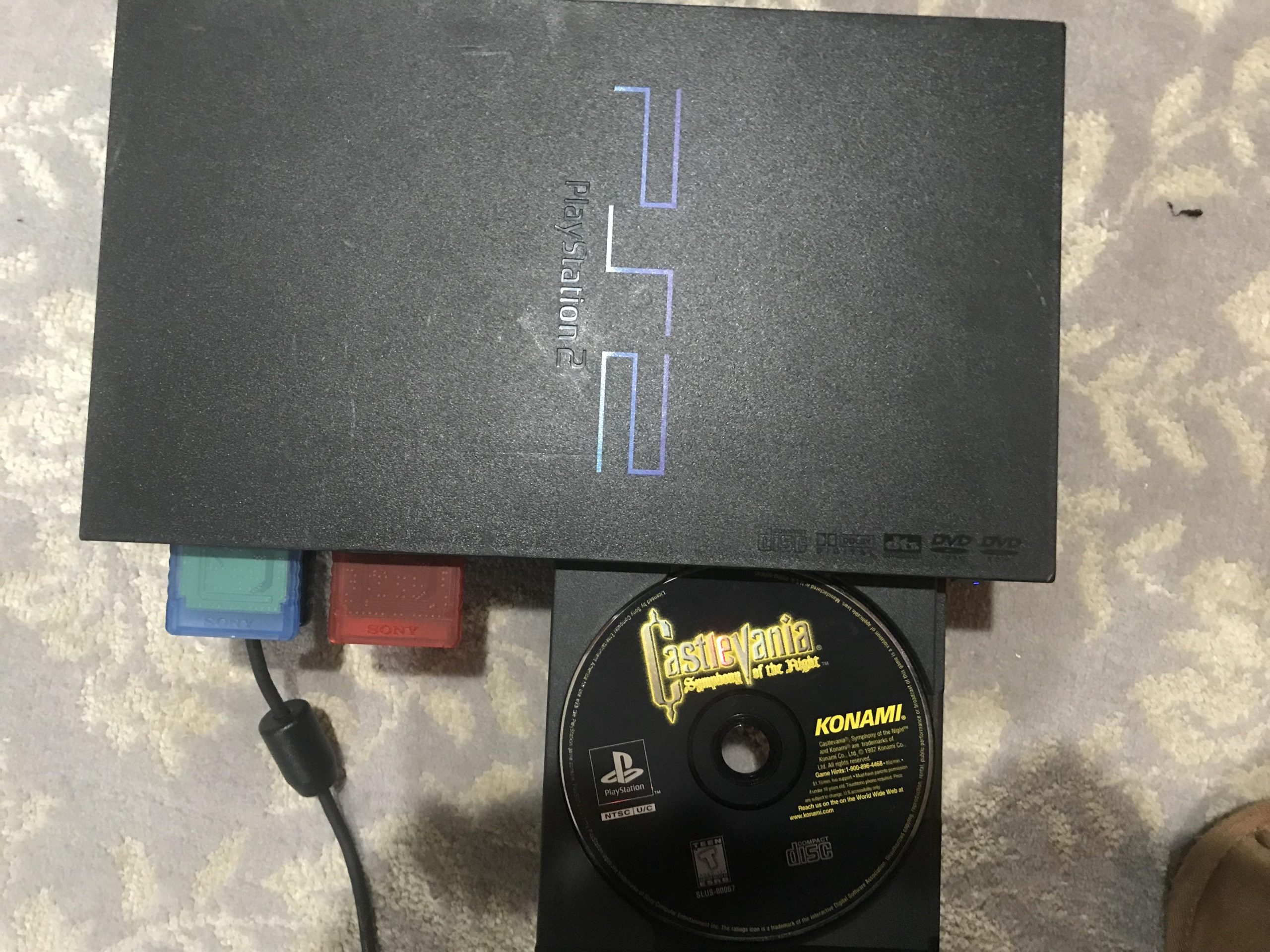
No, the PlayStation 1 cannot play PlayStation 2 games.
Ever pondered if you could pop a PS2 disc into your old PS1? It’s a question many have had when thinking about older console compatibility. The technical differences between the two systems prevent backwards compatibility. This means that the original PlayStation simply cannot read or process PlayStation 2 game discs.
The PlayStation 2 has updated hardware and architecture than its predecessor. Therefore, the disc formats and game coding are not compatible with the PlayStation 1. So the answer is that, can playstation 1 play playstation 2 games, is a definite no.

Can PlayStation 1 Play PlayStation 2 Games?
That’s a question many gamers have asked, especially those who grew up with the iconic PlayStation consoles. The short answer? No, the original PlayStation, often called the PS1, cannot play games made for the PlayStation 2 (PS2). These are two different consoles with very different internal workings. Let’s dive deeper into why this is the case and explore what made each console special.
Understanding the Differences Between PS1 and PS2
Think of it like this: a bicycle and a car are both vehicles, but you can’t use one where the other is needed. The PlayStation 1 and PlayStation 2 are both gaming consoles from Sony, but they’re built using very different technology. The PS2 is much more powerful and uses an entirely different system than the original PlayStation. Let’s break down some key areas where the two consoles differ.
Processing Power
The “brain” of any console is its processor, and this is where the biggest difference lies. The PS1 used a MIPS R3000A processor running at 33.8688 MHz. It was good for its time but was limited in how complex the games could be. The PlayStation 2, on the other hand, used a much more advanced “Emotion Engine” processor with a clock speed of 294.9 MHz. This huge leap in speed meant that the PS2 could handle much more detail, better graphics, and more complex game mechanics. Think of it as comparing a simple abacus to a powerful computer; they both do calculations, but one is far more capable.
Graphics Capabilities
Another big difference is in the graphics processing units (GPUs). The PS1 could create 3D environments, but it used relatively simple polygons and textures. This resulted in the somewhat blocky and low-detail look of many of its games. The PS2 had a significantly more advanced GPU, allowing for much smoother, more realistic graphics. It could handle more complex lighting, shadows, and more detailed textures. This difference in graphical prowess is one of the main reasons why a PS1 can’t run PS2 games; it simply doesn’t have the hardware to display them correctly.
Memory (RAM)
Memory, or RAM, is where the console temporarily stores information as it’s running a game. The PS1 had a small amount of RAM compared to the PS2. The PS1 used 2 MB of RAM, whereas the PS2 had 32 MB. The increased RAM in the PS2 allows the console to juggle more things at once, which is necessary for running its more complex games. Think of it like a school desk; the PS1’s desk was small and could only hold a few books, while the PS2’s desk was big and could hold many more books and notebooks.
Disc Formats
The type of disc each console uses also contributes to the incompatibility. The PlayStation 1 games were stored on CD-ROMs. The PS2, however, uses both CD-ROMs and DVD-ROMs. The use of DVDs, that have a much higher storage capacity, allowed for PS2 games to be larger and more detailed. The PS1’s CD drive can only read CD-ROMs; it can’t read the DVD format that most PS2 games use. It’s like trying to play a record on a CD player, it just won’t work.
Controller Differences
While the original Dualshock controller was used by both PlayStation 1 and PlayStation 2, there was a notable advancement with the Dualshock 2, which included pressure-sensitive buttons. Even if the technical specifications weren’t an issue, some of the button mapping differences and features would have been too much for the PlayStation 1’s hardware to interpret properly.
Why Backward Compatibility Matters
When talking about consoles, the term “backward compatibility” is very important. This means the ability of a newer console to play games from an older console. For example, the PlayStation 3 was capable of playing some, but not all, PS2 games through backward compatibility. But why is this important to players?
Preserving Gaming History
Backward compatibility allows us to play our favorite games from the past on new machines. This keeps gaming history alive and lets newer players experience games that might be hard to find otherwise. It prevents old games from becoming unplayable as technology advances.
Convenience for Gamers
It’s more convenient for gamers to play their games on one system, rather than having to switch between different consoles. If you could play both PS1 and PS2 games on one console, it would save space and reduce clutter around your gaming setup. Backward compatibility can also mean you don’t have to purchase the same games again when you get a new console.
Cost Savings
For players who still own old games, backward compatibility can be a money saver because it means you don’t have to buy remasters or re-releases of those games. The gaming industry’s move towards digital downloads has also complicated things for older physical games. Having backward compatibility would be a boon for people who want to keep playing their physical copies.
The Technical Hurdles of Backward Compatibility
While backward compatibility is great, it’s not always simple to make it work. There are several challenges that console makers face.
Hardware Differences
As discussed earlier, the PS1 and PS2 had very different processors, graphics cards, and memory. To make a new console play older games, you might need to include special chips that mimic the older hardware. This is costly and takes up space within the console, which makes it difficult to implement seamlessly.
Software Emulation
Another way to achieve backward compatibility is through software emulation. Emulation means using software to make the newer console “pretend” it’s an older one. This is complicated and requires a lot of testing to make sure every game works correctly. Sometimes, games may run slower or have visual glitches because the software emulation may not be perfect. It is often simpler to build a console with the older technology built in rather than rely entirely on emulation, especially if trying to perfectly recreate the experience.
Cost and Time
Developing and testing backward compatibility adds cost and time to the production of new consoles. It may be seen as an unnecessary feature by console makers if they believe that it may not significantly improve sales of the consoles themselves. Also, the manufacturers have to consider the cost and time implications of supporting it over the long term. This can lead to companies deciding against incorporating it in their designs.
What About Emulators?
While you cannot play PS2 games directly on a PS1 console, there are other ways you can enjoy those classic games. One popular method is using emulators.
What is an emulator?
An emulator is a software program that enables one computer system to behave like another. In the context of gaming, an emulator allows you to play games designed for one platform (like the PS2) on another device (like a PC). This can be done using software that mimics the behavior of a PS2 console. However, it does have its limitations.
How do emulators work?
Emulators work by translating the instructions of a game designed for one type of hardware into instructions that another piece of hardware can understand. For a PS2 emulator running on a PC, it would interpret the game’s code written for the PS2’s Emotion Engine and translate it into something the PC’s processor can handle. This process requires significant processing power, so a powerful computer is often required to achieve smooth gameplay. This explains why the original PS1 can’t run a PS2 emulator – it doesn’t have the computing power for it.
Are emulators legal?
The legality of emulators is a complicated subject. In most places, the emulating software itself is legal as it’s not usually a copyright violation, however, it can be in certain situations. However, downloading and using the game data or “ROMs” for games that you don’t own a legal copy of is a copyright violation and considered piracy. It is always best practice to obtain legal game copies through legitimate means.
The Legacy of PS1 and PS2
Even though the PlayStation 1 cannot play PlayStation 2 games, both consoles have made a huge impact on the gaming world. Each one was groundbreaking in its own right and provided lots of unforgettable experiences for gamers of all ages.
The PS1’s Impact
The original PlayStation introduced 3D gaming to a whole new audience. Games like Final Fantasy VII, Metal Gear Solid, and Crash Bandicoot showed what was possible with 3D graphics and captivating storylines. It brought a whole new generation to consoles and was a strong rival to the more well known systems at the time. The console shaped modern gaming and was an important part of the transition from cartridges to discs for media. The PS1 was affordable and accessible to so many people.
The PS2’s Impact
The PS2 was the best selling console of all time. It expanded on what the PS1 started and introduced even more advanced gaming experiences. Games like Grand Theft Auto: San Andreas, Metal Gear Solid 3: Snake Eater, and Final Fantasy X showcased the power of the PS2 and were among the most popular video games of the era. The PS2 also included a DVD player, which made it a staple of most homes. The console became a hub for entertainment and helped solidify the role of consoles in many households.
In short, while it would be amazing if the PlayStation 1 could play PlayStation 2 games, the technological differences between the two consoles make it impossible. Each one provided unique gaming experiences that have shaped the gaming world we know today. Remember to explore options like emulators for games you want to play from old systems, but make sure to follow the rules about copyright and legal downloads.
Does PS2 play PS1 games
Final Thoughts
No, the PlayStation 1 cannot play PlayStation 2 games. The hardware inside the original PlayStation is simply not powerful enough. It lacks the necessary processing power and memory to handle PS2 titles.
This backward compatibility was never included in the PlayStation 1 console. Therefore, you must use a PlayStation 2 console to play PS2 games, as they are designed specifically for its architecture. Ultimately, “can playstation 1 play playstation 2 games” is a question with a clear negative answer.

