
If you’re searching for games like Candyland, consider Chutes and Ladders, The Sneaky Snacky Squirrel Game, and Hoot Owl Hoot!, all of which offer simple rules and engaging gameplay for young children.
Here’s the response:
Remember those sweet, simple days of spinning the spinner and moving your gingerbread man along the colorful path? Candyland is a classic, but sometimes you want something similar with a bit of a twist.
Finding games like candyland that capture that same magic can be a fun quest. Luckily, there are plenty of options to keep those little ones entertained!
These games offer age-appropriate challenges and colorful themes, perfect for introducing young children to the world of board games.

Games Like Candyland
Many cherished childhood memories are built around playing board games with family. Candyland, with its colorful pathway and simple mechanics, is often a child’s first foray into the world of board games.
What happens when your child outgrows the Land of Lollipops and Gumdrop Mountains? Fortunately, many other games offer similar elements of chance, color recognition, and light strategy, perfect for transitioning to slightly more complex gameplay.
Exploring Games with Simple Mechanics
Several games capture the essence of Candyland’s accessibility while introducing subtle strategic choices. These are great options for families looking to move beyond purely luck-based games.
Chutes and Ladders
Chutes and Ladders is another classic that relies primarily on luck. Landing on a ladder lets you climb ahead, while landing on a chute sends you sliding back.
The anticipation of landing on a helpful ladder or avoiding a slippery chute makes it exciting for young children. It’s easy to learn and play, just like Candyland.
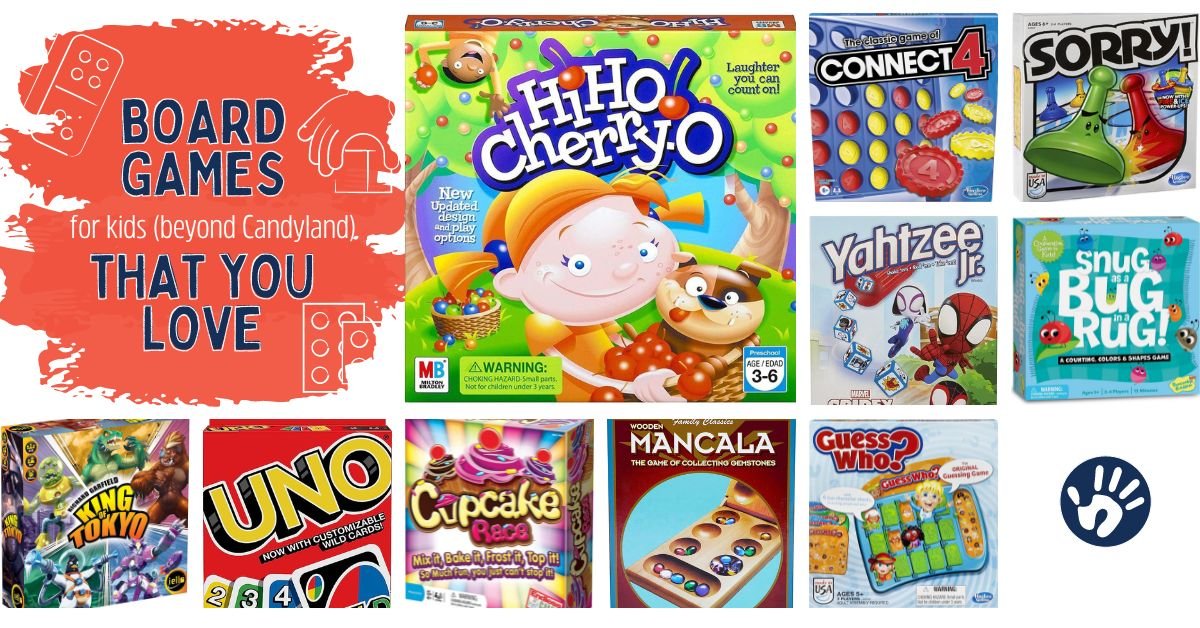
Hi Ho! Cherry-O
Hi Ho! Cherry-O involves spinning a spinner and picking (or putting back) cherries from a tree. The goal is to be the first player to empty your tree.
This game introduces simple counting skills and hand-eye coordination. The act of physically picking the cherries adds a tactile element that can be engaging for younger players.
The Sneaky Snacky Squirrel Game
This game uses a squirrel-shaped squeezer to collect colored acorns and place them on your log. It encourages color matching and fine motor skills.
The spinner adds an element of chance, and the squirrel tool makes it fun for kids. It’s a cooperative experience too!
Games That Focus on Color Recognition
Candyland heavily relies on color recognition to navigate the board. These games build upon that skill with new challenges and interactive elements.
Richard Scarry’s Busytown, Eye Found It!
Richard Scarry’s Busytown uses a large, detailed game board filled with colorful objects. Players work together to find hidden objects based on picture cards.
This game promotes visual discrimination and teamwork. The cooperative aspect reduces competition and encourages shared problem-solving.
Outfoxed!
Outfoxed! is a cooperative deduction game where players work together to identify the fox who stole a potpie. Players move around the board to gather clues.
Clue Gathering: Players roll dice to move around the board and reveal clues.
Deduction: They use a special decoder to eliminate suspects based on the clues found.
Teamwork: Players must work together to catch the fox before it escapes.
Spot it!
Spot it! is a fast-paced card game where players try to find matching symbols between two cards. Each card has a variety of symbols, and only one symbol is identical between any two cards.
The quick gameplay and visual search element make it engaging for all ages. It’s perfect for developing visual perception skills.
Introducing Light Strategy Games
Once children are comfortable with simple mechanics and color recognition, you can introduce games with a touch of strategy. These games require players to think ahead and make simple decisions.
Race to the Treasure!
Race to the Treasure! is a cooperative game where players work together to create a path to the treasure before the Ogre gets there. Players draw tiles and place them strategically to extend the path.
Cooperative Play: Players work as a team.
Tile Placement: Strategic tile placement is crucial.
Problem-Solving: The game challenges players to think critically.
Hoot Owl Hoot!
Hoot Owl Hoot! is a cooperative game where players work together to move owls to their nest before the sun rises. Players draw cards and move the owls along a path.
The cooperative element promotes teamwork and communication. It’s also an easy-to-learn game that young children can enjoy.
Robot Turtles
Robot Turtles is a coding board game that teaches children the basics of programming. Players use command cards to guide their turtle tokens around the board.
Coding Concepts: Introduces coding in a playful way.
Strategic Thinking: Requires players to plan their moves.
Problem-Solving: Players solve coding challenges to reach their goals.
Games with Similar Themes and Aesthetics
If your child loves the whimsical nature of Candyland, these games offer similar themes and appealing artwork.
Unicorn Glitterluck: Cloud Crystals
In Unicorn Glitterluck: Cloud Crystals, players roll the dice to collect cloud crystals. They must avoid the mischievous cloud sheep to win.
The game features adorable unicorn miniatures and colorful cloud crystals. It’s a great option for children who enjoy fantasy themes.
Mermaid Island
Mermaid Island is a cooperative game where players work together to save mermaids from the Sea Witch. Players roll dice to move mermaids to Mermaid Island before the Sea Witch reaches them.
Cooperative Play: Emphasizes teamwork and communication.
Thematic Elements: Appeals to children who love mermaids.
Simple Rules: Easy to learn and play.
The Fairy Game
The Fairy Game is a cooperative game where players work together to help the fairies reach the Fairy Castle before the dragon wakes up.
Collaborative Fun: Encourages group problem-solving.
Fantasy Theme: Engages kids with a whimsical world.
Accessible Rules: Suitable for young children.
Dice Rolling Games
Candyland is based on a draw-a-card-move system; introducing dice-rolling games helps transition to number recognition and counting.
Count Your Chickens!
Count Your Chickens! is a cooperative game where players roll a die and move the mother hen around the board to collect her chicks.
Cooperative Fun: Fosters teamwork and communication.
Counting Practice: Reinforces number recognition skills.
Simple Mechanics: Easy for young children to grasp.
Snug as a Bug in a Rug
Snug as a Bug in a Rug is a cooperative game where players work together to match colors, shapes, and numbers to cover the bugs before the stink bugs come out.
Collaborative Play: Encourages teamwork.
Matching Skills: Develops color and shape recognition.
Number Recognition: Introduces basic counting skills.
Roll and Play
Roll and Play is a game designed for toddlers, using a large plush cube with different colored sides. Each color corresponds to a type of action or question card.
Interactive Fun: Encourages active participation.
Developmental Skills: Builds cognitive and motor skills.
Simple Rules: Perfect for very young children.
Card Games
Card games build on the draw-a-card mechanic of Candyland but can introduce strategy.
Go Fish
Go Fish is a classic card game that involves matching pairs of cards. Players ask each other for specific cards to complete their pairs.
Matching Skills: Develops recognition and memory.
Social Interaction: Encourages communication between players.
Simple Rules: Easy to learn and play.
Old Maid
Old Maid is a card game where players try to match pairs of cards and avoid being left with the “Old Maid” card.
Matching Skills: Enhances pattern recognition.
Strategic Thinking: Involves some bluffing and anticipation.
Easy to Learn: Simple rules make it accessible for all ages.
Memory Match
Memory Match involves turning over pairs of cards and trying to find matching images. It’s a great way to improve memory and concentration.
Memory Skills: Strengthens short-term memory.
Concentration: Requires focus and attention to detail.
Adaptable: Can be played with varying numbers of cards.
Moving Beyond the Board: Imaginative Play Games
These games encourage imagination, storytelling, and social interaction.
Story Cubes
Story Cubes are dice with different images on each side. Players roll the dice and use the images as prompts to create a story.
Imaginative Thinking: Encourages creative storytelling.
Verbal Skills: Enhances communication and vocabulary.
Flexible Gameplay: Can be played individually or in groups.
Charades for Kids
Charades for Kids involves acting out words or phrases without speaking. Players guess what is being acted out.
Nonverbal Communication: Develops acting and guessing skills.
Social Interaction: Encourages group participation.
Fun and Engaging: A great way to get kids moving.
Tell Me a Story
Tell Me a Story is a game that encourages players to create a story together by building upon each other’s sentences.
Creative Writing: Fosters imaginative storytelling.
Social Skills: Enhances cooperation and listening skills.
Fun and Engaging: Promotes laughter and collaboration.
Feature Comparison: Candyland vs. Alternatives
A clear comparison can help parents choose the best game for their child’s developmental stage and interests.
Candyland
- Gameplay: Simple path movement based on drawn colors.
- Skills: Color recognition, turn-taking.
- Age Range: 3+.
- Complexity: Very low.
- Strategy: None, purely luck-based.
Chutes and Ladders
- Gameplay: Numbered spaces, ladders to climb, chutes to slide down.
- Skills: Number recognition (basic), turn-taking.
- Age Range: 4+.
- Complexity: Very low.
- Strategy: None, purely luck-based.
Hi Ho! Cherry-O
- Gameplay: Spin a spinner, add or remove cherries from a tree.
- Skills: Counting, fine motor skills.
- Age Range: 3+.
- Complexity: Very low.
- Strategy: None, purely luck-based.
Richard Scarry’s Busytown, Eye Found It!
- Gameplay: Cooperative search for hidden objects on a large board.
- Skills: Visual discrimination, teamwork.
- Age Range: 3+.
- Complexity: Low.
- Strategy: Minimal, focus on observation.
Outfoxed!
- Gameplay: Cooperative deduction game to catch a thief.
- Skills: Deduction, problem-solving, teamwork.
- Age Range: 5+.
- Complexity: Medium.
- Strategy: Light strategy, eliminating suspects.
Robot Turtles
- Gameplay: Coding game using command cards to guide a turtle.
- Skills: Basic programming concepts, strategic thinking.
- Age Range: 4+.
- Complexity: Medium.
- Strategy: Planning routes and using command cards.
Why These Games Are Great Alternatives
These games maintain the fun and accessibility of Candyland, while gently introducing new skills and challenges. They are engaging and suitable for a variety of age ranges.
Transitioning from Candyland to these games can help children develop critical thinking, problem-solving, and social skills. It also expands their appreciation for different types of games.
The WORST FNAF Clone? (Kandyland)
Final Thoughts
For lighthearted fun and simple mechanics, you must consider board games focusing on color recognition, counting, or matching. These games often feature whimsical themes and easy-to-understand rules perfect for young children. Consider “Chutes and Ladders” or memory matching games.
These alternatives offer age-appropriate challenges and enjoyable experiences for families. They provide a similar level of engagement as the classic Candyland.
In summary, plenty of options exist for simple family fun. These alternatives provide similar experiences. If you enjoy games like Candyland, these suggestions are sure to delight!

