
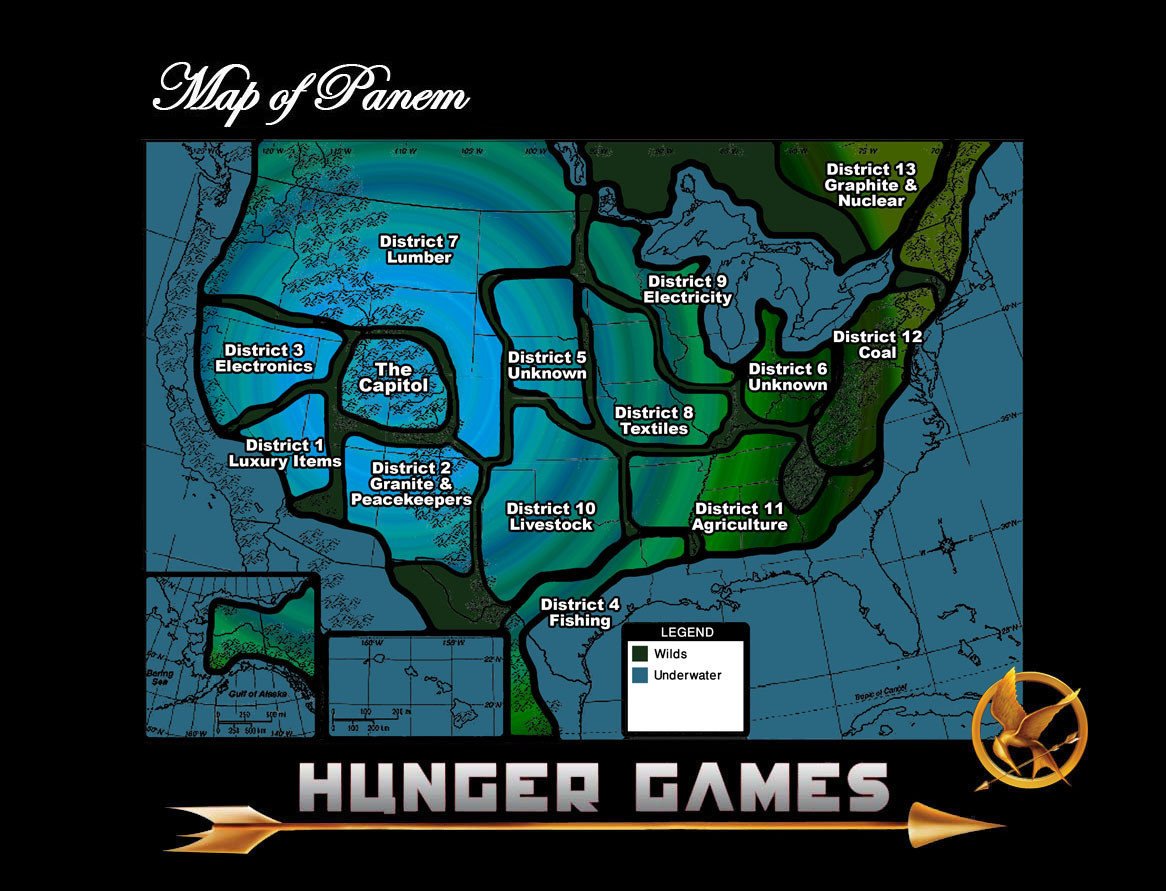
The size of the Hunger Games arena varies greatly between games, ranging from small, contained environments to vast, diverse landscapes spanning several square miles.
Ever wondered about the sheer scale of the battlegrounds in the Hunger Games? Many fans ponder exactly how big is the Hunger Games arena, and the answer isn’t always straightforward. The books and films depict diverse environments, each designed to test tributes in unique ways.
These arenas are not uniform; some are dense forests, others are barren wastelands, and some even feature water bodies and built structures. The size and complexity of each arena play a key role in the challenges presented to the contestants, significantly shaping the games and their outcomes.

How Big is the Hunger Games Arena?
Okay, let’s dive into the exciting, and sometimes scary, world of the Hunger Games! We all remember those intense moments when tributes are running for their lives, battling it out in the arena. But have you ever stopped to really think about just how big that arena actually is? It’s not just a small field; it’s a whole complex environment designed to test the tributes in every possible way. This place has to be large enough to house multiple dangers, varying terrains, and enough space for 24 tributes to initially spread out, then clash. So, let’s explore the question: just how big is the Hunger Games arena?
The Arena’s Purpose and Design
Before we talk about specific sizes, it’s important to understand why the arena is the way it is. The arena isn’t just a random piece of land. The Capitol designs each one carefully for several reasons:
- To Control the Tributes: The arena gives the Gamemakers a controlled space where they can create challenges, introduce dangers, and manipulate the tributes’ actions. They need enough room to separate and re-engage the participants based on the game plan.
- To Entertain the Audience: The arena’s size and varied environments keep the audience watching. A monotonous arena wouldn’t be very exciting! The changes in scenery, and the different challenges keep the spectators on the edge of their seats.
- To Push the Tributes to Their Limits: The vastness of the arena is meant to test the physical and mental abilities of the tributes. They have to think about survival, not just about fighting. The arena should push the tributes, forcing them to make hard choices.
Knowing these reasons helps us understand why the arena can be enormous and unpredictable.
Understanding Scale: The Arenas in the Books and Films
Now, when we talk about size, there isn’t an exact measurement given in the books or the films. Instead, the size is often described in terms of the varied terrain and the areas included in it. Think of it like describing a large park: you might not say it’s exactly 5 miles long and 3 miles wide but you would talk about the forest, the lake, the open meadow, and so on.
The 74th Hunger Games Arena
Let’s begin with the first arena we saw in “The Hunger Games” book and movie. This arena is usually described as having a mix of:
- The Cornucopia: The starting point. Tributes have the option to collect weapons, food, and supplies. A vast, open space that leads to many battles from the start.
- A Forest: This provides cover, opportunities for hiding, and resources like food and water, but also danger. The woods are dense and can hide unexpected things.
- An Open Field: A wide, flat area with little cover, designed to make it tough to hide. It is easy to spot other tributes.
- A Lake: A vital source of water, also provides a place for water-based battles and a place for aquatic resources.
- A Cliff Face/Rocky Terrain: Creates opportunities for strategic climbing and hiding, as well as the dangers of heights and falls.
While the size of these locations isn’t given in exact terms, it becomes evident that the entire arena would require a lot of area. It has to be big enough to accommodate 24 tributes, separate locations, and various dangers.
The 75th Hunger Games Arena (The Quarter Quell)
The 75th Hunger Games, known as the Quarter Quell, was an entirely different ball game. This arena, described as a tropical paradise, but with many hidden dangers. This arena was designed to confuse and disorient the tributes, with a clock-like structure to show time. This arena contained these primary features:
- The Central Hub: A circular area with the Cornucopia and pathways leading out.
- The Clock: Divided into pie-like sections with a different hazard at every sector, every hour. These areas included the following:
- Lightning Storms: One sector of the clock was hit with high voltage storms every hour.
- Poisonous Fog: Another sector contained a thick fog that would cause severe sickness.
- Blood Rain: A sector in which rain of blood would rain down.
- Jabberjays: A sector which included the jabberjay mocking birds, that would echo a person’s loved ones voice when distressed.
- Monkeys: A sector full of monkeys that would swarm and attack the tributes.
- Tidal Waves: One sector included massive tidal waves crashing.
- A Beach: The outer perimeter of the clock which was an open space.
- Jungle: A dense and dangerous jungle that concealed threats and resources.
This arena was more complex than the 74th games arena. Given that it featured a clock-like mechanism with sections that change every hour and wide areas of jungle, and the beach, this arena would be enormous and much larger than the 74th games arena.
Estimating the Area: A Detailed Look
Since we don’t have exact measurements, let’s try to estimate the arena’s size based on descriptions and what we know about the events that take place. We can make some good assumptions based on distances traveled within the arena, time it takes for tributes to go from one location to another, and how spread out the tributes were when the games began.
Using Travel Time and Distances
Think about the tributes’ movements, we often see tributes travelling over hours or even days. They often travel long distances to find water, food, or a safe place to rest. That kind of travel suggests that these arenas were not small. If we look at the 74th games, for example, we saw Katniss travel quite a distance from the Cornucopia, to get to the woods. Then again to the cave. This all adds up.
Comparing to Real-World Examples
The arena isn’t just a park, it is designed for survival and death. Let’s look at real life examples, such as large national parks. These are usually measured in thousands of acres. For example, Yellowstone National Park is about 2.2 million acres. While the Hunger Games arena may not be this massive, it needs to be large enough to simulate a real environment where people can go missing, create a challenge, and also be found if the Gamemakers want to get a specific player. Given that, we could guess the arena is most likely several thousand acres, or several miles wide. It has to be large enough to allow for varied terrains that can take days to cross, while also allowing the gamemakers to keep tabs on all tributes.
The Importance of Undisclosed Size
The lack of a specific, measurable size is no accident. This is strategic. It keeps the reader or viewer in suspense. Not having a precise size makes the arena more of an unknown force, more dangerous, and more imposing. This adds to the unpredictability of the games. The tributes are always in a state of uncertainty not knowing when and where something might attack or where the other tributes are.
Specific Challenges Related to the Arena Size
The size of the arena isn’t just about how much space there is, but the impact it has on the tributes. A large arena brings several challenges that they have to face.
Resource Management
In a large arena, tributes have to go far to find basic supplies. This is not just about finding food or water, but also about finding resources that could help them make a weapon, shelter, or stay protected. The distance they must travel to reach resources may make them weaker or more exposed to other dangers.
Isolation and Loneliness
The bigger the arena, the easier it is for tributes to get isolated. Isolation can make tributes feel very scared, anxious and make them feel like they are easy targets. For alliances, it is harder for them to find each other and stay together. Staying with your allies could prove dangerous as it makes it easier for other tributes to track and attack. The arena’s size greatly impacts social dynamics.
The Element of Surprise
A large arena also allows for elements of surprise, where tributes cannot anticipate when or where they may be attacked. They must always stay on alert. Gamemakers can also introduce dangers at any time and at any place, which makes it harder to be strategic. The hidden dangers may be hard to see coming, because the large size of the arena.
Comparing the Arenas Across Different Games
Each of the Hunger Games arenas are unique. They are each made with different features and different dangers. The environments are completely different and cater to the tributes in that specific games.
The Differences in Design
The 74th arena is more of a natural environment, while the 75th is more of a clock and has mechanical elements. There was also an arena with a desert and another arena with a jungle. Each of the arenas has different themes and dangers, which also impacted the size and layout.
The Impact on Tributes
The design of each arena forces the tributes to use different skills and strengths. The first arena rewards survival skills. The second arena demands adaptability to different kinds of threats. Each arena presents different kinds of challenges that the tributes must face in order to survive.
The Arena as a Character in Itself
The arena is not just a backdrop for the games. It’s an important part of the story. The design, size, and challenges in the arena reflect the twisted nature of the Capitol. The arena has a big influence on the tributes, and it almost acts like its own character. It’s a place of fear, death, and survival that will forever impact the tributes that are unfortunate enough to compete. The arena is like the main character in these stories because it controls the plot.
So, while we can’t say the Hunger Games arena is exactly this many square miles, or that many kilometers, we can understand that it is a vast and complex environment. It’s designed to push tributes to their limits, keep the viewers interested, and serve the story itself. The arena is a vital piece of the puzzle, making the games such a terrifying spectacle.
The arenas are an ever-changing, dangerous, and captivating space that contributes to the appeal of the Hunger Games.
Where are the arenas for the Hunger Games located?
Final Thoughts
The arena’s size varies greatly. Each Games presents a new, unique space. The Capitol designs them for specific challenges.
Considering the range of terrain, from forests to deserts, the exact area is never stated. This makes answering “how big is the hunger games arena” quite difficult. The scale is designed for strategic gameplay and must support the tribute’s survival.

