
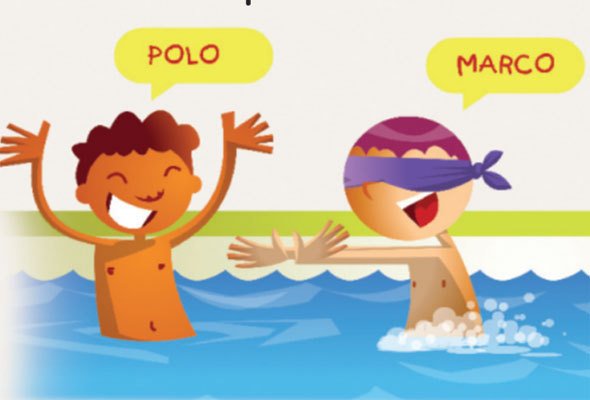
The exact origin of the “Marco Polo” game is uncertain, but it’s believed to have developed from older blind man’s buff variations and evolved over time into its current form.
Have you ever wondered how did the marco polo game start? It’s a simple yet fun game played in pools and yards, but its past is a bit of a mystery. We know it’s not something that someone invented on a single day; it’s evolved through many years and changes. The game likely came from various older games involving a person who can’t see.
Think back to games like blind man’s buff; “Marco Polo” seems like a natural extension of those ideas. The basic idea of someone who cannot see and who tries to catch others was a common theme in several games. This history gives us some ideas about where “Marco Polo” came from.

How Did the Marco Polo Game Start?
Ever splashed around in a pool, yelling “Marco!” and waiting for the reply, “Polo!”? It’s a classic game that kids (and even some adults!) have enjoyed for generations. But have you ever wondered where this fun game actually came from? It’s not as simple as you might think, and the answer might surprise you! There isn’t one specific moment or person that we can credit with inventing Marco Polo. Instead, it’s more like a fun tradition that developed slowly over time, borrowing ideas from other games and activities.
The Mystery of the Name: Why “Marco Polo”?
Let’s start with the most obvious question: why is it called “Marco Polo”? It’s definitely not because the famous explorer Marco Polo invented it! While he was an amazing adventurer, there’s no evidence he ever played a game quite like this. Historians think the name likely got attached to the game much later, possibly because of the wordplay involved. Think about it – “Marco” calls out and “Polo” replies. It’s a back-and-forth, just like the explorer’s journeys between faraway lands. The name probably stuck because it’s catchy and easy to remember, and kids loved the way it sounded!
Early Forms of “Blind Man’s Buff”
To understand how Marco Polo started, we need to look at some older games. Many believe Marco Polo evolved from games like “Blind Man’s Buff.” This game has been around for centuries, appearing in various forms across different cultures. In Blind Man’s Buff, one person is blindfolded and tries to catch the other players. It’s a game that relies heavily on listening, just like Marco Polo. Here are some things to know about Blind Man’s Buff:
- Ancient Roots: Evidence shows versions of Blind Man’s Buff were played in ancient Greece and Rome. That means people have been playing similar games for a very, very long time!
- Different Names: This game goes by different names around the world. This shows that the concept of a blindfolded person seeking others is widespread and popular.
- The Key Elements: Like Marco Polo, Blind Man’s Buff relies on being blindfolded, listening for sounds, and using those sounds to figure out where to go.
The similarities between Blind Man’s Buff and Marco Polo are quite clear. Marco Polo can be seen as a version of Blind Man’s Buff, but with a watery twist.
The Evolution: From Land to Water
How did a land-based game turn into a pool party activity? That’s a great question! It’s not entirely clear when the move to the water happened, but here are some ideas about how it may have occurred:
The Joy of Swimming: As kids started playing Blind Man’s Buff near or in water, it was natural for the game to become part of the fun of swimming. The added challenge of moving in water could’ve made the game more exciting. The use of sound became even more important in the pool because the water can make it harder to hear.
Adding New Elements: Over time, kids playing the game in the water probably added their own twists. Instead of just trying to catch each other, the “Marco” and “Polo” call-and-response might have emerged. This made the game easier to play in a larger area (like a pool) because people didn’t have to be right next to each other to play. The call-and-response also helps the person who’s “it” keep track of how many players there are.
Oral Tradition: Games like these are often passed down from one generation to the next through oral tradition. Kids show other kids how to play, and the game might change slightly each time it gets taught. This is why the game might be slightly different based on where you grew up or who taught you to play.
Variations and Adaptations
Like many classic games, Marco Polo has many variations. Some of these variations developed due to the way families or groups of friends played, but some also happened because of other creative additions.
Different “It” Rules:
Sometimes, the person who is “it” has to close their eyes instead of wearing a blindfold. In other cases, if the person who is “it” tags someone, the new “it” person has to say “I’m it” instead of “Marco.”
Using Other Words:
Instead of calling out “Marco” and “Polo,” some groups use different words or phrases, but the game follows the same basic rules. This can be especially true in countries that don’t speak English.
Adding Underwater Challenges:
Some kids like to add underwater challenges to make the game even more interesting. For example, if a person is tagged, they have to swim underwater for a certain distance before the game can continue. This can make the game even more physically demanding and fun!
Playing in Different Places:
Although the game is most often played in a pool, some people have played versions of Marco Polo in grassy areas, in gymnasiums, and in other large spaces. This shows how the basic concept of listening and finding others can be adapted for many different situations.
Why Marco Polo is So Popular
Even though we don’t know the exact moment it started, Marco Polo’s popularity isn’t a mystery. Here’s why this game has stood the test of time:
- Easy to Learn: The rules are very simple, making it easy for kids of all ages to learn and play.
- Fun for All Ages: Both kids and adults enjoy Marco Polo, making it a great activity for families.
- Promotes Physical Activity: It’s a fun way to get moving, especially when playing in the water. Swimming around and trying to catch the other players is good exercise!
- Great for Large Groups: Marco Polo is perfect for parties and large groups of kids. It’s easy to include everyone.
- Encourages Listening Skills: The game requires players to rely on listening to find their friends, which helps develop this important skill.
- Adaptable: The game can be easily adapted to different settings and situations. As we talked about, you don’t have to play it in a pool; any big area will work.
- It’s Fun and Simple: At its core, Marco Polo is just a simple, fun way to play with friends!
A Look at Cultural Games
Just as Marco Polo is a popular game in many countries, different cultures around the globe have their own traditional games. Many of these games are also very simple and involve listening and physical activity. This highlights that children everywhere enjoy playing and that many of our games have common elements.
Examples of Global Games:
- Hide-and-Seek (Various Countries): A very common game where one person counts while others hide.
- Tag (Various Countries): A chase game where one person is “it” and tries to tag the other players.
- Dodgeball (Various Countries): A game where players try to avoid getting hit by a ball.
- Hopscotch (Various Countries): A game where players hop through a pattern of squares.
These games, along with Marco Polo, prove that simple games are often the most loved by children worldwide. Whether you’re calling out “Marco!” or something else entirely, playing games together is a timeless tradition.
The Enduring Legacy of Play
Games are more than just fun; they help children develop social skills, learn about teamwork, and stay active. Marco Polo, like the games mentioned above, is an example of how simple interactions can provide long-lasting joy. These games are important parts of childhood, and many kids will pass these traditions on to the next generations. The fact that Marco Polo continues to be played shows how valuable it is, as it provides laughter, fun, and a chance to bond with others.
So, while the exact origins of Marco Polo are a little bit murky, the game’s long history and widespread popularity are clear. It’s a game that combines the fun of swimming with the thrill of the chase, and it relies on listening skills and a bit of creativity. Whether you’re playing it in a pool, a backyard, or some other space, Marco Polo remains a timeless and beloved activity. This simple game provides hours of fun for kids, and possibly for adults as well, as they remember the joys of their own childhoods. It is a testament to the power of play, and how games create connections between people, no matter where they come from.
How to Play Marco Polo
Final Thoughts
Marco Polo’s origins are hazy, not linked to the explorer himself. Some propose it evolved from blind man’s buff. People think that children made up variations of tag games over time.
The game’s simple ‘Marco’ call and ‘Polo’ response allowed people to play it. The game became very popular as a swimming pool fun activity. Therefore, understanding how did the marco polo game start reveals its organic development.

