
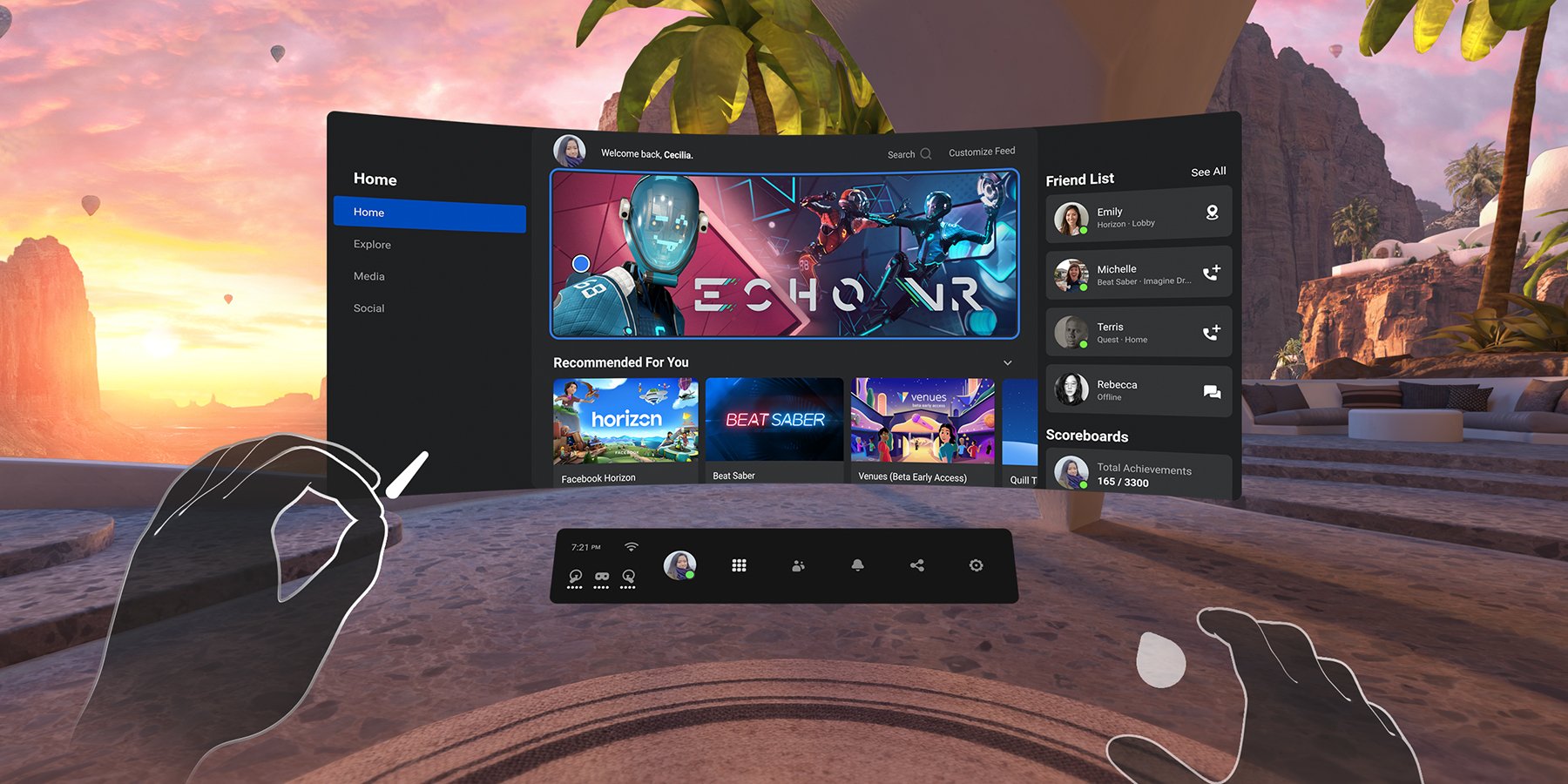
Meta Quest games function by utilizing the headset’s built-in processor and sensors to render virtual environments and track the player’s movements, creating an immersive interactive experience.
Ever wondered how those captivating worlds on your Meta Quest come to life? It’s fascinating to consider how do meta quest games work, isn’t it? These games aren’t just simple videos.
They use the power of the Meta Quest’s tech, letting you move around inside the game. The headset follows your head and hand motions, so your actions translate into virtual ones. This creates the unique feeling of actually being present within the game’s environment.

How Do Meta Quest Games Work?
Ever wondered how those amazing virtual worlds in your Meta Quest headset actually come to life? It’s not magic, even though it might feel like it! Let’s dive into the exciting world of how Meta Quest games work, breaking down all the cool tech and processes that make them tick. We’ll explore everything from the basic hardware to the complex software that creates those immersive experiences you love.
The Foundation: Meta Quest Hardware
Before we get into the games themselves, it’s important to understand what makes the Meta Quest, well, a Meta Quest. The headset itself is a powerful piece of technology that combines several key components to create the virtual reality experience.
The Core Processing Unit
At the heart of every Meta Quest is a special computer processor, similar to the chip in your phone or laptop, but designed specifically for VR. This processor handles all the calculations needed to run the game, from the graphics to the physics. Think of it as the brain of the operation, working hard behind the scenes to make everything smooth and responsive.
The Display
Instead of a single screen, the Meta Quest has two tiny displays, one for each eye. These screens are very high-resolution and work in tandem with the lenses inside the headset to create a 3D effect. This is what gives you the sense that you’re actually “in” the game world.
The Lenses
The lenses are crucial for focusing the image onto your eyes. They also adjust the image so that both your eyes see slightly different angles of the same scene, which creates the depth perception we call 3D. These lenses are carefully crafted to ensure the image is clear and comfortable to view.
The Tracking System
To make your movements translate into the game, the Meta Quest uses a system of cameras and sensors, the tracking system. These cameras, usually placed around the headset, constantly watch your surroundings and your controllers to determine your location and movement. This lets you move around the virtual world naturally, and interact with objects in the game.
- Inside-Out Tracking: This is the main system used by Meta Quest. Cameras on the headset track your movement relative to the environment.
- Controller Tracking: The headset also tracks the controllers, so you can use them to pick things up, swing swords, or perform other actions in the game.
The Controllers
Meta Quest controllers are not just buttons and triggers. They have their own sensors and tracking capabilities, communicating with the headset to make your virtual hands move just like your real ones. They’re designed to be intuitive and easy to use, even in complex game environments.
The Audio
Spatial audio is super important for making VR feel real. The Meta Quest uses built-in speakers that give you the sense of sound coming from different directions in the game world. This helps you feel like you’re actually present in the environment. It also provides important audio cues for game play.
How the Games Themselves Work
Now that we’ve looked at the hardware, let’s explore how Meta Quest games are actually made and run.
Game Engines
Most Meta Quest games are created using something called a “game engine.” Think of this as a toolbox that gives game developers all the tools they need to create a game. These engines handle a lot of the complicated stuff, like rendering graphics, handling physics, and managing game logic.
- Unity: A very popular game engine, many Quest games are made with Unity because it’s easy to use and offers great features for VR development.
- Unreal Engine: Another widely used game engine, known for its high-quality graphics and powerful features.
Programming
Game developers write code, using programming languages, that tells the game what to do. This code is what makes characters move, objects interact, and all the other amazing things you experience. It’s like writing a really detailed set of instructions for the computer to follow.
Let’s make this more clear with an example. Imagine you are playing a game and you want to pick up an item. The code would say something like this – “When the player presses the grab button on the controller, check if the virtual hand is touching an object. If it is, make that object attached to the virtual hand.” This set of instructions is called programming, and it’s necessary to make the game work.
Rendering Graphics
To create those amazing visuals, game engines use a process called “rendering”. This process takes all the 3D models, textures, and lights in the game and converts them into 2D images that you see on the headset’s screens. Rendering is like an artist that transforms the scene from ideas to the visuals.
Physics Engine
Many games involve objects reacting to forces, like gravity. A physics engine is a part of the game engine that calculates how things should move and interact. This is the reason why you feel like you are playing in real world. This provides that feeling of realism and allows you to pick things up, throw things, and watch things fall naturally.
Game Logic
Game logic is the set of rules that make the game work. It covers everything from what happens when you complete a level to how non-player characters (NPCs) behave. This keeps the game interactive and fun. It ensures that game is consistent and makes it engaging and fun to play.
Input Handling
The game needs to understand what you’re trying to do with the controllers and your movements. This process of input handling takes information from the sensors and turns it into actions in the game. When you move your head, your character should also move, that is called input handling. For example, when you press a button, this sends a signal that is handled by the game so that specific action is performed.
Multiplayer
When you play with friends, the game connects to a server where all the players are present in one virtual room or location. This enables all the players to see and interact with each other and also play the game together.
- Networking: Games that allow you to play with others use complex networking systems to ensure that everyone sees the same game and can interact with each other smoothly.
- Server-Client Architecture: Most multiplayer games use a system where a central server handles the game data, while the individual player headsets act as “clients” that communicate with the server.
Audio Processing
Sounds in games need to match the visuals. Audio processing makes sure that sounds like footsteps or explosions come from the correct location in the virtual world. This greatly improves immersion and makes the game feel real. It also makes the experience more engaging.
The Development Process
Creating a Meta Quest game is a complex process that involves many people and many steps.
Concept
It all starts with an idea! Developers brainstorm ideas, think about the type of game they want to make, and figure out who their audience is. This is where they make decisions like, what would the game look like, what kind of story they will tell, or what will be the main objective of the game.
Design
Once the concept is established, game designers create the detailed plan for the game. This plan includes the story, levels, characters, game play mechanics and the user interface.
- Level Design: Game designers craft the game environments, decide where items should be placed, and how players will move through the levels.
- Character Design: Characters are created with unique looks and personalities.
- User Interface (UI): UI designers make sure the game is easy to navigate and play.
Art Creation
Artists create the 3D models, textures, and special effects that make the game look awesome. They’re responsible for giving the game its visual style and making the virtual world look believable.
Programming
The programmers take the game design and turn it into code. They create the systems that make the game work and make sure that it runs smoothly and responds to player interactions.
Sound Design
Sound designers create all the sound effects and music in the game. They make the game more immersive and help create the right mood. Sound designers create the ambience for the game, and it’s equally important like visuals to make a game feel good.
Testing
Before the game is released, it goes through many rounds of testing. Testers play the game and find bugs or problems. This is essential to make sure the game is fun to play and runs smoothly.
Optimization
Meta Quest games must run on mobile hardware, which means they need to be optimized. Developers work to reduce the demand on the processor and make sure the game runs smoothly without any hiccups.
Release
Finally, the game is ready to be released! It’s uploaded to the Meta Quest store where anyone can download it and play. The release is usually followed by updates to make the game better.
Different Kinds of Meta Quest Games
There’s a wide variety of games available on Meta Quest! Here’s a look at a few popular types:
Action Games
These games involve fast-paced action and require quick reflexes. Think shooting games, fighting games and games where you have to swing swords. They are designed to get your heart rate going!
Adventure Games
In these games, you explore virtual worlds, solve puzzles, and go on quests. They’re often focused on storytelling and exploration. It’s like stepping into your favorite storybook.
Puzzle Games
Puzzle games challenge your mind with tricky problems to solve. They’re perfect for relaxing and keeping your brain active. They are like brain-training exercises in a fun way.
Social Games
These games are focused on interacting with other players. You can play with friends, meet new people, and have fun together in a virtual world. It’s like having a virtual playground to play with others.
Fitness Games
These are designed to get you moving! They can turn working out into a fun and immersive experience, often tracking your calories burned and progress made. It makes fitness a game, so you don’t feel like you’re working out.
Educational Games
These games are both fun and informative. You can learn about new things while playing, from exploring outer space to traveling to distant lands. It’s a fun way to learn about the world around you.
The Future of Meta Quest Games
The world of Meta Quest games is always changing. New technology is always coming and game development is advancing, which always makes games better and more immersive. Developers are constantly pushing the boundaries of what is possible in VR games.
Improved Graphics
We can expect graphics in games to keep getting better as the hardware improves. We will see more realistic details and more immersive environments in the future games.
More Realistic Physics
With advancements in technology, we might see game physics become even more realistic. Imagine being able to interact with objects in the game like you do in the real world.
Advanced AI
We might see more complex artificial intelligence in games, making characters smarter and more interactive. This would make non-player characters (NPCs) behave more believably.
Expanded Social Experiences
Social VR is becoming more important. We might see more opportunities to play with friends and meet new people in virtual spaces. This would make the VR world a big playground to meet, connect, and play together.
New Input Methods
Apart from controllers, we might see other methods of interaction, like hand tracking, body tracking, or even brain-computer interfaces. These new methods would make interaction even more natural and intuitive.
Meta Quest games work because of a combination of impressive hardware, clever software, and a lot of hard work from talented game developers. By combining all of these elements, we get to experience truly immersive and amazing virtual worlds. The process of creating a Meta Quest game is a complex collaboration of art, technology, and storytelling, making the virtual world we get to experience incredibly fun and captivating. With the progress of technology, we can be sure that Meta Quest games will keep getting better and more amazing in the future.
Endless FREE Quest 2 Games! #metaquest #quest #virtualrealityheadset
Final Thoughts
Meta Quest games function by running directly on the headset’s hardware. They use the built-in processor, graphics, and sensors for processing and display. This creates the immersive, standalone VR experience.
The games are downloaded and installed onto the device. Then they can be played without the need for a separate computer. ‘how do meta quest games work’ is essentially this local processing system.
Developers create content with specific tools for the Quest platform. The game logic interacts directly with the headset’s software and sensors for accurate tracking. It provides fluid and engaging gameplay.

