
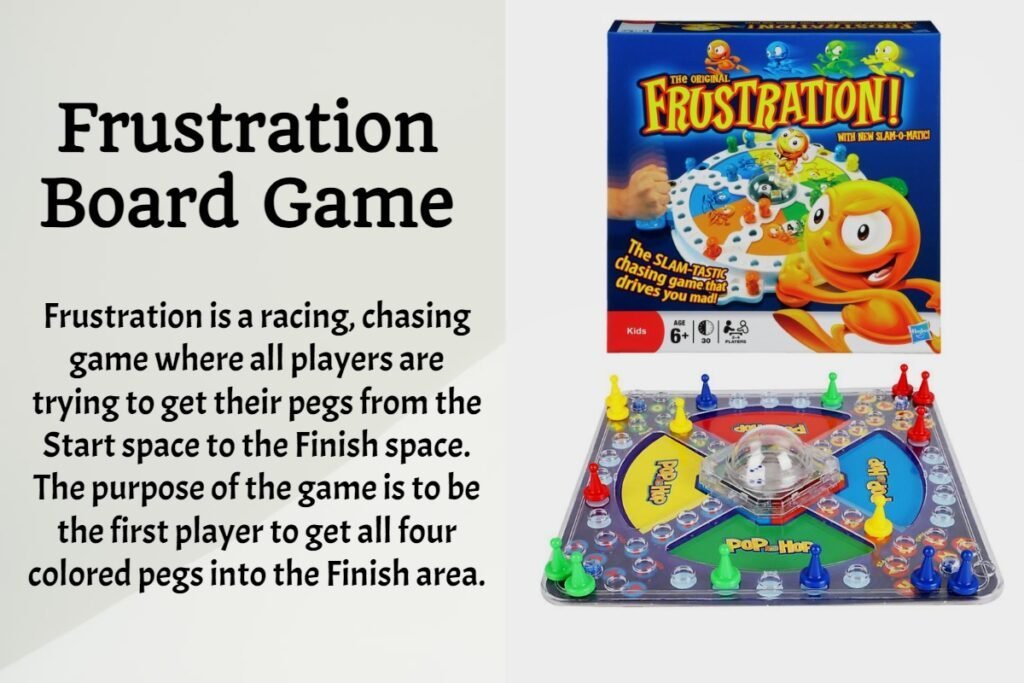
You play frustration board game by rolling a die to move your pegs around the board, aiming to get all four into the home spaces. The game features a ‘pop-o-matic’ die roller and you can bump other players back to their starting point.
Ever wondered how do you play frustration board game? This classic family game, known for its tense moments and strategic moves, is simpler than it seems. You’ll quickly grasp the core mechanics and start plotting your victory.
The satisfying pop of the die and the anticipation of moving your pegs makes the game exciting for all ages. It combines luck with simple strategies that make each game feel unique.

How Do You Play Frustration Board Game?
Okay, let’s dive into the exciting world of the Frustration board game! If you’ve ever seen that colorful board with little plastic pegs and a special die in the middle, you might have wondered, “How do I actually play this thing?” Don’t worry; it’s not as tricky as it might look! This game, also known by names like “Trouble” in some places, is all about a fun race, a little bit of luck, and a whole lot of anticipation. We’re going to walk through every step, so you’ll be popping those pegs and zooming around the board in no time.
Setting Up for a Round of Frustration
Before we can begin the chase, we need to set the stage. Frustration isn’t too complicated to get ready for, and these simple steps will have you rolling the die quickly. Here’s what you need to do:
- The Board: First, place the game board in the center of the playing area. Make sure everyone can easily reach the board and the Pop-O-Matic die.
- The Pegs: Each player chooses a color of pegs. The usual colors are red, blue, yellow, and green, but sometimes there are variations. Take your four pegs of the same color and place them in the starting area of your color. This is often a semi-circle that matches your peg color, located towards the outside edge of the board.
- The Pop-O-Matic Die: The special die in the middle is your key to movement. It’s covered by a plastic dome that you press to make the die jump. Make sure it’s clear and ready for popping.
Understanding the Board
The Frustration board is a circular path with spaces for each of the players. Around the edges, you’ll find the main track, and close to each starting area, you’ll spot a “home” area. This is where each peg hopes to end its journey. Each player’s starting space is often marked by the same color as their pegs. It’s like having a personal launching pad for your pieces.
The Basic Gameplay
The goal of the Frustration game is straightforward: be the first player to get all four of your pegs around the board and into your home area. However, there are some important rules to understand that adds a bit of a challenge.
Getting Started – The Magic of Six
To get one of your pegs out of the starting area and onto the board, you must roll a six. This might sound simple, but it can actually be one of the most frustrating parts of the game! It’s why the game has its name! Once you get a six, place one peg on the space right after your starting area (often the next colored space on the circle). You can only have one peg on each space, so if another player is already there, you’ll need to find an open space to move, so that player doesn’t block your progress.
Moving Your Pegs
After your first peg is on the board, each turn, you press the Pop-O-Matic to roll the die, and the number you get dictates how many spaces you can move your pegs. Here are the basics of movement:
- Moving Forward: Move any one of your pegs forward the exact number of spaces that you pop up on the die. You can only move one peg per turn, even if the result of the die allows more spaces to move.
- Multiple Pegs: You can have multiple pegs on the board at once, and each turn, you get to choose which peg you’ll move. Decide wisely!
- Following the Path: Pegs move along the circle path, following the colored spaces.
- No Cutting Corners: No skipping over spaces. You have to move each peg space by space in numerical order of the numbered track around the board.
The Art of Bumping
One of the most interesting things in the game is “bumping”. This is where things get exciting. If your peg lands on a space already occupied by another player’s peg, you can send their peg right back to their starting area. That player has to wait for another six to start their adventure all over again. Bumping adds a strategic element and keeps everyone on their toes. Be aware, however, that if your own pegs are on the same color, your pegs cannot bump each other.
The Home Stretch
The final goal is to get all your pegs safely in the “home” area, often found in the center or near your starting area. However, you can’t just move into the home area from anywhere. Here are the final steps:
Entering the Home Area
You must get your peg to land precisely on the space right before your colored home. From that space, your pegs will be able to move right into the home area. Now, you still need to roll the precise number to land inside your home zone. For example, if you are one space outside of your home zone, you must roll a 1. If you are two spaces out, you must roll a 2 and so on.
Finishing the Game
The first player to get all four of their pegs into their home area wins the game. After the winner, if you would like to keep playing to get the second, third and forth positions, you can continue to play until everyone has gotten their pegs into their home spaces. The first person to get all four pegs home is declared the winner.
Important Rules to Remember
To make sure the game is fair and enjoyable for everyone, remember these key rules:
- The Six Rule: You must roll a six to start a peg on the board.
- One Peg Per Space: Only one peg can occupy a space at any time. If someone is there, you’ll need to send them back to the start.
- Precise Movement: You must move the exact number of spaces rolled on the die.
- Bumping: If you land on another player’s peg, you send it back to its starting area.
- The Home Run: Move your peg directly into your home zone after moving onto the space before it.
Strategy Tips for Frustration
While Frustration involves luck, a dash of strategy can greatly enhance your chances of victory. Here are some helpful tips that you can use:
Balancing Pegs on the Board
Don’t get too caught up on moving just one peg forward. Spread them around the board. Having multiple pegs out means you have more options, and your peg may be further from other players.
Use Bumping Wisely
Sometimes bumping another player back to the start, especially if they are about to enter their home, can give you a great advantage. Always keep an eye on the other players’ pegs and try to find the best spots to set up a block for them!
Keep the Die Rolling
Keep pressing that Pop-O-Matic with enthusiasm! The more you pop, the more opportunities you have to move your pegs forward.
Plan Ahead
Look at your opponent’s positions and try to move your pegs strategically. If you see an opportunity to bump someone, plan your move to take that chance.
Variations and Fun Twists
Sometimes, players like to add their own little twists to the rules to make things even more interesting. These are just variations, and you don’t need to change anything to have a great game of Frustration. Here are a few ideas:
House Rules
- Double Six Start: If a player rolls two sixes in a row, they can move two pegs out of their start zone on their first turn.
- The Safe Space: Some people choose to implement a “safe space” on the game board where players cannot get bumped. This can be any of the board spaces.
- Continuous Play: If there are fewer than 4 players, continue taking a turn until all players have had a chance to complete their first move.
Team Play
If you have more people, you can play in teams! Just split up into groups and work together to get all your team’s pegs home. This adds a fun layer of teamwork to the game.
Why Is It So Fun?
Frustration game is very popular because it’s so simple to learn but has enough of a mix of luck and strategy to keep it exciting. It’s a great game for families and friends to enjoy together. Here are some reasons why it is enjoyable:
- Easy to Learn: The rules are very simple for all ages to understand quickly.
- Fun for All Ages: From young children to grandparents, everyone can have fun with this game.
- Fast-Paced: Each turn is fast, so there’s always something happening.
- Unpredictable: The dice roll and bumping action make sure every game feels new.
- Competitive: That race to get your pegs home brings out the competitive spirit in all of us.
A Game For Everyone
The Frustration board game is more than just popping pegs around a circle. It’s about friendly competition, good times, and maybe a little bit of playful “frustration” when you get bumped back to the start! Hopefully, you’re now ready to grab the game and get popping. Remember these details and you’ll be all set to enjoy this classic board game. Good luck, have fun, and may your sixes be plentiful!
So, whether you’re playing with family, friends, or even on your own, Frustration is a fantastic game that delivers endless entertainment. Now you have everything that you need to know to start enjoying this game with your loved ones!
this is how you play Frustration! board game by Hasbro
Final Thoughts
To play, each player takes a set of colored pawns. Roll the die and move your pawn around the board. You must land exactly on the finish square.
If you land on another player’s pawn, you send it back to start. The goal is to get all your pawns to the home base first.
The frustration is that you must roll a six to get your pawns out of start. So, how do you play frustration board game? You need a good combination of luck and strategy to win.

