
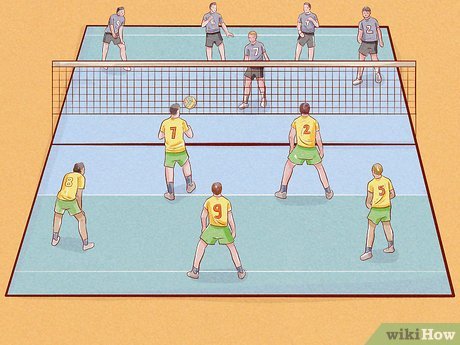
Scoring a volleyball game involves awarding a point to the team that successfully grounds the ball within the opponent’s court, commits a fault, or when the other team fails to return the ball legally.
Ever watched a volleyball match and wondered what’s going on with the numbers? The back-and-forth action is exciting, but understanding how the score ticks up is key to enjoying the game fully. So, how do you score a volleyball game? It can seem tricky initially, but it’s actually quite straightforward once you grasp a few basic rules.
Essentially, a point is awarded to a team after each rally. If one team fails to return the ball or commits an error, the other team gets the point. Also, when the ball lands inbounds on the other side you get a point, it’s really that simple.

How Do You Score a Volleyball Game?
Understanding how to score a volleyball game is super important, whether you’re a player, a coach, or just a fan who loves to watch the exciting action on the court. It might seem tricky at first, but once you grasp the basics, you’ll be keeping track of the score like a pro! Let’s dive into everything you need to know about how volleyball scoring works.
The Basic Goal: Winning Points
In volleyball, the main idea is simple: win points! But how do you actually earn these points? Well, a team scores a point in a few different ways. The most common way is when the other team makes a mistake. This can happen if they hit the ball out of bounds, if they let the ball hit the floor on their side of the net, or if they break a rule (like touching the net during play). Think of it like a friendly competition where each team is trying to make the other team make a mistake. Here’s a quick rundown of how a team can win a point:
- The ball hits the ground on the other team’s side. If you hit the ball over the net and it lands inside the boundary lines on their side, without them legally touching it, you score!
- The other team hits the ball out of bounds. If your opponent hits the ball and it lands outside the court lines, you get a point.
- The other team commits a fault. Faults can happen for a variety of reasons, like touching the net during play, hitting the ball twice in a row, or stepping over the center line.
- The other team fails to legally return the ball. If they don’t get the ball back over the net within three touches, that’s a point for you!
Rally Scoring: Points on Every Serve
Most volleyball games use a system called “rally scoring.” This means that a point is awarded on every single serve. It doesn’t matter who served the ball; if one team makes a mistake or hits the ball in such a way that other team is not able to return it legally, the other team will earn point. This is a big deal because it makes games faster and more exciting. In the past, a team could only score points when they were serving. Imagine how long some games could go if there was not rally scoring.
So, if your team serves and wins the point, you get a point and your team continues to serve. If the other team wins the point, even though your team served, they get the point and become the serving team. This back and forth continues until one team wins the set.
Winning a Set: Reaching the Target Score
Okay, so we understand how to get points. But how do you actually win the game? Volleyball is played in sets. Most of the time, teams need to win a certain number of sets to win the match. A set is won when a team reaches a certain number of points, usually 25, and they also have to win by at least two points.
The Two-Point Advantage
That last part is very important! You can’t just stop at 25 points if the other team has 24 points. Your team has to reach 25 points and have at least a two-point advantage over the other team. So, a set might end with a score of 25-23 or 26-24. But it could go higher until the two-point difference is reached. If the score is tied at 24-24, it will continue until one team has a lead of two points. For example, 26-24, 27-25, 28-26, and so on.
How Many Sets?
The number of sets needed to win a match can vary. Often, a match is won when one team wins three sets. So, this means the team who wins three sets first is the winning team. In some leagues or tournaments, they might play best of 5 sets, which means the first team to win 3 sets will win the match, or there might be some variation to this rule. You should always check the rules before you start to make sure you know how the matches are scored.
Keeping Track: The Scoreboard
Now, let’s talk about keeping track of the points. In volleyball, you’ll usually see a scoreboard which might be a digital board, or it might be an old-school manual board. On the scoreboard, there will be sections to show the score of each team. The board is usually setup so you can easily see which team has the point, how many sets each team has won, and whether or not someone needs a substitution. The scoreboard makes it super easy for the crowd to follow along and know what is happening.
Specific Scenarios: What Happens if…
Sometimes, in the heat of the game, special situations come up. Let’s take a look at some of them to better understand volleyball scoring.
What Happens When a “Let Serve” Occurs?
Sometimes, when serving, the ball might hit the top of the net and then go over and into the opponent’s court. This is known as a “let serve.” When this happens, the ball is still in play. The other team needs to play the ball if they can. If they fail to play the ball, then the serving team wins the point, but a let serve does not mean that the serving team automatically gets the point. The point is still in play unless the serving team makes a mistake on the serve or the ball goes out of bounds.
What About When a Ball Touches the Antenna?
Every volleyball net has two “antennas”, which are the flexible red and white rods at the side of the net. These antennas mark the edge of the playing area. If the ball touches the antenna, it is usually considered out of bounds. This means if a team hits the antenna while playing the ball, the point goes to the other team.
What Happens During a Time Out?
Coaches are allowed to take time-outs during the game. The time outs are very short. These are usually called to discuss strategies with the team. During the time out, the score is frozen, no points are added to any team, and the game will continue when the time out is over.
How Do You Score a Tiebreaker Set?
If a match goes to a fifth set (a tiebreaker set), the scoring rules are slightly different. The tiebreaker set is usually played to 15 points, but just like regular sets, the team still needs to win by two points. This makes the tiebreaker set even more tense and exciting.
Keeping a Score Sheet: The Official Way
While everyone can track scores on a scoreboard, official games also have a scorekeeper who records everything on a score sheet. This sheet is used to keep a record of every point, serving rotation, substitutions, and time outs. The score sheet provides a record of what happened in the game, and this allows anyone to review how things unfolded. Here’s some of what is tracked on the score sheet:
- Points Scored: Every point is marked next to the correct team on the score sheet.
- Serving Rotations: Each time a team wins a point and gets the serve, the scorekeeper notes which player is serving.
- Substitutions: When players are replaced, the scorekeeper notes who went in and out.
- Timeouts: The times when coaches call for a time out are noted on the score sheet.
Keeping a score sheet helps ensure accuracy and accountability. This is important for official games and tournaments. A good scorekeeper is crucial to ensure there is no confusion about what happened during the game.
Simple Tips for Beginners
If you’re just starting out learning about volleyball scoring, don’t worry if it seems like a lot to keep track of. Here are a few simple tips to help you:
- Focus on Rally Scoring: Remember, points are awarded on every serve, not just when your team is serving.
- Know the Target Score: Remember that in order to win a set you need a certain amount of points and you also need to win by 2 points.
- Watch the Scoreboard: Pay close attention to the scoreboard. It’s the easiest way to track the points.
- Practice Makes Perfect: The more you watch and play, the easier it will become!
Scoring volleyball can be fun and rewarding once you understand how things work. As you become more familiar with the process, you’ll be tracking scores and watching games with a better understanding and appreciation for the sport!
Volleyball scoring is a fundamental aspect of the game, a blend of skill, strategy, and keen observation. By understanding the core principles of rally scoring, the importance of two-point leads, and the nuances of tiebreaker sets, one can fully appreciate the dynamics of a volleyball match. Whether you are a player striving for victory, a coach guiding a team, or a fan enjoying the game, understanding how points are earned and tracked makes the experience all the more exciting. The detailed record keeping of a score sheet offers an official account of the competition, allowing for transparency and accountability in every game. Through simple tips and consistent observation, anyone can grasp the fundamentals of volleyball scoring and enjoy the exciting world of volleyball.
How Volleyball Works (and Volleyball Scoring Rules!)
Final Thoughts
To score volleyball, a team earns a point when the opposing team faults. This includes hitting out of bounds or failing to return the ball. Teams play until one reaches a certain number of points, usually 25, with at least a two-point advantage.
The rally scoring system means each serve results in a point. This speeds up gameplay and keeps the score moving. Therefore, how do you score a volleyball game? You track points awarded to the team when they win a rally.

