
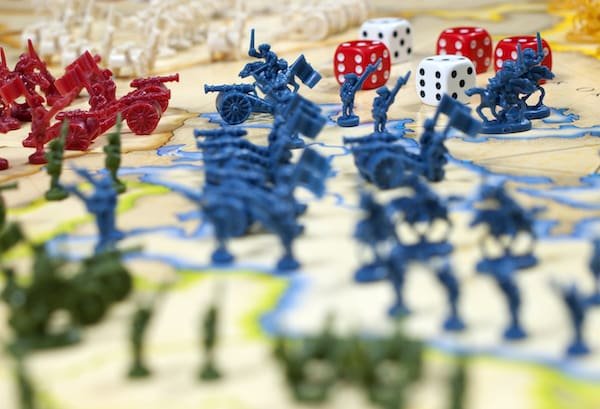
War games work by simulating conflicts using models and rules, allowing participants to explore strategies and outcomes without real-world consequences.
Ever wondered how military planners and analysts prepare for complex scenarios? They often use war games, a powerful tool that offers a safe space for experimentation. These games are not about digital entertainment; they are carefully constructed exercises.
The process involves creating a fictional conflict, specifying forces, and outlining rules. Participants then act out their roles, making decisions that impact the simulation’s trajectory. So, that is exactly how does war games work in essence. These simulations provide valuable insights.

How Does War Games Work?
Ever wondered how generals and military leaders plan big battles? They don’t just jump into action without thinking! They use something called “war games” to figure out the best strategies. War games aren’t about playing with toy soldiers; they’re a serious way to predict what might happen in a real conflict. Think of it like a practice test for a very important event. Let’s explore how these games work and why they’re so important.
What are War Games?
At their core, war games are simulations of military operations. These aren’t video games you play on a console. Instead, they are carefully planned exercises where people, often military personnel, act out different roles and scenarios. They use maps, models, and sometimes even computer programs to see how a battle might unfold. The goal is to try out different strategies and see what works best without the real risks of combat. It’s like playing chess, but with much more complicated pieces and stakes.
The Key Components of War Games
To really understand how war games operate, it’s helpful to break down the main elements that make them up:
- The Scenario: Every war game begins with a scenario or a story. This scenario describes a hypothetical conflict. It might involve two imaginary countries, a natural disaster that requires a military response, or even a potential terrorist attack. The scenario lays the groundwork for the whole exercise and determines what challenges the participants face. For example, the scenario might set the stage for a conflict over natural resources or a response to a cyber attack.
- The Players: War games involve teams of people. Each team represents a different side in the scenario. These could be different military units (army, navy, air force) or other groups, like emergency responders or civilian leaders. The players are the ones who make decisions and react to the events that occur.
- The Rules: Like any game, war games have rules. These rules are often quite complex and try to mimic the realities of warfare as closely as possible. They define what actions are allowed, how much damage different weapons can do, and how long it takes to move troops from one place to another. The rules keep the game fair and structured, but also allow for some creativity in how players respond to different situations.
- The Facilitators: Someone needs to run the war game. That’s where facilitators come in. They set up the scenario, enforce the rules, and keep the game moving. They also observe what the players do and take notes on what worked well and what didn’t. They act like referees and game masters combined, making sure things run smoothly.
- The Environment: This could be a large map, a computer program, or even a combination of both. This environment is used to depict the area where the simulated conflict occurs. Players use the environment to move their forces and make plans.
Different Types of War Games
War games aren’t all the same. There are different kinds that are used for different purposes. Here are some of the most common types:
Tabletop Exercises
These are some of the simplest types of war games. They often involve a large map or a model of the area where the conflict takes place. Players use small markers or pieces to represent their troops and equipment. They discuss their strategies around the table and make decisions about where to move their forces. Tabletop exercises are great for testing out different concepts and getting people to think creatively. They are also easy to set up and don’t require a lot of fancy technology.
Computer-Assisted Simulations
With the development of computers, war games also moved into the digital realm. These simulations are often much more detailed than tabletop exercises. They can model things like the weather, the effectiveness of different weapons, and the morale of troops. They allow players to react to events in real-time, which means the simulation can move quickly and be very dynamic. Computer-assisted simulations can be very immersive and provide valuable training.
Live Exercises
Live exercises involve real troops and equipment in the field. These are much more expensive and complicated to organize, but they provide the most realistic training experience. Soldiers get to practice their skills in a dynamic environment, and commanders get to test their plans under pressure. Live exercises can be incredibly helpful to identify weaknesses in the plans and train soldiers better. They also help improve coordination between different military units.
The Process of a War Game
So, how does a typical war game unfold? Let’s look at the process step-by-step:
- Planning: First, a team of experts carefully designs the scenario, rules, and environment of the game. This can take weeks or even months. They have to consider all the key factors that will affect the outcome. For example, what are the capabilities of each side, and how will weather or terrain affect the movements?
- Briefing: Once the game is ready, the facilitators brief the players on the scenario, rules, and their specific roles. Everyone needs to be clear about what they are supposed to do and how the game is played.
- Execution: The players then begin to make decisions and carry out their plans. They move their troops, make attacks, and respond to the actions of the other side. Facilitators monitor the game and ensure that the rules are followed. The game can last for hours, days or even weeks depending on its complexity.
- Analysis: After the game is over, the facilitators and players analyze the results. They look at what worked well, what didn’t, and why. They write reports about their findings and develop plans to improve their strategies and processes. This is a very important step as it is where valuable lessons are drawn from the whole exercise.
Why are War Games Important?
War games are not just a way to pass time for military personnel. They provide significant advantages that justify the time, effort and resources invested in them. Here’s why they are so important:
Testing Strategies
The biggest benefit of war games is that they allow generals and leaders to test different strategies before committing to them in a real situation. By trying out different approaches, they can identify their weaknesses and find better solutions. It is like experimenting with different ingredients in a recipe until you get the perfect taste, but with much higher stakes.
Identifying Weaknesses
War games can reveal areas where plans are flawed or troops are poorly prepared. This is very valuable as this knowledge can be used to make necessary improvements before actual deployment. It’s better to discover problems in a simulation rather than during a real conflict. By noticing and resolving these deficiencies ahead of time, they can prevent many potential problems and improve the chances of success in the real world.
Developing New Tactics
During a war game, people can brainstorm and come up with new ways of doing things. Sometimes, the constraints of the game can push participants to think outside the box and produce creative strategies. This innovation can lead to better tactics in the real world.
Training Leaders
War games provide an opportunity for commanders and decision makers to hone their leadership skills in a safe and realistic environment. They get to practice making decisions under pressure and coordinating the activities of many different people. These abilities are vital for effective leadership in a crisis or wartime.
Improving Teamwork
War games involve people from different teams and organizations working together. This helps build teamwork and coordination, so everyone learns to communicate effectively and collaborate more efficiently. Better communication and synergy helps achieve common objectives.
Cost-Effective Training
War games can be an affordable way to get realistic training compared to live drills. Live exercises use lots of resources and can be dangerous. War games, on the other hand, provide a relatively safe and cost-effective alternative. This makes it possible for militaries to train regularly and prepare for different situations, without spending excessive money.
Limitations of War Games
Even though war games are useful, they are not perfect. Here are some of their limitations:
Not Real Combat
War games are simulations, not real combat. They cannot fully replicate the stress, fear, and chaos of an actual battle. This can affect the actions of players and produce an unrealistic picture of how the things will play out in a real world situation. The pressures of actual conflict can cause individuals to behave differently than during the simulations.
Dependent on Rules
The results of a war game heavily depend on the rules used. If the rules are not accurate or too simplified, the game may not reflect reality. This can mean the lessons learned aren’t applicable to real world scenarios. For this reason, developing accurate and comprehensive rules is crucial to ensure a realistic simulation experience. The more closely rules mimic reality, the more realistic the results will be.
Human Bias
War games are planned and played by people. And people are prone to biases, which can affect the design of the game and the decisions made by the players. These biases can sometimes skew the results and cause misleading conclusions. Everyone has their own perspectives, and sometimes they might inadvertently guide the course of the game, which is not ideal.
Time and Resources
Designing and running complex war games requires substantial time and resources. This may cause delays in preparation and implementation. Additionally, it could prevent the use of war games where necessary, because of the costs and time constraints. This is why careful planning is extremely important to maximize their usage.
War Games Beyond the Military
While war games are most often associated with military applications, they have expanded into other areas. Now, these simulations are being used by different industries and organizations for planning and training purposes.
Emergency Response
War games can be helpful to plan for natural disasters, like earthquakes, hurricanes, and floods. Emergency response teams can use them to practice responding to these situations. They can also simulate terrorist attacks or pandemics, so that they prepare for all the different challenges and risks they face. These simulations offer invaluable opportunities to be ready for major events.
Business Strategy
Companies use war games to assess business risks and plan competitive strategies. They can use these games to simulate the actions of their competitors and then plan their responses. They can be used for various purposes, such as testing out a new product launch or anticipating the impact of economic changes. By identifying potential problems and opportunities, businesses can get a competitive edge.
Cybersecurity
Cybersecurity teams use war games to rehearse their response to cyber attacks. They simulate different attack scenarios and develop better ways to protect their systems from hackers. This enables them to identify weaknesses in their security and learn how to respond effectively when a real attack happens. Cybersecurity war games help them stay one step ahead of cybercriminals.
The Future of War Games
Technology is changing how war games are conducted, making them even more powerful and accurate. Here are some of the advancements we can expect in the future:
Artificial Intelligence (AI)
AI can be used to create more realistic simulations and control the actions of the opposing forces. It can adjust and modify the game based on how the human players are performing. AI makes the games more unpredictable and engaging, and it helps people train against many situations that are hard to recreate.
Virtual Reality (VR) and Augmented Reality (AR)
VR and AR can create much more immersive and realistic training environments for the players. People can use VR headsets to experience scenarios as if they were really there, making the simulation much more powerful and effective. AR technology can also integrate computer-generated data into real-world environments, further enhancing realism during training.
Big Data
Big data analysis can be used to improve how war games are designed and to make more accurate predictions about outcomes. It can be used to look at the historical data and trends and identify patterns that might be missed by human beings. All this information can help in planning more detailed and beneficial simulations.
Greater Accessibility
In the future, war game technology will be much more accessible to different groups and organizations. This can enable more businesses and emergency services to use these valuable training techniques. With more accessible and cheaper options, various sectors will benefit from these valuable tools for planning and preparedness.
War games are a powerful tool for planning, training, and improving strategies in many areas. They are more than just a game, they are an important way to understand how things may unfold in real life, and they help us plan for whatever may come. As technology advances, they will become even more crucial in our ability to manage complexities and reduce risks.
How Did War Become a Game?
Final Thoughts
War games simulate conflict scenarios, often using models or maps. They involve players making strategic decisions, testing plans and predicting outcomes. These simulations show possible results, and potential vulnerabilities.
“How does war games work?” It employs a structured environment, allowing teams to evaluate strategies. The process offers valuable learning experience. These activities explore diverse options in a risk-free way.

