
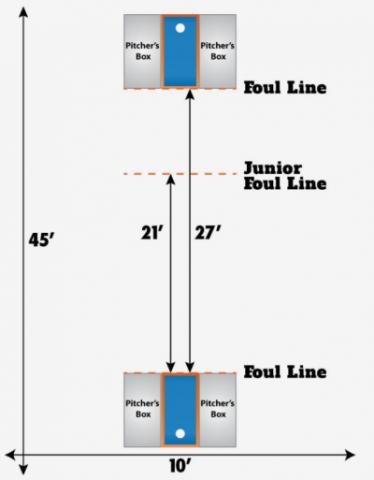
The official distance for how far apart bags game are placed is 27 feet between the front edges of the two boards.
Ever found yourself at a backyard barbecue, itching for some friendly competition? The satisfying thud of a beanbag landing on a wooden board is a signal of summer fun. But how far apart bags game is set up can change the whole dynamic.
Getting the distance right ensures everyone is playing under the same conditions. A shorter distance will make the game too easy and a larger distance will make the game too difficult and tiring, it ruins the fun.

How Far Apart Should You Place The Boards in a Bags Game?
Okay, so you’re ready to have some fun with a bags game, also known as cornhole! That’s awesome! But before you start tossing those bean bags, you need to know the right distance for the boards. Getting the spacing right is super important for a fair and fun game. If they are too close, it’s too easy. Too far, and it’s just frustrating! So let’s talk all about how far apart the boards should be.
The Official Distance: 27 Feet
The official distance for a standard bags game, as set by the American Cornhole League (ACL), is 27 feet. This measurement is taken from the front edge of one board to the front edge of the opposite board. It’s a good idea to know this distance if you’re playing a tournament or just want to play with official rules. This specific distance balances fun with a little bit of challenge.
Think of it like this: 27 feet is about the length of a small car, or maybe two adults laying down end to end. That helps make the picture clear in your mind, right?
Why 27 Feet? The Reasoning Behind the Distance
You might wonder, why exactly 27 feet? It wasn’t just a random number chosen out of a hat! The 27-foot distance was decided upon after lots of playing and testing to find a distance that works best for players of many different skill levels.
- Challenge: It gives a nice challenge, where you need to have some accuracy and aim, but it isn’t so far that most people can’t get close to the board. It makes for a much more interesting and fun game.
- Fair Play: This distance helps make the game more fair. A 27-foot spacing levels the playing field for all players, whether beginners or seasoned pros.
- Fun for All: Most people, from kids to adults, can enjoy a game at this distance. It’s challenging but not impossible.
It’s a distance that really works well for making the game engaging and fun for a wide range of players.
Setting Up Your Game: Getting the Distance Right
Okay, so you know the official distance is 27 feet. How do you make sure your boards are actually 27 feet apart? Here are some helpful tips:
Using a Measuring Tape
The most accurate way to set up your boards is with a measuring tape. Here’s how:
- Find the Front Edge: Identify the front edge of each cornhole board. This is the edge where you toss your bags from.
- Extend the Tape: Start at the front edge of one board, and extend your measuring tape toward the other board.
- Measure Out 27 Feet: Make sure that the 27-foot mark on your measuring tape aligns with the front edge of the other board.
- Double Check: It’s always a good idea to double-check your measurement. Make sure everything is perfectly lined up!
Using a Rope or String
If you don’t have a measuring tape, you can use a rope or string as a guide. Here’s how:
- Measure the String: Measure out 27 feet of string or rope and make a mark on each end.
- Align the String: Place one end of the string at the front edge of one board and extend it toward the other board.
- Position the Other Board: Align the front edge of the second board to the other mark of the string.
This method might not be as precise as a measuring tape, but it’s a handy alternative when you don’t have one. It’s a great way to get close enough for a fun game.
Using Your Feet as a Measurement Guide
If you don’t have a string or tape measure, you can make a rough estimate using your feet. Most people have feet that are about one foot long. You can measure out 27 steps. However, it is important to remember that this is not an accurate method. This method is good for a casual backyard game when you just want to start playing as quickly as possible, it is not recommended for professional games.
Visual Checks
Even after using a measuring tool, step back and look at your setup. Do the boards look like they are about the right distance apart? If something looks off, measure again! It’s better to be safe than sorry and make sure everything is set up correctly.
Adjusting for Different Age Groups and Skill Levels
While 27 feet is the official distance, you may want to change things up depending on who’s playing. Especially for younger kids, 27 feet might be too challenging. Here are some ideas for adjustments:
Kids and Beginners: Shorter Distances
For young kids or beginners, you might find it much more fun if the boards are closer together. Some good distances to try:
- 15 feet: This is a good distance for really little kids.
- 20 feet: Great for slightly older kids and beginners.
- 24 feet: A good distance if players are getting better, or for older children
Remember, the goal is for everyone to have fun and not get too frustrated. Shorter distances for younger kids help them learn the game and improve their skills without being overwhelmed.
Practice and Casual Play
If you are just practicing, you might decide to practice at a shorter distance. This might help players build confidence and develop skills before moving to the official 27 feet. Also if you are just playing casually with family or friends and want to change things up, that’s okay too! The most important thing is that you are having fun.
Just keep in mind, the distance can greatly change the nature of the game. If the boards are too close, the game is often too easy and boring, if the boards are too far, it is too frustrating, and not that much fun.
Playing Surface Matters
The type of surface where you set up your boards can affect the game. It’s important to consider this when setting up your boards.
Flat and Even Surface
Try to set up your bags game on a flat, level surface. Uneven ground can cause the boards to wobble and make it harder to play. A flat surface also helps make the game much more fair and prevents random results.
Grass, Concrete, or Sand
You can play cornhole on grass, concrete, or even sand. Each surface has different effects on how the bags slide and how the game is played. Make sure your boards are stable on any surface. On soft ground like grass or sand, the boards may sink slightly. This is why it is always a good idea to use a level to make sure that the boards are even.
Avoiding Obstacles
Check the area for any obstacles such as rocks, holes, or tree roots before you set up the boards. These obstacles can make your playing area dangerous and could cause injury. It’s best to avoid playing near these. Obstacles might also affect the way the bags move, which may affect the game in an undesirable way.
The Importance of a Proper Setup
Having the boards set at the right distance is one of the most important things for an enjoyable bags game. It means the game is fair and fun for everyone playing, no matter the skill level. When the distance is wrong, it can make the game too easy, too hard, and just generally less fun for everyone. It’s worth taking a few minutes to set up correctly. When the boards are set up at the proper distance, this helps ensure that it will be an even and fun game.
Understanding the Board Placement
The placement of the boards themselves is another factor in the game. Here are some ideas for proper board placement:
Parallel Placement
The boards should always be placed parallel to each other. This means that the front edges of each board are straight across from each other and aligned. If the boards are not parallel, it may lead to a situation where the players are throwing at angles, and this is not ideal. Proper parallel placement is very important.
Level Boards
Use a level to make sure each board is sitting flat. If the board is not level, the bags will roll differently, and this will affect the game in an undesirable way. It’s important to make sure that your boards are as level as possible. This will help to make for a more enjoyable game.
Avoiding Slopes
Avoid setting up your cornhole boards on a sloped surface. When a board is not flat, this can cause a lot of problems, including bags sliding off the board in an unexpected way, and it can make it harder to play in general. You should find a flat area that is not on a hill or slanted.
Beyond Distance: Other Important Things to Think About
While the distance between the boards is important, there are other important things to think about for a good cornhole setup.
Bag Quality
Use good quality bags that are filled with the proper amount of filler. Bags that are too light, too heavy, or unevenly filled may not work as well and may not throw accurately. You will want to get high-quality bags, especially if you play often. This is a way to make the game more enjoyable.
Board Quality
Also, use good-quality boards. Boards that are wobbly, too light, or are made from a material that makes them too slippery or too sticky may not be good to use. The boards should be smooth and sturdy. Good-quality boards are important for both safety and for playability. It’s often recommended to purchase a high-quality set for the best experience.
Lighting
If you plan to play into the evening or night time, make sure there is plenty of lighting. This is especially important for safety purposes, to make sure people can see the boards well and do not get hurt, but it is also important so people can play and see what they are doing.
Wind Conditions
Playing in high winds may make the game more difficult. If you are playing outdoors, try to find an area that does not get as much wind. Wind will impact the way the bags fly, so playing in high wind will not give you a fair game.
Making Your Game Unique and Fun
While the rules and spacing are important, don’t be afraid to get creative and customize your bags game. Here are some fun ideas:
Themed Boards
Get boards that have different designs or colors that express your interests or personality. You can even paint your own designs on the boards. This will allow you to add your own personal touches and customize your game. You could use a sports team logo, for example.
Glow-in-the-Dark Bags
Get some glow-in-the-dark bags for playing in the dark. These will help you play into the night. This is a fun way to change up the game and add to the enjoyment of your games.
Tournament Styles
If you want to play with more people, you can get tournament brackets. This will help you organize tournaments that can be a lot of fun and help people get to know each other better. Tournaments add to the fun of the game!
Music and Food
While you are playing, consider having some music and food. This can make your bags game even more fun. This adds an extra element of fun to the game.
Remember, while following the rules of spacing is important, making the game your own is really the best part. Don’t be afraid to experiment with different ideas to find what you and your group enjoy the most!
So, there you have it! You now know all about the distance of the boards in a bags game. Remember, the official distance is 27 feet, measured from the front edge of each board. But you can adjust this based on who’s playing and to make your game unique. Now go have fun tossing those bags!
How to Play Cornhole | Official Cornhole Rules | American Cornhole Association
Final Thoughts
Ultimately, the distance between your boards significantly impacts the difficulty of the game. Adjusting ‘how far apart bags game’ changes the throwing challenge and play strategy. A shorter distance is easier and good for beginners.
A greater distance between boards demands more accuracy and power. Consider player skill levels when deciding upon the board spacing. This ensures everyone enjoys the game.

