
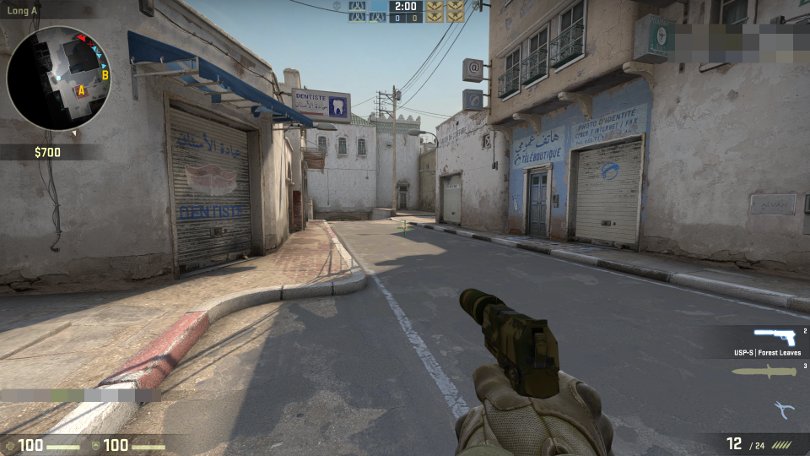
A standard competitive CS:GO match typically lasts around 30-45 minutes, while casual or deathmatch modes can be much shorter.
Ever jumped into a CS:GO match and wondered how long you’d be glued to your screen? It’s a common question! Considering different modes, understanding exactly how long are cs go games can help you plan your gaming sessions.
Competitive matches, the main focus for many, can be pretty lengthy. They have many rounds that contributes to the overall playtime. However, if you’re after quicker action there are other options.
Casual and deathmatch modes offer a much shorter experience, perfect for a fast gaming break or just jumping in and out of gameplay with friends.

How Long Are CS:GO Games?
Okay, let’s talk about how long you can expect to spend playing a match of Counter-Strike: Global Offensive (CS:GO). It’s a question many new and even some experienced players have. The short answer is: it depends. But let’s dig deeper than that! It’s not just one single number. There are different game modes, different scenarios, and even different levels of play that can all impact how long a game lasts. We’ll go over everything, so you know what to expect before you jump into a match.
Understanding the Core Game Modes
CS:GO has several game modes, each with its own rules and expected length. These different modes are a big part of why game times can vary so much. Let’s check them out:
Competitive Mode: The Main Event
Competitive mode is the heart of CS:GO. This is where most players spend their time, especially those who want to rank up and test their skills. These matches are structured around a best-of-30 rounds system. One team plays as the Terrorists (T), trying to plant a bomb, while the other team plays as the Counter-Terrorists (CT), trying to defuse it or prevent it. Here’s how it generally works:
- First Half: The teams swap sides after 15 rounds.
- Winning: The first team to win 16 rounds wins the game.
- Overtime: If the score is tied at 15-15, the match goes into overtime. Overtime is played in sets of 6 rounds (3 on each side). The first team to win 4 rounds in an overtime period wins. If teams are tied after an overtime period, they play another overtime. This keeps repeating until a winner is decided.
Because of the potential for overtime, competitive matches can vary quite a bit in length. A game could end quickly with one team clearly dominating, or it could be a real nail-biter that goes into multiple overtimes, making for a longer playtime.
Casual Mode: Relaxed Fun
Casual mode is designed for, well, a more casual experience. It has a lot of similarities to the competitive mode, but there are some key differences that affect how long a game lasts:
- Simpler Rules: The rules are a bit more relaxed. For instance, friendly fire is off, meaning you can’t accidentally hurt your teammates.
- Smaller Teams: Casual games often have more players, up to 10 players per team, which can lead to more chaotic situations.
- Round Goal: Generally in casual mode, the goal is to win 8 or 9 rounds instead of 16 rounds like competitive mode.
- No Overtime: If there is a tie in casual match, then it ends in tie instead of going for overtime.
These changes make casual matches generally shorter than competitive matches. They are good for warming up or just having some low-stakes fun.
Wingman Mode: 2v2 Action
Wingman mode offers a fast-paced 2v2 experience on smaller maps. This mode usually lasts a much shorter time than competitive and casual games.
- Smaller Teams: The game is designed for teams of two players.
- Fewer Rounds: Usually, the first team to win 9 rounds wins.
- No Overtime: Typically, there is no overtime in wingman mode. If there is a tie after 16 rounds, then it ends in tie.
The smaller team sizes and shorter round goals make Wingman a great option if you have only limited time.
Deathmatch: Practice Your Aim
Deathmatch mode is focused purely on practice. There’s no bomb planting or defusing; it’s all about getting kills. Here are the key things that impact its duration:
- Time Limits: Deathmatch matches are timed, usually with a duration of 10 minutes.
- Unlimited Respawning: Players can respawn instantly when they die, letting them get right back into the action.
- No Rounds: Deathmatch does not have rounds.
The time-based format makes the length of a deathmatch very predictable. It’s a good mode for quick aim training.
Other Game Modes
Besides these core modes, CS:GO also has other modes like Arms Race, Demolition, and Danger Zone. However, these modes are not as commonly played as the modes discussed above and their length can vary quite a bit as the format of these modes are not well structured like other game modes. In some mode there is no rounds, rather there is some target which player needs to achieve in time. But they don’t have structured rounds and the duration of these modes are usually shorter and often unpredictable. Usually they take around 10-20 mins at most.
Average Time Per Game Mode
Now, let’s put some numbers to all of this. Keep in mind these are averages, and the actual time may be shorter or longer. Here is an overview:
| Game Mode | Average Time | Factors Affecting Duration |
|---|---|---|
| Competitive | 45-60 minutes (can be longer with overtime) | Number of rounds won, overtime periods |
| Casual | 25-40 minutes | Number of rounds, player skill level |
| Wingman | 15-25 minutes | Number of rounds, player skill level |
| Deathmatch | 10 minutes | Fixed time limit |
| Other Game Modes | 10-20 minutes | Mode specific objectives/rules |
Factors That Influence Game Length
Beyond the game modes, several other factors can affect how long a CS:GO game lasts. These are things to consider when planning your game time:
Player Skill
One of the biggest factors influencing the length of a match is the skill level of the players involved. If one team is significantly better than the other, they will likely win quickly. This is especially true in competitive matches. A one-sided match with a quick 16-2 or 16-4 scoreline will take much less time than a very competitive match that goes to multiple overtimes.
Map Size and Complexity
The map itself can also play a role. Some maps are smaller and have simpler layouts, leading to quicker engagements and faster rounds. Other maps are larger and more complex, making it take longer to get into action and allowing for longer rounds. However, this effect is not so prominent. In fact, player skill will be far more influential than map size and complexity in determining the duration of the match.
Tactical Play
In competitive mode, how teams approach the game tactically can alter the length of rounds. If the team is slow paced or if both team like to strategize every action, this will lead to longer rounds, as the game tends to become a chess match with players trying to predict the other team’s actions. If the teams go for quicker rush plays, then this can drastically reduce round times.
Round Time Settings
While most of CS:GO uses standard round timings, server settings can affect game length. Some community servers might change the standard 1 minute 55 seconds round time, which might end the match quicker or prolong the game. However, generally official servers use standard settings.
Server Lag and Issues
Sometimes, server issues can cause a match to take longer. When there is lag or server problems, players might get disconnected, need to reconnect, or even the match might need to get restarted. This can increase the game time significantly.
How to Estimate Game Time
While the exact time for a CS:GO game can be hard to predict, here are a few tips to help you get a better idea:
- Consider the Game Mode: Choose a game mode that aligns with the time you have available. If you have just an hour, competitive mode may not be the best option. If you have only 20 minutes, then deathmatch or wingman could be the best choice.
- Think About Your Skill Level: If you are new to the game or are playing with other newer players, games might last longer as the rounds might become slower paced.
- Plan for Extra Time: Especially for competitive mode, it’s always best to allow extra time, just in case the match goes to overtime.
Keeping these points in mind will help you make a more accurate prediction for the length of your next CS:GO match.
Ultimately, the time you spend in a CS:GO match will depend on various factors. By being aware of the different modes and the factors that can influence game length, you can make more informed choices and have a better gaming experience.
Understanding how long a game might take lets you plan your gaming sessions better. So, whether you have a few minutes for a quick deathmatch or an hour for a competitive battle, CS:GO offers varied experiences to match the time you have available!
CSGO explained in 6 minutes [Animated]
Final Thoughts
Competitive CS:GO matches typically last around 30-45 minutes. Shorter game modes, like casual, can be quicker, often finishing within 20 minutes. Factors such as overtime or pauses can affect the overall duration.
How long are CS:GO games depends on the chosen mode and player skill. The duration varies, but understanding typical times helps with planning play sessions. Matches can sometimes go for longer, but that is less common.

