
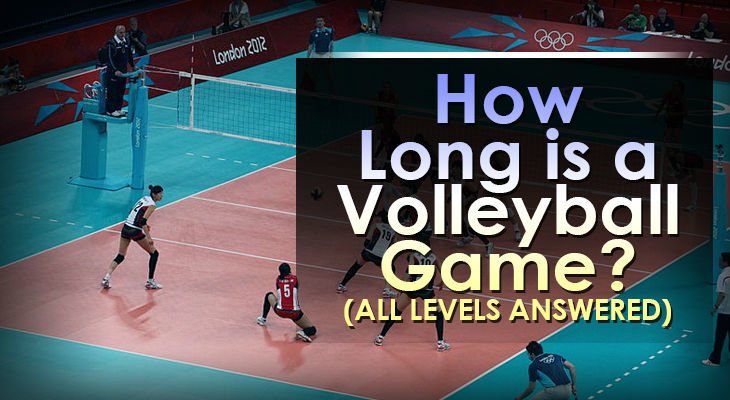
Varsity volleyball games typically last around one and a half to two hours.
Ever wondered about the duration of those thrilling high school matches? It’s a common question for fans and players alike. When you’re planning to attend or participate, knowing how long do varsity volleyball games last is key to managing your time and expectations.
The actual time can vary slightly, but this provides a good guideline. This timeframe allows for all the intense plays and strategic timeouts of the game. This ensures each team has ample opportunity to display their skills on the court.

How Long Do Varsity Volleyball Games Last?
Okay, so you’re wondering how long a varsity volleyball game takes, right? It’s a great question because it can feel like they go on forever when you’re watching a super exciting match! Unlike some sports with set time limits, volleyball game length is a bit more fluid. It depends on how many sets are played and how quickly the teams score points. Let’s dive into what makes a volleyball game tick and explore how long you can typically expect to be cheering from the sidelines or playing on the court.
The Basics of a Volleyball Match
Before we talk about time, let’s quickly review how a volleyball game is structured. A varsity volleyball match usually isn’t just one game. It’s a series of games called “sets.” Here’s what’s essential to know:
Understanding Sets
Think of a set like a mini-game within the bigger match. Most varsity volleyball matches are played as a “best-of-five” format. This means a team needs to win three sets to win the overall match. There are also matches that are played as a “best-of-three” sets, which are common in tournament play. So, the overall length is determined by the number of sets played.
- Best-of-Five: The first team to win three sets wins the match.
- Best-of-Three: The first team to win two sets wins the match.
How Points are Scored
In volleyball, a team scores a point every time there is a serve that cannot be returned in bounds, or a team commits a foul. The first four sets are typically played to 25 points, and the fifth set, if needed, is played to 15 points. The team needs to win by 2 points, though. So, you can’t just stop at 25 or 15! The team needs to get at least 26 points or 16 points to win the set if the score is tied at 24-24 or 14-14.
Factors That Influence Game Length
Several factors can make a varsity volleyball game shorter or longer. It’s not as simple as saying “it always takes exactly this much time!” Here’s a look at what impacts the game clock:
Number of Sets Played
This is the biggest factor. If one team wins the first three sets, the game is over quickly, and if each team wins two sets, that’s going to require a fifth set, and that’s going to add a considerable amount of time.
- Quick Match: If one team dominates and wins three sets in a row, the match can be over fairly quickly (maybe an hour or less).
- Longer Match: If the teams are evenly matched, and it goes to five sets, it can really lengthen the time of the volleyball game. These games can be well over two hours!
Rally Scoring
Varsity volleyball games use rally scoring. This means that a team scores a point regardless of which team served the ball. A volleyball game that does not use rally scoring can take even longer, so it is not used much anymore. A sideout is called when the other team gains possession of the ball, and with the use of rally scoring, the time of the game is considerably shorter.
Time Between Points
This isn’t a huge factor, but the pace of the game does influence the overall length. Things like team huddles, timeouts, and brief breaks between sets all contribute to the overall time spent at a volleyball game.
- Quick Pace: A game where teams quickly get back to play will be shorter.
- Slower Pace: If there are lots of delays, the match will be a bit longer.
Number of Timeouts
Each team is allowed a set number of timeouts in each match. When a team takes a timeout, the clock stops, and this adds time to the overall game. Teams use timeouts to regroup and develop new strategies. The number of timeouts used by each team can lengthen the time of the game, but some games do not require very many timeouts at all.
The Length of Rallies
Long rallies, where the ball goes back and forth many times before a point is scored, will make the game take longer than a game where there are short rallies. This will not have as much impact on the game length as the number of sets played, but it will play a small part. If the rallies are all short, then the game will be much quicker. If the rallies are all long, then the game is going to be longer than normal.
Player Injuries
If there is an injury, the game must stop. If the injury is serious, this can take a considerable amount of time, which will increase the time of the match. Nobody wants to see injuries in a game, but they can happen, and the game will have to be paused while the player is tended to.
Typical Varsity Volleyball Game Duration
Alright, let’s get to the numbers! Based on the different factors, here’s a general idea of how long you can expect a varsity volleyball game to last:
Average Time for a Best-of-Three Match
When a varsity volleyball match is played as a best-of-three, it tends to be shorter. Since only two sets must be won for one team to win, these tend to be the quickest matches. If one team wins both sets back-to-back, that match can be very quick, possibly taking under an hour. However, the game can take much longer if the match is close, and both sets are won by each team. Typically the average time it takes for a best of three match is about 60 to 90 minutes.
Average Time for a Best-of-Five Match
When a varsity volleyball match is played as a best-of-five, these games tend to be longer than best-of-three matches. This means that a team has to win three sets to win the match. There are cases where one team wins three sets in a row, and the match can be fairly short, maybe around an hour. However, if the teams are close in talent level and they end up winning two sets each, then it goes to a fifth set, which will lengthen the game time considerably. Most five-set matches will last anywhere from one hour and thirty minutes to over two hours.
Breakdown of Time Spent
To give you a rough idea, here is a sample time breakdown for a best-of-five match (though this can vary greatly):
- Each Set: Usually between 20 to 35 minutes (this can be more if it’s a very tight set)
- Between Sets: 2-3 minutes
- Total Match Time (3 quick sets): About 1 hour
- Total Match Time (5 close sets): 1 hour 30 minutes to over 2 hours.
Keep in mind, that these are just estimates, and actual game times will always vary based on game play.
Game Length Variations
Sometimes, the unexpected happens! Let’s talk about some reasons why a game might be shorter or longer than average.
Dominant Team
If one team is a lot better than the other, they could win three sets in a row very quickly. This could result in a shorter game (maybe less than an hour for a best-of-five!). You might not even get to see that fifth set.
Extremely Close Matches
On the other hand, very close games with back-and-forth rallies can make a set take much longer. If you have five sets, and all of them are close, it could mean a long afternoon! Sometimes, the match can be over two hours long if each set is a battle!
Tournaments
Tournaments sometimes have variations on the rules. In tournaments, you sometimes see a best-of-three format for most matches, and maybe a best of five in the championship. Sometimes there are different time limits set as well. For example, some tournaments have a time limit of one hour for each match. This would make some matches very fast and some matches very slow. Tournaments are usually high stakes, and the teams try to work hard for every point, which will make some tournaments long.
Tips for Planning Around Game Length
So, how do you plan around the somewhat unpredictable length of a volleyball game? Here are some helpful tips:
- Plan for Extra Time: Always plan for longer than you think it will take. It’s better to be early than late, especially if you have somewhere to be afterward!
- Check the Schedule: Most school districts will make the schedules public, and it will give you the approximate start time of each match. If you know the start time, you can use the average game times to estimate the length of the match.
- Stay Flexible: Volleyball games can have unexpected twists and turns, so try to keep your plans flexible after the game.
- Bring Snacks and Drinks: If you are going to a longer game, you should make sure that you pack some snacks and water. This will make sure that you can stay the whole match and cheer for your favorite team!
Varsity volleyball games don’t have a set time, but by understanding how the game is played, you’ll have a better idea of how long you can expect to be cheering, and you can get to the point that you can estimate the game time on your own. Keep in mind that the number of sets, length of the rallies, the number of timeouts, and injury time are all factors that could make the game length longer.
Texas vs. Nebraska: 2023 NCAA volleyball championship | FULL REPLAY
Final Thoughts
Typically, varsity volleyball matches last between 60 and 90 minutes. The precise duration varies depending on the number of sets played. A best-of-three match concludes quicker than a best-of-five.
Factors such as timeouts, referee decisions, and the pace of play all impact total game time. Therefore, ‘how long do varsity volleyball games last’ is not an exact science. Plan for about an hour and a half, to account for possible extra game time.

