
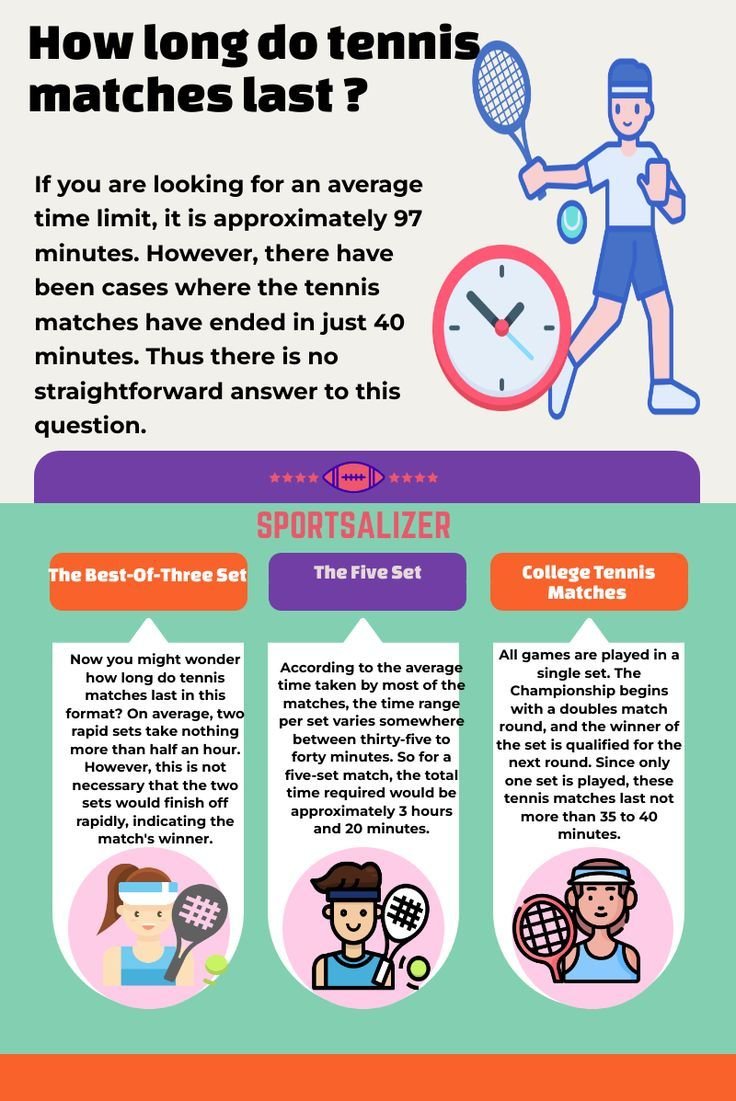
A typical tennis match can take anywhere from under an hour to over three hours; however, the actual duration varies based on factors like the number of sets played, player skill, and game breaks.
Ever wondered about the time commitment when planning a tennis match? The question of how long does a game of tennis take often comes up for players and spectators alike. It’s not always a simple answer as several elements impact the total time.
Different levels of play contribute to varying lengths. A casual recreational game likely finishes much quicker than a professional tournament match. The number of sets required for victory greatly influences the total duration.

How Long Does a Game of Tennis Take?
Ever wondered how much time you need to set aside for a tennis match? It’s a common question, and the answer isn’t always straightforward. Unlike some sports with set time limits, a tennis match can vary quite a bit in length. Several factors play a part, from the players’ skill levels to the type of match being played. Let’s dive deep and explore all the elements that affect how long a tennis game might last. We’ll go over everything so you can plan your tennis time effectively, whether you’re watching or playing!
Understanding the Basics: Match Structure
Before we get into specifics, let’s understand the basic structure of a tennis match. A typical match is divided into sets, and each set is made up of games. To win a set, a player usually needs to win at least six games, but they also need to win by at least two games. For example, a player needs to win by 6-4 or 7-5. If the set score reaches 6-6, a tie-break is played to decide the winner of the set. How these sets are arranged differs based on what you’re playing, which greatly affects the match duration.
Types of Tennis Matches
The number of sets needed to win a match changes according to the competition. This has a huge impact on the total match length. Let’s break it down:
- Best-of-three sets: This format is common in most recreational play, many junior tournaments, and some women’s professional events. The first player to win two sets wins the match.
- Best-of-five sets: This format is primarily used in men’s Grand Slam tournaments and the Davis Cup. A player has to win three sets to win the match. This adds significantly to the match time as there are a larger number of sets being played.
So, if you’re watching a men’s final at Wimbledon, expect a potentially much longer game than you would during a social match with friends.
The Speed of Play: A Key Factor
The speed at which players play the game also affects its overall length. Players who like to rally for long periods will lengthen the game. Those who like to play more attacking shots will tend to have shorter game lengths.
This can be seen at the highest levels of tennis. Someone like Rafael Nadal will usually prefer to play a long game, often grinding down his opponents before taking a chance to win the point. Whereas Roger Federer was known for playing quicker games. This change in game speed leads to changes in the length of the match itself.
Factors Affecting Match Duration
Beyond the basic match structure, several other things can influence how long a tennis game takes. These can make a match fly by or feel like it’s going on forever. Let’s take a closer look at these factors:
Player Skill Level
The skill level of players is a huge factor in determining the match time.
- Beginner or Recreational Players: These matches tend to be shorter. Beginners often make more errors, leading to faster points and shorter games. The games may seem to go on forever, but because there are more errors, the matches tend to be over quickly. Also, points may take longer to complete because players will struggle to get the ball back over the net, leading to lots of very long points.
- Intermediate Players: Matches between intermediate players can vary more. There are more rallies (when players hit the ball back and forth multiple times), which can extend the length of a game, but there are fewer errors that can end a point. This means that the match can go either way.
- Advanced/Professional Players: These matches can go on for a very long time, especially if the players are well-matched. Professional players make fewer unforced errors, leading to longer and more competitive rallies. This makes the points longer and also increases the amount of time the match takes. Also, if these players are very evenly matched, they can go to multiple sets and games that take longer. This makes it impossible to estimate their match length.
Number of Games per Set
As we discussed before, the typical set is played with six games, with a need to win by two, or a tie-break after the score reaches 6-6. However, if a set continues to go to deuce, as with an advantage system, these types of matches could potentially go on for a long time. Sets with a lot of extended games will add much more time to the match overall, so it’s a key factor to consider.
Number of Sets in the Match
As mentioned earlier, this has a huge impact on the length of a match. A best-of-five set match will almost always take longer than a best-of-three set match. For example, matches played at Grand Slams between top male players are always longer than most tennis matches. This is because these games are best-of-five-set games.
Tie-Breaks
Tie-breaks at the end of a set speed up the match, as they prevent games from continuing for longer periods of time. If the score in a set reaches 6-6, a tie-break occurs. This adds another variable as to the match time, as it speeds up the game. If the tie-break is long, the game can be extended, but generally speaking, tie-breaks reduce game time.
Weather Conditions
Believe it or not, the weather can significantly affect how long a tennis match lasts.
- Hot Weather: If it’s hot and humid, players may need more breaks for water and to cool down. This can lengthen the match. If the heat becomes very hot, it can become too hot to play and the game could be paused or even abandoned.
- Windy Conditions: High winds can make it more difficult to control the ball. This can lead to more errors or longer rallies, affecting the length of the match.
- Rain: Rain can stop a game completely. At times the game can be abandoned altogether, or the game could be paused until the weather changes. Rain can add a significant delay to any outdoor game.
Player Style and Strategy
The playing styles of the competitors also shape the match time. Players with very different strategies could extend the game:
- Aggressive Players: Players who prefer to attack, serve hard, and try to finish points quickly will probably cause quicker matches.
- Defensive Players: Those who are great at running and returning the ball will likely cause longer rallies and increase the overall match time. They rely on making very few errors and wearing down their opponents.
Breaks and Delays
The time taken between points, games, and sets also adds to the match time, as well as other reasons for delays.
- Between Points: Players are permitted a specific time between points to prepare. If a player is a slow mover, then they could cause the game to take longer. If they are quick between points, then it will speed up the game.
- Changeovers: Players take short breaks during the changeovers in play, which also adds to the total time.
- Medical Time-Outs: If a player is hurt or needs medical attention, the match can be paused. This pause could be long, adding significantly to match time.
Average Match Times: What to Expect
With so many factors at play, it can be tricky to put an exact time on a match. However, here’s a general overview of what you can expect based on different scenarios:
Average Match Times Based on Type
- Recreational Match (Best of 3 sets): 1 to 2 hours.
- Professional Women’s Match (Best of 3 sets): 1.5 to 2.5 hours.
- Professional Men’s Match (Best of 3 sets): 1.5 to 3 hours.
- Grand Slam Men’s Match (Best of 5 sets): 2 to 5 hours (or even longer).
These are averages, and there will be many matches that fall outside of these ranges. For instance, some matches at the top level of the game have even gone on for over 6 hours, such as the Isner-Mahut match at Wimbledon in 2010, which lasted for 11 hours and 5 minutes across three days.
The shortest match in recent history was a professional match between Nick Kyrgios and his opponent in the first round of the 2023 Shanghai Masters. The match lasted only 48 minutes and was over extremely quickly. This was because his opponent retired after the first set, but was still technically a complete game.
Tips for Estimating Match Time
Here are a few pointers to help you make a good estimate of how long a tennis match might last:
- Consider the Match Type: Is it best-of-three or best-of-five?
- Think About Player Skill: Are they beginners or very advanced?
- Factor in Weather: Is it hot, windy, or likely to rain?
- Observe Playing Styles: Are the players aggressive or more defensive?
By considering these details, you can make more accurate time estimations.
Watching a Tennis Match: Managing Your Time
If you’re planning to watch a match, knowing about typical durations can help you schedule your time. For example, if you’re going to watch a top level game, then you might have to prepare for several hours of watching. On the other hand, when you watch your friends play, it may be a much shorter time frame.
Tips for Planning Around Tennis Matches
- Check the Schedule: Look up the match schedule to see when the game is supposed to start.
- Add Buffer Time: Include extra time in case the match runs longer than expected.
- Plan for Breaks: If it’s a long match, plan for short breaks to stretch or grab a snack.
- Be Flexible: Things might not always go exactly as planned, so stay adaptable.
With good planning, you can watch all the tennis you want without worrying about scheduling conflicts.
Playing a Tennis Match: Time Management
When you’re playing tennis yourself, it’s important to be mindful of time, especially if you’re renting a court or playing with a group.
Tips for Managing Time on the Court
- Agree on a Time Limit: Set an agreed-upon time to play with the people you’re playing with. This will prevent matches from overrunning and allow for other people to play.
- Start on Time: Begin the match promptly to make the most of the allocated time.
- Keep the Pace: Avoid excessive breaks between points to keep the match moving.
- Be Aware of Court Rules: Some courts have strict time schedules, so be mindful.
By being mindful of these points, you and everyone else can enjoy tennis without any difficulties.
Understanding how long a tennis game can take is essential, whether you’re a player or a spectator. With many factors influencing the duration, it’s not a game that always follows a predictable timeline. Now armed with this guide, you can enjoy the sport even more by planning accordingly, managing time effectively, and really immersing yourself in the joy of tennis.
The Rules of Tennis – EXPLAINED!
Final Thoughts
A full tennis match duration varies. Professional matches, with best-of-five sets for men, can span 2 to 5 hours. Women’s best-of-three matches typically take less time.
Recreational games are generally shorter. They can finish within 30 minutes to 2 hours depending on the players. how long does a game of tennis take largely depends on skill and number of sets.
Ultimately, the length of a match is flexible. Factors like the score, game style, and individual player breaks also play a crucial role in determining total game time.

