
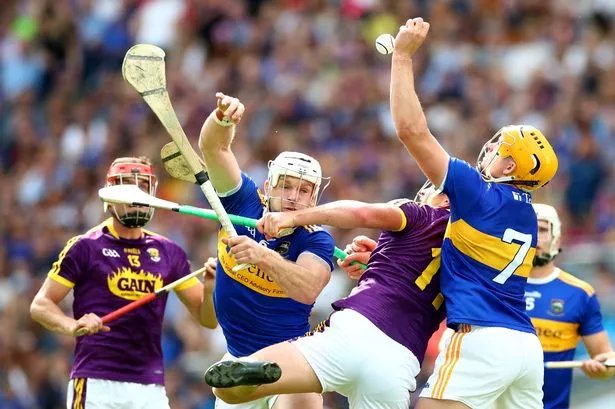
A standard hurling game lasts 70 minutes, divided into two 35-minute halves, with a short break in between.
Ever wondered about the fast-paced action of a hurling match? It’s a sport full of skill and excitement. The question many newcomers often ask is, how long is a hurling game?
Understanding the duration of a match helps appreciate the stamina and intensity involved. Knowing this detail adds to the enjoyment of watching a game.
So, next time you’re settling in to watch some hurling, you’ll know exactly how long you can expect to be entertained.

How Long Is a Hurling Game?
Ever wondered how long a hurling match lasts? It’s a question many people have, especially if they’re new to the sport. Hurling, with its fast-paced action and skillful plays, might seem like it goes on forever. But don’t worry, games follow a specific time structure. Let’s explore all the ins and outs of a hurling game’s duration so you can be fully prepared to watch or play!
The Standard Hurling Match Length
The standard length of a hurling game is 70 minutes for senior inter-county matches. This 70 minutes is broken into two halves, each lasting 35 minutes. Between the two halves, there’s a halftime break. This break is a chance for players to catch their breath, strategize, and get ready for the second half. It’s also a chance for the fans to grab a snack or chat about the game.
Breaking It Down: Halves and Halftime
Let’s take a closer look at how the time is divided:
- First Half: 35 minutes of playing time.
- Halftime Break: A short break, usually around 10 to 15 minutes, but can be shorter.
- Second Half: Another 35 minutes of playing time.
So, when you add it all together, you get the total playing time of 70 minutes plus the halftime break. But it’s important to know that this is just the base time. There’s also extra time to think about.
Extra Time in Hurling
Sometimes, games end in a draw, and that’s where extra time comes in. If the scores are tied at the end of the regular 70 minutes, additional playing time is added. This is especially common in knockout matches, where a winner must be decided on the day.
How Extra Time Works
Extra time in hurling consists of two periods, each lasting 10 minutes. There is usually a short break between these two extra time periods, which is not very long. If the scores are still tied after extra time, different procedures might be used depending on the competition, for example a replay in some cases or a penalty shootout in others.
- First Period of Extra Time: 10 minutes of gameplay.
- Short Break: Very brief break of one or two minutes.
- Second Period of Extra Time: Another 10 minutes of gameplay.
So extra time can add up to an additional 20 minutes to a hurling game, making it 90 minutes total (excluding break times). It can be a thrilling experience to watch extra time, because players are extremely tired, and every score or save counts.
Variations in Game Length
While 70 minutes is the standard for senior inter-county hurling, not every hurling match uses this length. The game length changes depending on age level of player playing.
Underage Hurling
Younger players don’t play as long as older players. This is done to make sure they don’t get too tired and still enjoy the game. Here is the breakdown of typical game lengths for underage hurling:
- Under-12: 20 minutes per half for 40 minutes of total game time.
- Under-14: 25 minutes per half for 50 minutes of total game time.
- Under-16 & Minor (U18): 30 minutes per half for 60 minutes of total game time.
These times are not always fixed and they sometimes can be increased or decreased by a few minutes in some leagues.
Factors That Can Affect Game Length
Even though we know the base time for hurling games, a few things can make a match last longer. These can add time to game and are part of the experience.
Injuries
If a player gets hurt during the game, the referee stops the clock to allow medical personnel to assess and take care of the player. The clock is only restarted when the injured player has received attention and the game is ready to resume. This added time is made up at the end of the half, so we call it injury time. The referee will take into consideration the length of stoppages and add the necessary time.
Substitutions
The substitution process itself takes time. When a player is taken off and replaced by another, the clock stops and the change is made, which takes time. These minor stoppages are added at the end of the half as injury time.
Delays
Unusual delays can happen, for instance, if the ball goes out of the playing area, or if there are any issues with the equipment, referee can stop the clock and it will be made up at the end of each half. These stoppages can sometimes slightly alter the game’s length.
Understanding Injury Time
As we talked about above, injuries, substitutions, and other delays can cause the game to stop and restart. The referee keeps track of the time lost and adds it at the end of each half. We call this “injury time” or “added time” . So, it’s important to remember that the game time might be longer than the original 35 minutes per half because of these additions.
How Injury Time is Calculated
There is no exact formula to calculate injury time. Referees estimate the lost time. They consider things such as how long the play was stopped for injuries and how many substitutions took place. Referees are very experienced in keeping time and usually add accurate amounts.
The Role of the Referee
The referee plays a critical role in keeping time in a hurling match. They are responsible for starting and stopping the game clock and also for signalling the end of the halves, and injury time. Referees also keep a watchful eye on the game to ensure it is playing within the rules and the time is managed properly.
The Referee’s Whistle
The referee uses their whistle to signal various points in the game, including the beginning and end of each half, stoppages, and the end of injury time. The sound of the referee’s whistle is an important part of the game, and a familiar sound to all who watch and play the game.
Why Knowing the Time Matters
Knowing how long a hurling game is very important for fans and players. It helps fans to plan their day around a match. For players and coaches, it allows them to manage their energy and plan tactics strategically.
For Spectators
When people go to watch a hurling match, it’s helpful to know when to expect the game to finish so that they can plan their travel and other activities around it. It also means that spectators can plan when to get snacks or take a bathroom break.
For Players and Coaches
Hurling is a very physical game, and players must be very fit and manage their energy throughout the game. Coaches use this knowledge to plan their tactics. Knowing how long the game will last helps coaches to make substitution decisions and time out their team’s runs and efforts.
Hurling Game Time in Summary
Let’s recap the key points about the duration of a hurling game:
- Standard Game: 70 minutes (2 halves of 35 minutes).
- Halftime: A short break, usually 10-15 minutes.
- Extra Time: If needed, it’s 20 minutes (two periods of 10 minutes).
- Underage Games: Shorter game times depending on age.
- Injury Time: Added time at the end of each half to compensate for stoppages.
Different Formats and Time
Sometimes, you might come across different hurling formats, such as indoor or modified games. These might have different rules and might use shorter playing times. These are common in fun training or for younger ages, and usually have less game time involved.
Other Variations to the Games
Some hurling tournaments might use different rules for time, and these could be shorter or longer depending on what the competition is for. These changes can sometimes bring an element of surprise to the game. But usually games are played in the format we have already discussed, which gives a standard game length.
Hopefully, this explanation has given you a better understanding of how long a hurling game lasts. It’s not just 70 minutes of action, it’s also about the flow of the game, which has the extra time and breaks built into the play. So next time you watch or play a game, you’ll be prepared for the full experience!
Understanding the different game lengths can enhance your viewing pleasure and help you appreciate the strategy and physical effort involved in hurling. Whether you are a player, a fan, or just curious, knowing the duration of the game is a key part of appreciating the sport. Hurling games are an exciting spectacle, filled with great skill and athleticism, knowing the timings of the game will enhance your experience of this amazing sport.
The Rules of Hurling – EXPLAINED!
Final Thoughts
A standard senior hurling match lasts 70 minutes, split into two 35-minute halves. There is a short break at halftime. This total playing time does not include stoppage time.
Minor and under-20 games have 60-minute durations. These are played with two 30-minute halves. Stoppage time gets added onto the end of each half. So, how long is a hurling game varies by level.

