
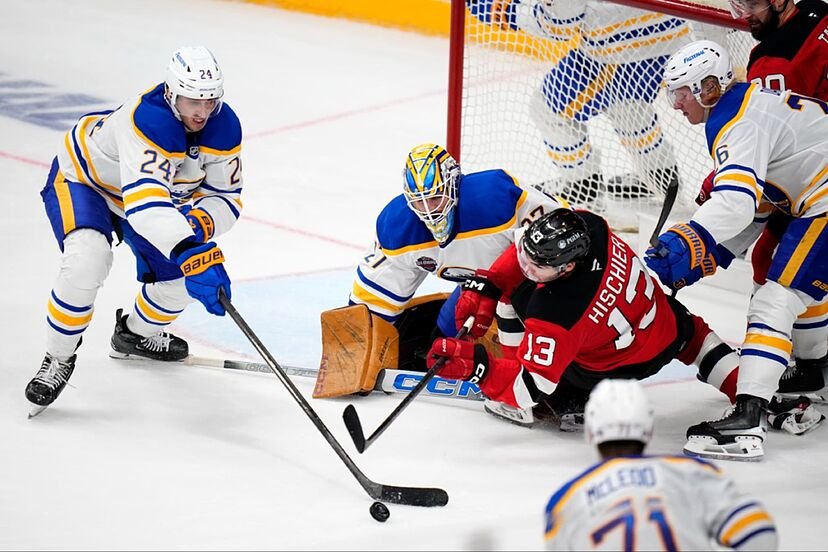
A professional hockey game is typically 60 minutes long, divided into three 20-minute periods.
Ever wondered about the precise duration when watching a high-stakes hockey match? Many fans often ask the question, “how long is a professional hockey game?” It’s a common curiosity for both newcomers and seasoned viewers of the sport.
Understanding the timing structure is key to fully appreciating the ebb and flow of the game. Beyond the standard playing time, there are other factors that contribute to the total time spent watching a match.

How Long is a Professional Hockey Game?
Okay, so you’re curious about how much time you need to set aside to watch a pro hockey game? It’s a great question, and the answer, while seemingly simple, has a few interesting parts to it. The basic answer is that a standard professional hockey game, like in the NHL (National Hockey League), is 60 minutes long. But, hold on, there’s much more to the story than just those 60 minutes. Let’s break down everything that goes into the total time you’ll spend watching a live hockey game.
The Three Periods: The Heart of the Game
The core of any hockey game is the three periods. Each period lasts for 20 minutes of actual playing time. That means the clock stops whenever the puck isn’t in play – when there is a penalty, an icing, a goal or the puck is out of bounds. These are also called “stoppages.” When we say “20 minutes,” we mean 20 minutes of fast-paced, hard-hitting action.
Here’s a little recap:
- First period: 20 minutes
- Second period: 20 minutes
- Third period: 20 minutes
So, if we were just looking at playing time, that’s a total of 60 minutes of hockey. But, as any hockey fan knows, there is more to a game than just those 60 minutes.
Intermission: Time for a Break (and a Snack)
Between each period, there is an intermission. This gives the players time to rest, talk strategy with their coaches, and prepare for the next period. It also gives the audience a chance to grab a snack or use the restroom. These intermissions are generally 15-18 minutes in length. Usually, there are two intermissions in a standard game, which adds roughly 30 to 36 minutes to the total game time.
Here’s how it all adds up:
| Game Event | Approximate Time |
|---|---|
| First Period | 20 minutes |
| First Intermission | 15-18 minutes |
| Second Period | 20 minutes |
| Second Intermission | 15-18 minutes |
| Third Period | 20 minutes |
Therefore, if you add up the 60 minutes of playing time and two intermissions of around 15 to 18 minutes, you are looking at a minimum of 90 minutes of game time. But in general, it’s more likely closer to 100 to 110 minutes, because of the stoppages.
Stoppages: The Unpredictable Time-Eaters
This is where things get a little tricky. Stoppages happen when play is stopped due to reasons like:
- Goals
- Penalties
- Icing
- Puck leaving the playing surface
- Injuries
- TV time-outs
These stoppages are normal and necessary. They are part of the game. The ref stops the clock during these stoppages, which can significantly increase the total time of a game. Because you can’t predict exactly when and how many stoppages will occur, it’s tough to give an exact time for a hockey game. Some games have lots of penalties and many goals, which results in more time added. While other games have a fast-paced play, with fewer stops, these games may be shorter.
On average, stoppages can add anywhere from 20 to 40 minutes to a game’s duration. So, while the clock shows 60 minutes of play, the actual time you’ll be watching the game could be closer to two and a half to three hours.
Overtime: When the Game Isn’t Over
Now, let’s talk about something really exciting: overtime. If a game is tied after the three periods, the game goes to overtime. In the NHL regular season, overtime is 5 minutes of sudden-death, three-on-three hockey. That means the first team to score wins. If no one scores, the game goes to a shootout. This adds to the length of a hockey game.
Playoff Overtime: A Different Beast
In the playoffs, overtime changes. Playoff overtime is a full 20 minute period at five-on-five. The game goes on as if it were the beginning of the first period, until someone scores. If no one scores, another 20 minute period will be played. This can result in games that last a very long time, going several overtime periods. The longest NHL game in history went six overtime periods! So you can’t predict exactly how long the game is.
Pre-Game and Post-Game: The Complete Experience
We’ve talked about the actual game time, but for many people, the experience of a live hockey game starts before the puck drops. You’ve got to factor in the time it takes to get to the arena, find your seat, and maybe grab a bite to eat or check out the team store. This could add an hour or more to your total hockey experience.
After the game, there is the time to leave the arena and the time it takes to get home. This means a total time commitment of close to 3-4 hours for many people when attending a live game.
TV Broadcasts: Watching from Home
If you’re watching a game on TV, the total time you spend watching will generally be similar to a live game in terms of start and end. But, the breaks and stoppages will include ads, instead of you going to the concession stands. TV broadcasts try to keep the game flow going. The networks plan for the game broadcast to be around two and a half to three hours, unless of course, it goes into multiple overtimes.
Factors Affecting Game Length: More Than Just the Clock
Many things affect the length of a game. We already mentioned penalties and overtime, but there are others, like:
- Number of Penalties: More penalties result in more stoppages. This means more time to be added to the overall game time.
- Number of Goals: Each goal means a pause to celebrate, so more goals means more time.
- Injuries: If a player gets hurt, it might cause a stoppage that results in a long break in play.
- Challenges: Coaches can challenge goals, which can pause the game while refs review the play on video.
- Shootouts: If a regular season game goes to a shootout after overtime, this will add to the length of the game.
- Television Timeouts: Some stoppages are for television broadcasts to show ads.
Understanding Game Timing: It’s More Than Just 60 Minutes
The main thing to remember is that while the hockey game is 60 minutes of play, that does not mean the game will be 60 minutes long. The game will take two and half hours or longer depending on all the stoppages and intermissions. If the game goes into overtime, it can be even longer.
It’s like a really good movie: the actual running time is just part of the experience. In hockey, there are many different factors involved that all increase the time of the game.
Key Takeaways: The Time Commitment of a Hockey Game
Let’s recap all the key points about the length of a professional hockey game:
- Regulation Time: The game has three 20-minute periods of actual playing time, totaling 60 minutes.
- Intermissions: Two intermissions of roughly 15-18 minutes each, adding about 30-36 minutes to the game length.
- Stoppages: Stoppages in play for goals, penalties, and other reasons can add 20-40 minutes or more to the total game time.
- Overtime: If the game is tied, overtime can add anywhere from five minutes to much longer in the playoffs.
- The Total Time: Expect the total time of a game, in general, to be around 2 1/2 to 3 hours, but games can vary in length.
- Live Experience: If you’re attending a live game, factor in travel time, and pre and post game time for an experience of 3-4 hours or even more.
Knowing all these things will help you plan your time, whether you’re going to the game or just settling in to watch it on TV. So, grab your snacks, put on your jersey, and get ready for some exciting action!
The Rules of Ice Hockey – EXPLAINED!
Final Thoughts
A standard professional hockey game consists of three 20-minute periods. The clock stops during play stoppages, like penalties or puck out of bounds. Intermissions take place between each period.
These breaks are usually around 15-18 minutes. Factoring in all these elements, how long is a professional hockey game generally clocks in at about two and a half to three hours total.
Therefore, the amount of time spent watching a professional hockey game can vary a bit.

