
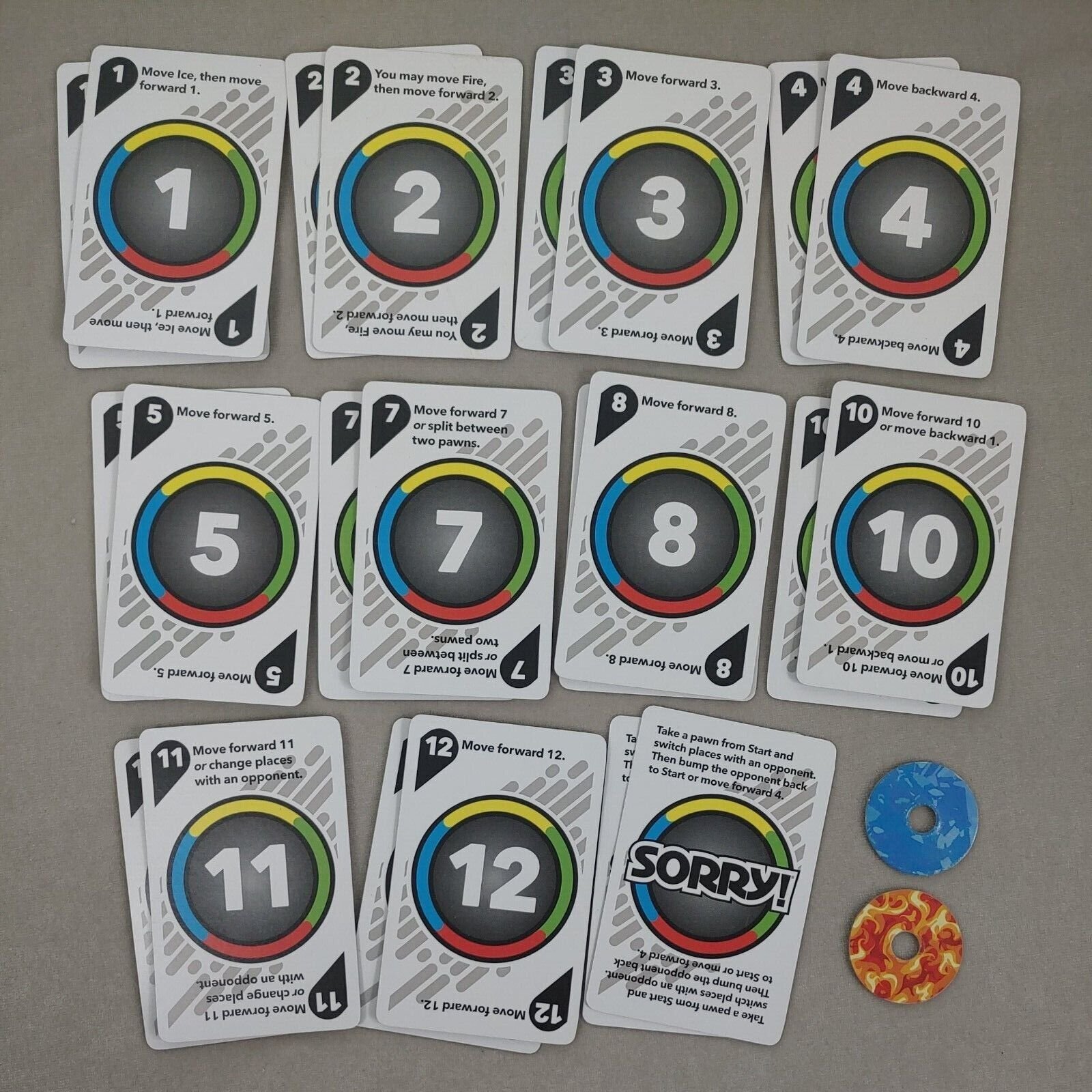
There are 45 cards in the standard Sorry! board game.
Ever wondered how many cards are in Sorry board game? It’s a question many new players ask when first encountering this classic game. The deck might seem smaller than other board games at first glance.
Knowing the exact number of cards is key to understanding the rules and strategy. Having the correct amount is vital for fair gameplay and ensures the game works as designed.

How Many Cards Are In Sorry! Board Game? A Deep Dive
Let’s talk about the classic board game, Sorry! You know, the one where you slide your pawns around the board, trying to get them home before anyone else? A big part of playing Sorry! is using the cards. But have you ever stopped to wonder exactly how many cards come in a standard Sorry! deck? Well, you’re in the right place! We’re going to explore everything about the Sorry! card deck, how it affects the game, and even some cool variations that you might not know about.
The Standard Sorry! Card Deck
Okay, let’s get straight to the point. A standard Sorry! board game includes a deck of 45 cards. That’s right, 45 little pieces of cardboard that control your fate on the game board. These cards aren’t just randomly picked; each one serves a specific purpose. It’s a carefully crafted system designed to bring just the right mix of luck and strategy to the game. Each card has a number printed on it, and this number is the key to your pawn’s movement on the board. Let’s take a closer look at how these numbers are distributed and what they do.
Card Distribution in the Standard Deck
Now, just knowing that there are 45 cards isn’t enough. Understanding what those cards are is what really matters for gameplay. These 45 cards have a specific distribution of numbers. Here’s how the numbers are spread out:
- 1 Cards: There are five ‘1’ cards in the deck. The 1 card lets you move one space forward, or, and here’s the exciting part, it also lets you start one of your pawns from your starting space and put them on the board. This makes them one of the most desirable cards when you are trying to get your pawns out.
- 2 Cards: There are four ‘2’ cards. A simple and straightforward card, these cards enable you to move two spaces ahead.
- 3 Cards: Just like the 2 cards, there are four ‘3’ cards. The ‘3’ card move your pawn ahead three spaces.
- 4 Cards: This number is also represented by four cards. The card makes your pawn move ahead by four places.
- 5 Cards: This card is present by four cards in the deck. 5 card will move a pawn 5 spaces ahead
- 7 Cards: There are four ‘7’ cards in the deck. This card lets you move a single pawn seven spaces ahead, or you can split the movement between two of your pawns. If you have two pawns out, a 7 card can be very helpful and can get you closer to the ‘home’ area.
- 8 Cards: This is represented by four cards in the deck. Just like 2, 3, 4 and 5 cards, the 8 card moves your pawn 8 spaces ahead.
- 10 Cards: There are four ’10’ cards. This powerful card lets you move 10 spaces forward, or move back one space. Deciding to move backwards sometimes could be strategic depending on where you are on the board.
- 11 Cards: Four 11 cards are in the standard deck. This card lets you move 11 spaces forward or switch places with an opponent’s pawn! This is one of the most ‘Sorry!’ aspects of the game because it allows you to send your opponent all the way back to their starting position.
- 12 Cards: The ‘12’ card is present in the deck by four cards. 12 number will move a pawn 12 spaces forward.
- Sorry! Cards: There are four ‘Sorry!’ cards in the deck. This is probably the most dreaded card to get for your opponents. The ‘Sorry!’ card lets you send any one of your pawns back to its start while at the same time allowing you to move one of your pawns ahead by ‘Sorry!’ space.
As you can see, the cards are distributed in a way that gives you a mix of small moves, big moves, and some special actions. This balance makes the game fun and challenging.
The Role of Cards in Sorry!
The cards in Sorry! are way more than just movement guides. They’re the key to all the strategic gameplay elements that make the game so engaging. Here’s a deeper look at what the different kinds of cards can help you do:
Starting Your Pawns
As discussed before, The ‘1’ card is the only card that allows you to move your pawns from the start area onto the board. This card is super important, especially at the beginning of the game. You need those ones to get things moving! But, it doesn’t guarantee success, as a player with bad draws and many ones could still have all his pawns stuck at the start until the final rounds.
Moving Around the Board
The cards with numbers 2 to 12 help you move around the board and strategically place yourself closer to the goal. As players are spread around the board, the numerical cards gain or lose their value. A 2 card can become very valuable if the goal is just 2 spaces away from you. The cards with higher numbers can move you closer to your home or maybe just allow you to skip some of the dangerous parts on the board. As you move your pawn across the board, you have to consider the positioning of the opponent’s pawns as well.
Using Special Cards
The ‘7’, ‘10’, ‘11’, and ‘Sorry!’ cards add extra spice to the game and make the game a lot more unpredictable. These cards allow for strategies, and often come as a surprise to other players. This strategic depth is why Sorry! is not just a game of chance, but also a game of careful decision making. Let’s break down each one:
- The ‘7’ Card: As mentioned earlier, you can move one pawn seven spaces or divide the movement between two pawns. This gives you some flexibility in how you move your pieces.
- The ‘10’ Card: This card can be a lifesaver as you can move 10 spaces forward, or if you need to, you can also move one space backward. This can be strategically useful when trying to avoid landing on a space where an opponent could send you back to start.
- The ‘11’ Card: This card is probably the most useful for the ‘Sorry!’ aspect of the game. This card allows you to move 11 spaces forward or swap positions with an opponent. This means you can move an opponent’s pawn back to the start and move your own pawn to where theirs was. It’s a powerful way to disrupt an opponent’s progress and boost your own.
- The ‘Sorry!’ Card: The ‘Sorry!’ card is an absolute game changer. It allows you to send any one opponent’s pawn back to the start while moving your own pawn forward. It’s the ultimate ‘take that’ moment in the game, and can often lead to some interesting turnarounds.
Why 45 Cards? The Game Design
You might be wondering why there are exactly 45 cards in the deck, and not 40 or 50. The 45 cards are an important design choice by the makers of the game. The number of each card is determined such that the game is balanced and remains unpredictable. Here’s a breakdown of why this number likely works well:
Balancing the Odds
The distribution of the numbers is not random. With five ‘1’ cards, the game ensures you are not stuck too long before you get a pawn on the board. The high and low number distribution also make sure that, the game does not become an exercise in luck. The special cards are also not too common, which makes the game more interesting.
Maintaining Game Length
Too few cards and the game would end quickly. Too many, and it might drag on for too long, and that could become boring. The number of cards and their distribution work such that a single game of sorry does not take too long and not too short. The 45 card deck, in combination with the length of the board, are very well set for an optimal gameplay experience.
Promoting Interaction
The special cards, such as ‘11’ and ‘Sorry!’, which allows you to interact with opponents directly are available in a limited amount. These cards make the gameplay more interactive because you get to mess with your opponent’s progress on the board. Too many such cards, and the game would be a chaos, while too few would make it boring. The perfect balance is kept by these 45 cards.
Variations in Card Decks
While the standard 45-card deck is the most common, some variations of Sorry! might have slight changes in the card deck, or might include new cards. Usually, the core set of cards remains the same, but the rules or game play might change. Knowing the base rules, though, will usually allow you to jump into these new variants without much hassle.
Travel Editions and Special Sets
Sometimes travel editions of Sorry! might use a smaller deck, or may change the game board entirely. Some special sets might also come with different kinds of cards that introduce new challenges to the game. These types of variations are more for novelty purposes and not the core game. These are fun for people who have already played the base game countless times.
House Rules and Modifications
Many people also add their own rules to the game, that might involve modifications to the card deck, such as adding a card that allows for 2 moves, and so on. This depends from family to family and is not the general rule. These types of modifications are usually done for a more competitive aspect.
Impact of Card Count on Strategy
The number of cards and their distribution directly affects how you should play the game. Knowing what cards are present and how many, allows you to formulate a strategy to play the game. Here are some tips for making the most out of the card system in the game:
Early Game Strategy
At the start of the game, getting the ‘1’ card is the priority. Once you have a pawn on the board, you have to consider moving quickly and efficiently across the board. Saving up some cards for later can also be a good strategy to surprise opponents during crucial parts of the game.
Mid-Game Tactics
In the midgame, the strategy is to move your pawn safely across the board, without getting sent back by an opponent. Cards that help with skipping large parts of the board can be extremely useful at this stage of the game. It is also important to block the opponent’s path by strategically placing pawns.
Late-Game Strategy
In the later parts of the game, the goal is to quickly move the pawn into the ‘home’ area. At this point, smaller number cards or using ‘7’ for two pawns are extremely beneficial. It is important to protect your pawns from the ‘Sorry!’ cards and avoid getting sent back.
In conclusion, the 45 cards in a Sorry! board game are the heart of the game, providing a careful balance of movement, strategy, and a little bit of luck. From starting your pawns to making daring moves, each card plays an important role. Understanding the distribution and what each card can do is key to getting better at the game, and it enhances the experience a lot more. So next time you play, take a closer look at your cards and think about the best ways to use them to achieve victory! They are more than just random pieces of cardboard; they are the tools you need to win this engaging and beloved board game.
How to Play Sorry
Final Thoughts
The classic Sorry! game includes a deck of 45 cards. These cards dictate movement and add strategic elements to the gameplay. Players must use the cards wisely to navigate their pawns around the board.
Therefore, understanding how many cards are in sorry board game is essential for successful game play. The 45 cards provide a sufficient range of actions and a fair amount of luck. This balance ensures that all players have a chance to win.

