
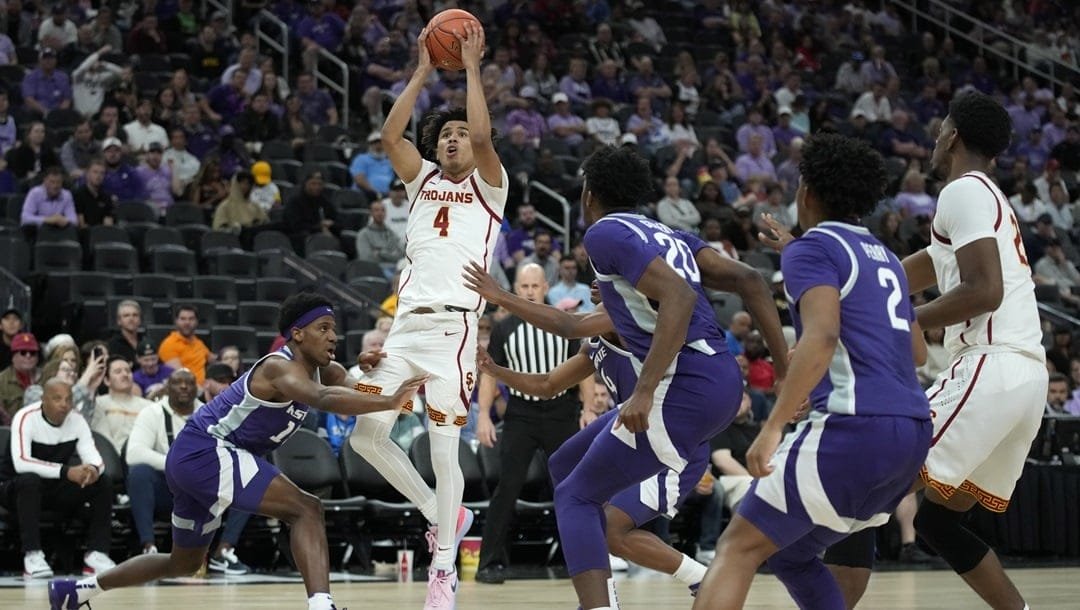
NCAA basketball games have 40 minutes of playing time.
Ever wondered how much time those thrilling college hoops battles take? Knowing how much time is on the clock impacts your game day experience and viewing habits. So, how many minutes are in a ncaa basketball game? Let’s dive into the standard format for these exciting matchups.
It’s a straightforward amount of action, divided into two halves, with a brief break in between. This standardized time allows fans and players to prepare and anticipate game pace. It provides equal footing for each team to compete.

How Many Minutes Are In A NCAA Basketball Game?
Okay, let’s dive into the exciting world of NCAA basketball! You’re probably wondering, “How long does a game actually last?” It’s a great question, and the answer isn’t quite as simple as a single number. While the standard game time is set, there are some factors that can make the games longer. Let’s explore all of it together.
The Standard Game Time: 40 Minutes of Action
The core of any NCAA basketball game is the 40 minutes of playing time. But this isn’t like a 40-minute movie where it runs straight through. Instead, these 40 minutes are split up into two halves.
Two Halves of 20 Minutes Each
In NCAA men’s basketball, the game is divided into two periods, known as halves. Each half is exactly 20 minutes long. So, 20 minutes of play in the first half, and then another 20 minutes of play in the second half. This is different from some other levels of basketball, which we’ll get to in a bit.
The Game Clock: Keeping Track of Every Second
A game clock is used to accurately measure the playing time. The clock only runs when the ball is in play. If there’s a foul, the ball goes out of bounds, a player calls for a timeout or an official pauses the game for any reason, the game clock stops. So, while each half is designed to be 20 minutes in length, the actual time from the start of the game to the final buzzer is almost always much more than 40 minutes.
Why Games Take Longer Than 40 Minutes
You might be thinking, “If the game is 40 minutes long, why do they take so much longer to watch?”. That’s because there’s a lot more that goes into an NCAA basketball game than just the 40 minutes of active play time. Let’s look at some other aspects that increase the overall time spent on the game.
Halftime: The Break in the Middle
Between the two halves, there’s a halftime break. Typically, this break is 15 minutes long. This is when players can rest, coaches can give instructions, and fans can grab refreshments. Halftime is essential to the game, but it also adds time to the overall game length.
Timeouts: Strategic Pauses
Teams get timeouts they can use to discuss strategies or for a breather. There are different types of timeouts, and usually teams get multiple in a game. When a team calls a timeout, the game clock is paused. These timeouts can add several minutes to the total length of the game.
Full Timeouts: These are longer and are useful for making big strategic changes.
Short Timeouts (20-second timeouts): These are shorter and are used when teams need a quick discussion.
Fouls, Out of Bounds, and Other Stoppages
When a foul occurs, the clock stops. The same thing happens when the ball goes out of bounds or if a player gets injured. These stoppages can occur often throughout a game. The more fouls and out-of-bounds plays, the longer the game is likely to be. The stoppages are all part of the game, so this adds a significant amount of time on top of the 40 minutes of play.
Overtime: When Games are Tied
Sometimes, a game will end with both teams having the same number of points at the end of the second half. What happens then? They go into overtime. Overtime is an extra period to determine a winner. In NCAA basketball, an overtime period is 5 minutes long. If the game is still tied after the first overtime, another 5 minute overtime period is played. The process continues until a winner is declared. These overtime periods can really extend the length of a game.
NCAA Women’s Basketball Game Length
While men’s and women’s NCAA basketball share many similarities, there is an important difference when it comes to game length. The women’s game is divided into four quarters rather than two halves.
Four Quarters of 10 Minutes Each
Instead of two 20-minute halves, NCAA women’s basketball is played with four 10-minute quarters. This means the total playing time is still 40 minutes (10 minutes x 4 quarters= 40 minutes), it is just arranged differently than men’s game. The shift to quarters is more similar to how other leagues play, including international play and the WNBA.
Halftime and Other Breaks in Women’s Basketball
The halftime break in women’s basketball is generally 15 minutes long, just like in men’s basketball. The breaks between the first and second quarters, as well as the third and fourth quarters, are shorter, usually 2 minutes in length. They are much shorter and do not add much length to the total time. Timeouts and other stoppages are handled in a similar fashion as in men’s games, and can add to the total length of the game.
Overtime in Women’s Games
Overtime rules are similar in both men’s and women’s NCAA basketball. In case of a tie at the end of regulation (after four quarters), an additional 5-minute overtime period is played. If the game remains tied, another 5-minute overtime is played, and this continues until a winner is determined.
How the NCAA Game Length Compares to Other Levels
It’s interesting to see how game times differ across other levels of basketball. Here’s a look at how the NCAA compares to high school and professional basketball.
High School Basketball: Shorter Game Length
High school basketball games are generally shorter than NCAA games. Usually, high school games have four quarters of 8 minutes, adding up to a total of 32 minutes. This is fewer minutes compared to the 40 minutes used in both NCAA men’s and women’s games.
High School Quarters: 8 minutes each
Total High School Game Time: 32 minutes
Professional Basketball: Different Timings
Professional basketball, particularly the NBA (National Basketball Association), has different game timing rules as well. In the NBA, games consist of four 12-minute quarters, totaling 48 minutes of play time. This makes NBA games longer than NCAA games, both in total playing time and total overall game length.
NBA Quarters: 12 minutes each
Total NBA Game Time: 48 minutes
Here is a table summarising the differences in timing at different level of Basketball:
| Level | Game Structure | Quarter/Half Length | Total Game Time |
|---|---|---|---|
| NCAA Men’s Basketball | Two Halves | 20 minutes | 40 minutes |
| NCAA Women’s Basketball | Four Quarters | 10 minutes | 40 minutes |
| High School Basketball | Four Quarters | 8 minutes | 32 minutes |
| NBA Basketball | Four Quarters | 12 minutes | 48 minutes |
How to Calculate Total Game Time
So, how can you estimate how long an NCAA basketball game will actually take? It’s a little tricky, but here is a general idea. Here are the key components for calculating game time:
Playing Time: 40 minutes (either two 20-minute halves or four 10-minute quarters)
Halftime Break: 15 minutes
Timeouts: Let’s estimate 8-12 minutes (this can change a lot).
Other Stoppages: Another 5-10 minutes (this can also be variable)
Overtime: If applicable, each overtime is 5 minutes.
Given all these factors, an NCAA basketball game, can take 1 hour 45 minutes to two hours to complete. If there are a lot of stoppages, or if a game goes to multiple overtime periods, the game can easily last longer.
The Impact of Game Length on Strategy
The way that the game time is formatted directly impacts the game strategy used by players and coaches. The total time, along with the way each team uses its timeouts, is all part of how the game is won or lost. Here are a couple of ways the length of an NCAA basketball game plays an important role in the game:
Pace of Play: Teams might try to control the game by controlling the tempo. If they are leading, they may try to slow down the pace of the game, use as much time on the shot clock as possible, and make fewer mistakes in order to close out a victory.
Player Fatigue: Coaches are very mindful of how much their players are on the court. Timeouts are used to help rest players that are working hard, and to make sure there are fresh legs on the court at all times. Having players ready to be able to play every minute of the game is key.
End-of-Game Situations: As the game draws closer to the end, teams focus much more on managing the game clock and taking advantage of any free throws or timeouts that they have remaining.
In conclusion
NCAA basketball games, while having a set playing time of 40 minutes, are much more than just that. The addition of halftime, timeouts, stoppages for fouls and other reasons, and potentially overtime periods, all contribute to the total game length. Whether it’s the two halves of the men’s game or the four quarters of the women’s game, the structure has a big impact on the flow of play and the strategies that coaches will use. Understanding all of these different parts helps us to better enjoy the excitement of NCAA basketball!
Explaining NCAA'S March Madness and how teams qualify
Final Thoughts
A standard NCAA basketball game consists of two 20-minute halves. This results in a total of 40 minutes of play time. Remember, this doesn’t include any stoppages or overtime periods.
Therefore, how many minutes are in an ncaa basketball game? The answer is 40 minutes of regulation play. Overtime periods can add extra minutes when a game ends tied.

