
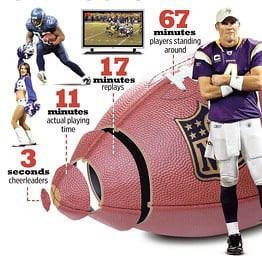
A standard NFL game consists of 60 minutes of playing time.
Ever wondered about the clock in American football? Specifically, how many minutes in a nfl game? It’s a question that often pops up, especially for those new to the sport or tuning in casually.
The game seems to fly by, filled with action and strategy, yet the official playing time is a set amount. Understanding this detail helps you appreciate the ebb and flow of each contest. So, let’s dive into what makes up an NFL game’s duration.

How Many Minutes in an NFL Game? Let’s Break It Down!
Alright, football fans! You’re probably here because you’ve asked yourself, “How long is an NFL game?” It’s a super common question, and the answer isn’t as simple as you might think. While the clock shows 60 minutes, the actual time a game takes is usually much longer. Let’s dive deep into the real time of an NFL game, explore all those stops and starts, and see why it takes so much longer than just an hour.
The Official 60 Minutes: What It Means
The rule book says an NFL game has four quarters, each lasting 15 minutes. Add that up, and you get 60 minutes of official playing time. So, if the clock was constantly running, a game would be finished in an hour. But that’s not how it works in the NFL. The game clock stops for various reasons, making the total game time longer.
Why The Clock Stops: A Look at the Interruptions
You might think the clock keeps running, but there are tons of reasons why it stops during an NFL game. These clock stoppages are a big part of what makes the game longer than 60 minutes. Here’s a breakdown of the most common reasons:
Out of Bounds
Whenever a player with the ball goes out of bounds, the clock stops. This gives the teams a moment to regroup and get ready for the next play. It happens a lot during the game, as players try to get extra yardage or avoid getting tackled.
Incomplete Passes
If a quarterback throws a pass and the receiver doesn’t catch it, it’s an incomplete pass, and the clock stops. It’s another moment for the teams to plan their next move.
Penalties
When a player breaks a rule, the referee throws a flag and the play stops. Depending on the penalty, the clock may stop too, so that officials can sort out what happened and enforce the rule. This can add more time to the game, sometimes significantly.
Change of Possession
When one team loses the ball and the other team gets it, this is called a change of possession. This can happen when there’s a turnover (like an interception or a fumble) or after a punt. The clock often stops during these changes, allowing the new team to get ready.
Touchdowns and Extra Points
When a team scores a touchdown, the clock stops. Then, the team tries for an extra point, or a two-point conversion, and the clock stops before that play too. These stops are necessary to make sure the score is recorded accurately and that teams have time to set up.
Injuries
If a player gets hurt on the field, the clock stops. This is done to make sure the player gets the medical attention needed. Player safety is most important, so any injury can pause the game.
Timeouts
Each team has a set number of timeouts they can use during a game. When a team calls a timeout, the clock stops. This lets teams discuss plays and strategies without the pressure of the clock running down.
Two-Minute Warning
At the end of each half, when there are two minutes left on the clock, there is a special rule called the two-minute warning. The clock stops automatically, giving teams the chance to plan for a final push. It creates more drama and excitement in those final crucial moments.
Instant Replay Reviews
Sometimes, referees aren’t sure if they got a call right, so they might use instant replay to review the play. During these reviews, the clock stops. This process ensures fair play and accuracy.
How Long Does an NFL Game Really Take?
Now that you know about all the clock stoppages, it’s easier to see why NFL games take longer than just 60 minutes. A typical NFL game will take between three and three and a half hours to complete. This time can change, but generally, that is what you expect. Some games can run even longer, depending on how many stoppages there are.
Factors Affecting Game Length
Several things can affect how long a game runs. Let’s have a deeper look:
Number of Penalties
If there are a lot of penalties in a game, the game will take longer. Penalties force the game to stop frequently, which will make the total time higher. More flags mean more time added on to the overall game time.
High-Scoring Games
When teams score touchdowns often, the clock stops more for the extra points or two-point conversions. High scoring games will always last longer. These touchdowns make the total game time increase because of the stoppages involved.
Close Games
Close games, especially ones that come down to the wire, often have more clock stoppages in the final few minutes. Teams use timeouts more strategically. The two-minute warning makes each play more important, and there is more stopping, which makes the total time longer.
Overtime
Sometimes, games end in a tie, so they go into overtime. The overtime period adds more time to the game. In the NFL, they have a special sudden-death overtime system, which means the first team to score wins the game. This can add about 10-15 minutes, or more, on to the game.
Instant Replay Reviews
If officials use instant replay reviews frequently, this adds more time. These reviews take a few minutes each time, and if there are a lot of reviews, this will cause the game to last longer. The process is important for accuracy but can increase game duration.
Injuries and Medical Timeouts
If there are injuries during the game, this will add time to the game. These medical breaks are needed for safety, and these stoppages will add to the overall time. Medical attention for players is always a priority.
A Look at Game Timing Through the Quarters
To make it easier to understand, let’s look at the typical time spent in each quarter, and how the actual time passes.
First Quarter
The first quarter starts with the kickoff and usually takes between 30-40 minutes. There are clock stoppages for incompletions, out of bounds, and penalties, this means the quarter lasts longer than 15 minutes.
Second Quarter
The second quarter usually takes about 40-50 minutes. The two-minute warning occurs at the end of this quarter, which causes clock stoppages. This can make it feel longer. Teams become more strategic at this time, and more stoppages may happen.
Halftime
Halftime is a longer break, usually lasting 12-15 minutes. During halftime, players rest, coaches plan strategy, and fans have a chance to go get food and stretch. It’s like a pause button in the middle of the game. There’s no playing time, but it’s part of the total game experience. Halftime is not part of the playing time, but you’ll need to factor it into the total time you’re spending watching the game.
Third Quarter
The third quarter usually runs about 30-40 minutes long, like the first quarter. The game play continues like normal, with the same rules and clock stoppages. This makes this quarter a bit shorter as the two minute warning is not included.
Fourth Quarter
The fourth quarter usually takes the longest, usually around 40-60 minutes. The two-minute warning is in play again, and many teams play aggressively which can lead to more clock stoppages. This quarter is usually the most exciting and most eventful, and the overall time reflects that.
Why the Length Matters
The actual length of an NFL game impacts players, coaches, and of course, you, the viewers. Here’s why the total time matters:
Player Endurance
The clock stoppages let players rest, but they’re still competing for a long time. Players need great endurance and stamina. They have to stay in top condition to make sure they play their best the whole game. Football players have to maintain their peak performance during the whole game.
Coaching Strategies
The way the clock stops affects how coaches plan and make decisions. They have to use timeouts wisely, and plan their plays for every stoppage. Game management becomes very important for coaches. Every second counts.
Fan Experience
For fans, knowing the game lasts longer than 60 minutes helps with planning. When you are planning to go to a game, you need to consider that you are going to be there for about three to three and a half hours. Many fans spend more than just a few hours at the stadium. This also affects those who are watching from their home, because there are other things to do but people choose to stay at the game for the duration.
A Quick Guide to NFL Game Length
To help you remember all of that information, here is a quick guide:
- Official Playing Time: 60 minutes (4 quarters of 15 minutes each)
- Typical Game Length: 3 to 3.5 hours
- Clock Stoppages: Out of bounds, incomplete passes, penalties, change of possession, touchdowns, extra points, timeouts, two-minute warning, injuries, instant replay reviews
- Longer Games: High scoring games, close games, games with a lot of penalties, games that go into overtime
- Halftime: 12 to 15 minutes
Keeping Up With the Game
Now you have a much better idea of how many minutes are in an NFL game. It isn’t as simple as just 60 minutes, because of many stoppages during the game. Keep in mind that the actual game time may vary. So when you tune in to watch your favorite team, you’ll understand that the clock stops are part of the game. This information will make you feel more informed and prepared for when you are watching the game.
So, the next time you’re settling in to watch an NFL game, remember it’s a bit more than an hour-long commitment. All of the stoppages make the game the way it is. Knowing why the clock stops makes it even more fun to watch.
A Beginner's Guide to American Football | NFL UK
Final Thoughts
A standard NFL game runs for 60 minutes of play. This time divides into four 15-minute quarters. However, stoppages and timeouts extend the actual game duration.
The clock pauses frequently for incomplete passes, penalties, and changes in possession. Therefore, the total time an NFL game takes is much longer than 60 minutes. You see that actual elapsed time on the clock isn’t always equal to the playing time. How many minutes in a nfl game are truly spent on actual play is considerably less than the clocked time.

