
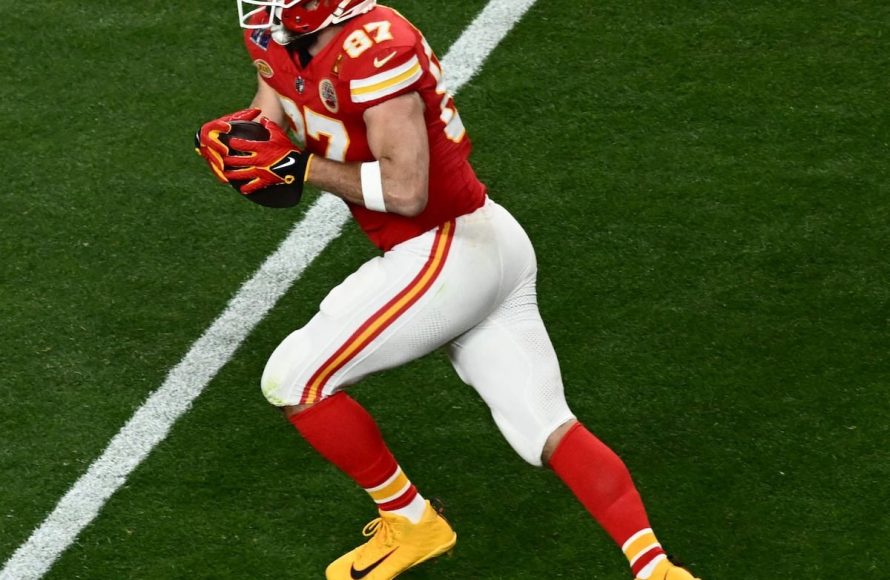
There are four quarters in a football game.
Ever wondered about the structure of a football match? If you’re new to the sport, a common question is “how many quarters are there in a football game?” Understanding this is key to following the game.
The game is divided into these distinct periods of play, with short breaks in between. Each quarter offers unique opportunities for both teams to score and gain an advantage.

How Many Quarters Are There in a Football Game?
Okay, let’s dive deep into the exciting world of football! You might be a seasoned fan who knows the game like the back of your hand, or maybe you’re just starting to get into it. Either way, one of the first things you’ll want to understand is how the game is structured. So, let’s talk about those important segments of play: the quarters. We’re going to explore how many quarters there are in a football game and what happens in each one, ensuring you get a full grasp of the game’s structure.
The Standard Four Quarters
At the most basic level, a standard football game is divided into four quarters. Think of it like a pie cut into four equal slices. Each quarter is a defined period of play, and after each one ends, there’s a short break. This is true for most levels of football, from the National Football League (NFL) to college and even high school games. So, the quick answer to “how many quarters are there in a football game?” is a straightforward four.
The Length of a Quarter
While the number of quarters stays the same, the length of each quarter can differ depending on the level of play. Here’s a breakdown:
- NFL (National Football League): In the NFL, each quarter is 15 minutes long. So, a full game would have 60 minutes of playing time, not including time for timeouts, penalties, and breaks between plays.
- College Football: College football also uses 15-minute quarters, mirroring the NFL.
- High School Football: High school football games usually have shorter quarters, typically 12 minutes each. This makes for a total of 48 minutes of playing time in a standard game.
- Youth Football: When we talk about youth football, the time of a quarter may change based on the league and the age of the players. Sometimes it’s 10 minutes, and sometimes even less. It’s all about ensuring the kids are safe and get a chance to learn the game.
Keep in mind that this time is running time. The clock stops for various reasons in each quarter, such as when there’s a penalty, when a player goes out of bounds, or when a team calls a timeout. So while a quarter might be 15 minutes long, the actual time it takes to play it can be longer.
The Flow of a Game: Beyond the Four Quarters
Now that we know a game has four quarters, it’s crucial to understand how these quarters fit into the overall flow of the game. The transitions between these periods are also significant.
First Quarter
The very first quarter sets the tone for the game. Both teams come onto the field with energy, trying to establish their rhythm. It’s a time of planning and strategy. The first quarter often involves teams testing the defenses, seeing how the other team is lined up, and attempting to gain early leads.
Second Quarter
The second quarter builds on the first, with teams continuing their strategies and trying to score some key points. It is crucial as it leads into half time. The intensity usually rises in the second quarter as each team attempts to end the half with an advantage.
Half Time
After the second quarter concludes, there is a significant break called halftime. This period is much longer than the break between the quarters, typically about 12 to 20 minutes in the NFL and college football. During halftime, the teams go to the locker room, coaches make any adjustments to strategies, and players rest and recover before the second half starts. This is a crucial break for teams to make big strategic changes and come back with a fresh perspective. Often, entertainment and performances are put on for the spectators. Think marching bands, singing and cheering. This adds to the overall experience of the football game.
Third Quarter
The third quarter is like the start of a new game. Teams often come out with adjusted plans based on the first half. It’s an important quarter to keep the momentum up. In the third quarter, teams try to make changes that’ll hopefully help them win the game. It’s a time to correct mistakes made in the first half and to apply the halftime strategy adjustments that were discussed in the locker room.
Fourth Quarter
The final quarter of play, the fourth quarter is where games are won or lost. If the game is close, the intensity becomes very high, with both teams putting forth every ounce of effort to get an edge. Clock management becomes crucial in this quarter. The focus is on pushing hard, taking calculated risks, and capitalizing on every opportunity. Every play counts, and the tension is high.
Overtime: When Four Quarters Isn’t Enough
What happens if the score is tied after the fourth quarter? Well, in many cases, we head to overtime! Overtime is an additional period of play that happens when the score is tied after the four regular quarters. However, overtime rules can vary.
NFL Overtime
In the NFL, overtime rules have changed over the years to make games fairer. As of the current rules, both teams are guaranteed one possession, meaning both teams get a chance to have the ball on offense. If the team that receives the ball first scores a touchdown on their first possession, the opposing team gets a possession to try and score a touchdown themselves. If they don’t score, or if they only score a field goal, the game is over and the team that scored a touchdown in its first possession wins. But, if a team scores a field goal as its first score, the other team gets the chance to score a touchdown, or a field goal of their own. If both teams end up scoring a touchdown on their first possessions, the game continues until one team scores a touchdown or a field goal without the other team scoring anything. This can be different during regular season and playoff games. Before the change in the rules, if a team scored a touchdown on their first possession, the game was immediately over and that team would win.
College Football Overtime
College football overtime has a different setup. Here, each team gets a possession starting at the 25-yard line. Each team is trying to score from that point. After each team attempts a score, if the score is still tied, then the teams switch sides of the field and keep trying until one team scores and wins. The overtime period continues in the same fashion. This is different from the NFL because both teams always get at least one possession in a tie situation, which means you could see overtime go on and on for many drives.
High School and Youth Football Overtime
High school and youth football leagues have varying overtime rules. Generally, these follow the format of college football overtime where each team gets an opportunity to score until the tie is broken. Some leagues have their own unique rules. It’s a good idea to check the specifics of your local league if you’re watching a high school or youth game.
Timeouts: A Pause in the Action
Throughout the four quarters, each team has a set number of timeouts. These timeouts allow coaches to pause the game and talk to their players, make strategic decisions, or simply give players a break. Timeout rules vary by level of play, so let’s get an idea of how they work.
NFL Timeouts
Each team in the NFL gets three timeouts per half. This means a total of six timeouts per game. The clock stops when a timeout is called, which can be an important strategic move for a team that is trying to make plays at the end of a quarter or game. Each timeout lasts for a maximum of one minute.
College Football Timeouts
In college football, teams have three timeouts per half, just like the NFL. The same as the NFL, the clock stops while timeouts are happening. This is important for coaches so that they can stop the play, reorganize their players, and develop new plays. A team might use a timeout to give its players a brief rest, or to discuss strategies, or, as in the NFL, to keep the game clock from running down.
High School and Youth Football Timeouts
The number of timeouts in high school and youth football can vary based on the league rules. Commonly each team gets three timeouts per half, but it’s not uncommon to see different rules. The length of timeouts also differs. For youth teams, timeouts can be even shorter, to make sure the pace of the game is good for the young players.
Why Quarters Matter
Breaking a football game into quarters has several practical and strategic purposes. It provides structure to the game, allowing for a rhythm of play. The quarters also give teams and the players breaks to reenergize and regroup, ensuring players can make the most effective plays they can. Each quarter presents a new opportunity for a team to change its strategy. When teams come back from the breaks between quarters, they often come back with a renewed focus.
Quarters in Other Sports
The use of quarters as a method of organizing game play isn’t exclusive to football. Other sports also incorporate quarters or similar periods, each with its own unique rules and time duration.
Basketball
Basketball games are also divided into four quarters. In the NBA, the quarters are 12 minutes long, just like in the NFL, but in other basketball leagues, the quarters are often 10 minutes long. The break between quarters is a lot shorter in basketball than in football. Also, basketball has a halftime similar to football.
Water Polo
Water polo also uses four quarters, though they are shorter in length than basketball or football, often between 6-8 minutes each. Similar to other sports, there are short breaks between the quarters and then a halftime.
Understanding the structure of a football game, including the four quarters, halftime, and possible overtime, is key to fully appreciating the game. Whether you’re cheering from the stands, watching on TV, or even playing the game yourself, knowing the rhythm of the game helps you become a more knowledgeable football fan. The breaks in play, strategic timeouts, and the way different leagues have different rules make every game unique and exciting to watch. So, go ahead and enjoy the game and now you know – a standard football game is composed of four exciting quarters!
How Many Quarters Are in an NFL Game? – The Football Xpert
Final Thoughts
The answer to ‘how many quarters are there in a football game’ is four. These quarters divide the game into equal segments of play. Each quarter provides a chance for teams to score points and gain an advantage.
Understanding this format is basic to following any football game. The four-quarter structure remains a constant in the sport. This makes it easy for fans to understand the flow and progression of a match.

