
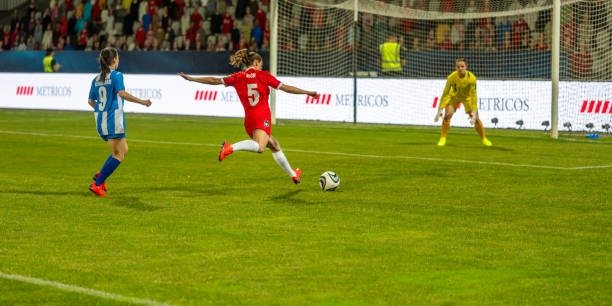
There are no quarters in a soccer game; instead, a soccer game is divided into two halves.
Ever wondered about the structure of a soccer match? It’s a common question, especially for newcomers to the sport. People often ask, how many quarters in a soccer game?
This confusion comes from other sports using a quarter system. Soccer has its unique way of dividing the game into distinct periods. So, let’s clear up the misconception right away.

How Many Quarters in a Soccer Game?
Okay, let’s clear up something that often confuses people! If you’re thinking about soccer and picturing four quarters like in American football or basketball, you’re in for a surprise. Soccer, also known as football in many parts of the world, has a different setup. Instead of quarters, soccer games are divided into two halves. That’s right, just two! So, the short answer to the question “how many quarters in a soccer game?” is that there are zero quarters. Soccer games use halves, not quarters.
Understanding the Structure of a Soccer Match
The standard soccer match is structured into two equal halves, separated by a halftime break. This format is consistent across almost all levels of professional and amateur soccer, from youth leagues to the FIFA World Cup. Knowing this basic structure is essential for understanding the flow and rules of the game. Let’s dive deeper into what makes up a typical soccer match.
The First Half: Getting the Game Started
The game begins with a kickoff, usually at the center of the field. Both teams start with eleven players each (with some exceptions at lower levels). The first half is played continuously, meaning the clock doesn’t stop for every break in play, unlike basketball or American football. Time only stops for significant injuries or referee decisions. The objective, of course, is to score more goals than the opposing team by getting the ball into their net. The first half usually lasts 45 minutes of playing time and then the referee will add additional time based on injuries, substitutions or other stoppages. This additional time is called stoppage time, or injury time.
- Duration: Typically 45 minutes of play.
- Objective: Each team aims to score goals.
- Play Style: Continuous play with stoppages for specific reasons.
- Starting Point: Kickoff from the center circle.
Halftime: A Brief Intermission
Once the first half is over, the players take a break called halftime. This is when the teams go to their locker rooms to rest, regroup, and strategize. The halftime break also provides time for coaches to give instructions and for players to rehydrate and recover. Halftime is typically a 15-minute break. But these times can vary depending on the level of play and the particular rules of each competition. While halftime is not considered part of the total playing time it’s a vital part of the soccer match.
- Typical Length: Usually 15 minutes, but may vary.
- Purpose: Allows players to rest, rehydrate, and receive instructions from coaches.
- Strategic Time: Coaches often use this time to make changes and game plan for the second half.
The Second Half: Finishing Strong
After halftime, the second half begins. The teams switch sides, and play continues for another 45 minutes. Again, the clock keeps running with stoppage time added at the end to account for play stoppages. The second half is just like the first half – a contest of skill, strategy, and teamwork. It is the period where teams aim to capitalize on their first half learnings and any adjustments they may have made during the halftime break. Ultimately, the second half determines who wins or ties the match, unless the specific competition rules dictates extra time or penalty shootouts.
- Duration: Typically another 45 minutes of play.
- Switching Sides: Teams switch sides of the field from the first half.
- Continuing the Game: Teams try to score more goals and execute any new strategies.
- Finishing Strong: The final 45 minutes is when the match’s outcome is decided.
Why Halves Instead of Quarters in Soccer?
The use of halves instead of quarters is a historical tradition in soccer. Unlike many other sports, soccer emphasizes the continuous flow of the game. Having only two halves, with minimal stoppages, means there is a consistent flow of play. This creates a unique sporting rhythm and tests the players’ endurance and stamina over a longer period. The idea of the continuous play makes the game more exciting and also places a higher emphasis on the fitness of the players.
Historical Context
Soccer’s format has been established for over a century. The decision to use two halves instead of dividing the game into more segments can be seen as a tradition passed down from its origins. This consistent format has become deeply ingrained in the sport. It maintains the sport’s fundamental rhythm and flow. While other sports have modified their formats, soccer has maintained the two-half structure for all but a few specific competitions.
Emphasis on Continuous Play
Soccer is a sport that relies heavily on continuous movement and strategic positioning. The use of two extended halves helps to keep a high flow of play. This is because stopping and starting the clock frequently, as seen in games with quarters, changes the feel of the game. The way the time keeps ticking in soccer keeps players and viewers on the edge of their seats.
Player Endurance and Stamina
Having two 45-minute halves makes player endurance crucial to winning. Players need to be able to perform at a high level throughout the entire 90 minutes of a game. Because there are no scheduled breaks, players have to manage their energy and maintain their focus throughout the entire match. The nature of two halves emphasizes a unique type of athletic skill that distinguishes soccer from other sports.
Variations in Game Length
While standard soccer games consist of two 45-minute halves, there can be variations, especially in youth leagues or for specific tournament formats. Understanding these variations is important, particularly if you’re new to the world of soccer.
Youth Soccer
In youth soccer, game lengths are often shorter than standard matches. The exact duration varies depending on the age group and league rules. Common variations include 20, 25, 30, or 35-minute halves. This allows younger players to participate fully without the extreme physical demand of 90-minute matches. The focus is on teaching skills and fun, rather than the more rigorous demands of professional level play.
- Younger Age Groups: Often play shorter halves, such as 20-25 minutes.
- Older Youth Groups: Usually increase the playing time to 30-40 minutes per half, depending on their age.
- Focus: To encourage a fun and developmental environment.
Extra Time and Penalty Shootouts
Sometimes games do not have a winner after the completion of the normal two halves. This is very common in knock-out matches or finals. In these cases, there may be an extra time period played. The extra time period is usually 2 x 15 minutes, played with a small break in between. This can sometimes be decided by a ‘golden goal’ where the first team to score the extra time, wins the match. If a match is still tied after extra time, then penalty shootouts will be used to determine a winner. A penalty shootout is a very exciting and a nerve wracking experience for both the players and the spectators.
- Extra Time: Two 15-minute periods are played if the match is tied after the normal two halves.
- ‘Golden Goal’: An old rule where the first goal scored in extra time wins the match. Some competitions may still use this rule.
- Penalty Shootouts: A series of one-on-one penalties from the penalty spot taken by players from each team, if the game is still tied after extra time.
Key Takeaways
To summarize, soccer does not have quarters like some other sports. Soccer matches are divided into two halves, each typically lasting 45 minutes. The format is consistent across most soccer levels. Halftime provides a brief break for rest and strategy. There are some variations in youth leagues, and if the game is tied at the end of the two halves, extra time and penalty shootouts may be needed to decide a winner. Understanding this fundamental structure helps to understand soccer better.
So, while some sports have quarters, remember soccer is all about those two exciting halves!
How Many Quarters Are in an NFL Game? – The Football Xpert
Final Thoughts
There are no quarters in a soccer game; instead, it features two halves. These halves are each 45 minutes long. There’s also a halftime break, typically around 15 minutes. This format is standard in professional and amateur soccer matches.
The question of ‘how many quarters in a soccer game’ often arises due to confusion with other sports. Soccer, unlike American football, uses halves, not quarters. Understanding this basic structure is key to comprehending the flow of a soccer match.

