
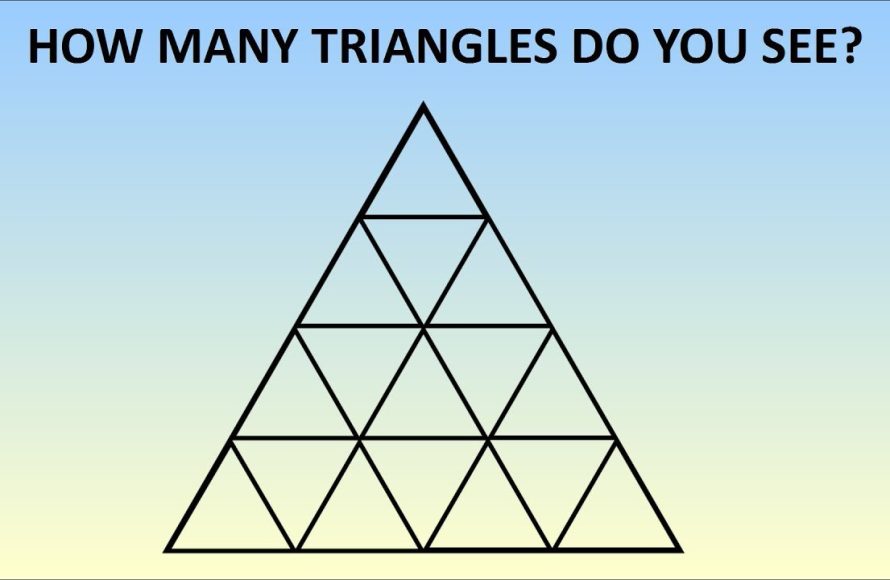
The objective of the how many triangles game is to count all the triangles within a given figure.
Ever stared at a seemingly simple shape and wondered how many triangles hide within? You are not alone! Many find it surprisingly tricky to accurately count them. The how many triangles game is a visual puzzle that tests your observational skills and patience.
It often involves complex diagrams with overlapping lines, making it more difficult than it initially appears. People enjoy challenging their friends and family with these kinds of puzzles and often seek methods for correctly identifying all the triangles.

How Many Triangles Game: A Deep Dive into Geometric Puzzles
Alright, buckle up geometry explorers! We’re about to take a fascinating journey into the world of the “how many triangles” game. This isn’t just a fun pastime; it’s a sneaky way to sharpen your brain, improve your observation skills, and get a better grasp of shapes. You might have seen these puzzles floating around—a big shape made up of lots of smaller triangles, and the challenge is to count them all. Sounds simple? Well, sometimes it’s trickier than you think! So, let’s break it down and explore all the ins and outs of this captivating game.
Why Are These Games So Popular?
You might wonder, why do people love these triangle puzzles so much? It’s not just about counting. These puzzles are popular because they:
- Boost Visual Perception: These games really challenge your eye to see all the different shapes and sizes, forcing your brain to really pay attention to details.
- Enhance Problem-Solving Skills: Finding all the triangles involves developing strategies and thinking systematically. You can’t just look randomly; you need a method to avoid double-counting.
- Improve Concentration: Focusing to count all those little triangles definitely makes your concentration muscles stronger!
- Offer a Fun Challenge: It’s like a mini-brain workout that’s actually enjoyable. It’s a great activity for both kids and adults.
- Accessible to All: You don’t need special equipment or any special skills to start playing; just your eyes and a bit of patience!
The Basic Building Blocks: Understanding Triangles
Before we plunge into the counting frenzy, let’s refresh our knowledge of triangles. A triangle is a shape with three sides and three corners. The cool thing about triangles is that they come in different varieties, like:
Types of Triangles
- Equilateral Triangles: All three sides are equal in length, and all three angles are equal too (60 degrees each!).
- Isosceles Triangles: Two sides are equal, and the two angles opposite these sides are also equal.
- Scalene Triangles: None of the three sides are equal, and all three angles are different.
- Right Triangles: One of the angles is a perfect 90 degrees, also known as a right angle.
- Acute Triangles: All three angles are less than 90 degrees.
- Obtuse Triangles: One angle is greater than 90 degrees.
Knowing these different types isn’t super critical for the ‘how many triangles’ game itself, but it adds a layer of understanding and helps you appreciate the complexity of the shapes you’re dealing with.
Strategies for Counting Triangles Effectively
Okay, so now we’re ready to count those triangles! Don’t just jump in and hope for the best. Here are some smart strategies to help you navigate through the triangle maze:
Start with the Smallest
Begin by identifying the smallest triangles first. Usually, these are the easiest to spot, and they make a good base for your counting process. Once you’ve accounted for those, you can look for the larger triangles made up of these smaller ones. This approach prevents confusion and double-counting.
Systematically Work Through the Diagram
Don’t hop around randomly! You’ll likely miss triangles or count them twice that way. Instead, divide the image into sections or rows and count the triangles in each section one by one. For example, in a grid of triangles, go row by row. This way you cover the whole image in an orderly way.
Look for Composite Triangles
This is where things can get tricky. Composite triangles are triangles that are made up of two or more smaller triangles. You can find them by tracing the lines of the smaller triangles, and forming a new triangle that covers some of the smaller ones. Make a note of any triangle you’ve already counted to keep track and not count the same triangle twice.
Label Your Diagram
If you’re finding it difficult, you could try labeling each individual triangle, either in the image, or on a separate piece of paper. This helps keep track of the triangles you already counted. You can label them with numbers or letters and tick them off as you find them. This trick also prevents you from counting triangles multiple times.
Be Patient and Persistent
Counting triangles can be challenging, and sometimes you might find it easy to miss a triangle or two. Keep calm, and don’t rush. If you miss some, it’s okay. It just means you can try again! Sometimes it also helps to have a second look with fresh eyes after a break.
Using Different Colors
Another visual trick you can use, is to use different colors when you are tracing and counting triangles. You can use different colors for different sizes of triangles, and it could help you spot any triangles you might have missed in the first round.
Common Mistakes to Avoid
Even with the best strategies, it’s easy to slip up! Here are some common pitfalls to watch out for:
- Double Counting: This is one of the biggest challenges. It’s easy to accidentally count the same triangle more than once, especially when dealing with complex images. A methodical approach and labeling can help prevent it.
- Missing Composite Triangles: Sometimes we get so caught up in looking for the small triangles that we miss the larger ones that are hiding in plain sight. Always be on the lookout for triangles that are made from multiple smaller triangles.
- Rushing Through: Speed is not your friend here. Take your time, analyze the image carefully, and follow a system. A rushed approach often leads to mistakes and an inaccurate count.
- Not Using a System: Attempting to count randomly will almost always lead to error. Have a plan of attack and stick to it. Whether it’s starting with the smallest triangles or systematically going row by row, a system is critical.
- Giving Up Too Soon: These puzzles can be tricky, and sometimes you might feel like you’re missing some. But don’t give up too easily! Take a deep breath, review your strategy, and try again.
Variations of the Triangle Game
While the basic concept of counting triangles remains the same, there are different ways to play. Some variations you might encounter include:
Varying Shapes and Sizes
Some triangle puzzles might not just have triangles within triangles, but triangles inside squares, or circles, or even more complex shapes. It’s important to focus on the fact that you are counting triangles only and ignore other shapes. The game can also have different sizes of triangles, and you can have large composite triangles and small individual triangles in the same game.
Different Grid Patterns
Sometimes the triangles are arranged in a simple grid pattern, like rows and columns. But other times, they can be in a star pattern, a web, or even a completely random pattern, which makes it much harder to find triangles. Sometimes the lines forming triangles can be curved and sometimes the triangles can be formed using dotted lines, all of which make the game more difficult and exciting.
Adding Extra Lines
Puzzles can have extra lines or shapes that are meant to distract or confuse you, making the job of identifying triangles much more difficult. These distractions force you to be very focused and careful when identifying and counting triangles.
Time Challenges
The game can also come with a timer, forcing you to count triangles within a limited time. It adds a new dimension to the game, and makes it more challenging as you have to quickly identify and count all the triangles under time pressure.
The Benefits of Playing
Besides being a lot of fun, playing “how many triangles” games provides some great cognitive workout! This exercise in mental flexibility helps keep your brain sharp and agile. Here are some advantages:
- Improves Visual-Spatial Skills: These games enhance your ability to perceive and understand visual information and spatial relationships between shapes.
- Sharpens Analytical Thinking: You learn to break down complex diagrams into simpler components, enhancing your analytical skills.
- Enhances Logical Reasoning: To solve these games, you use logical deductions and reasoning skills.
- Increases Attention to Detail: You need to pay very close attention to even the smallest details to spot all triangles.
- Develops Patience and Persistence: The challenge of these puzzles encourages patience and determination.
Creating Your Own “How Many Triangles” Game
Want to make your own puzzles? It’s a creative and fun way to challenge friends and family! Here are some tips on how you can create your own “how many triangles” games:
Start Simple
Begin with a simple triangle and gradually add more lines and triangles inside it. Try to keep it neat and evenly spaced at the start, until you get more used to creating these puzzles.
Use a Grid
Draw a grid on a paper and use the lines of the grid to create your triangles. This will make it easier to create a nice looking picture with lots of triangles.
Experiment with Different Patterns
Try creating different kinds of triangle puzzles, such as star shapes, circles, or even complex random shapes that have a lot of triangles in them. Be sure to test your own puzzles first, to ensure that you have found all the triangles yourself!
Adjust Complexity
You can make the puzzle more difficult by adding more triangles, making them smaller, or using different line styles such as dotted or curved lines. Experiment with the layout until you feel the level of difficulty of the game is appropriate.
Use Drawing Tools
For making the puzzles more precise, you can use drawing tools like rulers, protractors, or even graphic design software. There are many tools available online that can help with precise drawing and placement of shapes.
Keep it Organized
When you are drawing these puzzles, make sure you keep the lines distinct from each other and try to make your picture neat. It will make it much easier for someone else to play it and less confusing for them.
Where to Find More “How Many Triangles” Games
If you’re eager to try out more challenges, you can find plenty of these puzzles in various places:
- Online Websites: Many websites offer free printable puzzles or interactive versions of the game, just type the phrase into the search bar.
- Puzzle Books: Check out puzzle books in bookstores or libraries. These books often contain a variety of puzzles, including lots of “how many triangles” challenges.
- Educational Apps: Several mobile apps focus on educational games, and you might find triangle-counting puzzles in them.
- Social Media: Sometimes people share puzzles online for fun in social media groups, which is a great place to find new ones.
- Create Your Own: As we discussed earlier, you can also become a puzzle creator yourself!
So there you have it – a comprehensive exploration of the “how many triangles” game! It’s more than just a simple counting exercise; it’s a fantastic way to engage your brain, sharpen your skills, and have some fun. Whether you are a geometry whiz or just want a little mental exercise, this game can challenge and entertain you for hours.
Mind Game,how many Triangles?
Final Thoughts
The how many triangles game offers a fun, engaging mental workout. It sharpens observation and pattern recognition. Successfully counting the triangles can improve cognitive abilities.
Practicing regularly boosts spatial reasoning. This simple puzzle game proves surprisingly effective at developing key skills. Challenge yourself and see how many triangles you can identify.
Therefore, the ‘how many triangles game’ is beneficial for a quick brain exercise. It provides enjoyment while enhancing analytical thinking. It is accessible to all ages and skill levels.

