
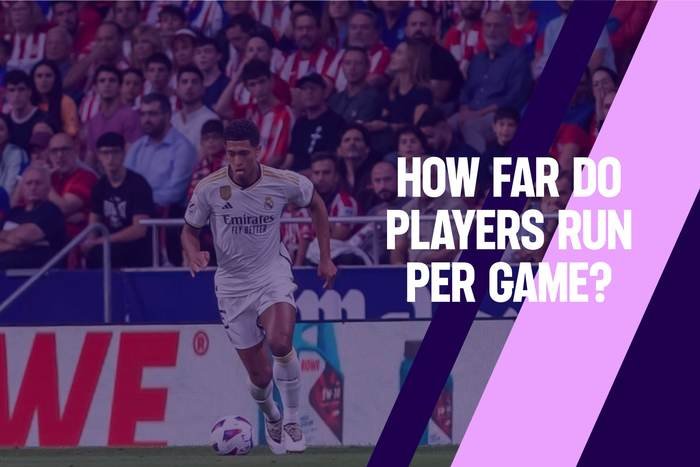
The average soccer player runs about 7 miles (11 kilometers) per game.
Ever wondered about the incredible endurance of soccer players? How much does the average soccer player run per game is a question many fans ponder. It’s not just about skill; it’s about covering a vast amount of ground during a match.
These athletes display impressive fitness, consistently sprinting, jogging, and walking throughout 90 minutes. This constant movement requires significant physical effort and stamina.

How Much Does the Average Soccer Player Run Per Game?
Ever watched a soccer game and wondered just how far those players run? It seems like they’re constantly moving! Well, you’re right – they cover a lot of ground. But how much exactly? It’s not a simple answer, as many things affect how much a soccer player runs during a match. Let’s explore this interesting topic together.
Factors Influencing Running Distance in Soccer
Many elements play a part in determining how much a soccer player runs during a game. It’s not a one-size-fits-all number. Here are some important things to consider:
Playing Position
Different positions on the field require different levels of running. Think about it – a forward who chases after the ball a lot will run more than a central defender who mainly stays in their own half. Here’s a general idea:
- Midfielders: These players often run the most. They’re like the engine of the team, moving between both ends of the field. They need to support the offense and help defend. So, they have to cover a lot of ground.
- Forwards: Forwards need to make runs to get into scoring positions. They do a lot of sprints and quick bursts of speed. But they might not always cover the same distance as a midfielder.
- Defenders: Defenders usually run less than midfielders and forwards. They need to stay organized and hold their position. However, they still need to run, especially when they need to stop opposing players and follow the ball.
- Goalkeepers: Goalkeepers run the least. They are mostly responsible for covering the goal line and the penalty area. They have short bursts of speed for saves, but not many long runs.
Level of Competition
How much players run can also depend on the level of play. For example, professional games are generally more intense. So, players in these leagues are likely to run more than players in amateur or recreational leagues.
- Professional Leagues: The highest level of play. Professional soccer requires players to run a lot, because it involves a fast pace, lots of pressure, and high stakes.
- College/University Leagues: College soccer is very competitive, so players will often run more than recreational level players.
- Amateur Leagues: At the amateur level, there are players who may be less conditioned. Thus, their running distances may be lower compared to the higher leagues.
- Youth Soccer: Running distances vary greatly in youth soccer depending on the age of the players. Younger kids will obviously run far less than older teenagers.
Tactics and Game Style
A team’s tactics will also affect running distances. If a team presses high up the field (meaning they try to win the ball back quickly near the opponent’s goal), players will need to run more. Similarly, a more defensive team that sits back deep will generally run less.
Some specific tactical aspects that influence player distance include:
- High Pressing: Teams using a high press require all players, particularly forwards and midfielders, to make frequent runs to put pressure on the ball holder, often covering the pitch quickly. This generally increases total distance covered.
- Counter-Attacking: Teams that prefer to counter-attack need players to quickly accelerate from defense to offense when possession changes, requiring short but very fast runs across the pitch.
- Possession-Based Play: Teams that focus on long periods of possession may run less overall, but will often make frequent shorter runs to create passing lanes, and maintain the flow of the match.
- Defensive Style: A team defending deeper with a low block will not require as much running from players compared to a team with an aggressive defensive approach.
Game Intensity
The intensity of the game itself matters, too. If there are a lot of attacks, counter-attacks, and transitions (when the ball changes from one team to another), all players will likely run more than in a match where the play is slow and there are fewer chances.
- High-Intensity Match: If a game is very competitive with lots of back-and-forth action, players cover more ground because of the constant movement required.
- Low-Intensity Match: In a slower match, where less pressure is on the ball, players may not have to run as much, resulting in a lower total distance covered.
- Close Games: A close, competitive game can drive increased movement as players try to win.
Individual Player Fitness
The fitness level of the player matters a lot. A player who is in top shape will cover more ground easily, compared to a player who hasn’t done much training. Players who are fitter also tend to run faster and are capable of quicker acceleration during their runs.
Average Distance Covered: Breaking Down the Numbers
With all these factors in mind, what’s the average distance covered? Let’s look at some typical ranges:
General Average
On average, a soccer player runs about 7 to 10 miles (11 to 16 kilometers) per game. This can vary a lot based on the factors we’ve discussed. Some players may run less, others may run a lot more. Remember, this is just an average.
Position-Specific Averages
As we already mentioned, positions play a key role in running distance. Here is a better look at how running might be broken down by position:
- Midfielders: These players typically run the most, with averages ranging from 7.5 to 10.5 miles (12 to 17 kilometers) per match. Some might even cover over 11 miles (18 kilometers) on occasion.
- Forwards: Forwards usually cover 6 to 8 miles (9.5 to 13 kilometers) per game. Their running is often in shorter, higher-intensity bursts.
- Defenders: Defenders generally run less than midfielders and forwards, averaging about 5.5 to 7.5 miles (9 to 12 kilometers) per game.
- Goalkeepers: Goalkeepers have the lowest running distances, averaging around 3 to 4 miles (5 to 6.5 kilometers) per game. However, their runs are often short, quick bursts.
Here’s a table that summarizes the average distances covered by position:
| Position | Average Distance (Miles) | Average Distance (Kilometers) |
|---|---|---|
| Midfielders | 7.5 – 10.5 | 12 – 17 |
| Forwards | 6 – 8 | 9.5 – 13 |
| Defenders | 5.5 – 7.5 | 9 – 12 |
| Goalkeepers | 3 – 4 | 5 – 6.5 |
High-Intensity Running
It’s also helpful to understand that not all running is the same. A lot of the running in a soccer game is at a high intensity, which means players are running at a good pace or are sprinting. This high-intensity running is more exhausting than slower jogging.
Most players will have several high-intensity bursts during a match. This type of running includes sprinting to chase a loose ball, getting into a scoring position, or stopping a counter-attack from the other team. The distance covered by high intensity sprints will be in addition to the overall distance covered during the match.
Technology and Tracking
In modern soccer, technology is a big help in measuring how much players run. Coaches often use GPS trackers to see exactly how far each player has run, as well as how fast they have run. This data is very valuable. It helps coaches understand which players are working the hardest and where improvements need to be made. These GPS trackers will tell coaches and players:
- Total distance covered: Exactly how far a player has run during the whole match.
- High-speed running distance: How far a player has run while running fast.
- Top speed: The fastest speed reached during the match.
- Sprint distance: How far the player has run during full sprints.
- Heat maps: These maps show where the players have spent the most time on the field, which can show where they need to improve their movement.
This data helps teams with:
- Improving player fitness: Coaches use data to make sure players are in peak condition.
- Making strategic decisions: Understanding how much players run can help with tactical changes during the game.
- Avoiding injury: Coaches use data to make sure they avoid overworking players and prevent injuries.
- Individual Training Plans: With individual data, coaches can create tailored plans for different players.
How Does Running Impact the Game?
The amount of running a player does in a match is really important to both individual performance and team success. It impacts different aspects of the game:
- Stamina and Endurance: Players with good stamina can maintain high-speed runs for longer periods. This helps them stay effective until the end of the match.
- Offensive Ability: Players who run frequently are able to create more options for attacks, creating more goal scoring opportunities.
- Defensive Work: When a player can effectively run to defend, they are more able to cut down the opponent’s space on the field and prevent goals.
- Team Dynamics: When everyone runs and works hard together, it creates a stronger team. Players supporting each other on the field creates an all-around good team ethic.
Players need to be fit enough to cover a lot of distance. This ensures they can keep going throughout the game. If players stop running because they are tired, it can reduce the team’s performance on the field.
So, the next time you watch a soccer game, pay attention to how much the players run! It’s a lot more than it might seem. This effort is essential for individual performance and contributes to their team’s success. The distances covered, the types of runs, and the strategies involved are all key to understanding the game of soccer.
Understanding how far an average soccer player runs per game gives you a greater understanding and appreciation for the effort and athleticism involved in the sport. It is not just about skill on the ball, it’s about the incredible physical effort these athletes put into each and every match. From sprinting and chasing the ball, to defending their goal line, every step counts.
How far do soccer players run during a match? | Ever Wonder? | NBC Sports
Final Thoughts
The average soccer player runs around 7 miles per game. This figure varies depending on playing position and intensity. Midfielders often cover the most ground, while strikers may run less. Factors like tactical approach and individual fitness also play a role.
So, how much does the average soccer player run per game? The answer is roughly 7 miles, though it’s never a fixed number. These distances demonstrate the incredible fitness demands of playing soccer professionally.

