
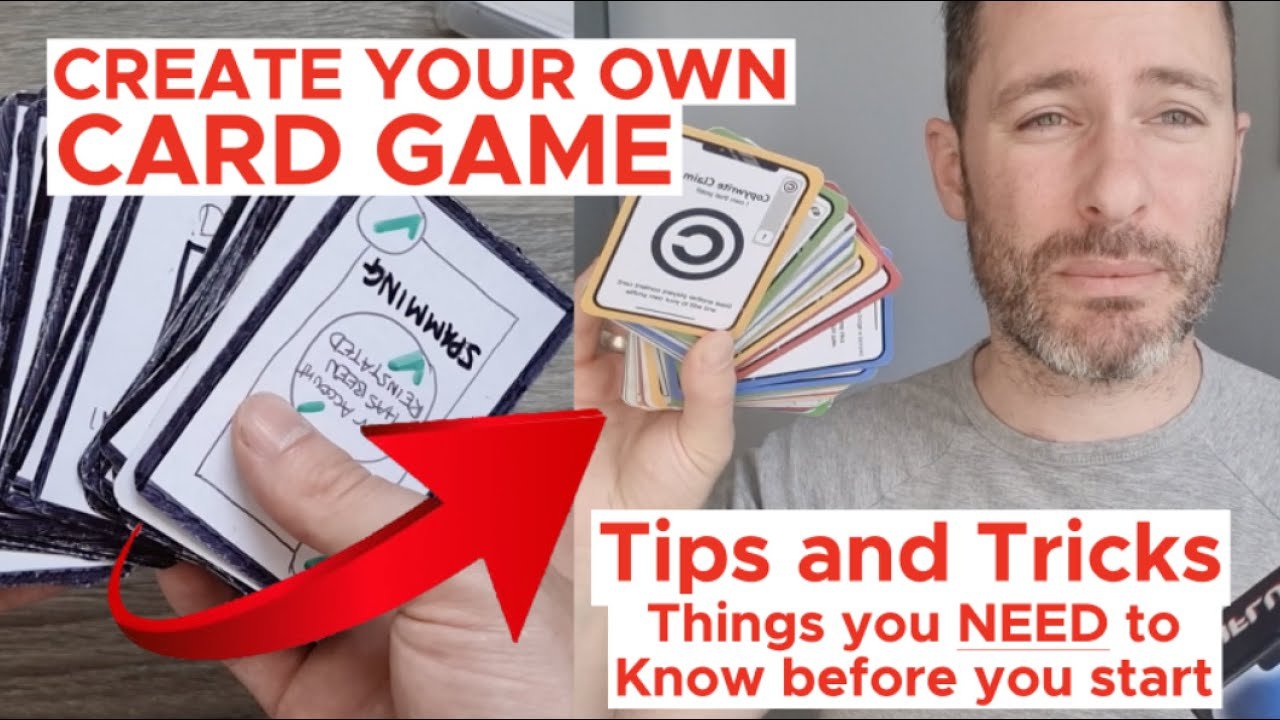
Creating your own card game involves designing game mechanics, developing card types with specific rules, and playtesting your design to refine the experience.
Ever had a brilliant game idea bubbling in your mind? Perhaps something that blends strategy and luck? You might be wondering how to create your own card game, bringing that vision to life. It’s a fantastic undertaking that’s more accessible than you might think.
Starting from a simple concept, we’ll explore the core steps involved in crafting your personalized card game. You’ll learn about building engaging mechanics and balancing your card’s powers. This will include testing your design, leading to a polished final product.

How to Create Your Own Card Game
Have you ever played a card game and thought, “I could make a game way cooler than this!”? Well, guess what? You totally can! Creating your own card game might seem like a huge task, but it’s actually a lot of fun if you take it step by step. It’s like building with LEGOs, but instead of plastic bricks, you’re using your imagination and some pieces of paper or cardstock. Let’s dive in and see how you can make your dream card game a reality.
Brainstorming Your Card Game Idea
Every great game starts with a spark of an idea. Before you start cutting out cards, you need to decide what kind of game you want to create. Here are some questions to get you thinking:
- What’s the Theme? Do you want a game about space exploration, magical creatures, or maybe a funny game about silly animals? The theme helps to guide your game’s look and feel.
- How many players? Is this a game for two people, a big group of friends, or something in between? Different player counts can change how the game plays.
- What’s the Goal? Will players be trying to collect sets of cards, build a special collection, or be the last player standing? Knowing the objective gives your game a focus.
- What kind of game play? Do you want a fast-paced action game or a game where people have to think carefully? This affects the type of mechanics you will use.
Thinking About Game Mechanics
Mechanics are the rules and ways that players interact with the game. Let’s look at some basic card game mechanics:
- Collecting Sets: Players try to gather cards of the same type or number.
- Trick-Taking: Players play cards to “win” rounds, based on card values or special rules.
- Hand Management: Players manage the cards they have to get the best combinations.
- Trading: Players exchange cards with each other to get the cards they need.
- Discarding: Players put cards in a discard pile. Sometimes to make room for new cards, sometimes as a strategic move.
You can even mix and match these mechanics to make your game unique! Don’t be afraid to try out different things to find what feels the most fun.
Designing Your Cards
Now that you have a basic idea, let’s start making some cards! This is where the design becomes visual.
Card Components
A card usually has a few key parts:
- Name: Every card needs a name, it helps identify the card quickly.
- Image: This is the picture or artwork that gives your game its unique style. It can be a drawing, a photograph, or a digital graphic.
- Text: The text usually describes what the card does and what its effect will be on the game.
- Values/Numbers: Some cards need numerical values, like points, attack power, or costs.
Your card design should match the theme you chose, so you need to select the appropriate colors, fonts, and graphics.
Choosing Materials
You don’t need fancy materials to make your cards. Here are some options:
- Index Cards: These are cheap and easy to use for making a card deck.
- Card Stock: It’s thicker than paper, making cards more durable.
- Playing Cards: You can even start by writing on top of some normal playing cards and making some rules around it.
- Computer Programs: Use programs like Microsoft Word, Google Docs, or even graphic design software for a more professional look.
Making Card Templates
For a consistent look, create a basic card template. This will help you make cards that look the same even if the text and image are different. You can draw a template on a piece of paper or make one digitally. All the cards will use this basic template.
Example Template:
| Element | Description |
|---|---|
| Card Title | Space for the card’s name at the top |
| Card Image | Area where the picture or drawing goes |
| Card Text | Space to write down what the card does |
| Card Values | Space to add any numbers or values |
Writing the Rules
Now, you’ll write the rules of the game. It’s super important to be clear, so that everyone who wants to play can understand how the game works.
Rule Sections
Your rulebook should cover these important things:
- Game Setup: How do players prepare to play? Do they need to sort cards, deal cards, or set up the play area?
- Game Objective: What’s the goal of the game? What are the rules of winning the game?
- Card Explanation: Describe what the different card types do. Explain the meaning of card values, special symbols, or keywords.
- Turn Structure: Explain what a player does in their turn.
- Playing Actions: Detail each playing action in the game. For example, how to draw cards, discard cards, play cards, or use card effects.
- End Game: How does the game end? How is the winner decided?
Tips for Writing Clear Rules
- Use Simple Language: Avoid big words and complicated sentences.
- Be Concise: Say exactly what you need to say, without adding extra words.
- Use Examples: Give some examples of gameplay to help people understand better.
- Number the Steps: For complicated parts of the game, it may be useful to use step-by-step instructions.
It is helpful to create a draft of the rules and test them out yourself and see if they work.
Playtesting
Playtesting is a crucial step. Before your game is ready for the world, you’ll need to try it out with your friends. This helps you find any problems or confusing spots.
The Importance of Playtesting
- Catch Errors: Find out if any card effects are too powerful or don’t make sense.
- Clarify Rules: See if the rules are easy to understand or if they need to be rewritten.
- Balance Gameplay: Ensure that each player has a chance to win, and that the game isn’t too easy or too difficult.
- Make it Fun: See if people enjoy playing the game!
Getting Feedback
- Ask Questions: Ask players what they liked and what they didn’t like.
- Watch How They Play: Observe if players understand the rules and if there are any points of confusion.
- Be Open to Changes: Don’t be afraid to change things based on the feedback you get.
Remember that playtesting is an ongoing process. You might need to test the game several times as you make changes.
Revising and Improving Your Game
Based on your playtesting feedback, you’ll need to revise the game. This means making changes to your card designs and rules.
Adjusting Card Balance
- Card Strength: If some cards seem too weak or too strong, change their values or effects.
- Card Combinations: If some card combinations are too powerful, adjust card effects or rule to make them fair.
- Rarity: You can even adjust how often certain cards appear in the game.
Fine-Tuning the Rules
- Add Missing Rules: If players have a question that’s not answered by the rules, add a new rule.
- Simplify the Rules: If there are any rules that are too complicated, rewrite them in an easier way.
- Add Clarifications: If there are rules that players misunderstand, add extra clarifications to make them clearer.
It’s okay if this process takes some time. The more work you put in now, the better your game will be!
Adding a Theme to Your Game
Now let’s make the game really fun by creating a more immersive and engaging experience. Here’s how to add to the theme:
Visual and Thematic Enhancements
- Artwork and Graphics: Use eye catching pictures and illustrations that are related to the theme of the game.
- Name and Titles: Choose names and titles that reflect the theme of the game. For example, if the game is about pirates, you can name cards something related to pirate or their activities.
- Card Symbols: Instead of just numbers and text, add some symbols to your cards that have meaning in the context of your theme.
- Flavor Text: Add a few lines of flavour text to the cards, that adds background to the story of the game.
Story and Immersion
- Game Story: Create a short story or backstory of the game. This adds more to the background and helps players connect with your game and the characters.
- Game Lore: You can add lore that tells the story of the world your game is set in. It can have background on the characters, regions or other elements.
- Player Roles: Assign specific roles for each player. By defining roles, it helps the game play better by keeping the player immersed in the experience.
Think of adding a theme like adding sprinkles to an ice cream cone; it takes it from good to great!
Producing Your Game
Once your game is finished, you can produce copies to share. Here are a few ways to do it:
DIY Production
- Print at Home: Print your cards on card stock and cut them out. This is the easiest option for the first few copies.
- Laminating: Laminate the cards to protect them from damage.
- Storage Box: Make your own storage box for cards by using cardstock or any old box.
Professional Printing
- Print Shops: Find local print shops to help print your cards.
- Online Printers: Use online services specializing in board and card game printing.
- Packaging: Design and order custom packaging to make your game look professional.
Choosing how to make your game depends on your budget and how many copies you want to make. You can also try different vendors to see the quality of the print and card they offer.
Making your own card game is a journey. It starts with an idea and ends with a product you can share with your friends and family. Don’t be afraid to try new things, make mistakes, and learn from the process. With a little effort and imagination, you can create an amazing game that people will love to play. The most important thing is to have fun and enjoy the process!
Homemade Trading Card Game #tcg#diy#shorts
Final Thoughts
So, creating your own card game boils down to these key points: brainstorm your game’s theme and core mechanics. Develop rules, test them repeatedly, and make necessary adjustments. Iteration is must.
Next, design appealing cards and playtest with different groups. This process helps refine your gameplay. These steps provide a good base for how to create your own card game.

