
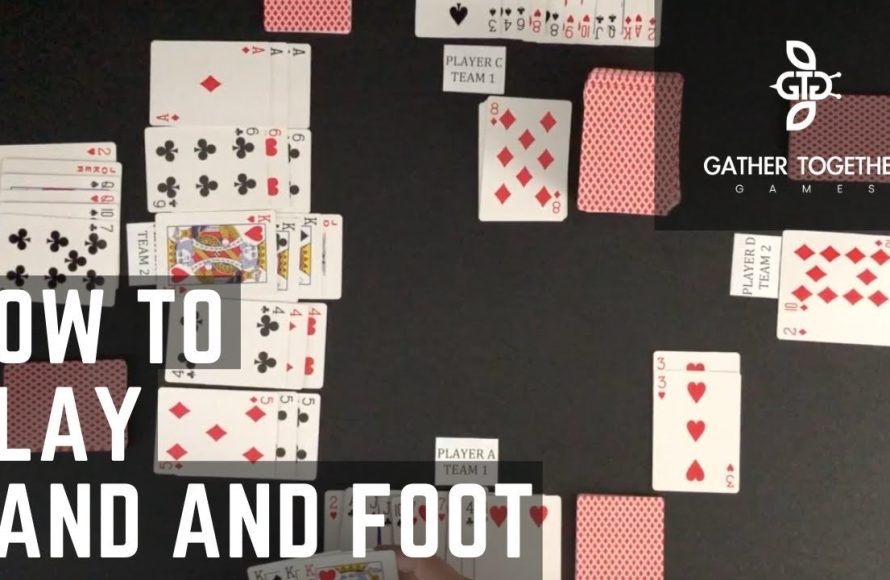
To play hand and foot canasta card game, you form partnerships, deal cards for hands and a foot pile, meld sets of three or more cards of the same rank, and aim to make canastas (seven cards of the same rank), going out when one team has met the required point threshold.
Have you ever wanted a card game that blends strategy with a bit of luck? Well, learning how to play hand and foot canasta card game might just be the perfect pastime for you. It’s a version of Canasta that includes a “foot” pile, adding an interesting layer of complexity to the classic gameplay. This variation makes each round a bit more unpredictable, and a lot more fun.
The game involves teamwork and careful card management, as you try to create melds and make canastas. The goal is to accumulate points and strategically deplete your cards before your opponents do. So get ready to dive into this exciting card game.

How to Play Hand and Foot Canasta Card Game
Hand and Foot Canasta is a fun and engaging card game that’s perfect for groups of friends and family. It’s a variation of classic Canasta, but with a few twists that make it even more exciting. If you’ve ever wanted to learn how to play Hand and Foot, you’ve come to the right place! We will walk you through everything you need to know to get started. Let’s dive in!
Understanding the Basics of Hand and Foot
Before we get into the specifics, let’s cover the basic principles of Hand and Foot Canasta. It’s a partnership game, meaning you play with a teammate against another team of two or more people. Your main goal is to score points by making melds (groups of the same card rank) and canastas (melds of seven or more cards). Understanding the core concepts of the game is crucial for success.
The Deck and Players
Hand and Foot requires multiple decks of standard playing cards. Typically, you’ll use two or more decks depending on the number of players. For a four-player game, two decks are generally sufficient, but for a larger group, use three or even four. Jokers are included in the deck and are important wild cards. Teams are made up of partners, and each team member has their own “hand” and a “foot” of cards.
Card Values
In Hand and Foot, each card has a point value. Here’s a quick guide:
- Aces: 20 points each
- Kings, Queens, Jacks, Tens: 10 points each
- Nine through Four: 5 points each
- Threes: Depending on the rule set, they’re either zero points, or 5 points. They have a special function (which we’ll cover soon)
- Twos and Jokers: These are special wild cards and are worth 20 points when used in melds
Game Setup: Getting Ready to Play
Proper setup is very important for a smooth game. Let’s see what you should do before the game begins:
Dealing the Cards
The first step is to choose a dealer. Then, each player receives two sets of cards: one ‘hand’ and one ‘foot.’ The number of cards in each varies depending on the specific rules being used, but a typical deal is 11 cards for your hand and 11 cards for your foot. The “foot” cards are placed face-down in front of the player, forming a separate pile. You cannot look at your foot until your hand is empty. After each player has their two piles, the remaining deck is placed in the middle of the table as the draw pile, and one card is flipped over to start the discard pile. Make sure all players are aware of their partners in the game.
Standard Deal Example (11 cards)
- Each player receives 11 cards for their hand.
- Each player receives an additional 11 cards for their foot, face-down.
The Discard Pile
The discard pile is a key part of the game. Players can draw the top card of the discard pile instead of drawing from the draw pile when there is a card they can use. However, they must use the top discard card in that same turn. The discard pile is made up of discarded cards during players turn, as their last move in that turn. The top card must always be face up, and visible to every player.
Playing the Game: Step-by-Step Guide
Now, let’s walk through how to play Hand and Foot, turn by turn. Here is a breakdown of what you need to do on your turn:
Beginning Your Turn
A turn begins by drawing a card. You can choose to draw a card from either the draw pile or, if you can use it, from the top of the discard pile. Note: if you draw from the discard pile, you must take that top card, and you must use it in that same turn. If you draw from the discard pile, you must also take the top card from the discard pile. If the discard pile is empty, you always draw from the deck. As soon as you take a card, either from discard or deck, your turn has officially begun.
Making Melds
The primary way to score points is by making melds. Melds are groups of three or more cards of the same rank. For example, three 7s, or four Queens, and so on. Wild cards (twos and jokers) can be used to complete a meld. You can have more than one meld of the same rank. For example, a player can meld a group of 3 Kings, and also a meld of 4 Kings. Keep in mind that you cannot add cards to your existing melds until your team has made at least one ‘initial meld.’
Initial Meld Requirements:
Before you can begin adding cards to your melds or creating canastas, your team needs to make a first meld with a specific point value. This value increases throughout the rounds.
- Round 1: 50 points
- Round 2: 90 points
- Round 3: 120 points
- Round 4: 150 points
The required point value must be met in one turn, and can be made up of many small melds.
Going Into Your Foot
Once you have played all of the cards from your hand, you can then ‘go into your foot’ by taking the foot cards you have. As soon as you play your last card from your hand, your first foot card can be added to any existing melds, or start new melds, so long as they do not exceed your remaining cards in hand. If you can make a new meld with your first foot card, you must use it. Then, you continue your turn as normal.
Completing Canastas
A canasta is a meld of seven or more cards of the same rank. There are two types of canastas: clean and mixed. Clean canastas have no wild cards and are worth 500 points. Mixed canastas contain wild cards and are worth 300 points. Making canastas is a main way to rack up points in the game. You must try and create these when possible.
Understanding Red and Black Threes
Threes have special rules in Hand and Foot. Red threes are worth 100 points each, but only if you have a completed meld. If you do not have an initial meld, you must discard any red threes you have. Black threes, however, are blocking cards. If a player discards a black three, the next player in rotation is blocked and cannot take from the discard pile, unless they also have a three. If they do take the black three from the discard, the next player is not blocked.
Ending Your Turn
After you’ve taken the top of the discard pile or drawn from the deck, have made all of your melds, or added cards to your teams existing melds, or created canastas, your turn ends by discarding one card face up into the discard pile. Be mindful of what you discard, as this could help the next player in rotation, or block them if you play a black three.
Rounds and Scoring in Hand and Foot
Hand and Foot is played over several rounds, and each round’s scoring contributes to the overall game score. Here’s how the rounds and scoring works:
Multiple Rounds
The game typically consists of four rounds. In each round, players aim to make melds and canastas. Every round you start with a fresh hand, and then once you finish your hand you can pick up your foot.
Scoring
At the end of each round, teams tally up their points based on the cards melded and canastas made. The scoring is as follows:
- Canastas:
- Clean Canasta: 500 points
- Mixed Canasta: 300 points
- Red Threes: 100 points each, if initial meld is made, otherwise 0.
- Cards:
- Aces: 20 points each
- Kings, Queens, Jacks, Tens: 10 points each
- Nine through Four: 5 points each
- Twos and Jokers: 20 points each
At the end of the rounds, all teams total their points, and the team with the highest points at the end of the last round wins the game.
Going Out
The round ends when one player on either team uses up all their cards, including their foot, and makes their final discard. The score is then calculated for the round, and the next round begins.
Strategic Tips for Playing Hand and Foot
Now that you have the basics, here are some tips that can improve your playing:
- Communicate with your partner. Even without speaking directly, you can communicate through your plays and discards. Pay attention to what your partner discards and how they meld their cards.
- Try to make your initial meld as soon as you can. This will help unlock your team to start working towards canastas.
- Prioritize clean canastas. They are worth more points than mixed canastas, and they have a higher chance of being created earlier in the game.
- Watch out for black threes. Always pay attention to what your opponents discard, as you might be blocked from the discard pile. Also, try to discard them if you have them, as they block the next player in rotation.
- Save wild cards for canastas. It’s easy to meld with a wild card, but they are valuable, so try to wait until you are making a canasta, as they will help you more there.
- Strategically plan which cards you are going to discard. Discarding the right card can be crucial to a player’s next turn, and your team’s success.
Variations of Hand and Foot Canasta
There are many variations of Hand and Foot that can affect gameplay. Here are some common variations to look out for.
Number of Decks and Cards
Some versions use different numbers of decks and cards per hand or foot. This may be something you have to agree with before starting the game. Different numbers of cards can make the game longer or shorter.
Initial Meld Values
Some groups adjust the initial meld values depending on the number of players or the desired pace of the game. You should always communicate this with your group beforehand, to ensure everyone knows the rules.
Scoring Rules
Scoring may be slightly different, for example, some groups may include a point bonus for being the first to ‘go out’ in a round. Again, this is something that should be communicated beforehand, to make sure everyone is playing with the same rules.
Practice Makes Perfect
Like any card game, you will improve your skills the more you play Hand and Foot. Don’t worry if you don’t pick it up right away. Start with the basic rules, and gradually try some of the more advanced strategies. The most important thing is to have fun while playing. So, grab a deck (or two!), find a partner, and begin your journey to being a Hand and Foot player!
Playing Hand and Foot can be a very enjoyable experience with the right amount of practice and understanding. Remember to be patient with yourself and other new players, and enjoy the process of learning. The more you play, the better you’ll become at both the strategy and speed of the game. Now you have a very strong understanding of how to play hand and foot. So, gather your friends and family and start a game! You might be surprised at how much fun you can have. Good luck, and happy playing!
How To Play Hand and Foot
Final Thoughts
To recap, hand and foot canasta involves teams using two decks of cards. Players form melds of three or more cards of the same rank. The game includes a ‘hand’ and a ‘foot’ pile.
Remember, you must build canastas, which are melds of seven or more cards. Strategize discards to benefit your partner. Knowing how to play hand and foot canasta card game is all about teamwork and clever card play to score points.

