
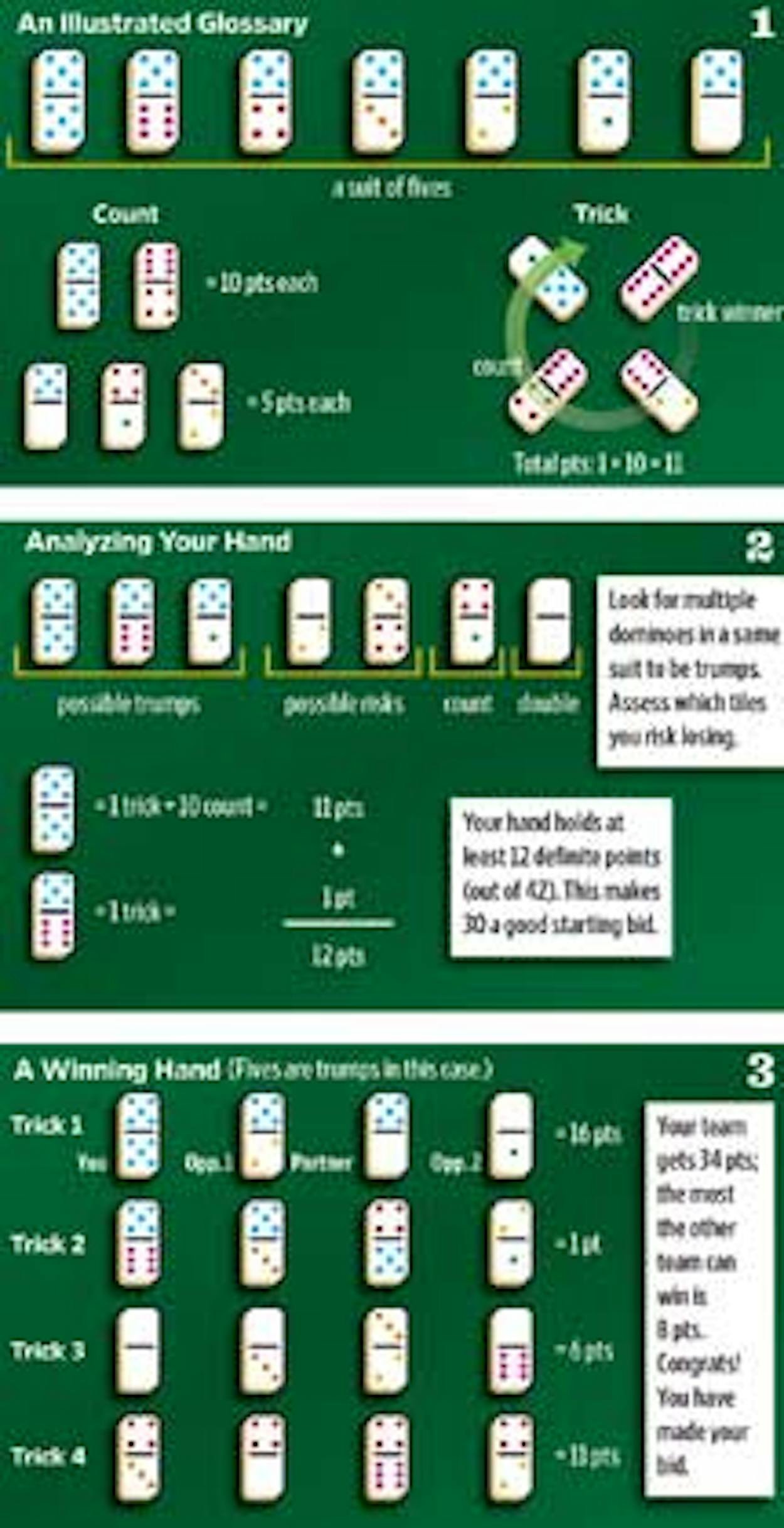
Playing 42 domino game involves four players in partnerships, bidding on the number of tricks they plan to take, and scoring points based on successful bids and collected pips.
Have you ever wanted to try a domino game that’s more than just matching ends? 42 offers a great, challenging game for four players who enjoy bidding and strategy. It uses a standard set of dominoes, but unlike simple games, it involves bidding on how many tricks you think you can take. Learning how to play 42 domino game can bring many hours of enjoyment.
This game is a bit like a domino version of trick-taking card games. Once you get the hang of the bidding and scoring, you’ll be strategizing and competing for those points.

How to Play 42 Domino Game
Alright, let’s dive into the exciting world of 42! It might sound like a complicated math problem, but trust me, this domino game is a ton of fun and easy to pick up. It’s a trick-taking game that combines strategy and a bit of luck, perfect for game nights with family and friends. We’ll go through everything you need to know, from setting up the game to figuring out who wins, in simple terms.
Gathering Your Crew and Gear
First things first, you need to gather your team. 42 is best played with four players, forming two teams of two. Think of it like a tag-team event but with dominoes! You also need a standard double-six domino set (that’s the one with dominoes going from blank-blank up to 6-6). No fancy dominoes required. You might also want a score sheet and a pencil to keep track of points. Having a flat surface, like a table, is crucial so the dominoes don’t slip and slide.
Setting Up the Game
Once you’ve got your players and gear ready, it’s time to get the game going. Here’s how to set things up:
Mixing and Drawing
Put all the dominoes face down on the table and mix them up really well. It’s like shuffling a deck of cards, making sure no one knows where the pieces are hiding.
Each player then draws seven dominoes. Make sure you keep your dominoes secret, so other players can’t see them. The best way is to stand them up on their edges in front of you, or hold them carefully in your hand.
Starting the First Hand
Before the game starts, the player holding the double-six (that’s the 6-6 domino) usually starts the first hand. If no one has the 6-6, the next highest double starts, in order (5-5, 4-4, 3-3, 2-2, 1-1, 0-0). This first player is called the “lead player”.
The game then moves to the left (clockwise) around the table.
Understanding the Basics of Play
Okay, now we’re ready to play! Let’s understand the basic mechanics of each round. It’s not as tricky as it might seem.
Leading a Trick
The lead player starts by laying down one of their dominoes face up. This domino is called the lead domino and determines the suit of the trick for that round. It is very important to think carefully about which domino to lead with.
Each domino has two sides, and the value of each side is called a “suit”. For instance, a 4-2 domino is in the 4 suit and the 2 suit. Whichever side you lead with will determine the lead suit.
The lead player must choose one of the suits of their domino to be the lead suit. For example if the lead player lays down the 5-3 and declares the lead suit to be 5. All other players must try to match the suit of 5 if they have one.
Following the Lead
The next player clockwise has to follow suit if they have it. That means they must play a domino that has the same “suit” (number) as the lead domino’s declared suit, which was used to start the trick.
If a player does not have a domino with the matching suit they can play any domino in their hand, but it will not win the trick.
It’s like playing cards and matching suits – hearts to hearts, diamonds to diamonds, etc, but with numbers instead.
Winning the Trick
Once everyone has played a domino, the trick is done. The player who played the highest domino of the led suit wins the trick. This player gets to collect all of the dominoes from that trick and will start the next trick.
For instance, if the lead suit is 5, and the players have played a 5-1, a 5-3, a 5-2 and a 5-6, then the player that played the 5-6 will win the trick.
Dominoes that are played which are not of the lead suit will never win the trick regardless of how high they are.
Important Term: “Bid”
Before the round starts, before the first trick is played, each team will estimate how many points they think they can win in that round by winning tricks. This is called “bidding”.
The bids go around the table clockwise. Each team must make a higher bid than the previous team until all of the teams have passed except one, or a team bids 42.
The bid is a number between 30 and 42, and is the total points that a team must win in that round in order to score points.
Calling the Trump Suit
The team that bids the highest will win the bid and must now declare a “trump suit”. This works the same way as the lead suit but in this case the trump suit is chosen before the trick starts.
The trump suit will be the suit that any domino can beat any domino from a different suit, during the trick. This gives the bidding team and advantage.
Example of Trick Play
Let’s walk through an example. Say the player with the 6-6 leads and declares the 6 to be the lead suit, and the trump suit was previously declared as 4.
- The lead player plays 6-6.
- The next player plays 6-1.
- The next player plays 6-4.
- The final player plays a 3-2.
In this example, because all players followed suit the player who played 6-6 has won the trick because it was the highest number in the 6 suit. If any player did not have a 6 domino, they could have played any other domino, but it would not win the trick in this case.
- If the final player had instead played a 4-4 because 4 was declared as trump the final player would win the trick because trump beat the lead suit of 6.
Scoring: It’s More Than Just Counting
This is where the “42” in the game comes into play. Scoring is important. It’s not just about winning tricks; it’s about the points in those tricks, and reaching 42. Here’s how to keep track:
Counting Points
After each trick, there are points to count. Some dominoes have face values (the number of dots) that add to a score at the end of each trick. Dominoes with total pips adding to 5 are worth 5 points. Dominoes with total pips adding to 10 are worth 10 points.
Here’s what to look for:
- 5-0: 5 points
- 4-1: 5 points
- 3-2: 5 points
- 6-4: 10 points
- 5-5: 10 points
All other dominoes are worth zero points.
After each trick is completed all of the dominos are placed face down in front of one player. After all tricks have been completed, one team will count all of their points and the other team will count all of theirs. These points will be added to the overall score of that team for that round.
Winning a Round and Scoring
The team that won the bidding must reach or exceed their bid of points to score points. If they score more points than their bid then they score the amount they bid. If they get the exact number of points they bid they also score the amount they bid. If they don’t reach their bid, then they score negative the amount they bid.
The team that does not win the bidding will score their points, regardless of their bid.
If the biding team loses, the other team scores all of their points, in addition to their bid (which will be added as a negative number to the bidding teams score.)
There are no bonus points or point multipliers, and the score does not scale.
The first team to reach 250 points wins the game.
Special Score for Bidding 42
If a team bids 42, it means they think they can win every single point and every single trick. This is a challenging but rewarding bid. If they make their bid they will score 42, but if they fail to bid 42 they will score -42. If the team that bid 42 manages to win every trick they score 42 regardless of the amount of points they scored.
The opposite team, if they are the non-bidding team, will not have any bonus score if the bidding team fails to make 42, and will simply score their points in that round.
Strategy: Thinking Ahead
42 isn’t just about playing the dominoes you’re dealt; it’s about thinking ahead and playing smart. Here are some tips to help you become a better 42 player:
Knowing When to Bid High (or Low)
Look at your dominoes carefully when deciding how much to bid. If you have many dominoes that match, you can consider bidding high. If you have dominoes that are good in multiple suits, you can also consider bidding high, because you will have more options when playing tricks. If you have very few of these things, you should consider bidding very low and trying to give the bid to the other team.
Also consider that not every round is winnable, sometimes even with good dominoes the other team might have better dominoes.
Keeping Track of Dominoes Played
Pay attention to which dominoes have already been played. This can help you figure out which dominoes are still in the hands of other players, and can help you determine if you are likely to win or lose tricks.
This is very important if your team has won the bid, because this will help you figure out the best way to get more points from the tricks you win.
Communication with Your Partner (Subtly!)
While you can’t talk about your dominoes, you and your partner should develop a silent communication system. For instance, if one team always bid high, they might give a little hand sign to show they are confident. This type of communication is allowed, and very common when playing games like 42.
Observing your partner’s plays can help you understand what dominoes they have, and what dominoes they don’t have.
Leading with Weak Suits
When leading a trick, consider leading with a suit you do not have many dominoes for. This will increase your chances of having another player lead into that suit, and you might be able to play your high dominoes in a later trick.
This can also be a good way to see how your opponents might react when you do not have the suit that they are leading with.
Variations on the Game
While the classic rules are popular, some people play with slight variations. Here are a few common ones:
Different Starting Domino
Some groups allow any double to start the first trick, not just the double-six. This adds a little extra randomness to the beginning of each hand.
The Option to “Nello”
Nello is a bid that is made before tricks start, that states you think you will take 0 points. If you declare “Nello” you will score a set number of points, regardless of if you actually take 0 points, as long as you don’t take all the tricks.
The game of 42 is a perfect combination of strategy, luck, and a lot of fun. By following these simple instructions, you’ll be playing like a pro in no time. So, gather your friends, grab a domino set, and let the games begin! Remember, practice makes perfect, so the more you play, the better you’ll become. Have fun!
How to Play 42
Final Thoughts
To play 42, form teams of two. Players bid on the hand’s point value, aiming for at least 42 points. The highest bidder leads the first trick.
Follow suit if possible; otherwise, play any domino. The highest domino of the lead suit wins the trick. Score points based on the value of dominos taken.
Scoring uses five points for each ‘5’ and ten for each ’10’ domino. A team must reach a predetermined score to win. Knowing how to play 42 domino game will enhance your game nights.

