
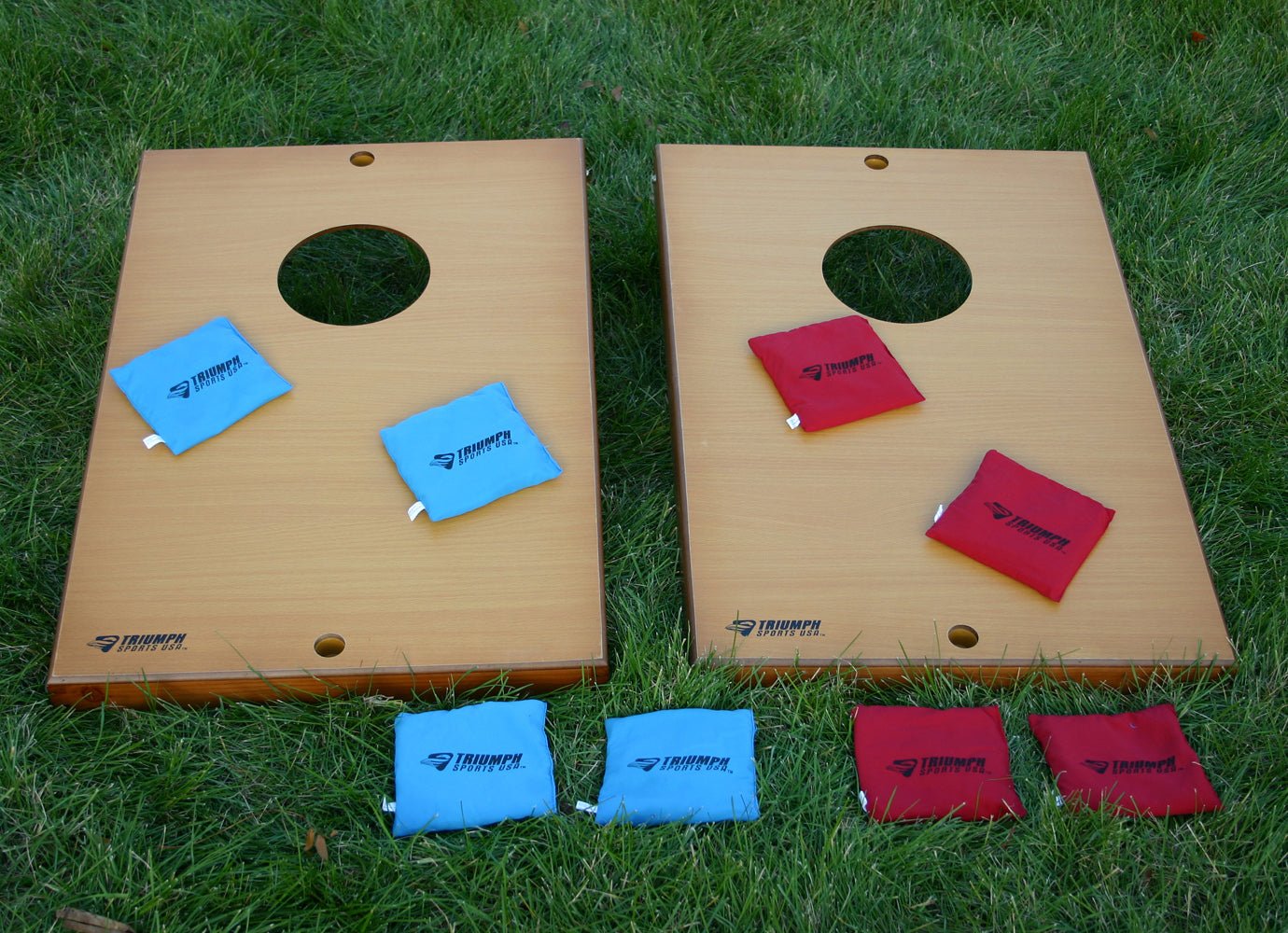
To play bean bag toss game, you throw bean bags at a target with designated point values, aiming to score the most points.
Have you ever wanted a simple, fun game for any occasion? Well, learning how to play bean bag toss game is easier than you might think! It’s a classic activity enjoyed by all ages, indoors or outdoors.
This game requires minimal equipment and provides tons of entertainment. We’ll guide you through the basic steps so you can start playing right away. Gather your friends and get ready for some friendly competition!

How to Play Bean Bag Toss Game: A Comprehensive Guide
Ready for some fun? Bean bag toss, also known as cornhole or baggo in some places, is a super easy and enjoyable game for all ages. It’s perfect for backyard barbecues, family picnics, school events, or just a casual day outside. You only need a few things, and you can get the hang of it in minutes. This guide will walk you through everything you need to know about playing the bean bag toss game, from setting up to different ways you can play. So, let’s get tossing!
Setting Up Your Bean Bag Toss Game
Before you can start having fun, you need to get your game set up correctly. Here’s what you’ll need and how to arrange everything:
What You’ll Need
- Bean Bag Toss Boards: Usually, you’ll have two rectangular boards with a hole near one end. These boards are often made of wood or plastic.
- Bean Bags: You’ll need a set of bean bags, typically eight in total. Four bags are usually one color, and the other four are a different color.
- Open Space: You’ll need a flat, open area, either indoors or outdoors, where you have enough room to stand and throw without obstacles.
Setting Up the Boards
The setup is quite straightforward, but the spacing is important for fair and enjoyable gameplay.
- Distance Between Boards: The front edges of the two boards should be placed 27 feet apart. For younger kids or casual play, you can shorten this distance to make the game easier. You can also adjust the distance for indoor play to fit your room.
- Board Placement: Place the boards facing each other, making sure each is stable and doesn’t wobble or move around too much during the game. If you’re playing on grass, make sure to place the board on even spots, to avoid having one board leaning.
- Throwing Line: Imaginary lines extend on the ground starting in front of the base of each board. Players must stand behind these lines when tossing bean bags. These lines usually are on the front edges of the boards.
Basic Rules of Bean Bag Toss
Now that you have everything set up, let’s learn the basic rules of the game. This will help you understand how to score points and what actions you can take.
The Basics of Play
- Teams or Individuals: You can play as individuals (one person vs. another) or in teams of two. If playing with teams, each person on a team alternates throwing bags.
- Taking Turns: Players alternate tossing all their bean bags, one at a time, at the board on the opposite side. The idea is to get your bean bags either onto the board (for one point) or into the hole (for three points).
- Throwing Technique: Throw bean bags with an underhand toss. No overhand throws are allowed.
- Foot Placement: Players must stay behind their throwing line. If you cross over, your toss doesn’t count, and the bag is removed from the board.
Scoring
Scoring is one of the most important parts of the game and what makes it fun! Here’s how you earn points in bean bag toss:
- On the Board: A bean bag that lands anywhere on the board but not in the hole is worth 1 point.
- In the Hole: If a bean bag goes all the way through the hole, it’s worth 3 points.
- Hanging Bags: If a bean bag is hanging partially in the hole (partially in and out) at the end of a round, it does not count for a score. The bag must go all the way through the hole to count for a score.
- Bags Touching the Ground: If a bean bag hits the ground first and then bounces onto the board or into the hole, it doesn’t count for any points. The bags must land directly on the board or go straight in the hole without hitting the ground first.
- Cancellation Scoring: The most common scoring method is cancellation scoring. This means that at the end of each round (when each player has thrown all four bags), the points from each team are subtracted from each other, and only the team or player with more points for that round scores. For example, if one team scores 5 points and the opposing team scores 2 points, that means the first team will get 3 points at the end of the round.
Here’s a simple table to illustrate scoring:
| Bean Bag Result | Points |
|---|---|
| On the board | 1 point |
| In the hole | 3 points |
| Hits the ground first | 0 points |
Ending the Game
The game continues until one team or player reaches a set score. The most common score is 21 points, but this can vary depending on how you choose to play. Here are other ways to end a game:
- Reaching 21: The first team or player to reach or exceed 21 points wins.
- Over 21: If a team or player exceeds 21 points, most often the score will be rounded back to 15 and the game will continue until someone scores above 21 without going over. Some versions of the game, however, may simply restart from 0.
- Winning by Two Points: Sometimes, you have to win by two or more points, this means that if you score 21 points in total, but the opponent scores 20 points, the game must continue, in this instance, you will continue to play until one team is ahead by 2 or more points.
Different Ways to Play Bean Bag Toss
While the standard rules are great, there are many variations of bean bag toss that can add some extra excitement and fun to your game. Let’s explore a few popular variations:
Knock-Off
In this fun version, the goal isn’t just to score points – you also have the option to knock off your opponent’s bean bags. Here’s how it works:
- Knock-Off Moves: If your bean bag lands on the board, you can try to knock off your opponent’s bags to lower their score, while at the same time, you also try to get your bean bag into the hole, so that it scores three points.
- Added Strategies: This game promotes better strategy because you must decide whether to aim for the hole or knock the other players’ bags off of the board.
Distance Challenges
This variation focuses on changing the difficulty by adjusting the throwing distance. Here’s how to make distance adjustments:
- Varying Distances: Try moving further away from the board to increase the difficulty. The further away the player is, the more difficult the game will become.
- Adjust for Different Ages: When playing with kids, move closer. As they improve, gradually increase the distance.
- Create Your Own Distance Rules: Use tape to create different lines at different distances and assign different point values to each distance. This can make the game more competitive!
Target Boards
Another way to play bean bag toss, is to use target boards instead of traditional bean bag boards. Here’s how this works:
- Use Different Targets: Create or use targets with different scoring zones instead of just a hole. These targets could be made of chalk on the pavement or drawn on pieces of wood. Each zone could be assigned a different point value.
- More Variation: Using targets offers more scoring options and can make the game more visually appealing and fun.
Around the World
This variation adds a fun, rotational element to the bean bag toss game:
- Multiple Boards: Set up multiple bean bag boards in a circle.
- Rotation: After each round, the players move to the next bean bag toss board. This changes the angle at which they throw, adding a new challenge.
- Great for Groups: This is a great way for a large group of players to all play at the same time without having to wait for a board to open up.
Tips for Improving Your Bean Bag Toss Game
Want to get better at bean bag toss? Practice definitely helps, but here are some tips to improve your accuracy and make your shots count:
Proper Stance and Grip
- Foot Position: Stand with one foot slightly in front of the other. This gives you more balance and stability. The foot that is in front should be on the same side as your dominant hand.
- Body Posture: Keep your body relaxed and facing the target. Avoid leaning too much forward or backward.
- Grip: Hold the bean bag gently between your fingers and thumb. Don’t squeeze it too hard.
The Underhand Toss
- Smooth Motion: Swing your arm in a smooth underhand motion, like you’re swinging a pendulum. Keep your elbow close to your body.
- Consistent Release Point: Try to release the bean bag at the same point each time. Practice to find your ideal release point.
- Arc: Toss with a gentle arc. Don’t throw it too low or too high. A good arc helps the bag land softly on the board or get in the hole.
Practice Regularly
- Consistent Practice: The more you practice, the better your throwing will be. Regular practice is the key.
- Practice Different Shots: Try practicing different throws, such as a straight shot versus an arced shot. Experiment and see what works best for you.
Making Your Own Bean Bag Toss Game
If you’re feeling crafty, you can easily make your own bean bag toss game. It’s a fun project that can be tailored to your own preferences. Let’s look at the materials you will need and instructions on how to make your own game.
Materials You’ll Need
- Wood: You’ll need two pieces of plywood, each about 2 feet by 4 feet and about ½ inch or ¾ inch thick for the boards.
- Legs: Four pieces of wood that measure 2 by 4 inches, about 12 inches long to support the boards
- Hole Saw: You’ll need a hole saw that measures 6 inches for creating the hole on the boards
- Screws and Drill: For putting the boards and the legs together
- Fabric: You will need some sturdy fabric like duck cloth or canvas to make the bean bags. You can use different colors to help keep track of the bean bags.
- Filler: You’ll need filler for the bean bags, like dried beans or plastic pellets.
- Sewing Machine: This is helpful for stitching up the bags, but you can also sew them by hand if you don’t have a sewing machine.
- Measuring Tools: A ruler or measuring tape to ensure the bean bags and boards are the right sizes.
- Scissors: For cutting the fabric.
Instructions for Building the Game
- Cut the Wood: Cut the plywood into the correct dimensions: 2 feet by 4 feet.
- Mark the Holes: Mark the center for the hole on each board, it is usually 9 inches from the top and 12 inches from the left/right side.
- Cut the Holes: Use a hole saw to create a 6-inch hole in each board using your measurements.
- Attach the Legs: Screw the four pieces of wood to the corners of the bottom of the board to act as legs. These should be about 12 inches in height.
- Make Bean Bags: Cut the fabric into small, rectangular pieces. Sew around three of the sides together to make little pouches. Fill the pouches with filler and sew the fourth side closed.
- Decorate: Sand and paint the wooden boards, and add any other personalizations that you wish.
By creating your own bean bag toss game, you add your own unique style to your games. Plus, it can be a really fun project to complete with friends and family!
Bean bag toss is more than just a game; it’s an activity that brings people together. Whether you are playing with family or with friends, the best part of the game is spending time with each other. Remember that the main goal of the game is to have fun while learning the rules. This guide, along with a little bit of practice and a good attitude, will set you up for many fun and memorable moments playing bean bag toss!
How to play Bean Bag Toss
Final Thoughts
To play bean bag toss game, set up your target board and stand a few feet away. Throw the bean bags underhand aiming for the holes on the board. Each hole scores a specific point.
Players take turns tossing their bean bags. The first player or team to reach the agreed upon score wins. Enjoy a fun and simple activity for all ages. The basic principle is how to play bean bag toss game!

