
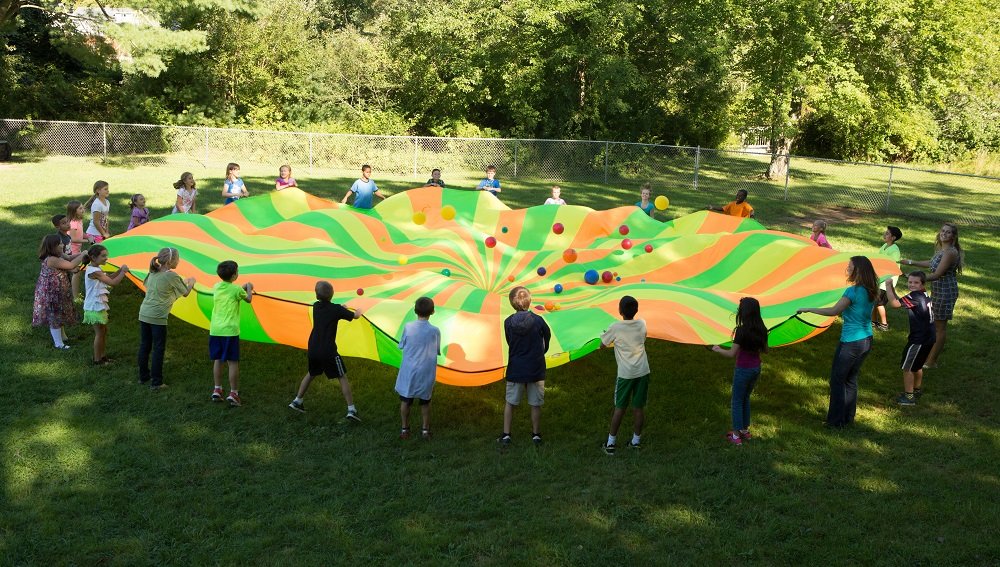
How to play parachute game involves a group holding the edges of a large parachute, performing various movements and activities like making waves, mushrooms, or switching places beneath the fabric.
Have you ever seen a large, colorful parachute billowing in the air and wondered how to play parachute game? It’s a fun and engaging activity that brings people together, usually in schools or camps. This game is simple to learn, but offers a wide variety of entertaining variations.
The basic idea is for a group to hold the edges of the parachute and move it in different ways. These movements create opportunities for cooperation and laughter. This blog article will give you a quick guide to start your own parachute fun.

How to Play Parachute Game: A Comprehensive Guide
Let’s dive into the wonderful world of parachute games! If you’ve ever seen a big, colorful parachute being used by a group of kids, you know how much fun it can be. But, how do you actually play these games? It’s not just about holding the edges and waving it up and down. There are tons of different activities you can do with a parachute, each bringing its own unique excitement and learning opportunities. This guide will walk you through everything you need to know, from the basics to more advanced movements and games, making it easy for anyone to join in the fun. Parachute play is fantastic for developing teamwork, coordination, and a sense of community. So, grab your parachute (or imagine you have one!), and let’s get started.
Getting Started: The Basic Parachute Setup
Before you can start playing games, you need to understand how to set up the parachute properly. This ensures safety and makes the games flow more smoothly. Here’s a step-by-step guide:
Choosing the Right Parachute
Size Matters: Parachutes come in different sizes, usually ranging from 6 feet to 30 feet in diameter. The size you need depends on how many people are playing. A smaller parachute is fine for a small group (like 5-8 people), while a larger one is needed for bigger groups (like 20 or more). Think of it like picking a pizza; you’d want a bigger one for a bigger party.
Material: Most parachutes are made from nylon, which is strong, lightweight, and easy to clean. Look for a parachute with strong seams and reinforced edges. These are the spots that experience the most stress when you’re playing.
Handles: Many parachutes have handles sewn around the edge. These are useful for getting a better grip, especially for younger children. It makes it easier for them to participate and reduces the chance of someone accidentally letting go.
Holding the Parachute
Evenly Spaced: Have players spread out evenly around the edge of the parachute, facing inward. It’s like forming a circle. Make sure everyone has enough room to move comfortably without bumping into each other.
Proper Grip: Each player should hold onto the edge of the parachute with both hands. If your parachute has handles, hold onto those. If there aren’t handles, use your hands under the edge or over the edge of the material. The important thing is to have a solid hold.
Standing Position: Make sure everyone is standing with their feet shoulder-width apart for balance. This will give everyone a stable base and make it easier to follow the game activities.
Teamwork: Encourage everyone to hold the parachute with equal tension. If one person pulls harder than others, the parachute will become uneven. Remind everyone that working together will make the games more fun.
Basic Parachute Movements: Mastering the Fundamentals
Once you’ve got your parachute set up, it’s time to learn some basic movements. These movements are the foundation for all the more complex games you’ll play later. Start with these simple moves:
The Gentle Wave
How to Do It: With everyone holding the parachute evenly, gently raise your arms up to about waist height and then back down. This creates a gentle wave or ripple in the parachute.
What it Does: This movement is great for getting everyone used to working together and feeling the parachute move. It’s also a nice, calm introduction to parachute play.
Variations: Try making smaller waves or larger waves. See how the parachute moves with different intensities of movement.
The Mushroom
How to Do It: On a signal, everyone lifts the parachute high above their heads as fast as they can. This will create a ‘mushroom’ or dome shape. Then quickly bring the parachute back down.
What it Does: The mushroom is a classic parachute move that allows for lots of air to get under the parachute. This creates a fun whooshing sound and lets everyone see the parachute rise.
Safety Note: Make sure everyone is spaced out enough to avoid bumping into each other when raising the parachute up and down quickly.
The Parachute Shake
How to Do It: Everyone holds the parachute at waist level and starts to shake it gently. You can shake it from side to side, or up and down.
What it Does: The shaking makes the parachute flutter and bounce around. It is a great warm-up exercise for the arm and shoulder muscles.
Variations: Try shaking it slowly or quickly. See how the parachute responds to the different speeds and intensities of movement.
Walking Around the Circle
How to Do It: Everyone holds onto the edge of the parachute and slowly starts walking in a circle (clockwise). Make sure everyone is moving in the same direction. After a few laps, change direction.
What it Does: This helps everyone practice moving as a group with the parachute, reinforcing teamwork skills. It is also a nice, gentle exercise to get everyone moving.
Variations: Try walking quickly or slowly. You could even do a skip or hop while walking in the circle.
Fun Parachute Games: Putting the Skills to Use
Now that you’ve mastered the basics, let’s move onto some exciting parachute games. These games are designed to be engaging and fun for all ages.
Popcorn
How to Play: Place a handful of lightweight balls (like small plastic balls or beanbags) onto the center of the parachute. Everyone gently shakes the parachute to make the balls jump up and down like popcorn.
Goal: The goal is to keep the “popcorn” on the parachute as long as possible.
Variations: Try using different kinds of items like stuffed animals or small toys.
Mushroom & Swap
How to Play: Perform the “mushroom” lift (raise the parachute high), but this time, when the parachute is at its peak, call out “Swap”. Then, everyone quickly runs underneath the parachute to a new spot.
Goal: The goal is to find a new spot quickly without losing control of the parachute.
Safety: Make sure everyone is careful when they go under the parachute and avoid bumping into one another.
The Wave Rider
How to Play: Some players sit underneath the parachute. Other players make waves with the parachute so that those below feel the movement of the parachute like being on a wave.
Goal: The goal is to move the parachute with different levels of intensity.
Variations: Have the “wave riders” switch out with the “wave makers” so everyone gets to experience both roles.
Cat and Mouse
How to Play: Pick one person to be the cat and another person to be the mouse. Have everyone else hold the parachute. The cat and mouse both move under the parachute. The mouse tries to avoid being tagged by the cat. Everyone waves the parachute up and down to make the game more challenging.
Goal: For the mouse to avoid being tagged and for the cat to tag the mouse.
Safety: Make sure all players stay under the parachute to avoid any accidents.
Number Call
How to Play: Assign each player a number. The adult leading the game calls out a number and that player has to run under the parachute to the other side before the parachute comes down.
Goal: The goal is to make it to the other side of the parachute before it touches you.
Variations: Call multiple numbers at once so multiple people have to run at the same time.
Turtle
How to Play: Everyone holds the parachute low, almost to the ground. On the count of three, everyone takes two steps forward, bringing the parachute down to the floor. Next, have everyone raise it high up again, forming a ‘turtle shell.’
Goal: The goal is to create a smooth, even “shell” with the parachute.
Safety: Make sure everyone is aware of their surroundings when they move forward so they don’t bump into each other.
Making a Tent
How to Play: The players lift the parachute high to make a mushroom shape. Then, when it’s high up in the air, everyone takes a few steps toward the center of the circle. Then quickly lower the edge of the parachute to the ground, creating a tent-like structure. Players can sit underneath the tent or crawl in and out.
Goal: The goal is to make a spacious “tent” using the parachute.
Communication: Be sure that everyone moves quickly and lowers the edges of the parachute to the ground at about the same time, so that the tent is even.
Ball Roll
How to Play: Place a ball on the edge of the parachute. Have everyone move the parachute to make the ball roll around the edge.
Goal: The goal is to make the ball roll all the way around the edge without falling off.
Variations: Use multiple balls or try making the ball move fast or slow.
Safety First: Guidelines for Parachute Games
Parachute games are a blast, but it’s important to keep safety in mind to avoid accidents. Here are some key points to remember:
Supervision
Adult Supervision: Always have a responsible adult supervise the games. An adult can help with setup, teach the rules, and ensure everyone is safe.
Proper Group Size: Keep the group size appropriate for the parachute you’re using. If you try to have too many people on a parachute that’s too small, it can get unsafe.
Age Considerations: Adjust the games and intensity based on the age of the participants. For very young children, stick to simpler games and gentle movements.
Playing Area
Clear Space: Make sure the playing area is free from obstacles, like rocks, sticks, or toys. This will help prevent trips and falls.
Soft Surface: If possible, play on a soft surface like grass or a mat. This will help reduce injuries if someone does fall.
Indoor vs Outdoor: Parachute games can be played indoors or outdoors. If playing indoors, be sure there is plenty of space and that there is no possibility of someone running into any walls or furniture.
Game Play
Start Slow: When learning a new game, start slow and make sure everyone understands the rules before picking up the pace. This can help prevent any confusion, and make it safer.
Avoid Overexertion: If someone is feeling tired, they should take a break. Parachute games are meant to be fun and not something that tires someone out.
Gentle Movements: Always try to avoid yanking or pulling the parachute too hard. This could make it unsafe for people.
Health Considerations
Individual Needs: Be aware of any individual needs of participants. If someone has specific health considerations or physical limitations, adapt the game to suit their abilities.
Breaks: It is good to take a break when necessary. If someone is getting out of breath they should stop and rest.
By following these guidelines, you can make sure that parachute games are a safe and enjoyable experience for everyone.
Parachute Activities for Different Age Groups
Parachute games are great for various age groups, but it’s important to adjust the games based on the participant’s age and ability. Here are a few tips for modifying activities:
Toddlers and Preschoolers
Simpler Games: Focus on very basic movements like the gentle wave, mushroom, and walking in a circle.
Shorter Sessions: Keep the games short and sweet. Toddlers and preschoolers have shorter attention spans, so games should only last for a few minutes at a time.
Visuals: Use colorful and engaging props like soft balls, scarves, or beanbags. This will help keep the younger children engaged and interested.
Safety: Always keep a close eye on very young children. Be aware of how fast they are moving and be sure to keep the games slow and calm.
Elementary School Children
More Complex Games: Introduce games like Popcorn, Cat and Mouse, Number Call, and the Wave Rider. These games are more complex and engaging.
Teamwork: Emphasize teamwork and cooperation. Encourage children to communicate and work together to achieve their goal.
Variations: Challenge them with variations of the games and encourage them to make up their own rules and movements.
Active Participation: Encourage active participation and make sure all the children have a chance to participate and have fun.
Older Children and Adults
Challenging Activities: Introduce more challenging games such as the Ball Roll, Turtle, and making a tent. Encourage them to come up with their own creative ideas.
Teamwork Skills: Focus on teamwork skills, strategic thinking, and communication. Parachute games are a good way to encourage these skills in older children and adults.
Fitness: Incorporate more physical movement. Try having the players try different ways of moving around the parachute such as skipping or running.
Cooperation: Remind older participants that working as a team is one of the most important parts of the parachute games.
By making these simple modifications, you can ensure everyone feels included and has a great time.
Parachute games are more than just fun and games; they offer many amazing benefits for both children and adults. These activities improve physical fitness, develop teamwork, encourage social skills, build listening skills, promote cognitive thinking, and provide a lot of sensory fun. The big colorful parachute really helps bring out the child inside everyone who participates, and the collaborative nature of the games help create a wonderful sense of community. With so much to offer, parachute games should definitely be part of any physical education program or recreational activity.
Our Top 5 Parachute Activities for PE
Final Thoughts
To play the parachute game, children hold the edge of a large fabric sheet. The group moves it up and down, creating waves. They can also lift it high, forming a “mushroom.”
Simple actions like walking or running under the parachute during waves add more fun. Another option is to have children switch places. This activity is a great way to learn teamwork.
In conclusion, how to play parachute game involves a group of kids manipulating a sheet, creating various movements for interactive, engaging play. The main focus is on coordinated group activity which creates shared joy.

