
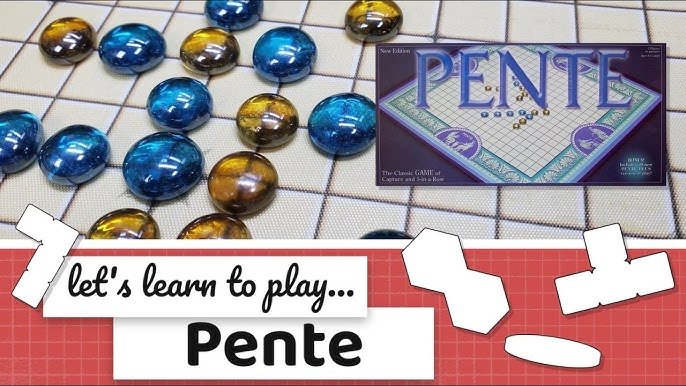
To play Pente, players take turns placing stones on a grid, aiming to form a five-in-a-row while also capturing pairs of opponent’s stones by sandwiching them. The first player to achieve five in a row or capture ten opponent stones wins the game.
Ever felt the urge for a game that blends strategy with straightforward rules? Many find Pente to be the perfect match. Learning how to play Pente game is easier than you might think.
This classic game challenges your planning and tactical thinking. It provides a competitive experience for two or more players.

How to Play Pente Game: A Comprehensive Guide
Let’s dive into the exciting world of Pente! If you’ve ever wanted to learn a strategy board game that’s easy to pick up but offers endless challenges, you’re in the right place. Pente, with its simple rules and deep strategic possibilities, is a fantastic game for kids and adults alike. Think of it like a mix of tic-tac-toe and Go, but way more fun! We’ll break down everything you need to know, from setting up the board to making your first capture. Get ready to become a Pente pro!
Understanding the Pente Board and Pieces
Before you can jump into a game, let’s get familiar with the playing field. The Pente board is typically a 19×19 grid of intersecting lines. It looks like a larger version of a Go board, but don’t worry, you don’t need to know Go to play Pente. The grid creates a series of points where you’ll place your stones.
You’ll also need stones to play. Pente is a two-player game (although some variations support more players), so you will need two sets of stones – one for each player. Traditionally, one player uses black stones and the other uses white. These stones are usually small and smooth, easy to pick up and place on the board’s intersections.
The Center Stone
The very first move in a game of Pente is special. The first player always places their first stone on the exact center of the board. This is called the “center stone.” It’s a key element to the beginning of the game and a common strategy for setting up your first few plays. The center stone provides options and should be considered an advantage to the first player, although the second player gets a specific rule change to attempt to balance out this advantage.
Setting Up the Game: A Step-by-Step Approach
Setting up a Pente game is pretty straightforward. Here’s how to get started:
- Place the Board: Put the Pente board on a flat surface where both players can easily reach it.
- Choose Your Color: Decide which player will take the black stones and which will use the white stones.
- Get Ready to Play: Each player should have their stones within easy reach.
That’s it! You’re now all set to begin your Pente adventure.
The Basics of Gameplay
The core of Pente gameplay is placing stones on the board. Players take turns placing one stone at a time on any empty intersection. There are two main ways to win: capturing pairs of opponent’s stones, or placing five stones in a row. Let’s discuss them in detail.
Placing Stones
Players alternate turns, placing one stone at a time on an empty intersection.
Stones are always placed, not moved after being placed.
There is no limit to the amount of stones a player can have on the board.
Try to visualize where the opponent might want to play in the future to plan out your next move to block the opponent.
Capturing Stones
Capturing your opponent’s stones is a central part of Pente. This is done by “sandwiching” a pair of your opponent’s stones between two of your own. When you successfully sandwich a pair of your opponent’s stones, they are immediately removed from the board and become part of your captured pile. This means, every time a player makes a capture, the player should take the stones off the board and set them aside to keep track of the total captured pairs.
Here’s a clear example:
Let’s say your opponent has two black stones next to each other on the board.
If you can place one of your white stones on either side of the black stones, you’ve “sandwiched” them.
Immediately remove the black stones from the board. Those black stones are now “captured”.
The player that has captured pairs of stones will get the first advantage over his or her opponent.
There are a few important rules to know about capturing:
- Pairs Only: You can only capture pairs of stones, not single stones or groups of three or more.
- Immediate Capture: Captures must be made immediately. If you sandwich an opponent’s pair, remove the stones right away.
- No Self-Captures: You cannot capture your own stones.
- Simultaneous Captures: It’s possible to capture multiple pairs with a single placement of a stone.
Winning the Game: Two Paths to Victory
There are two main ways to win a game of Pente: by capturing ten opponent stones, or by making a five-in-a-row.
Capturing Ten Stones
The first way to win is to capture ten of your opponent’s stones, which means that you must capture five pairs of your opponents stones.
Keep track of how many pairs you’ve captured as the game goes on.
This way of winning often involves a more defensive and strategic approach, focusing on making good captures as they present themselves.
Five in a Row
The second way to win is to be the first player to get five of their own stones in a row (horizontally, vertically, or diagonally).
The five-in-a-row doesn’t have to be in a straight line, as long as they are directly connected by edges, not corners.
This way of winning often involves a more offensive and strategic approach, focusing on making a connected line of 5 stones.
The Second Player’s Advantage
Because the first player gets to play the center stone, the second player gets an additional rule that gives a special advantage. After the first player places their center stone, the second player has the option of playing their first stone or swapping with the first player to take the center stone. This advantage is designed to balance the first-player’s advantage of starting with the center stone.
How the Swap Works
The second player, after the first player places the center stone, can say “swap” before playing their first stone.
If the second player says “swap” the second player will replace the first player at the game and then take the center stone from the board and replace it with their stone.
Then the other player will become the new second player and will play second and receive the ability to say “swap” in the second round.
If the second player decides not to swap, the second player will place their stone anywhere other than the center stone.
Strategic Thinking Behind the Swap
The swap option creates strategic depth right at the start of the game. You will want to carefully consider the placement of the center stone and how that will affect the entire game. The swap option allows the second player to play both offensively and defensively, and will allow the game to be more exciting.
Basic Pente Strategies
Okay, now that you know the rules, let’s talk about how to play smart. These strategies can significantly improve your game.
Control the Center
The center of the board is a powerful place. Controlling that area gives you more options for connecting lines and making captures. If you are the first player, the center is key. Even if you are not the first player, always consider if you should make your way towards the center.
Watch for Capture Opportunities
Always look for opportunities to capture your opponent’s stones. Capturing will help you get closer to the goal of capturing 10 stones and may force your opponent into a defensive position.
Plan Ahead
Think multiple moves ahead. Pente is not just about your current turn; think about where your opponent might place their next stone. Try to anticipate their moves, and set up your game.
Block Your Opponent
Don’t just focus on your own stones. Blocking your opponent’s five-in-a-row is crucial. If you see your opponent has four in a row, immediately block their next move.
Create Multiple Threats
Try to create several potential ways to win at the same time. That forces your opponent to make difficult choices and can lead to an advantageous position. For example, setting up to capture with a single play, while also making a three-in-a-row.
Be Flexible
The game can change quickly. If you notice that your strategy isn’t working, don’t be afraid to adapt. Always have a backup strategy.
Advanced Pente Strategies
Once you’re comfortable with the basics, you can start exploring more advanced techniques to improve your game.
The Double Threat
This involves creating two separate threats at the same time. For example, you may place a stone that simultaneously threatens a capture and also creates a four-in-a-row situation. This puts pressure on your opponent, because your opponent has to defend two lines at once.
The Fork
A “fork” is a position where a single move creates two separate threats. This is like the double threat but often is specifically designed to create two separate five-in-a-row opportunities. If you can set up a fork, it is very difficult for your opponent to defend.
The Sacrifice
Sometimes, you might need to sacrifice some of your stones to create a winning opportunity. This often involves creating a temporary capture opening to set up a larger opportunity in the future. This is risky but can pay off.
The Defensive Posture
Sometimes the best strategy is to focus on defense. This could include avoiding all capture opportunities and setting up solid walls to prevent your opponent from creating a five-in-a-row. This can be a strong choice when you are not able to make any winning moves yourself.
Strategic Positioning
Think about the long-term value of a particular position. Sometimes the best move is not one that has an immediate result, but a move that can give you an advantage for several moves in the future. For example, placing a stone to give you capture options in multiple directions down the line.
Study Your Opponent
Pay attention to how your opponent plays, what strategies they use, and what mistakes they make. This can help you anticipate their moves and counter their strategy.
Practice Makes Perfect
Like any game, the more you play Pente, the better you’ll get. Here are some things to keep in mind as you practice:
Play Often: The more you play, the more you will learn. Try to play every day.
Play Different Opponents: Playing against different people can expose you to new strategies and ideas.
Analyze Your Games: After each game, think about what you did well and what you could have done differently.
Be Patient: Pente can take time to learn. Don’t get discouraged if you don’t win every game. Keep practicing and you’ll improve.
Have Fun: Remember, it’s just a game! The most important thing is to enjoy yourself.
Variations of Pente
While the basic rules are consistent, there are some variations of Pente that you might encounter. These variations can add new dimensions to the game. Here are a few examples:
Tournament Rules
Official tournaments often have some slight variations, like limitations on game time or specific rules for how to handle rule disputes. They may also specify how the swap option should be used.
Multiple Player Pente
Some variations allow three or four players to play at once, usually involving a different way to capture stones or get a five-in-a-row. These variations can be fun when you have more than two people.
Different Board Sizes
While the 19×19 board is standard, you might see smaller boards used for teaching or easier play. These board sizes usually require a player to capture a lesser amount of stones to win, or may shorten the required length of a 5-in-a-row to win.
By exploring these variations, you can keep the game fresh and fun.
Pente is a game that provides both an easy introduction and a deep level of strategy. The gameplay is simple, and it is easy to learn the basics. The rules are designed to create fair and balanced gameplay, even though the first player always has a slight advantage. Don’t be afraid to experiment with different strategies, as they often help you learn the game much better. With a little practice, you’ll be playing Pente like a pro in no time! It’s a great game to enjoy with friends and family for years to come, and can also be a wonderful way to challenge your brain.
How to Play Pente by Brian Hanna
Final Thoughts
To play Pente, you need a 19×19 board and stones. Players alternate placing stones, aiming to form five-in-a-row. Capture opponent’s stones by bracketing them with your own.
You capture two stones at once. A five-in-a-row wins. Alternatively, capturing five pairs also means a win. This explains concisely how to play pente game. The game requires strategic thinking.
This quick summary will help you learn the basics of Pente. Remember practice will improve your game and strategy. Have fun playing Pente.

