
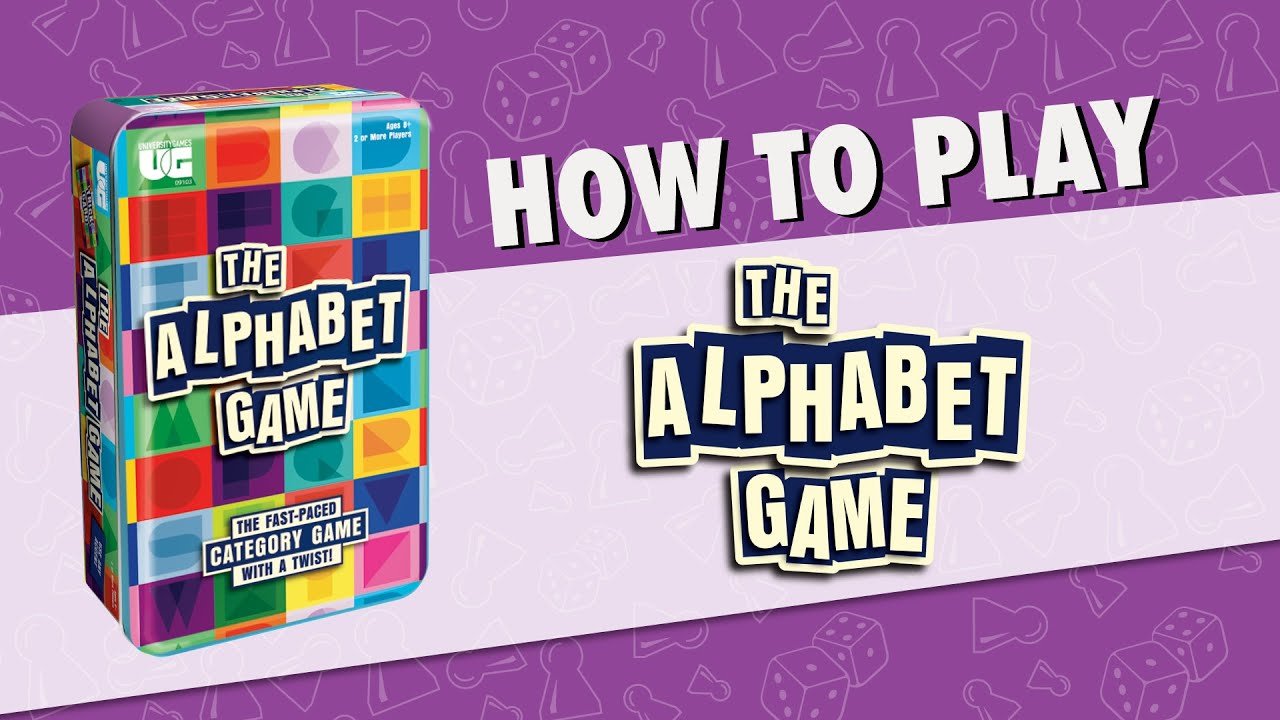
Playing the alphabet game involves saying words in sequence, each beginning with the next letter of the alphabet.
Ever found yourself needing a quick, engaging activity? How about something to get the brain working? The alphabet game is perfect for that. It’s a simple yet fun way to pass the time, whether you’re on a road trip or just hanging out at home.
This game requires no special equipment, making it readily accessible for anyone. So, if you are looking for a light hearted, easily understandable activity, learn how to play the alphabet game.

How to Play the Alphabet Game: A Complete Guide
The alphabet game is a fun and flexible activity that can be enjoyed by people of all ages. It’s a great way to pass the time, spark creativity, and even learn new words. There are many ways to play, making it perfect for long car rides, family gatherings, classrooms, or even just a quiet afternoon at home. Let’s jump into all the fun ways you can play and make the most out of the alphabet game!
Basic Rules of the Alphabet Game
At its core, the alphabet game is quite simple. The main idea is to go through the letters of the alphabet, from A to Z, and come up with something that fits a specific category for each letter. Here’s a breakdown of the basic way to play:
- Starting Point: One person begins with the letter “A.”
- Category: Decide on a category, like “animals,” “foods,” “places,” “names,” or “things you might find in a house.” You can either decide the category at the beginning of the game, or pick a new category for each round.
- Turn-Taking: Each person takes a turn to think of a word that starts with the current letter of the alphabet within the decided category.
- Continuing: If the first person said an animal that starts with ‘A’ such as “ant”, then the second person goes with the letter “B” and might say “bear”.
- Going Through the Alphabet: The game continues this way, moving through the entire alphabet until you reach the letter “Z.”
Variations on the Classic Alphabet Game
While the basic rules offer a great starting point, the beauty of the alphabet game lies in its adaptability. There are many variations you can play to keep things interesting and to tailor the game to different age groups or interests.
Category-Based Variations
Changing the category is probably the easiest way to switch things up. Here are some popular category choices:
- Animals: This is always a classic. Think of everything from aardvarks to zebras.
- Foods: From apples to zucchini, there are plenty of tasty options.
- Places: This could include countries, cities, parks, or even specific landmarks.
- Names: This is a fun one, especially when you try to find less common names for letters like “Q” or “X”.
- Things You Might Find in a House: A great way to focus on everyday objects. Think armchairs, books, or clocks.
- Movie Titles: A good one for movie buffs. How many ‘A’ movies can you think of?
- Songs: Challenge everyone’s musical knowledge.
- Famous People: How well do you know your history and current events?
- Colors: A simple and colorful category for younger players.
- Hobbies: Great for getting to know more about each other.
You are not limited to these categories; feel free to get creative with your own!
Advanced Alphabet Game Variations
Once you have mastered the basic game, it’s time to try out some advanced variations that will add a little more challenge and fun:
Adding a Theme
Instead of just a general category, you can add a theme to the entire game. For example, you could do “animals of the rainforest” or “foods from Italy.” This adds a layer of specificity and can be a lot of fun when you focus on certain topics.
Storytelling Alphabet Game
Here, each player adds a sentence to a story, beginning with a word that starts with the next letter in the alphabet. For example:
- Player 1 (A): “An old woman lived in the forest.”
- Player 2 (B): “Before breakfast, she would always gather her berries.”
- Player 3 (C): “Curiously, one morning she found a magical gem”
And so on! This can lead to some very funny and creative stories.
Alphabet Chain Reaction
In this version, the next person’s word has to be related to the previous person’s word. For example:
- Player 1 (A – Apples): “Apples”
- Player 2 (B – Baking): “Baking” (because you use apples in baking)
- Player 3 (C – Cake): “Cake” (as baking can produce a cake)
- Player 4 (D – Dessert): “Dessert” (as cake is often eaten for dessert)
This variation is a bit more challenging as you have to make a word association to the previous one.
Points System
You can introduce a scoring system to add an element of competition. For example:
- Standard Words: Words that fit the category and letter = 1 point.
- Difficult Words: Using a harder or less obvious word for the letter = 2 points.
- Creative Words: Using very creative or unexpected word for the letter = 3 points.
The person with the most points after going through the whole alphabet, wins.
Time Limits
To increase the challenge, you can add a time limit for each letter. If someone can’t think of a word within the set time, they’re out (or can receive a penalty). This also makes the game move a bit quicker.
Backward Alphabet Game
Play the game in reverse, starting with “Z” and going all the way to “A.” This can be very challenging, as it takes our brains out of the normal flow.
Team Play
The alphabet game can easily be adapted for team play.
- Teams: Divide the players into teams.
- Alternating Teams: Teams alternate giving answers for each letter.
- Team Scoring: Give each team a point for every correct answer.
- Teamwork: Teams can also use teamwork to think of more creative and difficult words.
This can make it a very social and collaborative game, as everyone works together to complete the alphabet.
Tips for Playing the Alphabet Game
To make sure everyone has a good time, here are some tips and tricks for playing the alphabet game.
For Younger Players
Playing the alphabet game with younger kids can be a bit different than playing with older children. Here are some tips:
- Simplify the Categories: Stick to simpler and more concrete categories such as “animals”, “foods” or “colors”.
- Visual Aids: Have picture cards or posters handy that show different options for each letter to help them get ideas.
- Encouragement: Offer lots of praise and encouragement. It’s more about participation than winning.
- Play Slower: Take your time and do not rush the process. This allows them to better understand and enjoy the game.
- Team Effort: It’s ok to help out. A little guidance goes a long way in the early learning stages.
For Older Players
For older players, you can increase the challenge and competitiveness by using the ideas below:
- Use Complex Categories: Use more advanced categories such as “historical events,” “scientific concepts”, or “literary characters”.
- Add Rules: As discussed above, try adding time limits, point systems, or more advanced rule sets.
- Creative Thinking: Challenge each other to come up with less obvious words.
- Strategy: Use strategy to get more difficult words or to stump the other player.
- Team Play: Use teamwork to solve each letter and category.
General Tips
Whether you’re playing with kids or adults, these tips are useful:
- Be Flexible: The best thing about the alphabet game is its flexibility. Do not be afraid to change categories or rules to match the group.
- No Pressure: Remember, it’s supposed to be fun! It’s okay if someone struggles with a letter, just keep the game moving forward.
- Use a Dictionary: A physical or online dictionary is a great resource for challenging letters or categories.
- Record Words: Consider writing down the words as you go along. This can be a great way to see the breadth of words you and your team came up with and can help prevent repetition.
- Adapt to Your Audience: Modify the categories and rules to make it easy or challenging enough, depending on the group.
Benefits of Playing the Alphabet Game
Beyond being a fun pastime, the alphabet game offers many unexpected benefits, such as:
- Vocabulary Expansion: The game encourages participants to think about words they might not use every day, which can improve overall vocabulary.
- Spelling Practice: By trying to come up with words, players reinforce their spelling skills.
- Cognitive Flexibility: Players have to think on their feet, quickly recall vocabulary, and think creatively, all of which boost cognitive flexibility.
- Team Building: When playing in teams, it strengthens teamwork, communication and collaboration skills.
- Memory Improvement: You need to recall words that you know that might be not on the tip of your tongue.
- Fun and Engagement: The game is inherently enjoyable. It’s a great way to pass time, get creative, and have fun.
- Adaptability: It can be played virtually anywhere, with a large group or just a few.
Making the Alphabet Game More Engaging
Want to take your alphabet game to the next level? Here are some ideas for making it even more interesting:
Themed Sets
As mentioned earlier, themed sets such as “countries of South America”, “types of birds” or “different types of cheeses” can be very interesting.
Visual Aids
Use flashcards, pictures, or even a whiteboard to write down your words. This can help with engagement, especially for kids.
Use Technology
Use an online word generator or dictionary for inspiration. This is a great way to discover new words and stay engaged.
Story Elements
Try to incorporate the words into a mini-story as you go along to make the game more dynamic and creative.
Use a timer
If you want to add a little bit more pressure and fun, put a timer on the answers. Set it for 2 minutes or 1 minutes and challenge everyone to come up with a word for the current letter before the timer ends. This also speeds up the gameplay.
Add some silly rules
Make it a bit silly! Add some rules such as having to stand on one leg while saying a word. Or using a silly voice, etc. This always helps bring in more laughter and fun to the game.
The alphabet game is simple, fun, and has many learning benefits. It is adaptable for different age groups and can be played anywhere, anytime. Whether you stick to the basics or make up your own unique rules, the most important part is to have fun and enjoy the game!
How To Play: The Alphabet Game
Final Thoughts
To quickly recap, the alphabet game needs players to say words in alphabetical order. Each person takes turns, naming something starting with A, then B, and so on.
You can play it anytime, anywhere. This is a must for simple fun. The first player starts with a word beginning with A. The next player must use B, and so forth.
Remember, how to play the alphabet game is straightforward. Keep going through the alphabet until you reach Z, or until someone can’t think of a word.

