
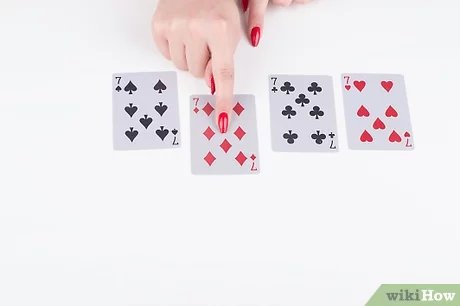
How to play the card game sevens involves starting with the seven of each suit, and players adding cards in ascending and descending order of the same suit. Players must pass if they cannot play, aiming to be the first to empty their hand.
Ever wondered about a simple yet engaging card game? Well, many people search for how to play the card game sevens, and it is quite fun! This game is easy to pick up, using a standard deck of 52 cards. The goal is straightforward and requires a little bit of strategy.
The game’s pace is quick, making it great for all ages. It’s also a fantastic way to pass the time with a group of friends or family. Let’s delve into how the rules work.

How to Play the Card Game Sevens
Okay, so you want to learn how to play Sevens, sometimes called Dominoes or Fan Tan? It’s a really fun card game, and pretty easy to pick up once you get the hang of it. It’s a great game for families and friends because it can be played with almost any number of people. We will explore all the details of this game step-by-step, and by the end of this explanation, you’ll be playing like a pro!
Understanding the Basics
Before we jump into the gameplay, let’s understand the very core of the game. Sevens is a card game where you’re trying to be the first person to get rid of all your cards. You do this by placing cards in sequence on a layout that everyone is building together. The sequence starts with the ‘7’ card of each suit, then goes up and down. Sounds simple? It really is! The key is getting rid of those tricky high and low cards first.
What You Need
A standard 52-card deck is the only thing you need for a fun time. That’s it!
2 or more players. Sevens is most enjoyable with 3 to 6 players, but you can still enjoy it with 2, or more than 6 players with some adjustments, like using two decks of cards.
A table or flat surface to play on, like the kitchen table, for example.
The Goal of the Game
The main goal of Sevens is pretty straightforward: you are trying to be the first player to get rid of all the cards in your hand. The first player who empties their hand, becomes the winner. This is done by building sequences in each suit, starting from the sevens and extending the sequences both upwards towards the kings and downwards towards the aces. The game might continue with a set number of rounds or until everyone reaches a set score.
Setting Up the Game
Let’s get this show on the road! We need to set up the game properly to play it well. Here’s how we do it:
1. Shuffle the Deck: Get your cards nice and mixed up. This makes sure the game is fair for everyone.
2. Deal the Cards: Now give everyone an equal number of cards. It’s alright if some people get one extra card than others sometimes because this game is not very strict. You want to try your best so that each player has a very similar number of cards in hand, to make the game even. If you have extra cards, you might have to keep them in a face down pile for the game. But if you have 5 or fewer players, just distribute the entire deck of cards between all of you.
3. Arrange Your Hand: Take a look at your cards. Sort them by suit (hearts, diamonds, clubs, and spades). This helps you see what you have and what you can do. When you are starting it can be very helpful, although many experienced players skip this step.
Gameplay: How to Place Cards
Now, the fun part starts – putting the cards down! This is where you build the sequences. Here’s how it works, step by step:
Starting the Game
The player who has the 7 of hearts goes first. If nobody has the 7 of hearts, then the player with the 7 of any suit goes first. This player starts the layout by putting their 7 on the table, face up. From here, the game goes clockwise.
Taking Your Turn
On your turn, you can place a card if it fits on the layout.
Cards are placed in sequence, building up or down from the sevens, by suit.
For example, if the 7 of hearts is on the table, you can put down a 6 or an 8 of hearts. You could add a 6 of diamonds to the layout if the 7 of diamonds is on the table.
You build upwards towards King (8, 9, 10, J, Q, K) and downwards towards Ace (6, 5, 4, 3, 2, A).
You can only play a card if it matches one of the sequences being built on the table.
If you don’t have any card you can play, then you skip your turn.
What Happens When You Can’t Play?
Sometimes you’ll be stuck with cards that don’t fit the sequence, meaning that you can not play them on that turn. In that case, you skip your turn, and the next person plays. It’s also a good idea to have a system where you have cards face down during game play, so you can know if you are not able to play a card. This can help keep the flow of the game.
Strategy and Tips
Okay, so now you understand how to place cards. Now, let’s talk about some ways to play Sevens so that you can win. These little hints and tips can help make you a better player.
Observe Other Players
Watch what cards other players are putting down. You can learn about the type of cards they might be holding, and you can use this to help you decide which cards to put down. Also, you can observe what they do, and learn about their strategies.
Get Rid of High or Low Cards First
Try to play out all your high cards and all of your low cards, especially the kings and aces, as quickly as you can. These cards can trap you when the game is closer to ending because no other cards can be played after or before them. You don’t want to be stuck with a king and an ace when the other players are finishing up!
Don’t Hold On To Too Many Cards
It is a good idea to not hold onto too many cards if possible, because if you are not able to play any card for an entire round, and other players have played a few rounds, then you would start being left behind in the game.
Block Opponents
When you see an opportunity to play a card that will stop another player from going out, you should try to do that as long as it does not hinder your own chances of winning. For instance, if you know the player after you has the king of hearts, but the queen has not been played, it might be a good idea to hold off on that queen of hearts for a moment, to stop the other player from going out.
Pay Attention to the Open Sequences
Pay close attention to all the open sequences. If the six of clubs is out, but you have five and four, it might be helpful to put out the five of clubs, and then play the four of clubs on your next turn. This will help you to make sure you are able to play your cards as quickly as possible, and do not get stuck with a large number of cards.
Variations and Adjustments
Sevens is a flexible game, and sometimes, you may like to change it up with variations. Here are a few ways you can do that:
Playing with More Players
If you have more than 6 players, or a very large crowd, you can simply include a second deck of cards. Be sure to shuffle it very well with the existing deck to have fair results. You can also change the rules to include 2 sets of each numbered cards, and then play by including all the same type of cards in the layout.
Adding a Passing Rule
Some variations include a “passing” rule. If you don’t have a card to play, you pass, but it goes to the next player. If they also do not have a card, they pass to the next person. And if no one can go, then you are able to play any cards you like!
Penalties for Skipping
Another interesting variation is that if you cannot play a card, you could face a penalty of picking up another card from the deck of cards. This adds a sense of urgency to playing your cards, and makes you have to strategize more quickly to avoid this situation.
Keeping Score and Winning
While many people play Sevens without keeping score, it’s common to keep score so that people can play multiple rounds, and have one big winner at the end of the day. Here’s how you can keep track:
Points for Cards: Each card left in your hand at the end of a round is worth points. Aces might be 1 point, number cards their face value, and face cards (Jacks, Queens, and Kings) might be worth 10 points.
Multiple Rounds: Play a set number of rounds (like 5 or 10).
Lowest Score Wins: The player with the lowest score at the end of all the rounds is the overall winner.
Practice Makes Perfect
Like any game, the more you play Sevens, the better you’ll get. Don’t worry if you don’t win the first few games. Have fun, learn the strategy, and you’ll be a Sevens master in no time! The important thing is to play a fun game, so do not focus too much on your score.
Sevens is a fantastic game that’s easy to learn and fun to play with others. From setting up to winning and even trying a few variations, you are ready to play your own game of sevens and start being the champ of card games with your friends and families.
How to Play Sevens (Card Game)
Final Thoughts
In summary, to play Sevens, players must start by dealing all cards. The player with the seven of diamonds begins play. The next players must add cards in sequence, building up or down on the suits. The goal is to get rid of your cards first. A key strategy involves planning ahead so that you can play multiple cards on your turn.
Knowing how to play the card game sevens allows for a fun and engaging time. Blocked plays require strategic thinking and good hand management, so do pay attention! A must, you must know what cards your opponents may have, this is important to win. Enjoy playing.

