
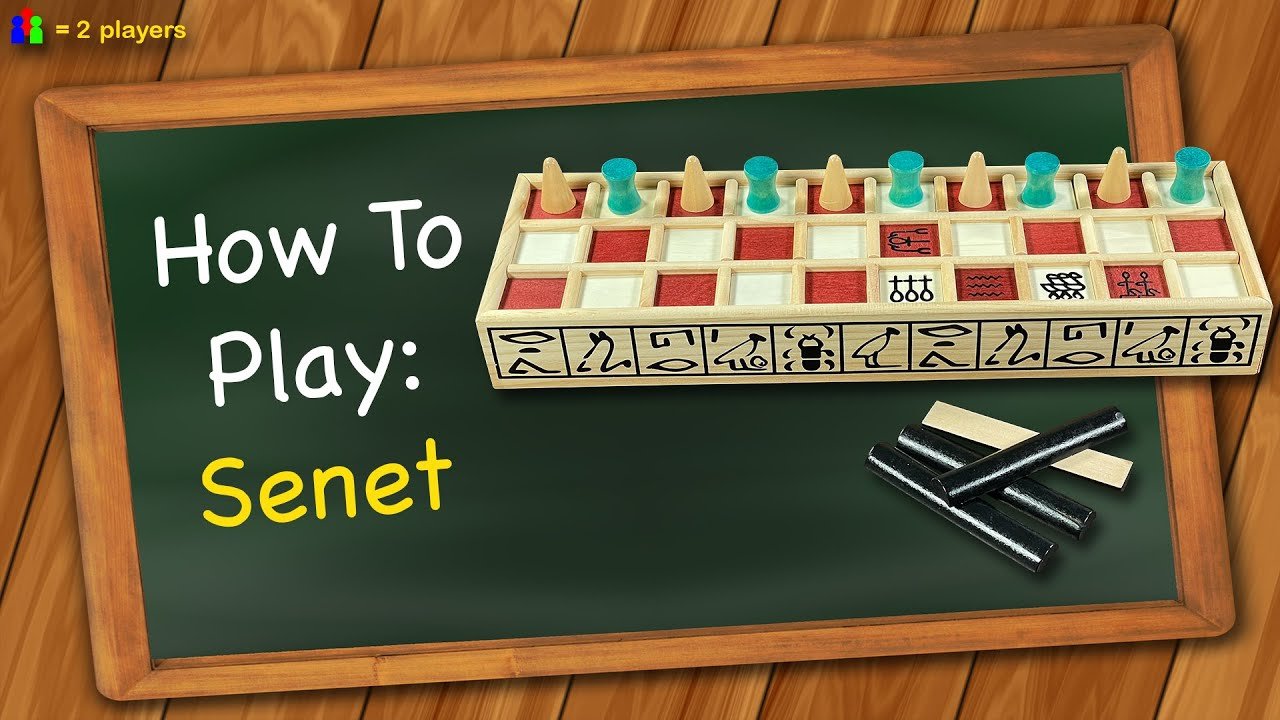
Playing Senet involves strategically moving your pawns across a 30-square board, aiming to reach the final square first while avoiding hazards, all determined by casting sticks or bones.
Have you ever wanted to step back in time and experience a game enjoyed by pharaohs? The ancient Egyptian game of Senet offers just that, a fascinating blend of strategy and chance. Understanding how to play the game Senet might seem complex at first, but it really isn’t.
This game involves moving pieces across a marked board, making it enjoyable for players of various ages. You’ll soon find yourself captivated by its simple yet engaging mechanics. Let’s explore the ways to enjoy Senet.

How to Play the Game Senet
Let’s dive into the fascinating world of Senet, an ancient Egyptian board game that’s been around for thousands of years! It’s like stepping back in time to play a game that pharaohs might have enjoyed. Senet isn’t just a simple roll-and-move game; it has strategy, a touch of luck, and a lot of history. We’ll explore everything you need to know, from setting up the board to winning the game. Get ready to become a Senet pro!
The Senet Board: A Journey Through Time
The Senet board is a grid of 30 squares, arranged in three rows of ten. But here’s the twist: the squares aren’t numbered in a simple 1 to 30 way. Instead, they have a unique winding path. Think of it like a snake slithering across the board. Let’s break down how the squares are numbered:
- Row 1: Squares are numbered 1 to 10, from right to left.
- Row 2: Squares are numbered 11 to 20, from left to right.
- Row 3: Squares are numbered 21 to 30, from right to left.
Some Senet boards might have special markings on certain squares, usually squares 15, 26, 27, 28, 29, and 30. These special squares often carry their own unique rules, adding an extra layer of excitement to the game. For example, some squares might require you to move backwards if you land on them or other interesting rules based on board variations. These marked squares usually represent obstacles or safe havens within the game. Now let’s go over some basic terminologies related to this game, so you would be familiar with it throughout the article.
Senet Game Terminologies
Understanding the terms used in the game makes it easier to learn and play. Here are a few key terms you will encounter while playing Senet:
- Pawn/Piece: These are the game pieces each player moves around the board. Each player usually has 5 or 7 pieces.
- Throw Sticks/Dice: These are used to determine how many squares a player can move. Unlike regular dice, in Senet, we generally use Throw Sticks.
- Special Squares: These squares have unique rules. Examples are the House of Beauty (Square 15) which generally allows safe passage and prevents you from being captured. The water square is square 27, which usually means that the player lands back at the beginning.
- Opponent/Rival: These are the players you are playing against.
Setting Up the Game
Now that you know about the board, let’s get the game ready to play. Here’s how to set up your Senet game:
- The Board: Place the Senet board in the middle of the playing area.
- Game Pieces: Each player chooses a set of pieces. Usually, one player has all light-colored pieces and the other has all dark-colored pieces.
- Starting Position: Traditionally, the players arrange their pieces in an alternating pattern on the first ten squares of the board. Player 1 places their first piece on square 1, Player 2 places their first piece on square 2, and so on. This continues until all of their pieces are arranged.
- Throwing Sticks: Place the throw sticks or dice next to the board. They’re ready to use when it’s your turn.
How to Move Your Pieces
Movement in Senet is determined by the throw sticks. Here’s how to interpret the results of your throw:
- The Throw Sticks: Senet traditionally uses four flat sticks, each with one marked side and one blank side. When you throw them, the number of marked sides facing up determines how many spaces you move.
- No Marked Sides Up: This throw usually means you move 5 spaces. This may vary a bit in different variations of the game, as some use 6 in this scenario.
- One Marked Side Up: You move 1 space.
- Two Marked Sides Up: You move 2 spaces.
- Three Marked Sides Up: You move 3 spaces.
- Four Marked Sides Up: You move 4 spaces.
- Moving Your Piece: Once you know how many squares you can move, select one of your pieces and advance it the correct number of squares. Pieces move along the snake-like path we described earlier.
Special Squares and Their Rules
The special squares on the Senet board add an exciting element of strategy and surprise to the game. Each square can affect the game in different ways. Let’s explore these special squares:
The House of Beauty (Square 15)
This is often a safe haven in Senet. If your piece lands on this square, it is usually safe from capture. In most variations, an opponent can’t move you from this position unless they land on this square with a direct throw. This means they cant go past this square and come back to capture your piece. It acts as a protective space for your pieces, so try to get them here.
The House of Water (Square 27)
This square is generally considered an obstacle. In most variations of Senet, if you land on this square, you must move your piece all the way back to the beginning, usually square 1, and restart your journey. This can be a big setback and you have to be careful to avoid it.
The Three Good Squares (Squares 26, 28 and 29)
These squares often provide a safety buffer. In some variations of the game, a player can move an additional time, a great advantage. But, more often than not, a player gets to move their pieces from these squares. The purpose of these squares can vary widely based on different versions of the game.
The House of Rebirth (Square 26)
Some variants have square 26 act as a rebirth square. When you land here, you get to move your piece directly to square 27 and then move them on the next roll. This way, you are not necessarily going back to the starting point of the board, but rather moving up closer to the goal. This can be a really great advantage that can allow you to win the game faster.
The Finish Line (Square 30)
This square is the goal of the game. You need to move your piece exactly to this square in order to remove it from the game board. Overpassing this square usually means you need to move back by however many spaces you went past it. For example if your piece is at square 29, and you rolled a 3, you would move to square 30, and then move back by 2 squares. This will put your piece on square 28. You need to get exactly on square 30 to exit a piece, not past it.
Capturing Opponent’s Pieces
One of the most exciting aspects of Senet is capturing or blocking your opponent’s pieces. Here’s how it works:
- Capturing: If one of your pieces lands on a square occupied by one of your opponent’s pieces, that opponent’s piece is captured. The captured piece must go back to the starting position or move to an earlier square as defined in some variations of the game. However, if two pieces of the same player occupy the same square, no piece can land on that square. It becomes a block for any other players.
Strategic Gameplay Tips
Senet is not just about luck; strategy plays a significant role. Here are some gameplay tips to help you get better at this game:
- Safety First: Try to move your pieces to the House of Beauty (square 15). This is often the most secure spot on the board. You should also aim to move your pieces to the other safe squares that can prevent them from being captured.
- Block Opponents: Try to block your opponent by occupying the square in front of their piece. This will force them to retreat to the starting point of the board.
- Plan Ahead: Think about your moves. Don’t just move the first piece you see. Try to plan a couple of moves ahead to see where your pieces will end up.
- Avoid the water: Be careful when you move your piece near the water. Landing on the House of Water (square 27) is a setback, and it’s something you want to avoid as much as possible.
- Utilize the Special Squares: Use special squares like the 3 good squares and the House of Rebirth to your advantage. These squares can help you move faster and more strategically.
Winning the Game
The goal of Senet is to get all of your pieces off the board by moving them to the final square, square 30. The first player to successfully move all of their pieces off the board wins the game. It takes patience, a little luck, and some strategy to win at Senet.
Variations of Senet
Like many ancient games, Senet has multiple variations. Some of the differences you may find include:
- Number of Pieces: Some games use 5 pieces per player; others use 7.
- Special Square Rules: The rules associated with the special squares can vary. For instance, The House of Beauty can provide different benefits based on the variations of the game.
- Throw Stick/Dice interpretation: Some interpretations may differ on how many spaces a player can move depending on the position of the throw sticks.
When playing senet, it’s always good to discuss the exact rules before playing, and to familiarize yourself with the specific Senet set you are using.
Senet is more than just a game; it’s a journey back in time. It’s a game that was beloved by ancient Egyptians, and still enjoyed today by those seeking a connection with the past. Understanding the game’s history, rules, and strategies enhances the gaming experience. So now, you know how to play Senet, get your board ready and play this amazing game!
How to play Senet
Final Thoughts
Senet involves moving pieces across a board using throws of casting sticks or bones. The goal is to get all your pieces off the board first. Players must strategize to avoid landing on bad spots that might set them back.
Learning how to play the game senet is straightforward, though winning requires a great deal of tactical thought. Understanding how the board works, especially the special squares, is must for all the players.

