
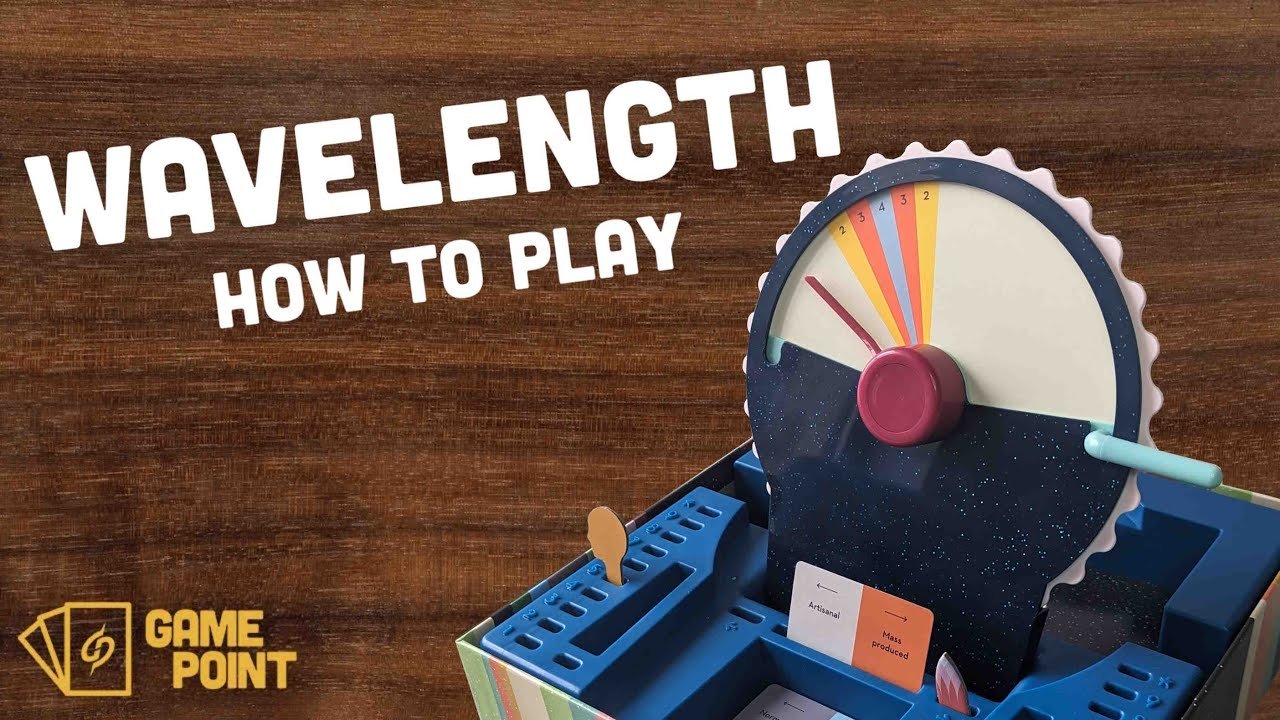
The core gameplay of Wavelength involves one player, the Psychic, trying to get their teammates to guess a target word or concept, indicated on a hidden dial, by giving a clue related to a spectrum of two opposing ideas.
Ever wondered how to play Wavelength game? It’s a fantastic party game where your team tries to read your mind. One of you becomes the Psychic, and everyone else is on the same team. You will be giving clues that must align with the hidden dial in order to help team guess the target.
The Psychic knows where a hidden pointer is positioned on a spectrum between two opposite concepts, and they must give a single word clue for their team. It’s all about finding the perfect word that will get them to guess the hidden value!

How to Play Wavelength Game: A Complete Guide
Hey there, game lovers! Ready for a mind-reading adventure that doesn’t involve actual mind-reading? Get set to explore the fantastic world of Wavelength! This isn’t your average board game; it’s a party game that tests how well you and your friends can think alike. It’s all about getting on the same “wavelength,” get it? In this guide, we’re going to break down all the details on how to play Wavelength, so you and your friends can dive right in and have a blast. We will guide you step-by-step, ensuring you know everything to jump into a game and enjoy the fun.
Understanding the Core Concepts of Wavelength
Before we jump into the nitty-gritty rules, let’s talk about the main idea of Wavelength. The game is built around the concept of a spectrum. Think of it like a scale, where one end is totally different from the other. For example, on a scale of “Hot” to “Cold,” fire would be on the ‘Hot’ end, and ice would be on the ‘Cold’ end. The game gives you these spectrums. One player, the “Psychic,” knows exactly where on that spectrum the target is. They have to give their team a clue to help them guess as close as possible to that target.
The Psychic and Their Crucial Role
In each round of Wavelength, one player takes on the role of the Psychic. The Psychic’s job is to know where the “target” is on the spectrum and give a clever clue. This is important because the team has to guess the correct location on the spectrum using just that one clue! The Psychic can’t point or use their hands, or say the target number or something that is very similar. They must use their smart words to try and get their team into the ballpark. This part needs some creativity and clear communication.
The Team’s Guessing Game
The rest of the players work as a team to make their guess on the dial. The dial has a small white line that indicates the team’s final answer. If their answer is closer to the target, they receive more points! The guessing and trying to interpret the psychic’s clues is where most of the fun and laughs will come from!
Setting Up for Your First Wavelength Game
Before the fun can begin, we need to set up the game. Don’t worry, it’s easy to get started!
What’s in the Box?
Here’s what you’ll find inside the Wavelength box. Make sure you have everything before starting:
- The Wavelength board with a dial and a scoring track
- A deck of spectrum cards
- A screen (to hide the target)
- A team token
- Point tokens
- A set of game rules (which we’re explaining here!)
Step-by-Step Setup
Here’s how to set everything up:
- Place the Board: Put the main game board in the center where everyone can see and reach it easily.
- Shuffle the Cards: Shuffle the deck of spectrum cards and place them face down near the board.
- Set up the Screen: Put the screen on the side of the board where the psychic can see it but the team members cannot.
- Team Token: Place the team token on the “0” space on the scoring track.
- Choose the First Psychic: Pick the player who will be the Psychic for the first round. After each round, the Psychic will change to the next person on clockwise direction.
How to Play Wavelength: A Round-by-Round Breakdown
Now that you’re all set up, let’s get into how to actually play the game!
The Psychic’s Turn: Reading the Spectrum and Giving the Clue
The Psychic draws the top card from the spectrum card deck. The card has a spectrum with two words or ideas on either end. For example, it might say “Fast” and “Slow” or “Sweet” and “Salty”.
On the other side of the card is the “target.” This is where on that spectrum the team needs to guess. For example, if the spectrum was from “Dark” to “Light,” the target might be closer to the “Light,” but not all the way. The Psychic gets to see where this target is on the spectrum, but keeps it hidden from the team behind the provided screen. Now, the Psychic must give a single word or short phrase to help their team guess the position of the target, on the spectrum.
Here’s the key: the Psychic can’t say the word that is the target or any words that are too obvious. For example, they cannot say ‘almost light’ when the target is close to ‘light’ of a spectrum ranging from ‘dark’ to ‘light’ because it reveals too much about the target. They can’t point to the board, make any hand gestures, or anything like that. They must describe the target using words.
The Team’s Turn: Guessing the Target
After the Psychic gives the clue, it’s the team’s turn to talk and try to figure out where they think the target is on the spectrum. This is the moment of debate and discussion. Based on the clue, the team must work together to decide where to move the dial. They have to think hard about what the Psychic was suggesting and make their best guess. The team moves the dial to where they think the target is on the spectrum. Once the team is satisfied with the dial’s position, the team confirms their decision.
Scoring Points in Wavelength
Once the team locks in their guess, it’s time to reveal the target and see how well they did! The Psychic removes the screen to reveal the target location. The closer the team’s guess is to the target, the more points they score. The point system is pretty simple:
- Bullseye: If the team’s guess lands exactly on the target, they get 4 points.
- Close: If the team’s guess is very close to the target, they get 3 points.
- Near: If the team’s guess is moderately close, they get 2 points.
- A Little Off: If the team’s guess is farther off but still within the same general area, they get 1 point.
- Miss: If the team’s guess is not near the target at all, they earn 0 points.
The team moves their token along the scoring track by the amount of points they earned on that round. The game ends when the team’s token reaches a certain number of points or after a set number of rounds.
Tips and Strategies for Winning
Want to get better at Wavelength? Here are some tips to help you and your team score big!
For the Psychic: Giving Great Clues
Being a good Psychic is not just about knowing the target. It’s about giving clues that make sense to your team. Here are some ways to give great clues:
- Think About the Spectrum: Try to think about where the target is on the spectrum and what kind of words fit. If you have the “Hot” to “Cold” spectrum and the target is more to the “Hot”, try to think the words that represent the warmth or the hot side.
- Use Specific Words: Avoid using vague words. The more specific your clue is, the more likely your team is to guess correctly. For example, “warm” is more helpful than just “feeling”.
- Consider Your Audience: Think about how your team thinks. Knowing the way they think can help you pick clues they will understand.
- Think Outside the Box: Sometimes, a creative clue that connects the spectrum with something related in real life might help your team connect the idea to the target.
For the Team: Guessing Like a Pro
The team needs to be great at figuring out the clues, too. Here are some things you can do:
- Discuss the Clue: Don’t just move the dial right away. Take some time to talk about what the Psychic might have meant.
- Ask Questions: If the clue is not clear, ask for clarification. Sometimes, just talking through the possibilities can help.
- Think About the Psychic: Knowing how the Psychic thinks can help you figure out their clue. If they like to be literal, then maybe a literal interpretation of their clue would be helpful.
- Trust Your Gut: Sometimes, you just have to go with your instincts. Don’t overthink it, sometimes the first interpretation can be the right answer.
Common Mistakes to Avoid
Everybody makes mistakes while playing. But knowing some common mistakes can help you and your team avoid them:
- Giving Clues That Are Too Obvious: If you are too obvious as a Psychic, it won’t be a challenge for your team.
- Not Talking Enough: Team discussions are vital for this game. Not communicating can lead to very off-target guesses.
- Overthinking Clues: Sometimes a clue is just that simple. Don’t try too hard to find a hidden meaning if it’s not there.
Adding Variations to your Wavelength Game
Once you’ve played Wavelength a few times, you might want to add some variations to keep things exciting. Here are some ideas.
Advanced Psychic Clues
For experienced players, try giving clues using only actions or sounds instead of words. This can add a whole new layer of difficulty and fun. If you like challenges, this can be fun!
Team Challenges
Create challenges for each round, like “everyone has to close their eyes” or “no talking”. This will force you to communicate in different and creative ways, making the game more interesting.
Time Limits
Add a timer to make the game more intense. Having limited time to guess can bring some tension, which also means fun!
Why Wavelength is a Great Game
Wavelength is more than just a game; it’s an experience. Here’s why it is so popular and a great choice for game night.
Easy to Learn, Hard to Master
The rules are very easy to understand, which means you can play right after opening the box. But playing really good takes strategy and understanding between players. The combination of simple rules and high-skill ceiling makes it fun for everyone.
Great for Social Interactions
Wavelength encourages lots of communication and collaboration. This is a great way to interact with family and friends. The social interaction in the game makes it unique.
Fun for All Ages
This game is good for almost all age groups. Whether you’re playing with your family or your friends, Wavelength is a blast for people of any age.
Develops Creative Thinking
Wavelength pushes you to think differently. Both the Psychic and the team have to find creative solutions, which makes the game mentally stimulating.
And there you have it! You’re now equipped with all the knowledge you need to jump into a game of Wavelength. It’s a game of communication, creativity, and a bit of mind-reading (or at least, pretending to!). Gather your friends and family, get ready to laugh, and see how well you can all get on the same wavelength. Happy gaming!
Learn How to Play WAVELENGTH in 5 Minutes! Watch 5 Minute Tutorials with Professor Kim
Final Thoughts
To play Wavelength, one team chooses a card and secretly views the target. A team member then gives a clue, attempting to get teammates to guess a position on a spectrum. The dial must align with where the clue positions the target.
The guessing team then gives their best estimation based on the clue. The game is about how well teams can communicate the spectrum.
Scoring occurs based on proximity to the hidden target. Understanding how to play wavelength game is simple. Effective communication is a must for success.

