
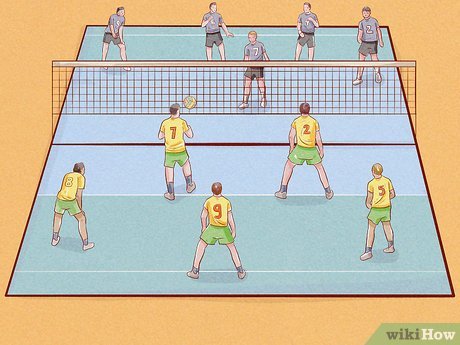
Scoring a volleyball game involves awarding points when a team successfully grounds the ball on the opponent’s side, or when the opposing team commits a fault. Teams play until one reaches a predetermined point total with at least a two-point lead.
Have you ever watched a volleyball match and felt confused about how the score changes? It’s not as complicated as it might seem! Knowing how to score a volleyball game is key to understanding the flow of the game and appreciating the action. This article will guide you through the simple yet crucial rules.
We’ll break down the point system, and explain common faults that award points to the other team. So, you will quickly grasp how the scores go up during a thrilling match.

How to Score a Volleyball Game
Alright, let’s talk about keeping score in volleyball! It might seem a little confusing at first, but it’s really not that hard once you get the hang of it. Just like any game, volleyball needs someone to track who’s winning, and that’s where scoring comes in. We’re going to go through all the important parts so you can be a scorekeeping pro. Think of it like being the official storyteller of the match – you’re keeping track of all the exciting moments!
Understanding the Basics of Volleyball Scoring
Before we jump into the nitty-gritty, let’s make sure we know the main ideas. Volleyball is played between two teams, and the goal is to score points by making the ball touch the other team’s court or by making them make a mistake (called a fault). Usually, a team needs to reach a certain number of points to win a set, and the first team to win a certain number of sets wins the match. Simple enough, right?
The Point System: Rally Scoring
Most volleyball matches use a system called rally scoring. This means that a point is awarded on every single rally, no matter which team served the ball. In older scoring methods, you could only score points when your team was serving. But now, every time the ball hits the floor or someone makes a fault, a point is given. This makes the game faster and keeps everyone on their toes!
What Constitutes a Point?
So how do you get a point? Well, there are several ways:
- The ball lands in the other team’s court: If you spike, set, or even bump the ball so that it touches the floor in the other team’s area, that’s a point for you!
- The other team makes a fault: This can happen for a variety of reasons: hitting the ball out of bounds, touching the net while playing the ball, or a player touching the ball twice in a row (unless it is a block).
- The other team can’t get the ball over the net: if you hit the ball in a right way that is not touchable for the other team, then also you score a point.
- A team goes out of rotation: Each team has a specific rotation pattern, if a team plays with not a right rotation player, then a point will be awarded to the opposite team.
When you score a point, you just add one to your team’s score. It’s a running total, so you’re always seeing who’s ahead.
Keeping Track of Sets and Matches
Volleyball games aren’t just one long go; they’re broken up into sets. Depending on the level of play, you’ll usually see matches that are either best-of-three or best-of-five. So, let’s dig into sets and matches.
Understanding Sets
A set in volleyball is like a round in boxing or a period in hockey. It’s a mini-game within the larger match. Usually, a team needs to score 25 points to win a set, but they have to win by two points. So, if the score gets to 24-24, you keep playing until one team is two points ahead (26-24, 27-25, etc.). In some leagues, the final set (usually the 5th set in a best-of-five match) is only played to 15 points, with the same two-point winning margin rule.
Winning a Match
To win a match, a team needs to win a majority of the sets. In a best-of-three match, you need to win two sets. In a best-of-five match, you need to win three sets. The match ends as soon as one team has won the required number of sets. You don’t need to play out all five sets in a best-of-five match if a team wins three sets before that.
The Scorekeeper’s Tools and Setup
Okay, so now that we know the rules, let’s look at what you need to keep score. Being a scorekeeper is like being an accountant for the game, and you need the right tools to do the job properly.
The Essential Score Sheet
A volleyball score sheet is your main tool. It looks a bit like a big grid or table and it’s designed to help you track everything. It’ll have spaces for:
- The names of the teams playing.
- The date and time of the match.
- The score of each set.
- The total score for each team at the end of each set.
- Individual player rotations and substitutions.
- Time-outs taken by each team
- Sanctions given to a player.
- Any other important information about the match.
You can get these score sheets from your league or online. It’s a really good idea to get familiar with the sheet before the match starts so you know where to fill in all the information. Usually, this comes with some basic instructions that guides you on the scoring process. But no worries, we will break it down even more in this article.
Having the Right Writing Tools
Having the right writing tools is important too, for keeping the score sheet neat and readable. Use a pen or pencil that writes clearly. It is often better to use pencils, as erasers can help correct mistakes without leaving permanent marks. You should also bring a backup pen or pencil, as they might be not be able to write during match for many reasons. A small ruler can also be useful for drawing clean lines on the score sheet.
Placement and Communication
As a scorekeeper, your position is important too. You usually sit somewhere at the side of the court where you can easily see the whole game. A good view is essential so you can keep track of all the plays. Also, make sure you can communicate with the referee. They are your source of truth of the match. Good communication is key to a smooth match.
Step-by-Step: How to Fill Out a Volleyball Score Sheet
Now let’s get practical! We’ll go through how to actually fill out the score sheet, step-by-step.
Before the Match Starts
Before the match starts, you will need to fill in all the important information. You will start by writing down the names of the teams, the date, and the time. This helps keep your game information organized. Double-check all the information to make sure you haven’t made a mistake.
Tracking Points During the Set
As the game begins, you’ll begin tracking points for each team. Each team has its own column where you mark down when they score a point. When a team scores, you mark the point in their column. You will keep doing this until one of the team reaches the target (25 in the first four sets, or 15 in the last set). Remember to also track each of the team’s rotation order too, as teams will rotate after they win a point when they didn’t served before.
Recording Set Scores
Once a team wins a set (reaches 25 with at least a 2 point lead, or reaches 15 in the final set with at least a 2 point lead) you’ll need to write down the final score of the set. Each set has it’s own location in the score sheet, so be sure to enter them in the right space. Make sure you draw a line after the set to indicate that a new set is about to begin.
Noting Time-outs
When a team calls a time-out, it’s important to mark this down on the score sheet. Every team has a limited number of time-outs they can use each set, and the scorekeeper needs to keep track of these. Make a note to avoid the team taking more than the allocated number of time-outs.
Keeping Track of Substitutions
During a match, teams will substitute players. In volleyball, there are specific rules on how players can be subbed in and out. These substitutions have to be tracked on the score sheet to ensure that the team are following the rules. The scorekeeper will write down the players who enter and leave the court, along with the time they are subbed.
Recording Player Rotations
Each team in volleyball must follow a certain rotation pattern. When a team wins a point and did not serve, the team will rotate one player clockwise. If the team wins another point in a row, they must keep rotating clockwise. Scorekeepers will need to track these rotation changes on the score sheet. If the player rotation is in wrong order, it is considered as a fault and point will be awarded to the opposite team.
Handling Sanctions
Sometimes, players might receive sanctions (like warnings or penalties) from the referee during the game. The scorekeeper is responsible to mark down all of these sanctions with the player’s number, so that it is tracked during the match.
Completing the Score Sheet
Once the match is finished, you will need to complete the score sheet. You will add up how many sets each team has won, and write down the final score of the game. Also check that all details are filled out correctly. This final score will be the official record of the match. Once the match score sheet is completed, it must be signed by the scorekeeper, referee, and the captain from both teams. This makes it an official and accurate record of the match.
Common Mistakes and How to Avoid Them
Even if you understand how to score, making mistakes can happen. It’s perfectly normal! So here are some common mistakes, and ways to dodge them:
Confusion with Rally Scoring
One of the most common mistakes is forgetting that you’re using rally scoring. It is very important to keep in mind that point is awarded on each rally, whether the team was serving or not. So remember, every point counts, every time!
Missing Substitutions or Time-outs
Sometimes the game can go really fast, and it can be easy to miss substitutions or time-outs. Pay close attention to the court and to the referee. If you miss something, ask the referee to clear the information again, so you can accurately mark it down in your score sheet.
Inaccurate Point Tracking
It’s very easy to add a point to the wrong team, or forget to mark a point altogether. Always double-check your score with the referee and the score sheet regularly. This way, you’ll catch any problems early on. This is why being attentive is important for a scorekeeper.
Poor Handwriting
Having messy handwriting can create confusion and misunderstandings. Make sure you write clearly and neatly on the score sheet. Using uppercase letters is a good idea, as they are easy to see and read, and also use erasable writing instruments, so you can clean any mistakes. It will really help you from getting lost!
Rotation Errors
If the scorekeeper is not paying attention, then they can miss rotation mistakes. It is important to always be aware of the players positions in the court. When the serve goes to the opposing team, make sure they rotate in clockwise order. If you miss that rotation, the team may be in wrong position, and this can be a big error.
Tips for Being a Great Scorekeeper
Beyond just knowing the rules, there are things you can do to become a really good scorekeeper. Here are some top tips:
Stay Focused
The most important thing for any scorekeeper is staying focused. The game can move really fast, so you always have to be paying attention. Try to remove distractions by paying attention to your score sheet. If you lose focus, you might miss points, substitutions, and time-outs.
Communicate Effectively
Good communication is important in keeping a smooth match. If you’re not sure about something, speak up! Don’t be afraid to ask the referee or another official for clarification. Effective communication will help reduce errors and keep the game fair for both teams. Being confident will help everyone.
Be Prepared
Make sure that you have all of your tools needed. Have your score sheet, pens, pencils, and maybe even a calculator ready to go. Being prepared means you can focus on your work as scorekeeper, and not having to worry about not having the tools needed.
Practice Regularly
The best way to become good at something is by practicing! So, try to practice scoring with different score sheets, or even watch a game and score on a piece of paper. This way you’ll be used to the process, and become more confident in your scorekeeping skills. The more practice you do, the better you will get.
Be Patient
Being a scorekeeper can sometimes be hard, because the match can get intense and fast paced. You always have to be patient and keep your cool. If you make a mistake, don’t panic! Just correct it and keep going. Everyone makes mistakes, and the important thing is to not give up.
So there you have it! Scoring a volleyball game might seem like a lot at first, but with practice and by following these instructions, you’ll become a scorekeeping pro in no time. It’s all about knowing the rules, using the tools, and staying focused. Remember, you’re an important part of the game. Your job is to keep the match fair, and give everyone the correct history of the game. Now go out there and keep score, and be the real MVP!
MHSAA VOLLEYBALL SCORESHEET
Final Thoughts
Scoring a volleyball game involves awarding a point after each rally. The team winning the rally gets a point, and the serving team rotates. A team must reach a certain point total, usually 25, with a two-point lead to win a set.
Following these simple rules is how to score a volleyball game. Keep a tally of the points earned by each team and track set wins. Understanding this is essential for anyone involved in the sport.

