
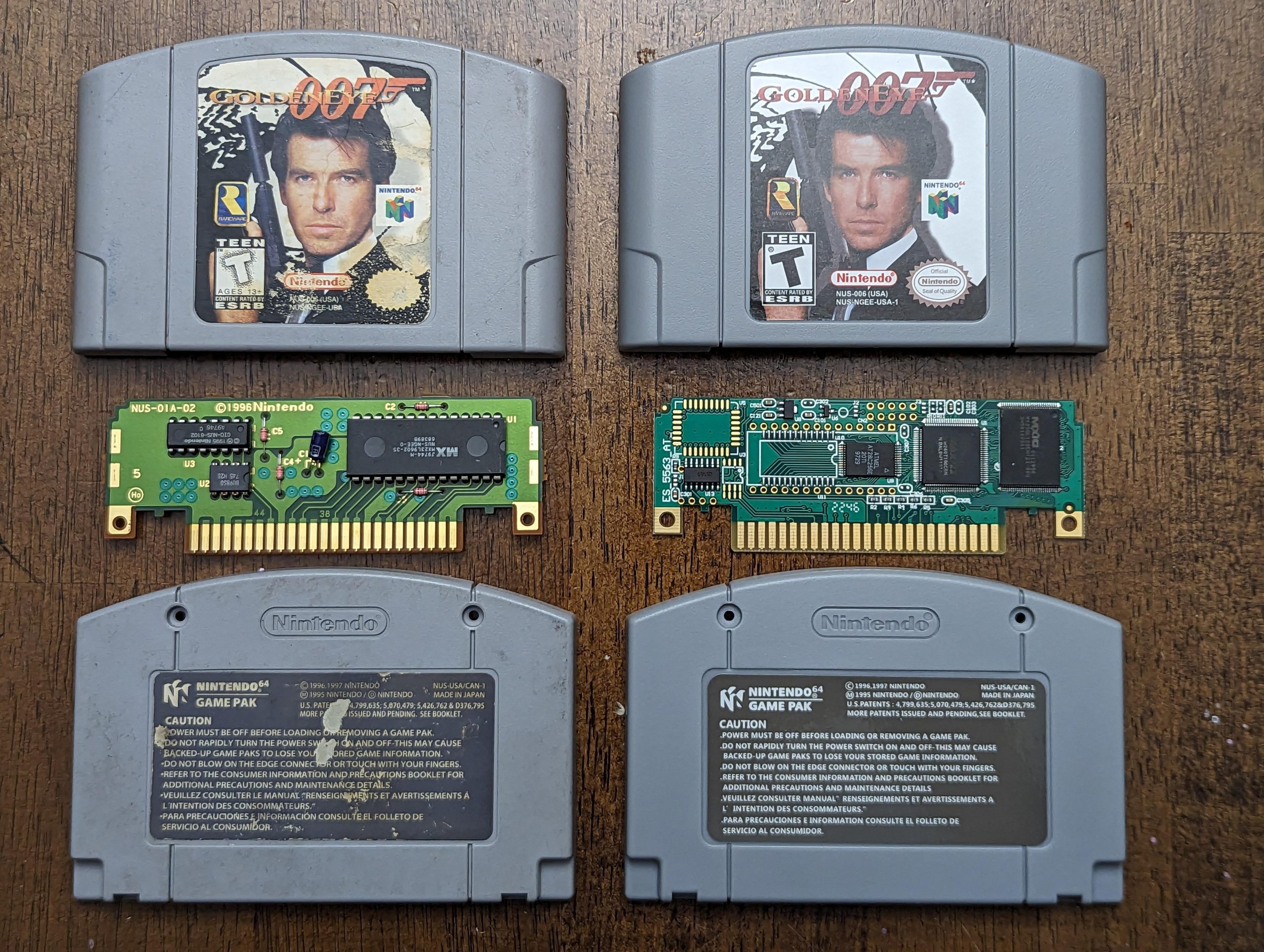
Here are some methods on how to spot fake N64 games: Check the label for poor printing quality or misaligned logos, inspect the cartridge plastic for cheap materials or incorrect colors, and scrutinize the circuit board through the back for any anomalies like a missing CIC chip.
The retro gaming scene is booming, making those classic cartridges highly sought after. But with popularity comes the risk of fakes. Many counterfeit N64 games exist and they can be difficult to identify if you don’t know what to watch for. Knowing how to spot fake N64 games is crucial if you want to avoid getting scammed and want authentic gaming experiences.

How to Spot Fake N64 Games
So, you’re excited to add a new classic to your Nintendo 64 collection? That’s fantastic! But before you hit that ‘buy’ button, it’s really important to know how to tell if you’re getting a real N64 game or a sneaky fake. Counterfeit games are out there, and they can really spoil the fun and cost you money. This guide will help you become a pro at spotting the fakes, ensuring you only get the genuine, awesome cartridges you deserve. Let’s dive in and learn the tricks of the trade!
The Cartridge Case: First Line of Defense
The very first thing you’ll see is the game cartridge itself. That’s where our detective work begins! Pay close attention to these key areas:
Plastic Quality
Genuine N64 cartridges are made with a high-quality, sturdy plastic. It should feel solid and have a consistent color and finish. Fake cartridges often use a cheaper, thinner plastic that might feel flimsy or have a slightly different color tint. Sometimes, the edges might be rough or not fit together as perfectly as they should. Check for any small imperfections like uneven surfaces, mold marks, or inconsistent coloring; this may be a sign of a fake. The original plastic used has a slight sheen to it, not a matte finish.
The Nintendo Logo
The Nintendo logo on the cartridge is another crucial detail to examine. On a genuine N64 cartridge, the logo has a very distinct look. The oval around the “Nintendo” text should be smooth and symmetrical, not jagged or oddly shaped. The word “Nintendo” should be sharply printed with clean, crisp letters. It shouldn’t look blurry, faded, or too thick. The color should also be a consistent shade of grey. Fakes might have a logo that’s slightly off in terms of font, spacing, or color. Sometimes the oval might look misshapen, or the font might appear too bold or too thin. Use a magnifying glass if you have one, to get an even closer look.
- Genuine: Crisp, clear text, symmetrical oval.
- Fake: Blurry or jagged text, misshapen oval.
Cartridge Screws
Look at the screws on the back of the cartridge. Genuine N64 games use special, tamper-resistant screws called “gamebit” screws. These screws have a unique hexagonal shape with a pin in the center. They aren’t standard Phillips or flathead screws. If you see any other type of screw, it’s a big red flag that the game is likely a fake. The gamebit screws should be recessed slightly, not flush with the case. These gamebit screws also have a specific metallic coloring, which is often ignored when creating counterfeit games. Check to make sure they are the correct, metallic, color. Counterfeiters might use normal screws due to the gamebit screws being uncommon and more expensive.
- Genuine: Gamebit screws (hexagonal with a pin).
- Fake: Phillips or flathead screws.
The Label: A World of Details
The label on the front of the game cartridge is another goldmine of information when it comes to spotting fakes. Pay close attention to these points:
Print Quality and Clarity
Genuine N64 labels are printed with high-quality ink that is sharp, vibrant, and doesn’t easily smudge or fade. The colors should be consistent and match the original art. Fake labels often have poor print quality. The images and text might look blurry, pixelated, or faded. The colors might be slightly off compared to a real game. If the text looks jagged or the images appear less vibrant, that’s a sign to be careful. Sometimes the ink may appear too shiny, while other times it appears to be dull and almost faded. Be sure to have a reference image of the original game label, in order to compare to the label you are examining. Look for things like text alignment, and any misprints that might be present.
Label Material and Texture
Original N64 game labels use a specific type of semi-gloss paper that has a slightly smooth and subtle sheen. It should feel sturdy and not overly thin or flimsy. Fake labels might use a cheaper, more matte paper that can sometimes feel thinner and more prone to peeling. The adhesive on the back of a genuine label should hold the label securely, whereas the adhesive on a fake label may be weaker and easier to peel off. The edges of a genuine label are often cleanly cut; a counterfeit label might have rough or frayed edges due to poor cutting. Run your finger lightly across the label. Does it feel like smooth, semi-gloss paper, or does it feel papery, glossy, or even like a sticker? These tactile checks can be a good indicator of a genuine or fake label.
Label Alignment and Placement
The label on an authentic N64 game is always applied very precisely. It will be straight and evenly aligned on the cartridge, with the edges perfectly matching the shape of the cartridge. A fake label might be crooked, placed too high or too low, or have edges that don’t line up with the cartridge correctly. Misalignment or incorrect placement of a label can be a strong sign of a fake. This is an area where counterfeiters often fail to put in the extra effort needed to achieve accuracy. Even a small deviation in placement can signal a fake game. Pay special attention to the space between the label and the edge of the plastic cartridge.
The ESRB Rating
Pay attention to the ESRB (Entertainment Software Rating Board) rating on the label. This rating is crucial, especially for games released in North America. Original ESRB logos are sharp, well-defined, and have a very specific design and size. The text should be clear and legible. On fake games, the ESRB logo may look distorted, blurry, or have incorrect colors. For example, if the logo looks too bold, or too skinny it is a red flag. The rating should also be appropriate for the game in question (e.g. a kid’s game shouldn’t have a “Mature” rating). If you see a very old game with a new ESRB rating logo, this is also a clear sign of a fake cartridge, as the old ESRB logos are not in the new logo style, and will be the older logo format. Compare the logo to other games of the same release time to get an idea of what the correct logo for the game should look like.
Regional Differences
Understanding the regional differences in labeling is also very important. N64 games were primarily released in three main regions: North America, Europe, and Japan. Each region had its own standards and labels. North American games will have the ESRB rating as mentioned above, while European games will use the PEGI rating system (or older regional rating logos for older games). Japanese games will have no ESRB or PEGI ratings and will instead have a Japanese CERO (Computer Entertainment Rating Organization) rating. A fake might have an ESRB rating on a game that was released only in Europe, or vice versa. Be sure to check the label for the correct regional logos or information.
The Circuit Board: Looking Under the Hood
If you’re feeling brave (and have the proper tools), you can take a peek at the circuit board inside the cartridge. This takes a bit more skill, but it’s another great way to identify a fake.
Using a Gamebit Screwdriver
First, you’ll need a special “gamebit” screwdriver (typically a 3.8mm gamebit) to open the cartridge. These are widely available online or at gaming stores. Don’t use a regular screwdriver – it could damage the screws and the cartridge! Gently and carefully unscrew the two screws on the back of the cartridge to get a look at the internal hardware. Be very careful when doing this, because if the screwdriver is not the correct size, you could strip the screw heads. Once the screws are loose, gently lift the two halves of the cartridge.
Genuine Circuit Board Characteristics
Once inside the cartridge, take a good look at the circuit board itself. A genuine N64 game circuit board will have a high level of quality. Look for a dark green board, that is precisely cut, and the gold-plated contacts should look clean and have a high quality look to them. You will also see the Nintendo logo and a code printed directly on the board itself, that will correspond to the game it is designed for. The chips on the circuit board will also be carefully placed, with good solder joints that are consistent and smooth. The overall look of the internal board will be very polished and precise.
- Color: Dark green
- Contacts: Clean gold-plated contacts
- Logo: Nintendo logo present, with a code that is specific to the game
- Solder Joints: Smooth and consistent
Signs of a Fake Circuit Board
A counterfeit circuit board will usually have very obvious signs of being a fake. The board itself might be a color other than dark green (some fakes are a very light green), or it may have an uneven cut to it, that does not appear precise. The gold contacts might not be of the highest quality, and they may look very dull, and may even be poorly aligned. On a fake circuit board, you may not see the Nintendo logo, or a specific product code, or they may be printed in low quality ink. The solder joints on a fake game will often look messy or uneven, or the chips themselves may appear to be sloppily attached to the board. Sometimes, you might even see wires attached between chips, which is never present on an original board. Also, fake game boards usually have cheaper chips that are not of the same brand or quality of an authentic game. These are all strong indicators of a fake game.
- Color: Light Green or other color, instead of dark green.
- Contacts: Dull or poorly aligned.
- Logo: Missing, or printed in low quality ink.
- Solder Joints: Messy or uneven.
- Chips: Poor quality chips, from different manufacturers
The “Blow Test” Myth
You might have heard that you should blow into a game cartridge to make it work. This is a popular myth, and it actually can cause more harm than good. Blowing into a game cartridge introduces moisture into the cartridge, and can lead to internal corrosion, so please do not blow into your cartridges. It should be noted that a fake cartridge may very well work even if you blow on it, so this is not a reliable test to determine authenticity. If a game is not working, there may be something that is wrong with the cartridge or the console itself. Try carefully cleaning the contacts with isopropyl alcohol, instead of blowing into the cartridge.
The Game Play Test: The Ultimate Check
The final and most reliable test is to actually play the game. Boot up your Nintendo 64, insert the cartridge, and see what happens. Here’s what to look for:
Game Boot Up
A genuine game should boot up smoothly and quickly, taking you straight to the game’s main menu or title screen. Fake games might take longer to load, or they might have loading errors. Sometimes, fake cartridges won’t boot up at all, or they may give you an error message or a black screen. If you encounter unusual delays or errors upon starting, the game may be a fake. It should also be noted that some original N64 games may have difficulty booting due to dirty contacts, however if the cartridge has been cleaned and it still exhibits booting problems, that is a good indication that it may be a counterfeit game.
Gameplay Performance
While playing the game, pay attention to how it performs. Genuine games should run smoothly with no major graphical glitches, frame drops, or other errors. Fakes may have graphical errors, strange textures, slowdowns, or even freeze up during gameplay. If you experience any of these problems, that’s a strong sign you’ve got a fake on your hands. Additionally, some counterfeit games may have missing game features, or very poor AI (Artificial Intelligence), that is very inconsistent with the gameplay of the genuine original game. A good tip is to reference a gameplay video of the original, to compare to your game, to see if anything seems different or off. Counterfeiters often do not put in the necessary time and effort to create a perfect copy, which is where errors in gameplay may occur.
Saving Data
Another area to watch out for is game saves. Most N64 games use internal memory to save your progress. A genuine game should save and load your data correctly. Fake games may have problems with saving, they may not save at all, or they may delete your saved data after you turn the console off. A lack of proper save functions or corrupting save files is a huge sign you have a counterfeit copy. Always test the save function to be sure that your game is performing the way it should. Counterfeiters often do not program the game correctly to have the proper save functions. Also be aware that some legitimate N64 games do not save, this is typically due to the game itself not being designed to have save functionality, so research any particular game to be sure of how the game should perform before you assume it’s a fake game based off of the save functionality.
Buying Tips to Avoid Fakes
Prevention is always better than trying to fix a problem. Here are a few tips on how to avoid buying fake N64 games in the first place.
Buy From Reputable Sources
The best way to avoid fakes is to purchase your games from reputable sellers. Go to stores that specialize in retro games, or reputable websites that have reviews and ratings from other customers. These sellers typically are knowledgeable about what they are selling, and will usually offer a guarantee on the product. Avoid buying from places that have unknown sellers, or very low ratings. Always read the reviews of a seller to make sure others have had good experiences with the seller before you make a purchase.
Be Wary of Deals That Are Too Good To Be True
If a game is offered for a price that is way lower than the average value, you should be suspicious. N64 games, especially the more rare and popular ones, can be quite expensive. If you find a copy of a normally high-priced game being sold for a very low price, it may very well be a fake. Do your research to know the average price of the game before you commit to buying it. Low prices can be a major red flag.
Examine Pictures and Videos Closely
When buying online, make sure to examine the photos that the seller has provided. Check all of the details of the cartridge, label, and box (if applicable) for any red flags, such as those mentioned above. Also, if a seller provides a video, be sure to watch it closely to see the game working, to be sure it is booting up correctly and is running smoothly. Always ask for more photos or videos if the seller has not provided them. A good seller will understand why you are requesting more information, and they should have no problem supplying additional pictures or videos for you.
Ask Questions
Don’t hesitate to ask the seller questions before you buy, especially on online marketplaces. Ask about the game’s condition, where they obtained the game, and if it’s an original copy. A seller that is unwilling to provide details about what they are selling, may not be a reliable source. Be prepared to ask specific questions, such as what type of screws the game has, or what the color of the circuit board is. The more questions you ask, the more informed you will be before you make a final decision on whether to buy or not.
Spotting fake N64 games might seem a little tricky at first, but with a little knowledge and attention to detail, you’ll get the hang of it in no time. Remember to check those cartridges, scrutinize the labels, look at those screws, and playtest the game. By being careful and informed, you can avoid getting ripped off and enjoy the amazing collection of N64 games for years to come.
How to tell if your N64 game is fake
Final Thoughts
Spotting fake N64 games involves close examination. Check the label for pixelation or incorrect logos. Cartridge color and plastic quality matter; genuine games feel solid. Screw heads should match Nintendo’s design, not generic ones. These details help you quickly identify counterfeit items. Learning how to spot fake n64 games saves frustration. A thorough check is your best defense against buying fake cartridges.

