
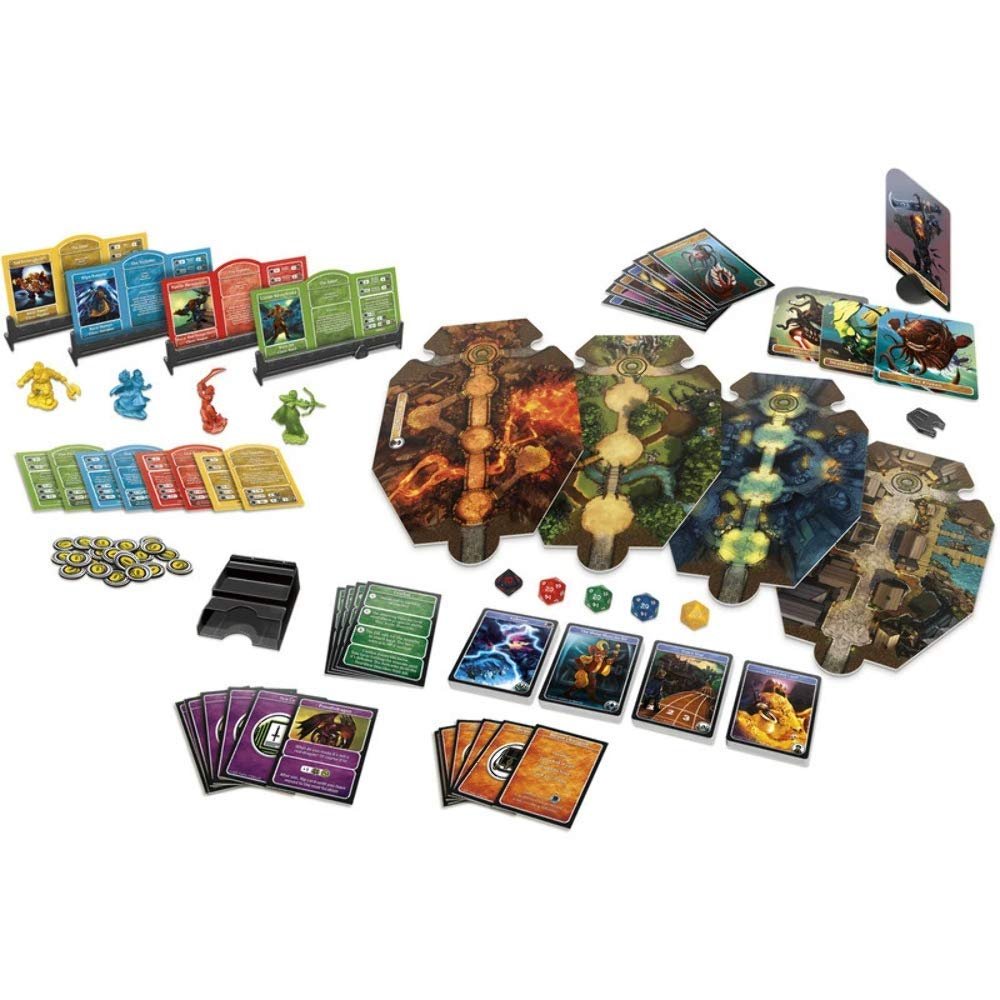
Dungeons and Dragons is not a board game; it’s a tabletop role-playing game.
Many people wonder, is dungeons and dragons a board game? It’s a fair question, considering the dice and character sheets. However, it goes far beyond moving pieces on a static board.
D&D involves a storyteller guiding players through an imaginary world. Players make choices, shaping the story with their actions and imagination, rather than just following a predetermined path.

Is Dungeons and Dragons a Board Game?
That’s a question many people ask when they first hear about Dungeons & Dragons (often called D&D or DnD). It looks like it might be a board game with all those dice and character sheets, but it’s actually something quite different and, some might say, much more exciting! Let’s dive deep into what makes D&D unique and why it’s often placed in a category of its own, even though it shares some similarities with board games.
Understanding the Core of a Board Game
Before we can decide if D&D is a board game, it helps to know what most people think of when they hear that phrase. Generally, a board game has these features:
- A physical board with a set path or area. Think of games like Monopoly, Candyland, or Chutes and Ladders.
- Pieces that players move around the board. These can be anything from little cars to colorful pawns.
- Rules that are followed by all players. The rules tell you how to move, what to do, and how to win.
- A clear goal to reach. This might be getting to the end of the path, buying the most properties, or collecting the most points.
- Often, a way to tell who has won the game. This could be the first person to the finish line or the player with the most money at the end.
Board games are usually structured, meaning they have a beginning, a middle, and a clearly defined end. You follow pre-set rules and move pieces around a board. These structure provides order and the predictable play for a wide range of people. They often involve strategy, luck or both.
Dungeons & Dragons: A Different Kind of Game
Now, let’s look at Dungeons & Dragons. While it might use some pieces, like miniatures, and has rules, it’s fundamentally different from your classic board game. Here’s why:
The Role of the Dungeon Master
The most significant difference is the presence of a Dungeon Master (DM). The DM is like the narrator, referee, and sometimes even the villain of the story. They set the scene, describe the world, control non-player characters (NPCs), and present challenges to the players.
- The DM does more than just move pieces around, instead the DM guides the game.
- They act as the storyteller, making up scenarios and controlling how the world reacts.
Storytelling at Its Heart
D&D is about collaborative storytelling. Players create their own characters with their own backgrounds, motivations, and skills. The game isn’t just about moving your piece from one square to another; it’s about your character’s journey and how they interact with the world and the story.
- Players work together to make a story instead of competing against each other.
- The game focuses on creative expression and problem-solving.
The Dice: A Tool for Randomness and Uncertainty
Yes, D&D uses dice, especially a 20-sided die (d20), but they are used very differently from typical board games. In D&D, dice rolls help determine the success or failure of a character’s actions. For example, a character might roll a die to see if they successfully jump over a chasm or persuade a guard to let them pass. It introduces an element of chance and makes the game feel unpredictable. This way of using dice is more like simulating real-life situations where there isn’t always a pre-determined outcome.
Flexibility and Adaptability
Unlike board games, D&D doesn’t have a set board in the traditional sense. Instead, the DM often uses maps or just describes the locations and environments. The game’s world is often flexible and can change based on the players’ actions. This leads to unique experiences each time you play. This means D&D is much more adaptable to different player choices and stories. The story is not set in stone, the players and DM collaborate to make the story they want.
Roleplaying and Character Development
The roleplaying aspect is a key element of D&D. Players don’t just move pieces; they embody their characters, making decisions and acting according to their personality and goals. Over time, these characters grow, learn new skills, and change as they go through adventures. This character development adds depth to the game, which board games don’t usually have.
Comparing D&D to Different Types of Games
To better understand where D&D fits, let’s compare it to other types of games.
D&D vs. Traditional Board Games
We’ve already touched on the major differences, but here’s a quick rundown:
| Feature | Traditional Board Game | Dungeons & Dragons |
|---|---|---|
| Physical Board | Usually, a pre-defined board. | No set board. Often uses maps or descriptive storytelling. |
| Pieces | Pieces are moved around the board. | Miniatures or tokens represent characters, but player actions drive the game more than the physical position. |
| Rules | Set rules to follow. | Set rules, but also space for creativity and interpretation by the DM. |
| Goal | A clear, defined objective (e.g., reach the end, collect most points). | Goals can vary by campaign and player choice. The objective is less about “winning” and more about the journey and story. |
| End | Game ends once a set condition is met. | The campaign or adventure can last many sessions. An end point is not usually a factor, it is about the progression of the story. |
| Story | Usually does not have a story, or if it has one, it is very basic. | Central to the experience. Players contribute to the story with their choices. |
| Roleplaying | No roleplaying elements, just following rules and moving pieces. | Heavily focused on roleplaying, making choices and acting as your character. |
D&D vs. Card Games
Card games like Magic: The Gathering or poker use cards as the main component of the game. While there is an aspect of randomness when drawing cards, D&D’s dice provide a different kind of randomness and it uses them with different purposes. D&D is more about roleplaying, story and adventure than strategy and competition like card games.
D&D vs. Video Games
Many video games, especially role-playing games (RPGs), have taken inspiration from D&D. Video games usually have their own mechanics that are built into the game. In most cases, Video games provide a set of rules. D&D is different because its rules can be interpreted, and changed, by the DM. A video game cannot change the code, that is built into it. Video games are also typically a solo experience or has fixed number of people that can participate. D&D is different because anyone can join, at any time, that the DM wants to incorporate in to the story.
D&D vs. Other Role-Playing Games (RPGs)
D&D is a type of role-playing game, but there are other RPGs out there too! These games often have similar structures, with a game master (like the DM), player characters, and storytelling elements. However, different RPGs might use different rules, settings, and ways of rolling dice. They might emphasize different aspects of play, some might focus more on storytelling while others might have a more complicated rule system. Some RPGs don’t use dice at all, and they are often more focused on specific themes or genres. So while D&D is an RPG, its unique blend of rules and fantasy themes makes it stand out, and in many people’s eyes, the most recognized RPG.
The Social and Creative Aspects of D&D
One thing that sets D&D apart is the social aspect of the game. Players work together as a team to overcome obstacles and complete their goals. They communicate, plan, and strategize to win together as a team. D&D provides a space for social interaction and making memories. It gives an opportunity to make friends, and learn to work as a team. D&D also encourages creativity. Players can make up their own characters, make their own choices and interact with the game world based on their imagination. It’s not just about following the rules; it’s about seeing the world inside your mind and making that world come alive.
Why People Play D&D
People play D&D for lots of reasons:
- To be creative: D&D allows players to create characters and make decisions to affect the world around them.
- To socialize: D&D is a group game, a team game. Players work together, make friends and share experiences.
- To tell stories: The combination of DM and players create new stories that can often be very compelling.
- To have an adventure: D&D takes players on a journey to magical lands with amazing things to encounter.
- To learn and grow: D&D helps with problem-solving, creativity, cooperation and social skills.
So, is Dungeons and Dragons a board game? The answer is, mostly no. While it shares some features with board games, like using dice and sometimes miniatures, D&D is a much more flexible, creative, and story-focused experience. It’s a role-playing game that provides an opportunity for collaborative storytelling, problem solving, and social interaction. D&D is an unique kind of experience. It’s a game of imagination, adventure, and friendship. Its flexibility, and focus on narrative, distinguish it from a typical board game.
Dungeons & Dragons: A Complete Beginner's Guide
Final Thoughts
Dungeons and Dragons defies simple categorization. It involves dice, character sheets, and a rulebook, elements found in many board games. However, it also includes collaborative storytelling and role-playing, aspects rarely present in typical board games.
The experience is what truly matters. The shared narrative takes center stage, making it feel more like an interactive story. Therefore, we can say that is dungeons and dragons a board game is a complicated question; it is more than just a simple game.

