
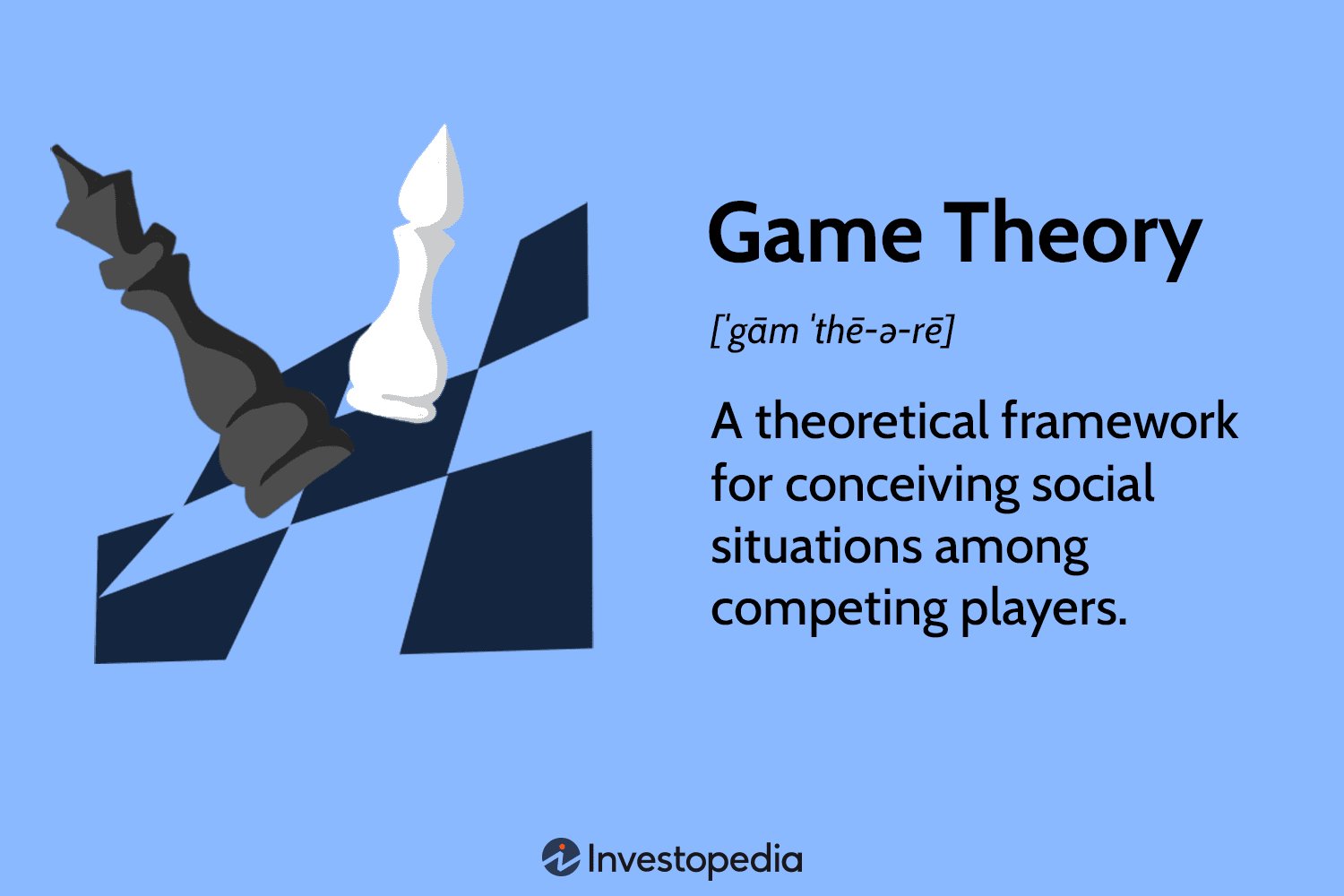
Game theory can be challenging, requiring mathematical thinking and strategic analysis, but the difficulty varies based on the complexity of the specific problem.
Is game theory hard? That’s a question many people ask when they first encounter this fascinating field. It deals with strategic decision-making, which sounds simple enough at first glance. However, when you delve into the mathematics and complexities of various games, things quickly become more intricate.
The challenge often lies in understanding the underlying principles and how they apply to different scenarios. It is not always easy, it takes practice. But, with dedication, you can grasp the core concepts.

Is Game Theory Hard? Unpacking the Challenges and Rewards
So, you’re curious about game theory, huh? Maybe you’ve heard it mentioned in a movie, a business class, or even a video game. The name itself might sound intimidating – “theory” usually brings to mind complicated math equations and super smart people with big glasses. But is game theory really that hard? The answer, like most things, is not a simple yes or no. It’s more like a “it depends.” Let’s explore what makes it challenging and what makes it, well, less so.
What Exactly Is Game Theory Anyway?
Before we dive into how hard it is, let’s make sure we all know what we’re talking about. Game theory isn’t about playing checkers or video games, although those can be used to understand game theory principles. At its core, game theory is the study of how people (and other entities) make decisions when the outcome depends on what everyone else does. Think about it – when you play a game, you’re not just thinking about your own moves; you’re also trying to guess what your opponent will do. Game theory provides a framework for understanding these kinds of strategic interactions.
Here are some key things to understand about game theory:
- It involves “players”: These can be individuals, companies, countries, or even animals.
- They make “moves”: Actions each player can choose from.
- There are “payoffs”: The result each player gets, which could be anything from money to satisfaction to simply not losing.
- It’s about strategy: Players try to choose the best moves, taking into account what they think others will do.
- It’s not always about winning: Sometimes, the goal is to cooperate or to avoid the worst possible outcome.
The types of games can vary greatly. Some involve cooperation, where players win together, some involve competition, where one player wins at others’ expense, and many involve combinations of both.
The Perceived Difficulty: Why It Seems Hard
Now that we’ve got a basic understanding, let’s tackle why game theory sometimes gets a reputation for being difficult. Here are a few things that might make it seem challenging:
The Math Can Be Intimidating
Okay, let’s be honest, there’s math involved. You’ll often see formulas, diagrams, and graphs. For some people, just the sight of these can be a bit scary. Game theory uses mathematical tools to model situations. While it doesn’t usually involve super complex calculus, you will encounter concepts like probability, expected value, and even some basic algebra. These math concepts help game theorists quantify the outcomes and find the best strategies. It’s similar to figuring out odds in poker, but on a much broader scale. These calculations allow to determine the ‘best’ move, but they do not always guarantee a win in a real-world scenario. Because reality is far more intricate than any game model.
Abstract Thinking Required
Game theory isn’t just about plugging numbers into formulas. It requires a lot of abstract thinking. You need to imagine different scenarios, put yourself in the shoes of other “players,” and think about the possible consequences of each action. This kind of strategic thinking is a skill, and like any skill, it takes practice to get better at it. It’s like being a chess player who is thinking several moves ahead, but instead of chess pieces, we have people, or companies, or governments. It can be tricky to keep all the potential moves and counter-moves in your head at once. This is one reason why game theory can feel very complex.
Counterintuitive Results
Sometimes, game theory throws up results that are counterintuitive or go against what you might expect. For example, the famous “Prisoner’s Dilemma” shows how even when it’s best for everyone to cooperate, individuals are often incentivized to act selfishly. These situations can be confusing and seem paradoxical at first. These results force us to reconsider our ideas of how people interact and make decisions. This is what makes it a fascinating field. The fact that the ‘best’ choice on an individual level may not lead to the ‘best’ outcome for a group can be hard to wrap your mind around.
The Language Barrier
Game theory, like many academic fields, has its own vocabulary. Words like “Nash Equilibrium,” “dominant strategy,” and “zero-sum game” can sound like a foreign language if you’re not familiar with them. These terms have very specific definitions within game theory, and it takes some time to learn them and to use them correctly. Even if you understand the mathematical concepts, you’ll need to be familiar with the vocabulary to truly participate in conversations about game theory.
Learning the language is like learning a new code; once you understand it, everything else falls into place.
Applying Theory to the Real World
Game theory provides a framework, but using it to predict what will happen in real-world situations is much more difficult. Real people don’t always behave rationally, or follow the rules of the games laid out in theory. Real world situations are messy and full of unpredictable factors. Human psychology can also play a role in people’s decisions. This makes using game theory to predict behaviors more of an art than a precise science. While the theory can be useful in helping to understand the underlying forces at play, it is not always perfect or fully predictive.
Why Game Theory Isn’t Always So Hard
Now, let’s look at the flip side. While there are aspects of game theory that can be challenging, it’s not impossible to grasp. Here’s why it’s not as intimidating as it might seem:
The Core Concepts Are Intuitive
Once you get past the technical jargon, many of the core ideas in game theory are quite intuitive. The idea of thinking about other people’s perspectives, anticipating their moves, and making the best choice based on all possible scenarios – these are all things we do in our daily lives to some extent. The theory gives them a formal structure and terminology. The idea of anticipating an opponent’s move in a game of tag, or in a negotiation with a sibling, is something you likely did as a child, and those intuitive ideas are the foundation of game theory concepts.
Many Good Resources Are Available
There are tons of resources available for learning game theory. From beginner-friendly books to online courses and interactive tools, you don’t need a math degree to get started. Many online resources use real-world examples and even visual aids to explain the concepts. You can find resources for every level of expertise, whether you are completely new to the topic or you already have some background knowledge. These resources can help make the ideas easier to understand and more accessible.
It’s Logical, Not Just Mathematical
While there’s a math component, game theory is fundamentally about logic and reasoning. It’s not just about crunching numbers; it’s about using a systematic approach to think through complex problems. If you are comfortable with logical reasoning, you will be able to master many aspects of the theory. The mathematical equations and models are just tools that are used to help solidify logic that is used in games. So, good logical reasoning skills will make your understanding better, and will make the math involved much easier to comprehend.
Real-World Examples Make It Relatable
Game theory isn’t just a bunch of abstract ideas. It has real-world applications, which can make it easier to understand. We encounter game theory principles almost everywhere. Think about competitive pricing strategies, negotiations between countries, or even choosing a route to work in rush hour – all of these can be analyzed through a game-theory lens. Understanding the theory helps you make more effective decisions. Real-world examples make the abstract concepts come alive and can show why game theory matters. When you can relate theory to real things, it makes theory much more memorable and much easier to grasp.
Breaking Down the Difficulty by Type of Game
The difficulty of game theory can also depend on the type of game you are studying. Some games are simpler than others. Here are a few examples:
Simple Games: Zero-Sum Games
These are games where one person’s gain is always equal to another person’s loss. The total of everyone’s payoffs always equals zero. A very simple example would be a game like chess. If you win, I lose. A zero-sum game is usually simpler to analyze than more complex games, since there is a very clear winner and a clear loser, and the strategies often revolve around outsmarting an opponent. There are still strategies you need to be familiar with, but the overall goal is very easy to understand.
More Complex Games: Non-Zero-Sum Games
These are games where the total payoffs can be more or less than zero. In non-zero-sum games, multiple people can gain at the same time or lose at the same time. The “Prisoner’s Dilemma” is an example of non-zero-sum game, where the choices of both players can lead to very different results for each. These games often involve cooperation and negotiation, which can make them harder to analyze because the best strategies often depend on what the other players choose to do, and there might not be one single right move.
Even More Challenging: Games with Incomplete Information
These are games where players don’t know all the facts. For example, in a poker game, the players don’t know what cards each other is holding. Games with incomplete information are the most difficult to analyze, because players need to make moves without perfect knowledge. Players must rely on probabilities and their expectations of how others will act. A player needs to be extremely analytical to develop effective strategies. These games also introduce elements of deception, bluffing, and trying to get inside the opponent’s head.
Is Game Theory Right for You?
So, is game theory hard? It can be, but it’s also incredibly rewarding. It’s like learning a new language – it might be tricky at first, but once you grasp the basic principles, you can see the world in a completely new way. If you enjoy puzzles, thinking strategically, and learning about how decisions are made, you might find game theory a very interesting and satisfying subject to study.
Here’s a quick guide to help you decide:
- You might enjoy game theory if:
- You like puzzles and problem-solving
- You are curious about how people make decisions.
- You enjoy thinking strategically.
- You are interested in applying mathematics and logic to real world scenarios.
- You are willing to learn new terms and concepts
- Game theory might be difficult for you if:
- You dislike math and equations.
- You prefer concrete and straightforward answers.
- You are not comfortable with abstract thinking.
- You are unwilling to work through challenges.
Remember, you don’t need to be a genius to understand basic concepts of game theory. Start with a simple example, and you will soon be looking at situations with new understanding. It’s a journey of learning and discovery, and the more you study, the more you’ll appreciate the world around you.
Whether game theory is “hard” is subjective, but it’s definitely an area with plenty to explore. It challenges how we think about choices and their consequences. It invites us to consider the world through a new lens. If you are willing to put in the effort to understand game theory principles, you’ll definitely find it very beneficial to how you view the world. The challenges it presents are part of the reward it gives.
Game Theory: Hard Mode is a LIE! (Sekiro Easy Mode Controversy)
Final Thoughts
In essence, game theory presents challenging concepts. Understanding strategic thinking, payoffs, and equilibrium points requires effort. These ideas can seem abstract initially, adding to the difficulty.
Therefore, the question “is game theory hard” warrants careful consideration. While foundational ideas are accessible, advanced applications demand significant mathematical skill. The subject requires analytical aptitude and persistence to truly grasp its core principles.

