
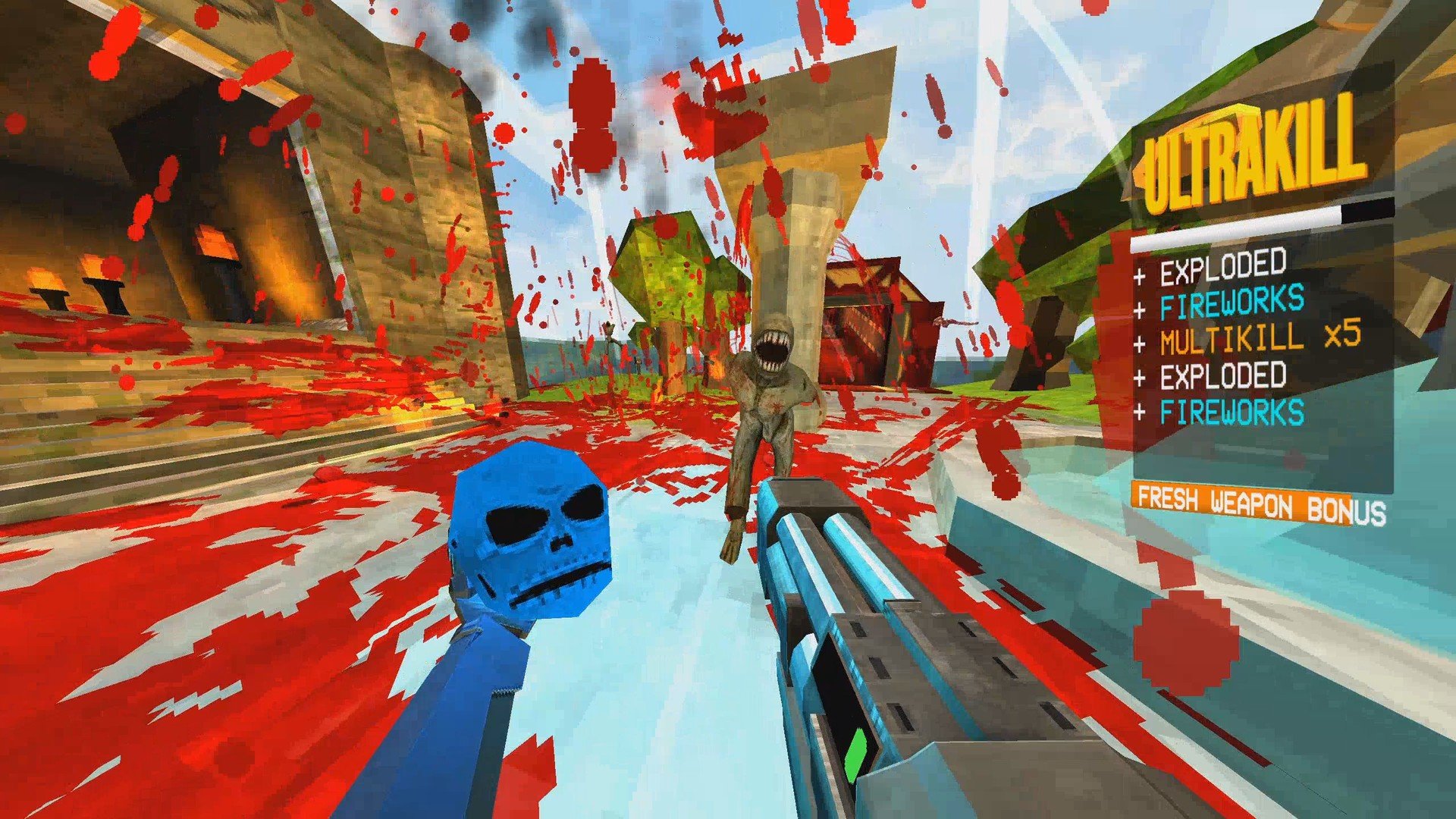
Yes, Ultrakill is an indie game, developed by a single person, Arsi “Hakita” Patala.
Is Ultrakill an indie game a question swirling in your head after witnessing its intense, stylish gameplay? It’s understandable, given the game’s polish and hardcore action. The game feels so refined and complete. It might seem like it came from a large studio with a huge team and big funding.
But the reality is quite different. This fast-paced, retro-inspired shooter came from one creator, a talented individual who poured passion and creativity into their work. This makes its indie status quite unique.

Is Ultrakill an Indie Game?
The question of whether Ultrakill qualifies as an indie game is one that sparks quite a bit of discussion within the gaming community. It’s not always a simple yes or no, and that’s what makes it such an interesting topic to explore. To really figure this out, we need to look at what it means for a game to be “indie” and then see how Ultrakill fits into that picture. We’ll dig into the game’s development, its funding, and the overall vibe it gives off to players. Let’s jump in!
What Does “Indie Game” Really Mean?
The term “indie game” often gets thrown around, but what does it actually signify? It’s more than just a game that’s not made by a big company like EA or Activision. There are several key factors that usually come into play.
Development Size and Structure
Indie games are typically created by smaller teams. We’re not talking hundreds or thousands of developers, artists, and composers. It might be just one person wearing all the hats or a small group of a few friends working on a passion project. These teams often have much more flexibility in their creative process since they don’t have a big publisher telling them what to do. They’re able to experiment with new ideas and take risks.
Small Teams: Indie development teams tend to be much smaller than those working on AAA titles.
Creative Control: Indie developers usually have more control over the game’s vision.
Flexibility: They have the ability to adapt and change the game based on community feedback.
Funding and Publishing
How a game gets funded and how it reaches players is another significant part of the indie label. Many indie games are self-funded, through personal savings, loans, or crowdfunding campaigns like Kickstarter. They often self-publish their games too, meaning they don’t go through a major publisher that takes a cut of the profits.
Self-Funded or Crowdfunded: Many indie games rely on these methods for financial support.
Self-Published: Indie games often get released without the backing of a major publisher.
Lower Budgets: Indie games generally have much smaller budgets compared to AAA games.
The Indie Game Vibe
Beyond just the facts about funding and team size, indie games tend to have a particular feel to them. They’re often more experimental, quirky, and focused on innovative mechanics rather than following established formulas. You will likely encounter fresh gameplay and unique art styles in the indie space. They often embrace new ideas and different styles.
Unique Art Styles: Many indie games have art styles that you won’t see in bigger releases.
Innovative Gameplay: Indie games tend to focus more on novel and different gameplay mechanics.
Passion Projects: Many indie games are seen as passion projects made by developers who genuinely care about the game they are making.
Ultrakill’s Development Journey
Now that we’ve got a handle on what makes an indie game, let’s take a close look at Ultrakill’s journey to see where it fits in. It’s a wild and interesting ride that definitely gives us a lot to consider.
A One-Man Show Turned Team Effort
Initially, Ultrakill began as a solo project by Arsi “Hakita” Patala. He started working on the game in his free time, creating a basic concept and building the foundations of what we know today as Ultrakill. However, as the game’s scope and popularity grew, he brought on additional help, which turned it into a small team.
Initial Solo Development: Ultrakill started as the passion project of one individual.
Expansion: Over time, the development team expanded to a small core group.
Close Collaboration: Even with a team, the development remained a very close-knit and collaborative effort.
Funding and Publishing for Ultrakill
Ultrakill took the path of a self-funded, self-published game. Hakita funded the initial development out of his own pocket, relying on his savings. As the game gained popularity and players started purchasing it in Early Access on Steam, he used those earnings to continue funding development and support the team. The game didn’t rely on a traditional publisher to go through.
Self-Funding: The game was primarily financed by the developer’s own funds.
Early Access: Steam’s Early Access program helped to sustain the game’s development through player purchases.
Self-Published: Ultrakill was released by the developers themselves, without the involvement of a publisher.
The Ultrakill “Feel”
Ultrakill has a distinct and very intense style. The gameplay is fast-paced, challenging, and satisfying, paying tribute to classic first-person shooter games, but with a fresh spin. The visual style is heavily influenced by 90s gaming with a unique blend of retro graphics and smooth, modern gameplay. The music, also composed by Hakita, is a pulsating and high-energy mix of electronic and heavy metal tracks. This combination of elements gives Ultrakill a very unique identity.
Fast-Paced Gameplay: Intense and adrenaline-fueled action is a defining feature of Ultrakill.
Retro Visuals: The game uses a low-poly look inspired by classic 90s shooters.
Unique Sound Design: The music is a mix of electronic beats and heavy metal.
Experimental Design: The game doesn’t stick to the norm; it tries unique and new things.
How Ultrakill Aligns With Indie Game Traits
So, putting everything together, how well does Ultrakill match the typical characteristics of an indie game?
The Scale of Development
The game’s small team definitely meets the criteria of indie status. Even though the team grew from a solo project, it remains small. This allows for very close collaboration and a unified vision for the game. The development process is also very agile, meaning they can make changes quickly and efficiently based on feedback.
Small Team: Ultrakill’s core team is relatively small compared to AAA game studios.
Close Collaboration: The small team allows for a unified and collaborative creative process.
Agile Development: The team can adapt quickly to player feedback and changing circumstances.
Funding and Financial Independence
Ultrakill fits the indie picture here, too. By avoiding traditional publishers, Hakita and the team have maintained complete creative control and financial independence. This approach means they answer only to the game’s vision, not to investors. The reliance on Early Access sales also showcases a common path for indie games that allow the community to contribute to the game’s growth.
Self-Funded: The game’s development was primarily funded by the developer and sales.
Financial Independence: The team maintains control over the game’s revenue streams by avoiding traditional publishers.
Early Access Success: Using the Early Access model is a key part of indie game development.
The Unique Gaming Experience
Ultrakill’s style and focus on a challenging, unique gameplay experience also place it in the indie camp. The game is not afraid to push boundaries and do things differently, setting it apart from big-budget titles that tend to stick to safer formulas. This desire to innovate and provide something different is a core value of indie gaming.
Innovative Gameplay: The game prioritizes unique and challenging gameplay mechanics.
Artistic Vision: Ultrakill boasts a distinctive visual and auditory style.
Experimental Design: The game takes risks with experimental elements that aren’t often found in mainstream games.
Arguments Against Ultrakill Being “Indie”
Although Ultrakill has many characteristics of an indie game, some arguments are brought up against that classification. It’s worth taking a look at them.
Growing Popularity
One common argument against Ultrakill being indie is its growing popularity and success. It’s become a significant presence in the gaming world, with a large following and very positive reviews. Some argue that once an indie game reaches this level of popularity, it loses its “indie” status.
Commercial Success: Ultrakill has achieved a significant level of commercial success and fame.
Mainstream Attention: The game has gained considerable attention from the mainstream gaming community.
Large Playerbase: Ultrakill has cultivated a large and loyal player base.
Professionalism and Production Value
Ultrakill has very polished gameplay and a high level of overall production quality. Some might argue that this degree of professionalism blurs the line between indie and AAA. The game feels smooth and runs exceptionally well, not giving off that “rough around the edges” feeling that some indie titles might have.
High Production Value: The game shows high production quality in both gameplay and graphics.
Polished Gameplay: Ultrakill’s gameplay is smooth, responsive, and well-optimized.
Professional Feel: The overall game feels professionally made, with very few rough edges.
The Nuances of Indie Game Definition
It is important to remember that the term “indie game” isn’t always a strict, clear-cut definition. There is a grey area, and it depends on how you weigh each aspect. The definition of an “indie” game changes over time. The games might start out as small projects but grow into bigger endeavors.
No Strict Definition: The indie term doesn’t have a single, universally agreed-upon definition.
Evolving Definition: The concept of what constitutes an indie game evolves over time.
Spectrum of Games: Indie games should be viewed as being on a spectrum rather than a strict category.
Ultimately, whether Ultrakill is viewed as an indie game often comes down to personal interpretation. It certainly began as one and maintains many indie characteristics. Yet, its rising success and polished feel may lead some to argue that it’s transcended that label.
The game fits almost every trait of indie games. It began as a passion project, self funded, developed by a small team, and innovated with a unique style and gameplay experience. While Ultrakill has found a large audience and commercial success, it’s roots and development process are firmly grounded in the indie spirit. Regardless of label, Ultrakill remains a significant and exciting experience in the world of video games.
ULTRAKILL tech can get crazy #funny #gaming #gabriel #indiegame #ultrakill #review #videogames
Final Thoughts
Ultimately, Ultrakill’s development and distribution strongly suggest an indie origin. Its smaller team and independent publishing align with typical indie game characteristics. The game’s creative vision also demonstrates independent spirit.
Despite some overlap with AAA titles, Ultrakill maintains an independent identity. The community embraced it as an indie darling. So, we can confidently say is ultrakill an indie game is a valid statement.

