
Practicing Pymetrics games involves familiarizing yourself with the game formats and focusing on consistent decision-making, rather than trying to “game” the system, to demonstrate your natural behavioral tendencies.
Here’s the answer and introduction:
Nervous about taking the Pymetrics assessment? Many job seekers feel the same way! Understanding what to expect and how to prepare is key. That’s why understanding pymetrics games practice is so vital to success.
The best approach is to actually practice! Become comfortable with how the games work.
Remember, Pymetrics is designed to assess your natural behavioral traits, not your ability to memorize specific strategies. Focus on being consistent and authentic in your choices.

Pymetrics Games Practice: Ace Your Assessment
Pymetrics uses neuroscience games to assess candidates. Preparing effectively is key to showcasing your potential.
Understanding the games and practicing similar skills will significantly boost your confidence. Let’s explore how to prepare.
Understanding Pymetrics Games
Pymetrics doesn’t test for specific job skills. Instead, it measures behavioral traits and cognitive abilities.
These traits are then matched to different roles within a company. This approach aims to remove biases in the hiring process.
Common Traits Assessed
- Risk Tolerance: Pymetrics gauges your comfort level with taking chances.
- Attention Span: The games evaluate how well you can focus on tasks.
- Learning Agility: Pymetrics determines how quickly you can adapt and learn.
- Decision-Making: The assessment looks at how you make choices under pressure.
- Emotional Intelligence: Your ability to understand and manage emotions is assessed.
The Gamified Assessment Experience
The games themselves are designed to be engaging and relatively short. Each game focuses on a different cognitive or emotional aspect.
You’ll typically interact with visual stimuli, make choices, and respond to different scenarios. Remember to remain calm and focused throughout the process.
Effective Pymetrics Games Practice Strategies
You can’t “study” for Pymetrics in the traditional sense. However, targeted practice can still make a big difference.
Focus on improving the underlying skills the games assess. This means honing your attention, decision-making, and adaptability.
Focusing on Core Skills
Start by identifying your weaker areas. Do you struggle with multitasking or quick decision-making?
Practice activities that challenge these skills. Consider brain training apps or games that target specific cognitive functions.
Practicing Attention and Focus
Attention and focus are crucial for many of the games. Try practicing mindfulness meditation or focused breathing exercises.
These techniques can help you improve your concentration and stay present during the assessment. Also, consider using the Pomodoro Technique for focused work sessions.
Improving Decision-Making Skills
Many Pymetrics games involve making quick decisions. Practice making choices under pressure in low-stakes environments.
You can use strategy games or simulations to hone your decision-making abilities. Analyze your choices afterward to identify areas for improvement.
Enhancing Adaptability
The games often require you to adapt to changing circumstances. Practice being flexible and open to new information.
Engage in activities that challenge your assumptions and force you to think on your feet. Consider improvisational exercises or puzzle-solving games.
Specific Game Examples and Practice Tips
While the specific games may vary, understanding common types is beneficial. Here are a few examples and tips for preparation.
Remember that the goal isn’t to “cheat” the system. It’s to showcase your natural abilities in the best possible light.
The Digits Memory Game
This game assesses your working memory capacity. You’ll be presented with a sequence of digits and asked to recall them in the correct order.
Practice by gradually increasing the length of the sequences you try to remember. Use memory techniques like chunking to improve your recall.
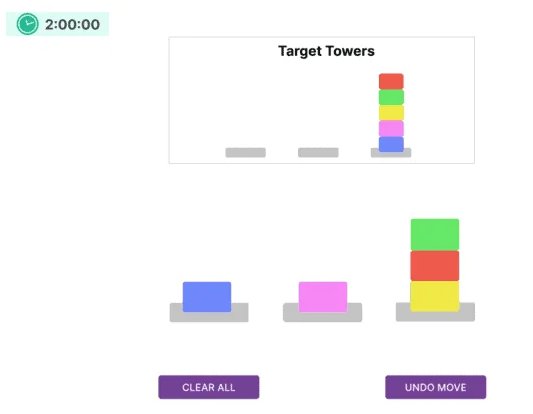
The Towers of Hanoi Game
This classic puzzle tests your planning and problem-solving skills. You need to move disks from one peg to another, following specific rules.
Practice the Towers of Hanoi puzzle online or with a physical set. Focus on developing a systematic approach to solving the puzzle.
The Stop Game
This game measures your impulsivity and response inhibition. You’ll need to respond to certain stimuli but inhibit your response to others.
Practice similar tasks using online games or apps that require you to control your impulses. Focus on improving your reaction time and accuracy.
The Lengths Game
This game assesses your ability to judge distances and make quick estimations. You’ll be asked to compare the lengths of different lines.
Practice visual estimation by comparing the sizes and distances of objects in your environment. Use online tools to test and improve your accuracy.
The Keypad Game
This game measures your learning and adaptation skills. You will need to learn a pattern of key presses and adapt to changes in the pattern.
Practice your muscle memory and ability to adapt to new patterns. Try learning to type on a new keyboard layout or playing rhythm-based games.
Debunking Common Pymetrics Myths
Several misconceptions surround the Pymetrics assessment. Let’s address some of the most common myths.
Understanding the reality can help alleviate anxiety and improve your performance. Remember that the assessment is designed to be fair and objective.
Myth: There is a “Right” Way to Play
There is no single “right” way to play the games. Pymetrics is looking for a range of traits and behaviors.
Focus on being yourself and responding naturally to the stimuli. Trying to game the system will likely backfire.
Myth: Speed is Always Better
While some games have time limits, accuracy is often more important than speed. Don’t rush through the games at the expense of making mistakes.
Take your time to understand the instructions and respond thoughtfully. A balance of speed and accuracy is ideal.
Myth: Your Results are Used in Isolation
Your Pymetrics results are typically combined with other factors, such as your resume and interview performance. The assessment is just one piece of the puzzle.
Don’t put too much pressure on yourself to perform perfectly. Focus on showcasing your strengths in all aspects of the application process.
Myth: You Can “Study” for Pymetrics Like a Test
Pymetrics is not a test of knowledge or specific skills. It’s an assessment of your inherent traits and abilities.
While you can practice skills relevant to the games, you can’t “study” in the traditional sense. Focus on developing your cognitive and emotional skills over time.
Optimizing Your Pymetrics Test Environment
Creating the right environment can significantly impact your performance. A calm and focused setting is essential.
Minimize distractions and ensure you have a stable internet connection. This will help you concentrate and perform your best.
Creating a Distraction-Free Zone
Find a quiet place where you won’t be interrupted. Turn off notifications on your phone and computer.
Let your family or roommates know that you need uninterrupted time. A dedicated workspace can help you focus.
Ensuring a Stable Internet Connection
A reliable internet connection is crucial to avoid technical issues. Test your connection speed before starting the assessment.
Close any unnecessary programs or applications that may be using bandwidth. A wired connection is generally more stable than Wi-Fi.
Using Appropriate Devices and Browsers
Make sure you are using a compatible device and browser. Check the Pymetrics website for recommended specifications.
Close any unnecessary tabs or windows in your browser. A clean and efficient setup can improve performance.
Taking Breaks and Staying Hydrated
Take short breaks between games to avoid fatigue. Stand up, stretch, and move around to refresh your mind.
Stay hydrated by drinking water throughout the assessment. Physical well-being can positively impact cognitive performance.
Understanding Your Pymetrics Results
After completing the assessment, you may receive feedback on your traits and abilities. Understanding this feedback is key.
Use this information to identify your strengths and areas for development. This self-awareness can benefit you in your career.
Interpreting Your Trait Scores
The Pymetrics report typically includes scores for various traits. These scores are usually presented as percentile ranks.
A higher percentile rank indicates that you scored higher than a larger percentage of other test-takers. Understanding these scores can provide valuable insights.
Identifying Your Strengths and Weaknesses
Use your Pymetrics results to identify your strengths and weaknesses. Focus on leveraging your strengths in your career.
Work on improving your weaker areas through targeted practice and development. This continuous improvement will make you a more valuable asset.
Using Feedback for Personal Development
Treat your Pymetrics feedback as an opportunity for personal growth. Use it to identify areas where you can improve your skills.
Seek out opportunities to develop these skills through training, mentorship, or on-the-job experiences. Continuous learning is essential for career success.
Connecting Results to Career Paths
Consider how your Pymetrics results align with different career paths. Certain traits are better suited to specific roles.
Research different career options and identify those that align with your strengths and interests. This can help you make informed career decisions.
Alternatives to Pymetrics and Similar Assessments
Pymetrics is not the only gamified assessment tool available. Several other companies offer similar solutions.
Exploring these alternatives can provide you with a broader understanding of the assessment landscape. Each tool has its own strengths and weaknesses.
Arctic Shores
Arctic Shores uses immersive virtual reality scenarios to assess candidates. Their assessments focus on personality traits and cognitive abilities.
The platform offers a more engaging and realistic assessment experience. It aims to provide a more holistic view of candidates.
Criteria Corp
Criteria Corp offers a range of pre-employment tests, including cognitive aptitude tests, personality assessments, and skills tests.
Their assessments are designed to predict job performance and identify the best candidates. They offer a comprehensive suite of tools for hiring.
TalentLens
TalentLens provides assessments that measure cognitive abilities, personality traits, and emotional intelligence. They offer a variety of tools for different stages of the hiring process.
Their assessments are based on scientific research and designed to be fair and objective. They aim to help companies make data-driven hiring decisions.
SHL
SHL offers a wide range of talent assessment solutions, including aptitude tests, personality questionnaires, and situational judgment tests.
Their assessments are used by companies around the world to identify and develop talent. They provide a comprehensive suite of tools for talent management.
Future of Gamified Assessments in Hiring
Gamified assessments are likely to become even more prevalent in the future. The technology is constantly evolving.
Expect to see more sophisticated and immersive assessments in the years to come. AI and machine learning will play a greater role in analyzing assessment data.
Increased Use of AI and Machine Learning
AI and machine learning can be used to analyze assessment data more effectively. These technologies can identify patterns and insights that humans might miss.
This can lead to more accurate and unbiased hiring decisions. AI-powered assessments can also provide personalized feedback to candidates.
More Immersive and Realistic Scenarios
Future gamified assessments are likely to be more immersive and realistic. Virtual reality and augmented reality technologies will be used to create more engaging experiences.
These immersive scenarios will provide a more accurate assessment of candidates’ abilities in real-world situations. This offers a more natural and engaging candidate experience.
Greater Focus on Personalized Feedback
Expect to see a greater focus on personalized feedback in the future. Assessments will provide candidates with more detailed insights into their strengths and weaknesses.
This feedback can help candidates identify areas for improvement and develop their skills. Personalized feedback can also improve the candidate experience.
Integration with Other HR Technologies
Gamified assessments are likely to be integrated with other HR technologies, such as applicant tracking systems and learning management systems.
This integration will streamline the hiring process and provide a more holistic view of candidates. It also allows for more data-driven decision-making throughout the entire employee lifecycle.
Pymetrics Games Assessment – Complete Guide [2025]
Final Thoughts
Pymetrics games simulate real-world job tasks, assessing cognitive and personality traits. Preparation is essential to perform your best during the assessment. Understanding the game mechanics reduces anxiety.
Focus on practicing cognitive skills. This improves your ability to quickly process information. It ensures you can effectively adapt to the game’s challenges.
Effective pymetrics games practice involves familiarizing yourself with sample games. Strategic preparation builds confidence and contributes to a better overall performance.

