
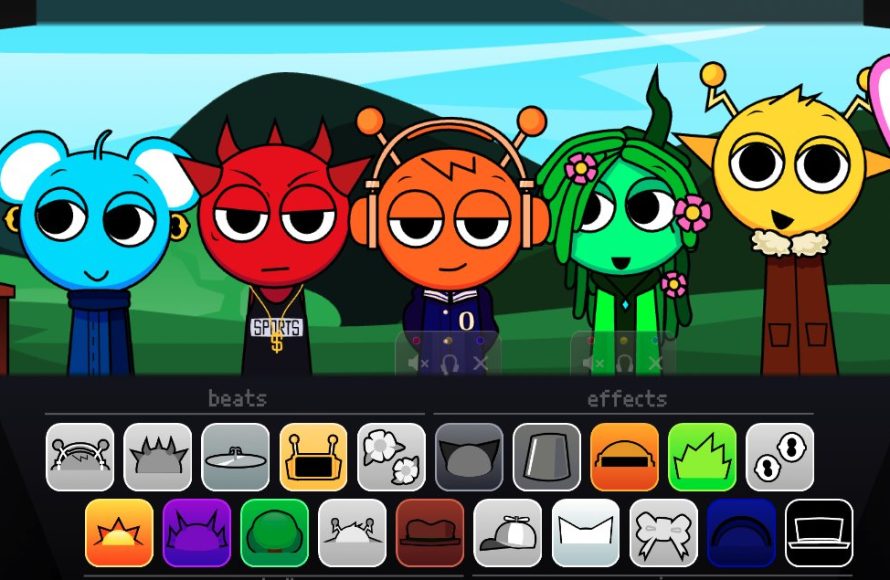
Sprunki animation techniques analysis reveals a blend of squash and stretch, exaggerated timing, and dynamic posing to create its distinct, bouncy feel.
Ever wondered how those peculiar, jiggly characters in Sprunki come to life? The secret lies in a fascinating combination of traditional animation principles. Sprunki animation techniques analysis shows a deliberate approach, using techniques that emphasize movement and personality.
These techniques focus on extreme poses and quick transitions, giving the animation its signature style. The emphasis on cartoon physics allows for wonderfully flexible and entertaining action. It creates a unique visual experience for viewers.

Sprunki Animation Techniques Analysis
Okay, let’s dive deep into the wonderful world of Sprunki animation! We’ve all seen those bouncy, squashy, and oh-so-expressive characters, right? But have you ever stopped to think about how animators achieve that signature Sprunki look? It’s not just random wiggles; it’s a collection of clever techniques working together to create that unique style. This article will break down the secrets behind Sprunki animation, making it easier to understand and appreciate. We will explore the core principles and methods that bring these lively characters to life. Let’s get started!
The Foundation: Squash and Stretch
At the heart of Sprunki animation lies the principle of squash and stretch. This isn’t just about making characters look silly; it’s about creating the illusion of weight, speed, and impact. Think of a bouncing ball. When it hits the ground, it squashes, becoming wider and shorter. As it flies back up, it stretches, becoming taller and thinner. This change in shape gives the ball a sense of motion and energy. In Sprunki animation, this idea is taken to the extreme, with characters bending, warping, and deforming in ways that real objects wouldn’t, making them appear more dynamic and entertaining. Animators use squash and stretch to emphasize movement and the force of actions.
- Squash: When an object hits something or pushes against a surface, it flattens out. This makes the action feel powerful.
- Stretch: When an object is moving quickly or being pulled, it lengthens. This shows speed and energy.
This technique makes characters look more alive and less like stiff, lifeless drawings. It’s all about exaggerating movement to create a fun and engaging experience.
How Squash and Stretch is Applied
The application of squash and stretch in Sprunki is quite freeform. Characters can squash so thin they nearly disappear or stretch to ridiculous heights. This flexibility is part of what gives Sprunki its unique style. It’s not about sticking to realistic physics; it’s about using distortion to amplify emotions and actions. For example, a character might squash down to the ground in fear or stretch way up tall with excitement.
Exaggeration: Turning Up the Volume
Another cornerstone of Sprunki animation is exaggeration. It’s like turning up the volume on everything! Sprunki characters don’t just react; they overreact. Their expressions are bigger, their movements are wilder, and their poses are more dramatic. This doesn’t mean the characters lack emotion; they just show their feelings in a bigger, more entertaining way. Exaggeration is a key to making their actions fun and clear to the viewer. It’s what makes watching Sprunki so engaging and memorable. Animators push the boundaries of normal movement to achieve this characteristic effect.
Types of Exaggeration
Here are some ways exaggeration appears in Sprunki animation:
- Facial Expressions: Eyes become huge, mouths stretch into wide grins or dramatic frowns, and eyebrows perform acrobatics.
- Body Language: Characters leap across the room with incredible jumps, their limbs flailing wildly, and their whole bodies move with more energy.
- Timing: Actions are either incredibly fast or exaggeratedly slow, creating a comedic effect.
Exaggeration is used not just for comedic effect but also to make the emotion of a scene much clearer to the viewer. When a character is sad, they will not just appear downcast, they will possibly be drooping and wilting like a flower and have tears that seem like waterfalls.
Fluid Movement: The Smoothness Factor
While squash and stretch and exaggeration give Sprunki animation its energy, fluid movement provides smoothness and cohesion. This means every movement flows from one frame to the next without any jarring transitions. It’s like watching a stream of water, where every drop flows into the next. To achieve this, animators use something called ‘in-betweening,’ which means drawing the frames that bridge the gap between key poses. In Sprunki the timing and spacing is also exaggerated.
In-Betweening: Filling in the Gaps
In-betweening is what makes the movement look natural. It’s the process of drawing the frames that go between the main poses, such as how a character goes from standing to jumping. The more in-between frames, the smoother the movement appears. Animators add more in-between frames when an object moves slowly, and fewer when it moves quickly. In Sprunki animation they take creative liberties on how to add in between frames to make actions much more exaggerated.
A key part of fluid movement is following the proper arcs and timing. Characters do not move in straight lines, but they move in arcs or curves, which helps give the animation a more natural feel. Timing refers to how quickly or slowly a motion happens, which can be used to make an action feel heavier or lighter, fast or slow.
The Use of Anticipation
Anticipation is the idea that before a character performs an action, they do something that gets the audience ready for that action. It’s like a wind-up before a pitch. For example, before a character jumps, they might crouch down or take a small step back. This gives the audience a moment to prepare for the main action, making the movement more understandable and dynamic. In Sprunki, anticipation is often exaggerated.
Examples of Anticipation
Here are a few examples of how anticipation works in animation:
- Jumping: Before a character leaps into the air, they might squat down low.
- Punching: Before a character throws a punch, they might draw their fist back and wind up.
- Looking: Before a character turns their head quickly, their eyes will look to the side to make the audience feel their full focus.
Anticipation is a key tool to give the audience a better understanding of the actions in a scene. It makes the animation more fun to watch and gives viewers a better understanding of the characters’ intentions.
Secondary Action: Adding Depth
Secondary actions are smaller movements that happen because of the main action. They add detail and make the animation more believable. Think of a character walking: the main action is their legs moving, but the secondary action is their arms swinging, clothes moving, and hair bouncing. Secondary actions help give a character personality and create more interesting and enjoyable animation. In Sprunki, secondary actions are often just as exaggerated as the main actions, giving the characters more energy and personality.
How Secondary Action is Used
- Clothing and Hair: The way clothes flow and hair bounces adds to the sense of movement and can tell you something about the speed and energy of the action.
- Facial Features: When a character talks, their eyes and eyebrows move as well as their mouths.
- Overlapping Actions: Parts of the character’s body, like arms or tails, might lag behind the rest of the body and catch up later, this can make actions look more fun and silly.
Secondary actions create layers in the animation, making it more dynamic and fun to watch. Sprunki takes advantage of secondary actions to add more silliness to character movements.
Timing and Spacing: The Rhythm of Animation
Timing and spacing are the two elements that bring rhythm and style to animation. Timing refers to how quickly an action is performed. If you want a character to look heavy, you might make their movements slow. If you want them to look light, you make their movements quick. Spacing refers to the distance between each drawing of a character as they move. When the drawings are far apart, the object will move quicker. When the drawings are closer together, the motion will be slower. In Sprunki animation, timing and spacing are often exaggerated. Actions that might be slow in real life are much faster in Sprunki animation, and vice versa.
Timing and Spacing in Sprunki
- Fast Actions: In Sprunki, a character might go from standing still to running at super speed in just a few frames.
- Slow Actions: A character might take a long time to move a hand or blink.
- Exaggerated Spaces: The spaces between drawings become extreme, making actions seem even more dramatic.
The timing and spacing of Sprunki animation contributes a lot to the overall style. The mix of fast and slow movements, along with extreme spacing, helps create a sense of humor and energy.
Appeal: Making Characters Likable
Appeal is the quality that makes a character interesting to watch. It’s not just about being cute or attractive; it’s about having a personality that the audience can connect with. In Sprunki animation, characters are given unique designs and personalities to make them entertaining and memorable. This is done through their shape, the way they move, and the way they express themselves. A character may be appealing because of their cuteness, humor, or some other characteristic.
Elements of Appeal
- Unique Design: Sprunki characters often have exaggerated features, interesting shapes, and vibrant colors that make them stand out.
- Distinctive Personalities: Each character has their own quirks, reactions, and ways of moving, which help them become more appealing to the audience.
- Expressive Movement: The way a character moves, especially through the use of squash and stretch, can tell the audience a lot about their personality and emotions.
Appeal is what makes us want to watch Sprunki animation, it’s what makes us care about the characters. By combining unique designs, distinctive personalities, and expressive movements, animators create characters that audiences find interesting and fun to watch.
The Importance of Line of Action
Line of action is an imaginary line that flows through a character’s pose and shows the main flow of the action. It gives a sense of energy, movement, and emotion. Think of it like a curve that runs from head to toe. In Sprunki animation, the line of action is often very exaggerated, creating fun and dynamic poses. This helps make the characters more expressive and interesting to look at. Animators pay close attention to the line of action to ensure that the poses of the character give energy and purpose.
Using the Line of Action
- Exaggerated Poses: Sprunki characters often have curved, flowing lines of action that help them look dynamic.
- Clear Intentions: The line of action helps the audience understand what a character is doing or feeling.
- Dynamic Compositions: By using a strong line of action, animators can create exciting and engaging poses.
The line of action makes characters appear more dynamic and adds to the overall feeling of the scene. It helps make the characters more expressive.
Color and Design
While animation techniques are key, the color and overall design of Sprunki animation play an important role in its appeal. Bright, vivid colors are often used to make the characters and scenes more exciting. Character designs are simple, but they are made to be expressive and memorable. This combination of color and design makes Sprunki animation appealing to audiences of all ages.
Color and Design Elements
- Vivid Colors: Bright colors are used to create energy and excitement.
- Simple Shapes: Character designs are usually made of simple shapes, which makes them easier to animate and more memorable.
- Unique Silhouettes: Each character has a unique silhouette that makes them easily recognizable.
The use of color and design elements adds another layer to the overall feel of the animation. They help the characters come to life and make the animation more enjoyable.
By combining all these techniques – squash and stretch, exaggeration, fluid movement, anticipation, secondary action, timing and spacing, appeal, line of action, and creative use of color and design – Sprunki animation creates a very unique style. It’s a style that is energetic, funny, and engaging, making it fun for people of all ages. It’s a style that’s easy to recognize and appreciate because of its use of these specific animation elements. It shows the power of animation to create stories that are full of life and humor.
Analyzing the techniques used in Sprunki animation gives us a greater appreciation for the work and creativity that goes into it. It shows us that animation is not just about moving pictures, but it is a way to tell stories and express emotions in unique and creative ways. Sprunki is a perfect example of this, showing the creative use of traditional animation methods to create a highly original style.
The elements of squash and stretch, exaggeration, anticipation, and other animation fundamentals work together to create the signature Sprunki look. It’s a style that stands out for its energy, humor, and memorable characters, showing the power of animation to bring fun and imaginative worlds to life.
SPRUNKI RETAKE Testing Every Type
Final Thoughts
Sprunki animation techniques analysis reveals a clear emphasis on exaggerated movement and squash-and-stretch principles. Character actions are often fast-paced and comical, contributing to the style’s unique visual charm. These choices create a distinctive feel.
Frame-by-frame animation is a vital aspect, allowing for complete control over each movement. The attention to timing and spacing of frames enhances the energetic feel. The overall result is a highly dynamic and memorable style.
The focus on expressive posing and fluid motion demonstrates a skilled manipulation of classic animation ideas within the sprunki animation techniques analysis framework. The overall presentation is very effective.

